Cast Iron Sewer Pipe Replacement Parma, OH
Cast iron was the standard sewer pipe inside Parma homes and just outside the foundation — and after seventy years, it corrodes from the inside until the line can barely pass water.
Need help with your sewer line?
Call Now to reach a local sewer professional. Describe the problem, where it is, and what the line has been doing.
Hours: Mon–Fri 7:00 AM–10:00 PM ET · Sat 8:00 AM–10:00 PM ET · Sun 7:00 AM–9:00 PM ET
What this service does
Cast iron was the sewer pipe of choice for the section of the line inside the house and just outside the foundation, in Parma and across the country. It is strong, quiet, and fire-resistant, and it was the standard material for indoor drains and the first few feet of the lateral when Parma's homes were built in the 1940s, 1950s, and 1960s.
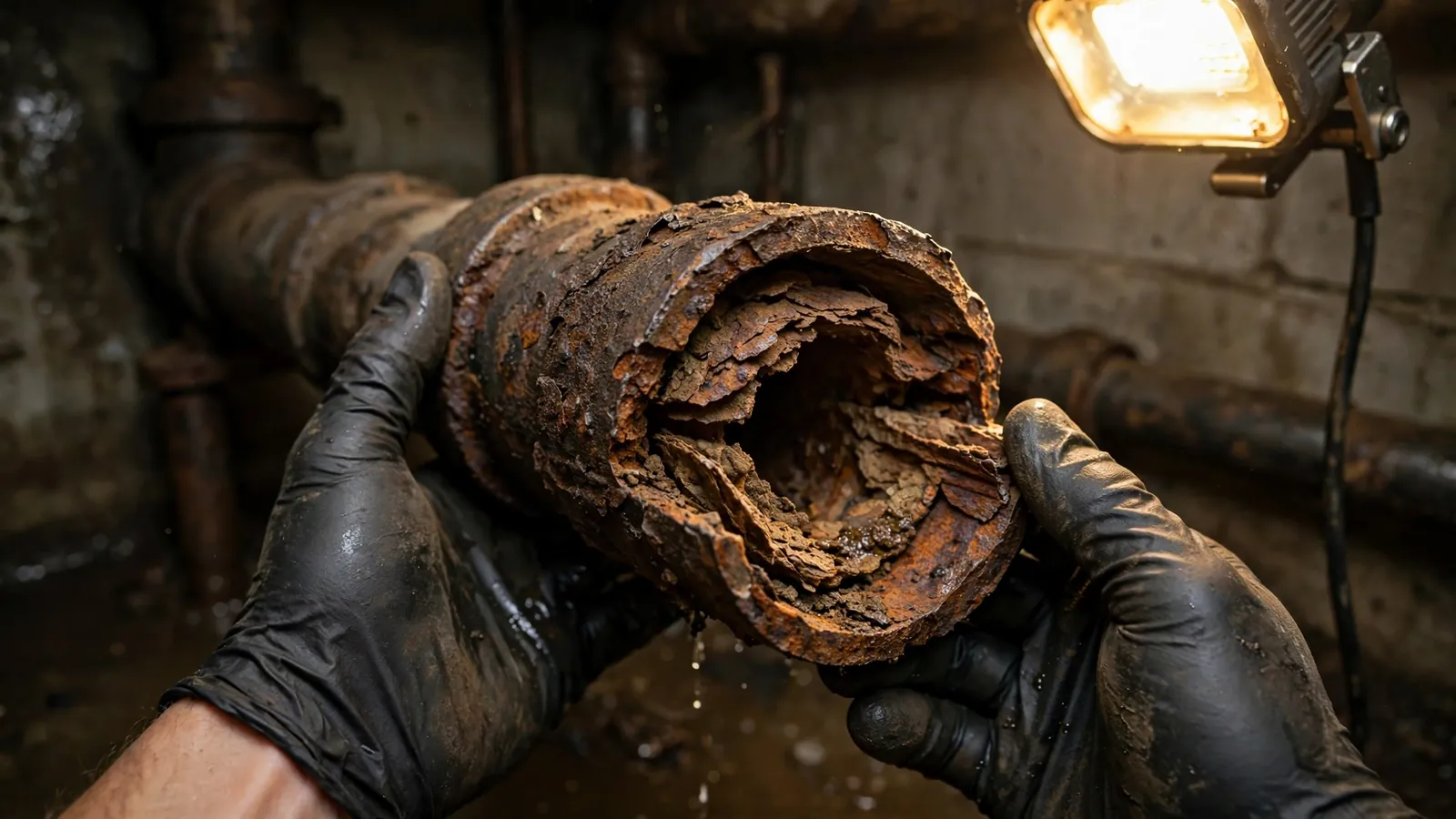
The weakness of cast iron is corrosion. Wastewater, and the gases it gives off, attack the iron from the inside. Over decades the inside wall scales and pits, the bore narrows, and the rough surface catches paper and waste. A cast iron line does not fail suddenly the way a cracked clay section can — it closes slowly, year by year, until the line barely passes water and the house starts backing up.
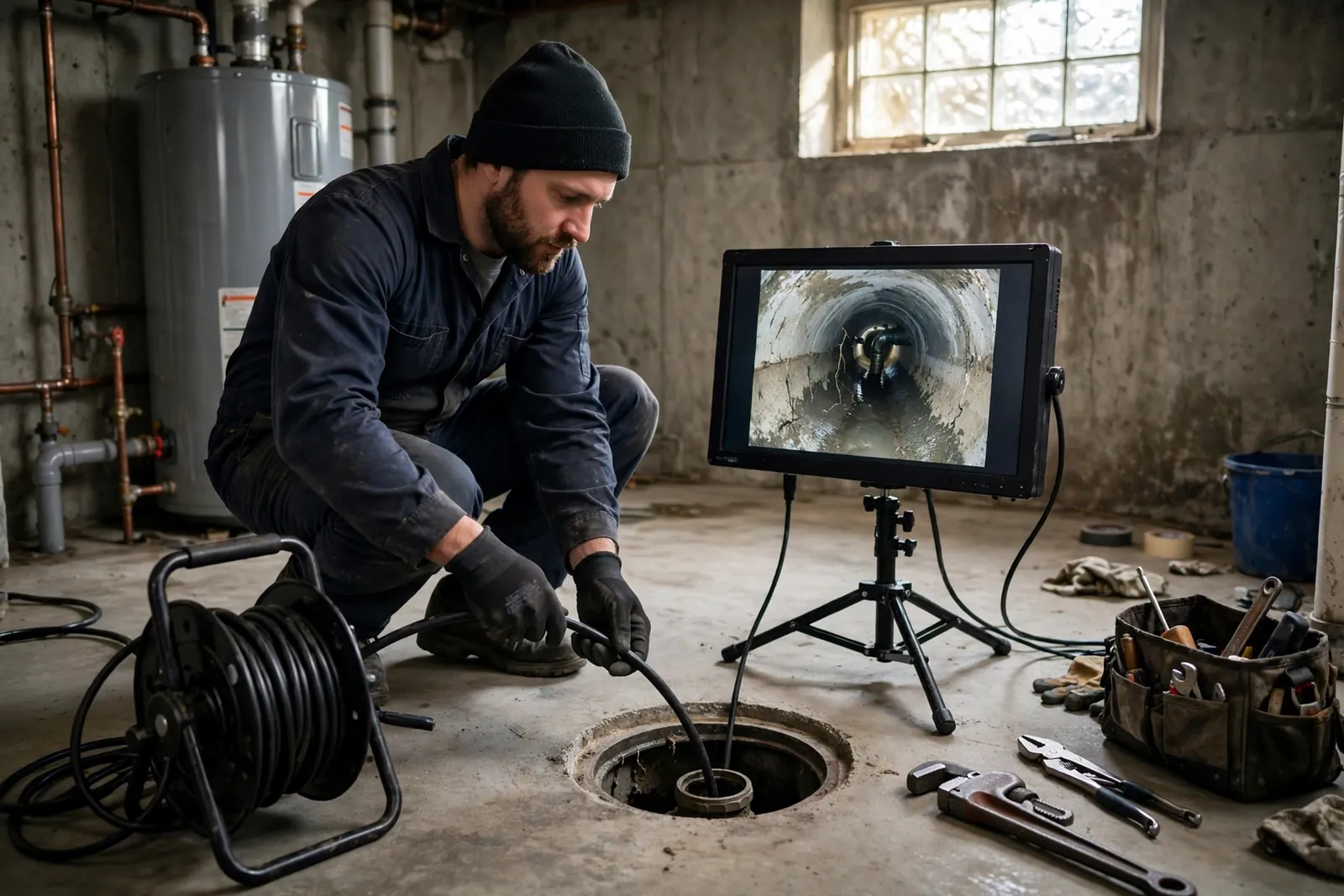
A cast iron lateral from the 1950s is now about seventy years old. The corrosion is not a matter of if but of how far it has gone, and a camera inspection shows it directly: the inside of the pipe on the monitor, rough and narrowed, with scale flaking off the wall. When the bore has narrowed that far, replacement is the work that gives the home a line that flows again.
Before you call
- Stop using water if the line is backing up.
- Keep people and pets away from any wastewater.
- Note which drains are slow, and which one backs up first.
- Note whether the problem happens in heavy rain, or all the time.
- Have the age of the home ready, if you know it.
How cast iron fails
Cast iron corrodes from the inside out. The wastewater flowing through it, and the hydrogen sulphide gas that rises from it, attack the iron wall. The inside surface scales — rough, flaking layers build up — and the bore narrows. A pipe that started with a clear four-inch bore may have an effective opening of half that, and the rough surface catches everything that passes.
The second failure is at the joints. Cast iron sections were joined with lead and oakum, or with hub-and-spigot fittings, and those joints can loosen as the pipe corrodes and the ground shifts. A loose joint leaks, and the leak washes out the soil around the pipe, letting a section settle or separate.
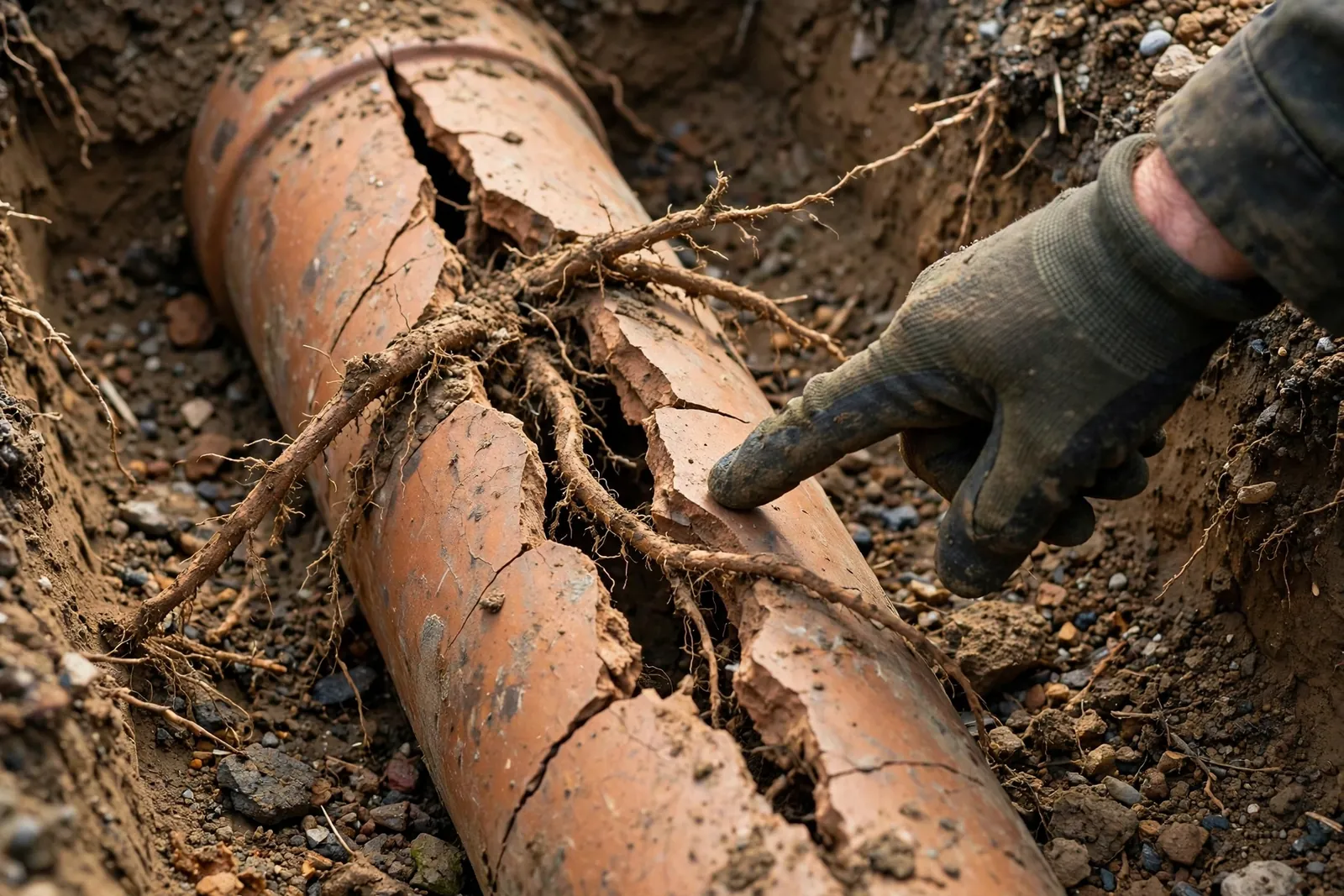
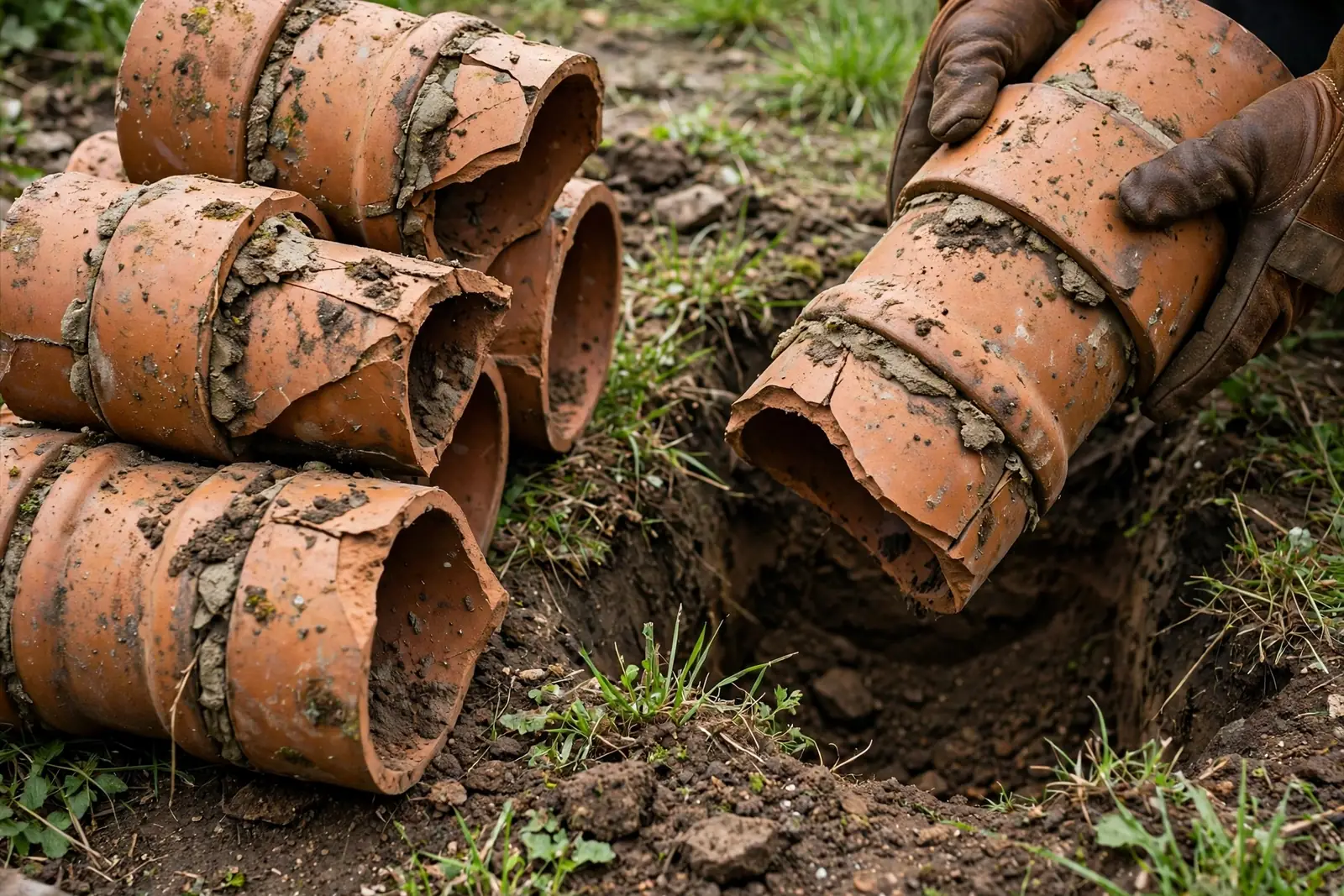
The third failure is the break. Corrosion thins the wall until it can no longer carry the weight of the ground above it, or a point load — a rock, a heavy vehicle over a shallow section — cracks it. A cast iron section can also fail where it meets clay tile outside the house: the two materials move differently with the ground, and the joint between them is a common failure point.
What the service includes
Camera inspection of the cast iron line
The camera shows the inside of the cast iron — the scale, the narrowing, the joints — and the transition to clay tile outside the house. The inspection decides whether the line can be lined or needs replacement.
Locating the line
The line is located and marked on the surface, with the depth, so the work goes to the right place and stays clear of other utilities.
Open-trench replacement
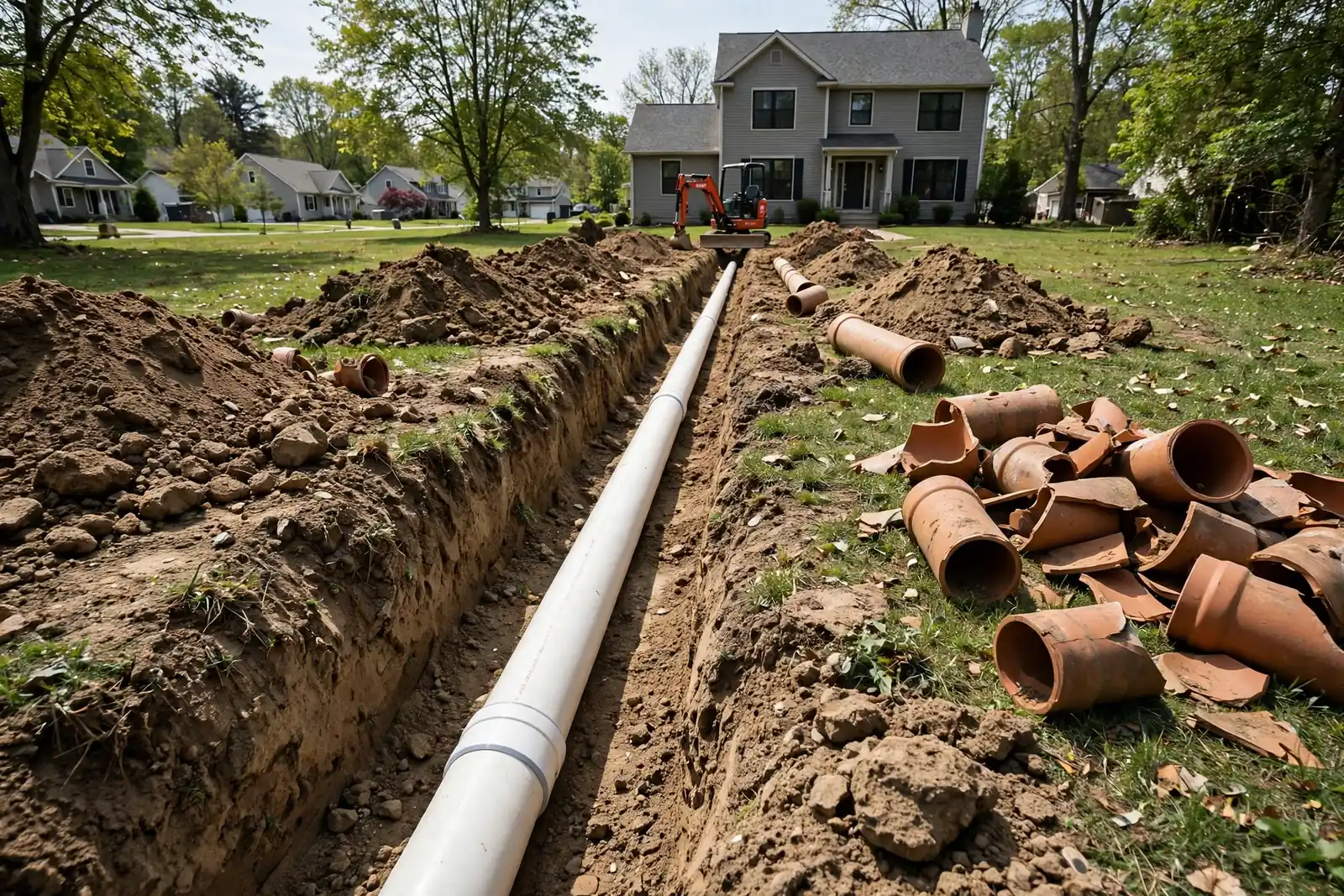
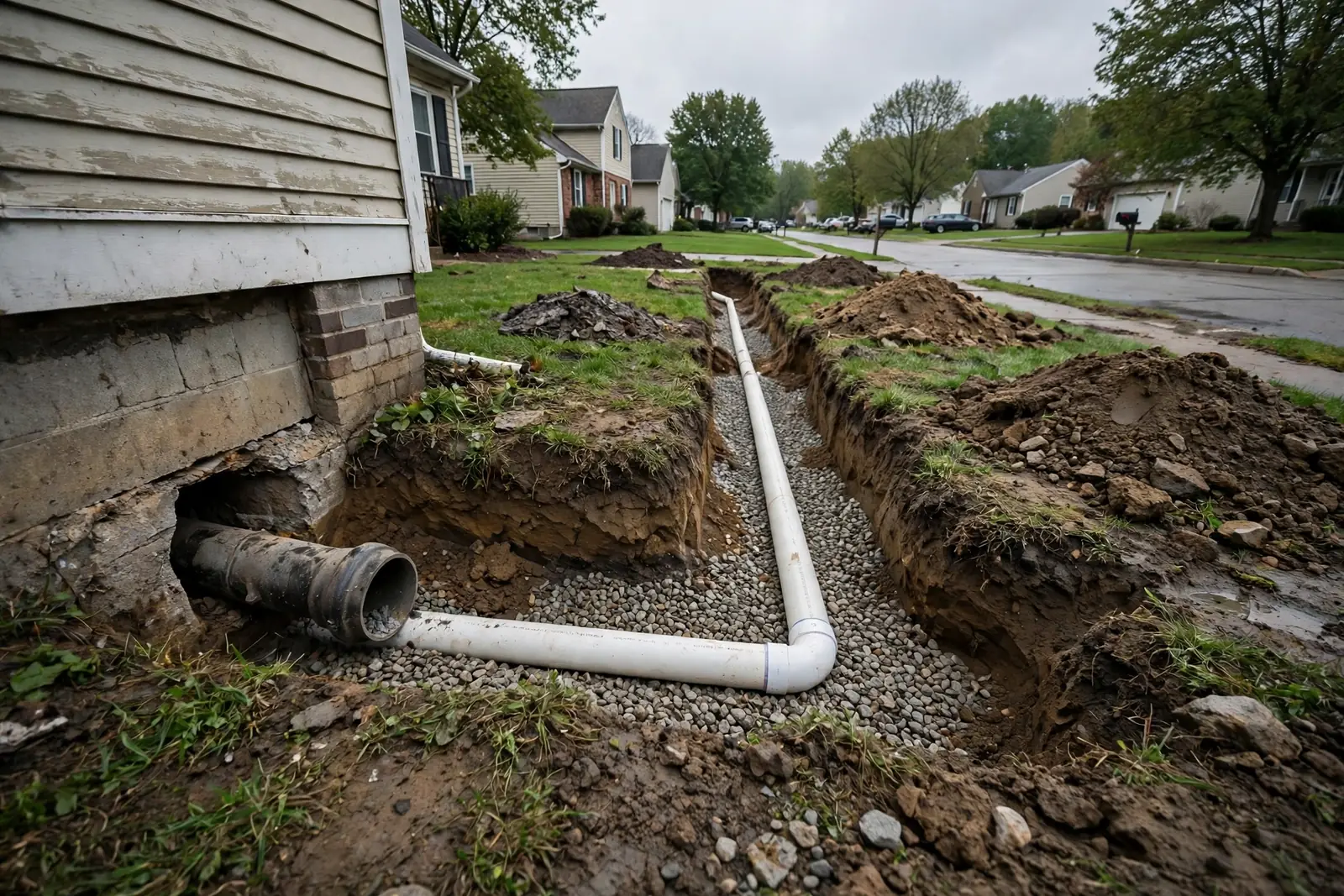
The corroded cast iron is dug out and replaced with modern sealed pipe, laid on a prepared bed with the correct slope. The right method when the line is shallow or the damage is extensive.
Trenchless pipe bursting
A bursting head breaks the old cast iron outward and pulls a new pipe into the same path, through small pits. The old iron never has to be dug out.
Cured-in-place lining
Where the cast iron is still round and continuous, a resin liner can be installed inside it, forming a smooth jointless pipe that the rough iron can no longer provide.
Final camera check
The replacement line is camera-checked end to end, confirming the new pipe is clear, continuous, and flowing with the correct fall toward the street main.
How the work runs
Call and describe the symptoms
Slow drains throughout the house, repeat backups, or a camera report — and the age of the home, which usually tells the crew the pipe is cast iron.
Camera inspection
The camera runs the line from the house to the street main, showing the scale, the narrowing, the joints, and the transition to clay tile outside.
Method choice
Open trench, pipe bursting, or lining — chosen from how far the corrosion has gone, the depth of the line, and what sits above it.
Locating and permits
The line is located and marked, and the permits for work in the right-of-way and at the main are handled before digging.
Replacement
The old cast iron is removed or burst in place, the new pipe is laid with the correct slope, and the connections at the house and the street are made and sealed.
Final check and restore
The new line is camera-checked, then the trench or pits are backfilled in layers and the surface is graded.
Tools and methods used
Sewer camera with locator
The camera shows the inside of the cast iron — scale, narrowing, joints — and the locator marks the line's path and depth on the surface.
Pipe bursting rig
The rig pulls the bursting head and the new pipe through the old cast iron line, breaking the corroded sections outward as it goes.
CIPP inversion equipment
For lining, the resin liner is inverted into the cast iron pipe and cured with hot water or steam into a smooth, jointless new pipe.
Mini excavator
A compact excavator digs the trench or the access pits in a residential yard, sized for the narrow side yards common in Parma.
Cast iron inside, clay tile outside
Most Parma homes have two pipe materials in one lateral. Inside the house, and for the first few feet outside the foundation, the pipe is cast iron — the standard indoor drain material of the era. Beyond that, the lateral is clay tile, laid in short sections to the street main. The two materials meet at a transition joint, and that joint is a common failure point.
The two materials fail differently. Cast iron corrodes from the inside, narrowing slowly. Clay tile fails at the joints, opening and letting roots in. A lateral can have both problems at once — a narrowed cast iron section near the house, and root-filled clay joints further out — and the camera inspection shows both, so the replacement covers the whole run.
That is why a replacement that only fixes one material can leave the problem half solved. The camera run goes from the house to the street main, and the replacement plan covers the full lateral, whatever materials it is made of.
Descaling vs replacement
Descaling is sometimes offered for cast iron lines: a chain or a cutter is run through the pipe to knock the scale off the inside wall. It can restore flow for a time, and it is a reasonable step when the pipe wall is still thick enough to hold. But descaling does not restore the iron that corrosion has already taken, and it cannot fix a joint that has loosened or a section that has thinned to the point of breaking.
The camera inspection is what separates a line that can be descaled from a line that cannot. If the wall is thin, the bore is badly narrowed, or a section has cracked, descaling only buys time — and it can make a thin section worse. In that case the lasting fix is lining or replacement.
A homeowner who has had a cast iron line descaled more than once, with the problem returning each time, is usually looking at a line that has reached the end of its working life. The camera shows the wall and the bore, and the findings decide whether descaling, lining, or replacement is the right next step.
How cast iron fails from the inside
Cast iron fails from the inside out. Wastewater and the gases it carries corrode the inner wall of the pipe, and the corrosion builds up as a rough, crusty layer called scale. The scale narrows the bore of the pipe a little at a time, so the line carries less and less water each year. A cast iron lateral that looks solid from the outside can be half closed on the inside, and the camera is the only way to see it.
The narrowing is not even along the run. It is worst at the bottom of the pipe, where wastewater sits, and at joints, where the flow slows. The rough surface catches paper and waste, so blockages form more easily as the pipe ages. Eventually a section of the pipe wall corrodes through, and soil or groundwater enters the line. That is the point where cleaning stops helping: the pipe is not blocked, it is failing.
Replacement removes the corrosion problem with the pipe. The new line has a smooth bore that does not scale, and sealed joints that do not catch debris. The camera check at the end shows the difference — a clear, even run from the house to the main. If only part of the line is cast iron, the camera findings decide whether the whole run goes or only the damaged sections, and the decision should be made from the footage, not from the age of the house alone.
A cast iron line narrowed by corrosion
A lateral that keeps backing up will not heal — the water keeps coming back through the lowest drain in the house.
A new smooth line, checked on camera
The work is checked with a camera, not a look at the surface — the new line is seen end to end before the job is called done.
Problems cast iron replacement solves
- A cast iron bore narrowed by scale until the line barely passes water.
- A rough interior that catches paper and waste and blocks again and again.
- Joints that have loosened and leak, washing out the soil around the pipe.
- A cast iron section cracked or broken under the weight of the ground.
- The cast iron to clay tile transition, separated by ground movement.
- A line that backs up because the pipe itself has closed, not because of a blockage.
Signs your cast iron sewer pipe needs replacement
- The home was built in the 1950s or 1960s and still has its original cast iron drain line.
- All the drains in the house are slow, and cleaning them does not hold.
- The basement floor drain backs up when water is used upstairs.
- A camera inspection shows a narrowed bore with heavy scale inside the pipe.
- There is a sewer smell from a floor drain or a basement corner.
- The line has needed cleaning more than once in a year.
- Flakes of rust or scale appear in the drain, or the water runs brown after the line is disturbed.
- The transition from cast iron to clay tile outside the house has separated.
Related problems
Cracked Sewer Pipe · Collapsed Sewer Line · Bellied Sewer Line
Industries that use this service
Frequently asked questions
Questions people ask about cast iron sewer pipe replacement, answered plainly.
A camera inspection shows it. Cast iron is easy to recognise on camera — a rough, dark interior with scale, and long sections with joints far apart. The age of the home is also a strong clue: a Parma home built in the 1950s or 1960s almost always has cast iron for the indoor drains and the first part of the lateral.
Cleaning can clear a blockage, and descaling can remove some of the scale — but it cannot restore the wall thickness that corrosion has taken, and it cannot fix a joint that has loosened or a section that has cracked. A cast iron line that has narrowed badly will close again, and the lasting fix is replacement or lining.
Yes. Cast iron is brittle enough to break outward as the bursting head passes, and the new pipe is pulled into the same path. The camera inspection first confirms the line is passable and the corrosion has not collapsed a section flat.
Where the cast iron is still round and continuous, a resin liner can be installed inside it. The liner gives the line a smooth, jointless interior that the corroded iron no longer has. A collapsed or badly offset section cannot be lined, and needs a trench or bursting instead.
Most residential cast iron replacements are measured in days. The length of the run, the depth, and whether the line goes under a driveway all affect the schedule. The camera inspection and the locate give the crew the information needed to plan it.
Work that connects to the street main and work in the public right-of-way follows the city's rules, and permits are part of that process. The crew handling the job deals with the permit side before digging starts.
The work is mostly outside, in the yard and at the street. The indoor part is the connection at the foundation, where the new line meets the indoor drain system. The crew explains what happens inside the house before work starts, and the finished line is checked on camera.
Most residential replacements use PVC or a similar modern plastic pipe, with sealed joints and a smooth interior. Trenchless bursting often uses HDPE. The material and diameter are chosen for the home and the connection at the street main.
Sewer line trouble in your Parma home?
Call Now to reach a local sewer professional. Describe the problem, where it is, and what the line has been doing.
Call now for sewer line help
Tap Call Now to reach a local sewer professional. Tell them where the problem is, what the line has been doing, and whether wastewater is coming into the home.
Hours: Mon–Fri 7:00 AM–10:00 PM ET · Sat 8:00 AM–10:00 PM ET · Sun 7:00 AM–9:00 PM ET
Before you call
- Stop using water if the line is backing up.
- Keep people and pets away from any wastewater.
- Note which drains are slow, and which one backs up first.
- Note whether the problem happens in heavy rain, or all the time.
- Have the age of the home ready, if you know it.