Trenchless Sewer Line Replacement Parma, OH
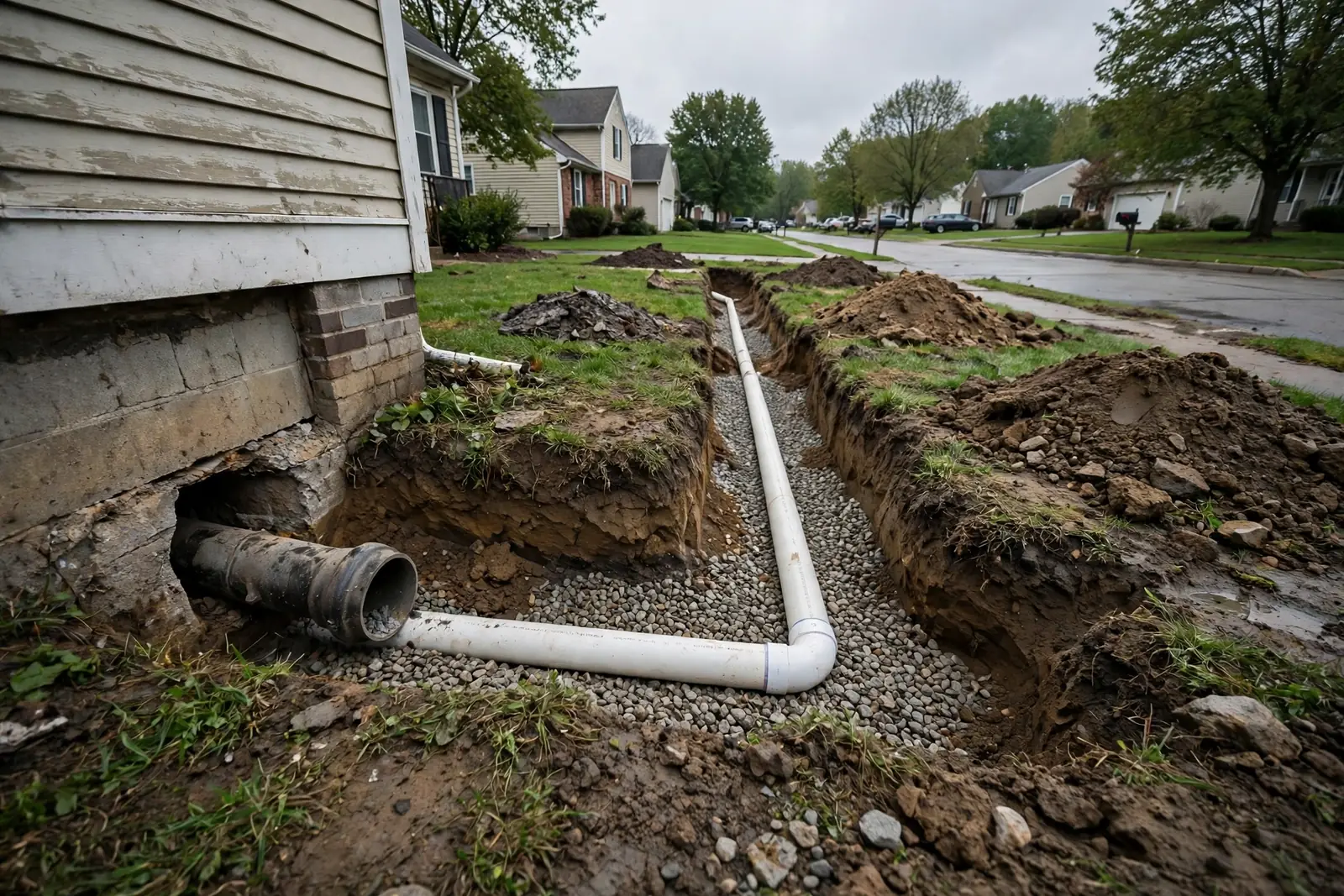
Trenchless replacement swaps a failed lateral for a new line through small access pits — no long trench across the lawn, the driveway, or the walkway.
Need help with your sewer line?
Call Now to reach a local sewer professional. Describe the problem, where it is, and what the line has been doing.
Hours: Mon–Fri 7:00 AM–10:00 PM ET · Sat 8:00 AM–10:00 PM ET · Sun 7:00 AM–9:00 PM ET
What this service does
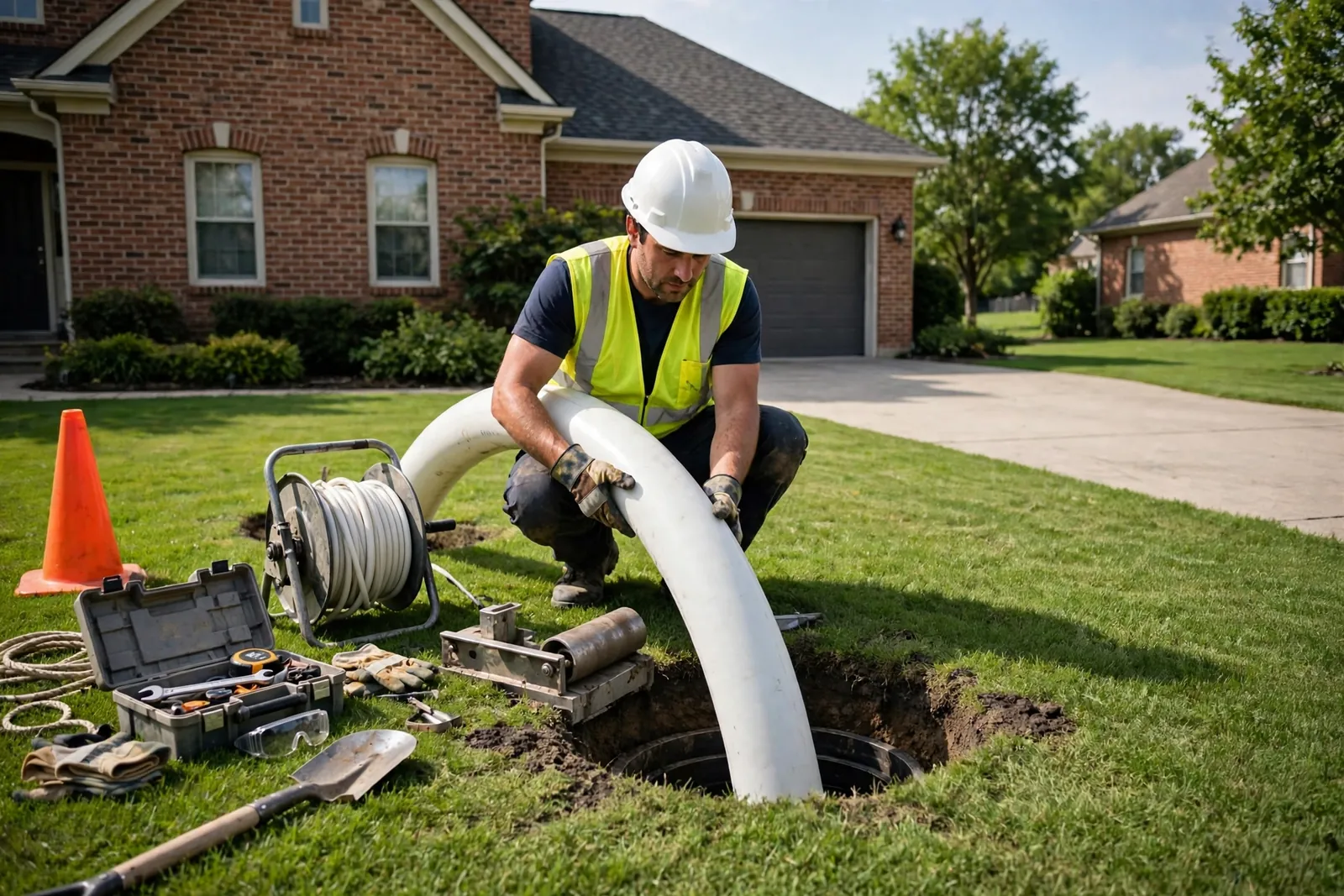
Trenchless sewer replacement is the answer most Parma homeowners ask about first, and the reason is simple: the yard stays largely intact. Instead of digging a trench along the whole line from the house to the street, the crew digs a small pit at each end — one near the house, one near the street — and replaces the pipe between them without opening the ground in between.
There are two trenchless methods, and they solve different problems. Pipe bursting pulls a bursting head through the old line, breaking the old pipe outward while a new pipe follows in the same path. Cured-in-place pipe lining — CIPP — inserts a resin-soaked liner into the old pipe and cures it in place, forming a new pipe inside the old one. Bursting replaces the pipe entirely; lining renews it from the inside.
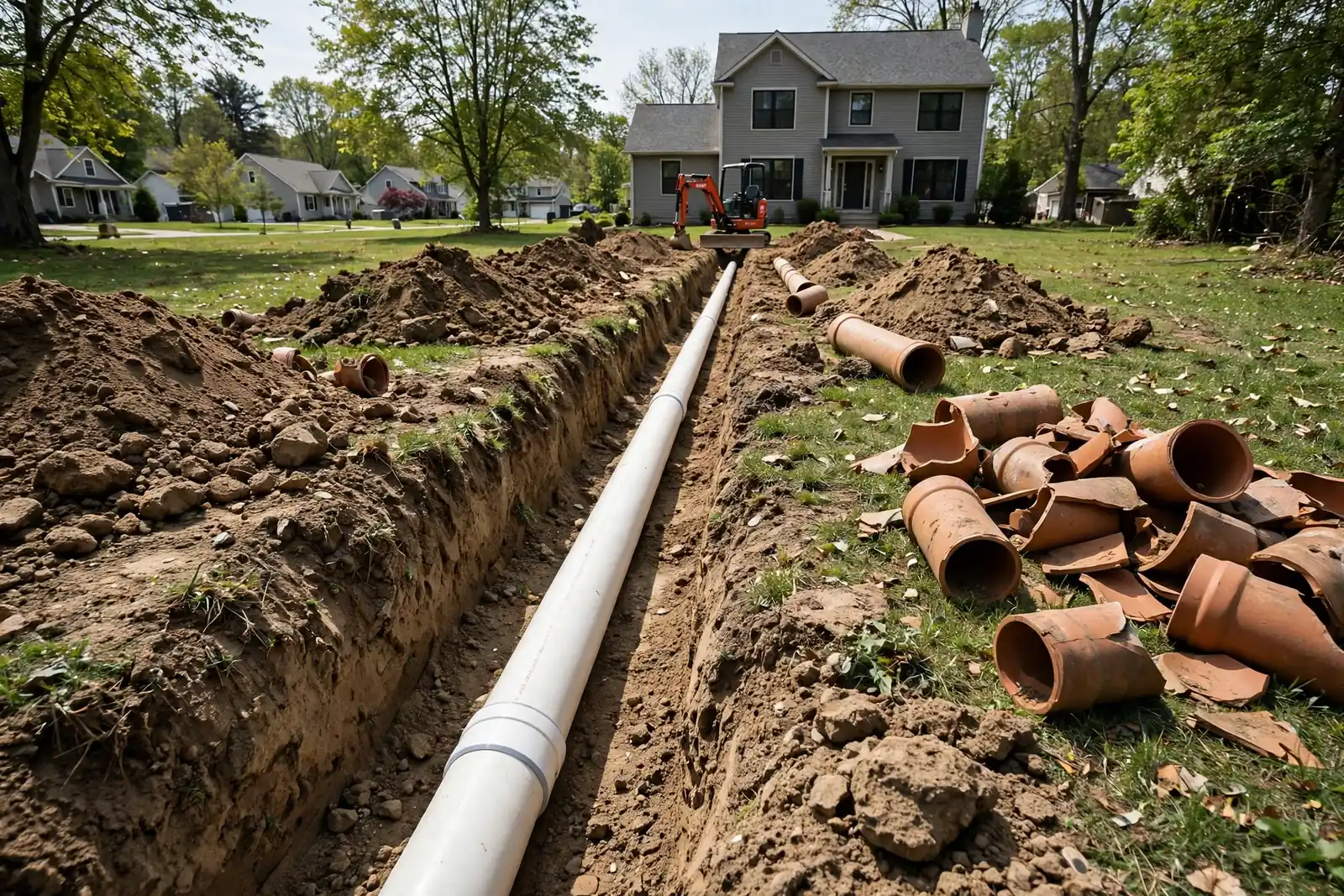
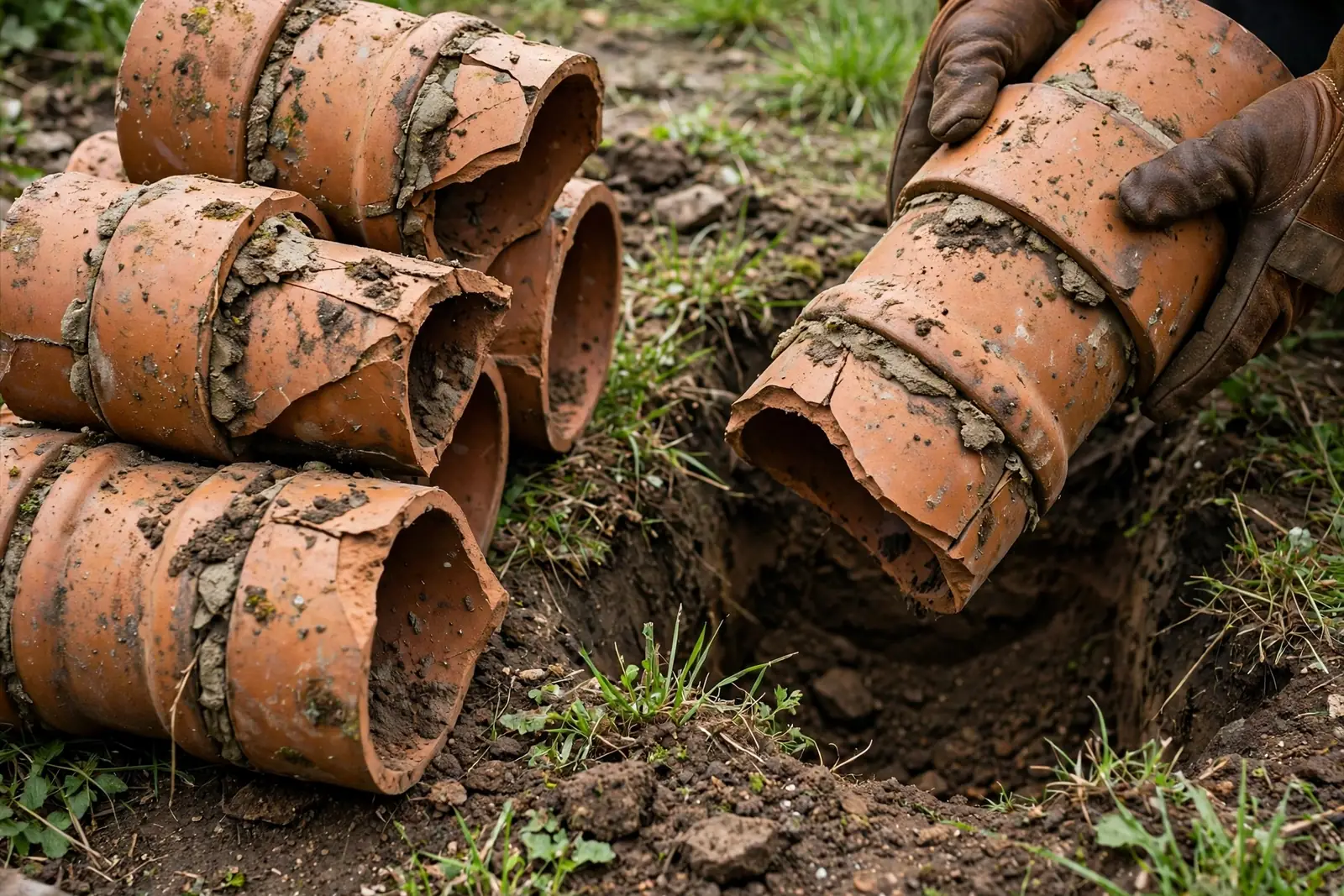
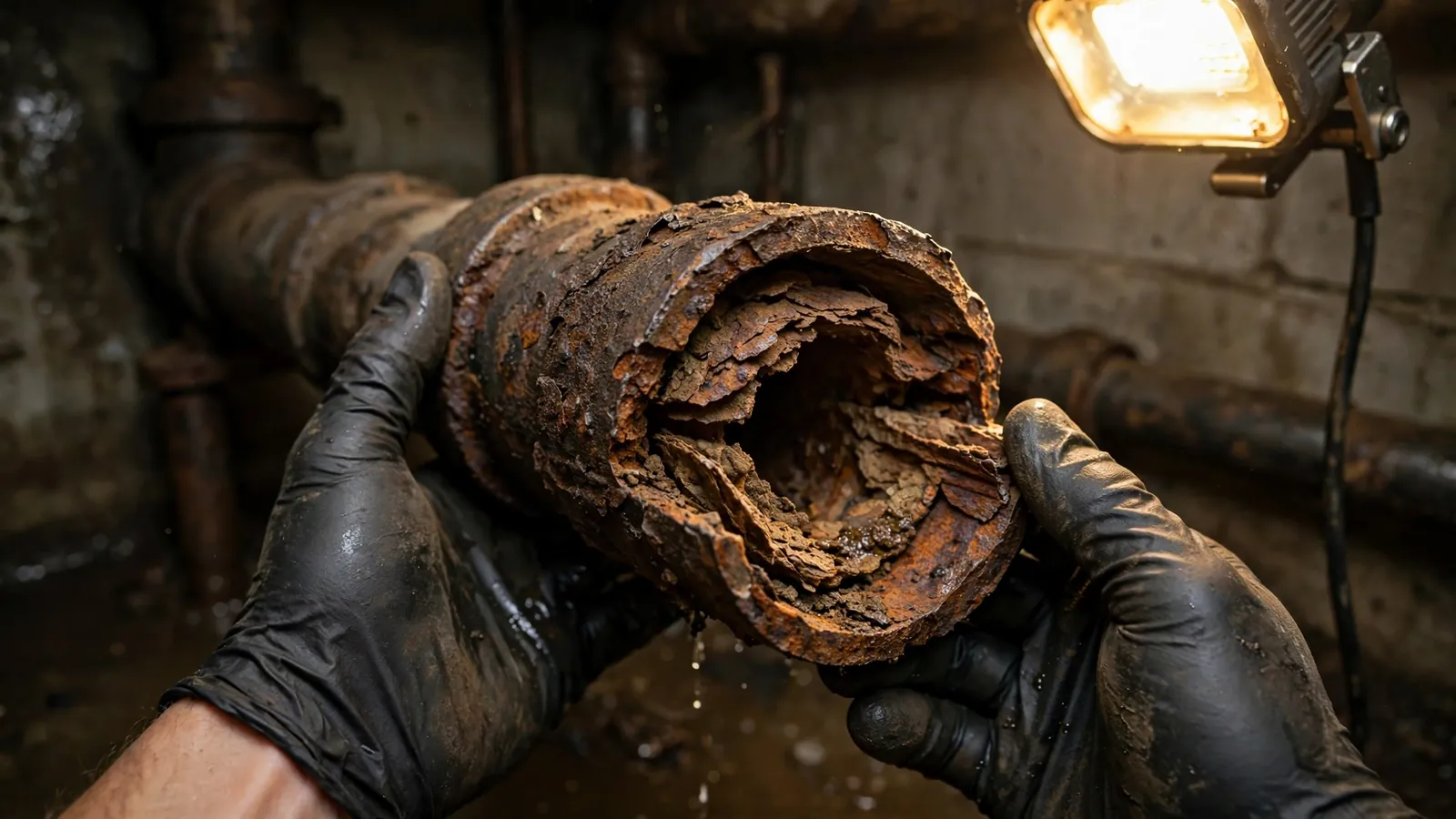
Both methods suit Parma's housing stock well. The laterals here are usually clay tile or cast iron from the 1950s and 1960s, running under lawns, driveways, and mature trees. A trench through all of that is a big restoration job on its own. Trenchless work avoids most of it — but it is not right for every line, and a camera inspection decides whether it fits yours.
Before you call
- Stop using water if the line is backing up.
- Keep people and pets away from any wastewater.
- Note which drains are slow, and which one backs up first.
- Note whether the problem happens in heavy rain, or all the time.
- Have the age of the home ready, if you know it.
How trenchless replacement works
Every trenchless job starts the same way: a camera inspection. The camera shows the pipe material, the depth, the joints, the damage, and the path of the line. Trenchless methods need a line that can be entered and pulled through. A line that has collapsed flat, or a line with a sharp offset where two sections have separated sideways, may not allow a bursting head or a liner to pass — and that line still needs a trench.
With pipe bursting, the crew digs a launch pit at one end of the line and a receiving pit at the other. A steel cable or rod is threaded through the old pipe, the bursting head and the new pipe are attached, and a pulling machine draws the head through. The head breaks the old clay or cast iron outward into the surrounding soil, and the new pipe — usually HDPE or PVC — follows into the space the head opens. The new pipe is the same diameter as the old one, or larger.
With CIPP lining, the crew measures the line, cuts a liner to length, soaks it in resin, and inverts or pulls it into the old pipe. Hot water or steam cures the resin, and the liner hardens into a smooth, jointless pipe inside the old one. The liner is slightly smaller in diameter than the old pipe, but its smooth interior often flows as well as the rougher old pipe did.
What the service includes
Camera inspection and measurement
The line is camera-inspected and measured end to end, so the crew knows the length, the diameter, the depth, and every defect before choosing a method.
Access pits, not a trench
Small pits are dug at the house connection and at the street connection. The ground between them is not opened, so the lawn, walkway, and driveway stay in place.
Pipe bursting
A bursting head breaks the old pipe outward while a new pipe is pulled into the same path. The old line never has to be dug out, and the new line can be the same size or larger.
Cured-in-place lining
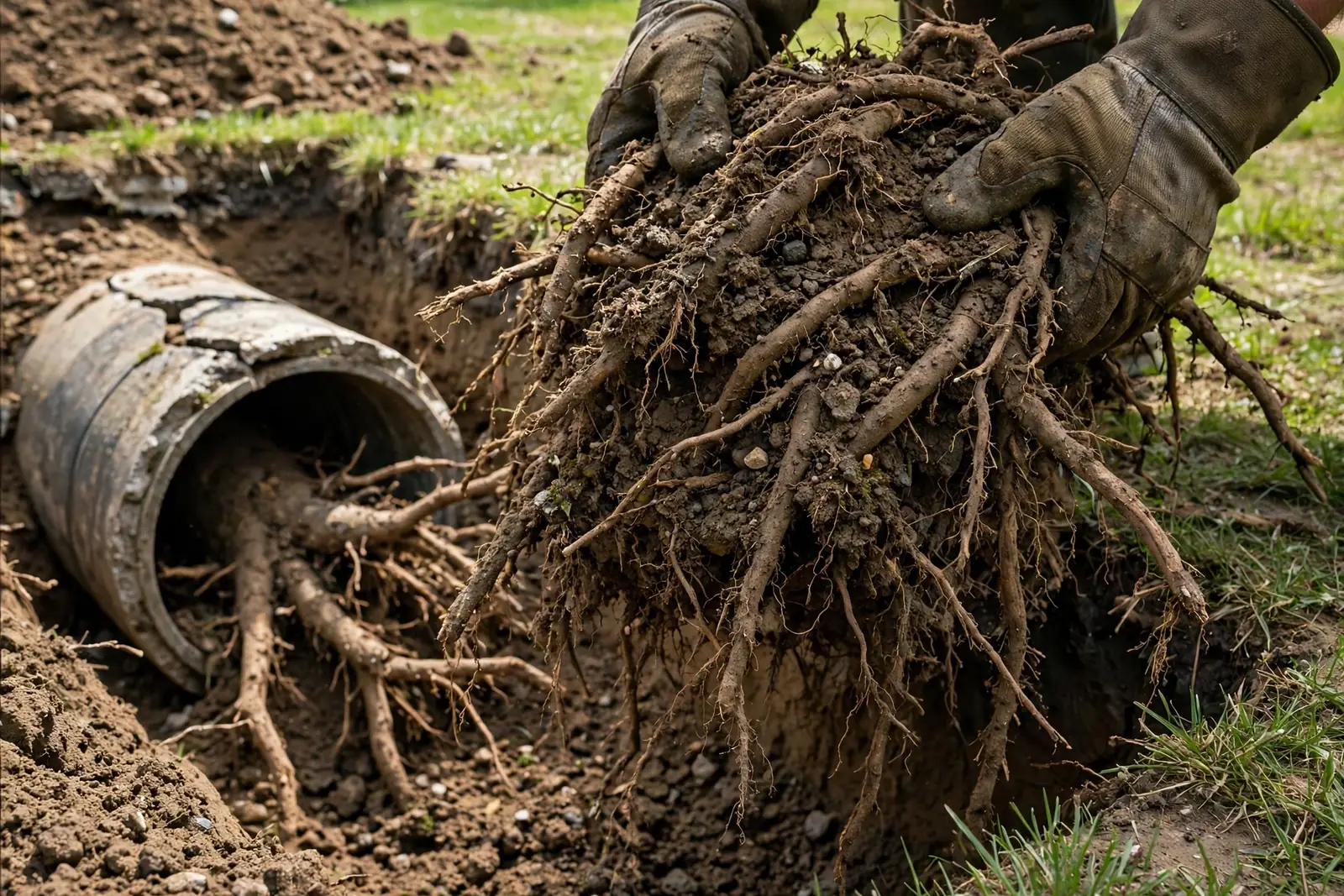
A resin liner is installed inside the old pipe and cured into a new, jointless pipe. Roots cannot enter through joints, because the lined pipe has none.
House and street connections
The new line is connected at the house and at the street main, and both connections are sealed and checked. A replacement that leaks at either end is not a replacement.
Final camera check
The finished line is camera-checked from end to end, confirming the new pipe is clear, continuous, and flowing with the correct fall toward the street.
How the work runs
Call and describe the problem
Repeat backups, slow drains, or a camera report that already shows a failed line — and whether the line runs under a driveway, a patio, or mature trees.
Camera inspection
The camera maps the line: material, depth, length, joints, and damage. This is the step that decides whether trenchless work fits at all.
Method choice
Pipe bursting fits a line that needs full replacement and has a clear path. Lining fits a line that is structurally sound enough to hold a liner. A collapsed line may need a trench for part of the run.
Locating and access pits
The line is located and marked, and the launch and receiving pits are dug — usually one near the house and one near the street main.
Bursting or lining
The bursting head pulls the new pipe through, or the liner is installed and cured. Either way, the work happens underground, between the two pits.
Connections and final check
Both ends are connected and sealed, the new line is camera-checked, and the pits are backfilled and graded.
Tools and methods used
Sewer camera with locator
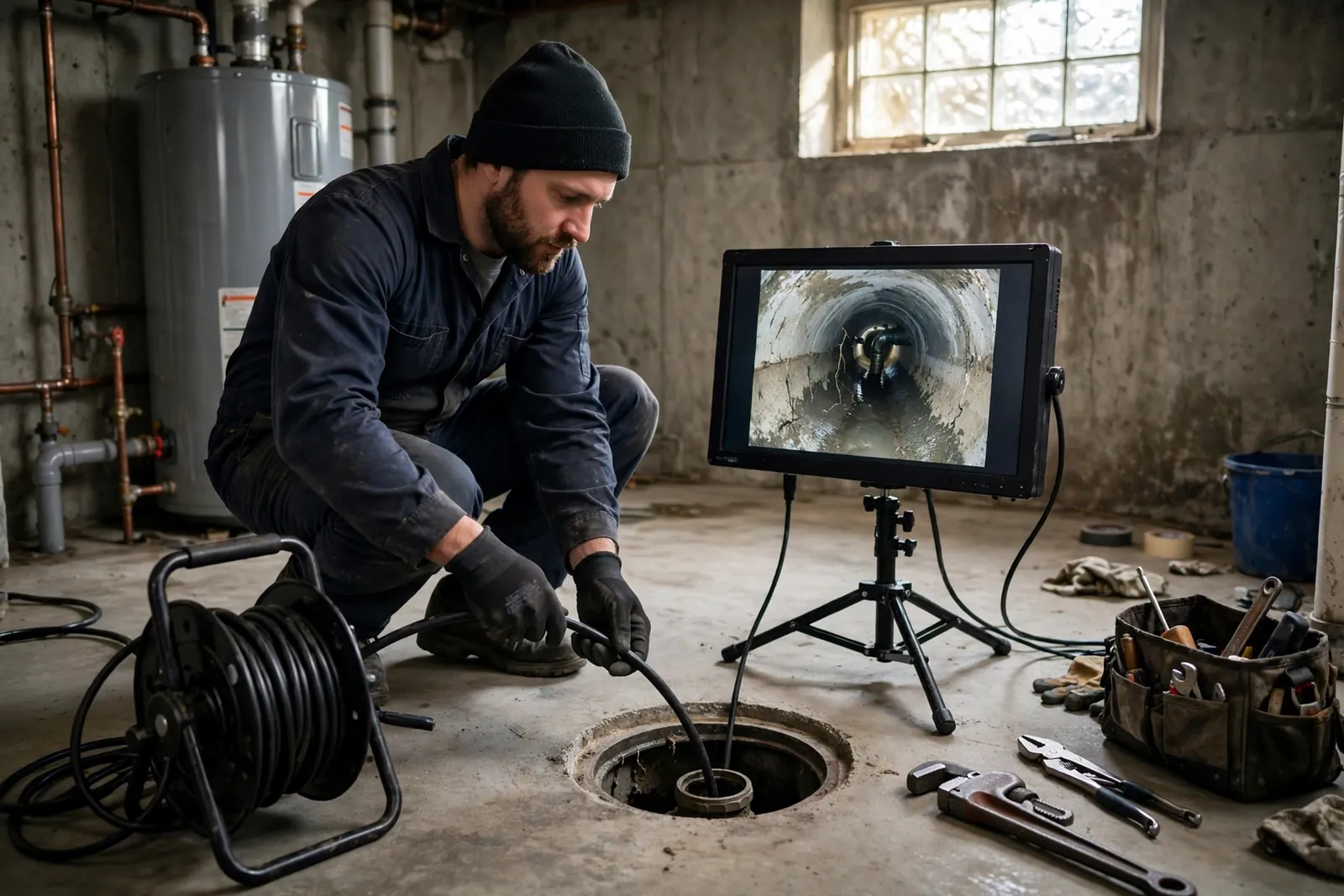
The camera shows the inside of the line, and the locator beacon marks its path and depth on the surface — the information the method choice depends on.
Pipe bursting rig
A pulling machine draws the bursting head and the new pipe through the old line. The rig sits at the receiving pit, and the head does the work underground.
CIPP inversion equipment
The liner is inverted into the old pipe with air or water pressure, then cured with hot water or steam until the resin hardens into a new pipe.
Mini excavator
A compact excavator digs the access pits in a residential yard. Two small pits are far less disruption than a trench along the whole line.
Pipe bursting vs lining: the honest comparison
Pipe bursting and lining are both called trenchless, but they are different jobs with different limits. Bursting removes the old pipe from the equation — it breaks it outward and pulls a new pipe into the space. That means the finished line is a full new pipe, and it can be the same diameter as the old one or larger. Bursting fits a line that is badly damaged, undersized, or so root-filled that a liner could not be pulled through cleanly.
Lining keeps the old pipe as a shell and builds a new pipe inside it. It fits a line that is still roughly round and continuous — cracked, leaking at joints, or root-damaged, but not collapsed. The liner has no joints, so roots have no seams to enter, and its smooth interior resists buildup. But the liner follows the shape of the old pipe, so it cannot fix a bad belly or a sharp offset, and it reduces the inside diameter slightly.
The camera inspection is what separates the two. A line with a collapse or a severe offset goes to bursting or to a trench. A line that is damaged but still holds its shape goes to lining. A line that is sound except for one bad section may need neither — a spot repair may be enough.
When trenchless is not the answer
Trenchless work is not a cure for every lateral. A line that has collapsed flat will not pass a bursting head or a liner. A line with a sharp sideways offset — where one section has shifted away from the next — will stop both methods. A line with a deep belly holds water in the low spot, and neither method corrects the fall; the low section still needs to be re-graded, which means digging.
There are also lines where trenchless work is possible but not sensible. A very short lateral, for example, may be simpler and more reliable to replace by open trench, because the digging is small anyway. A line that is shallow and runs through open lawn may be the same. The method should fit the line and the yard, not the other way around.
A camera inspection that shows any of these conditions is not bad news — it is the information that keeps a trenchless job from becoming a failed trenchless job. The crew explains what the camera found and what the options are, including a partial trench where only the bad section is dug.
When trenchless does not fit
Trenchless methods work on most laterals, but not on all of them. A line that has collapsed flat cannot be burst or lined, because there is no open path for the bursting head or the liner to follow. A line with a severe belly — a long low section where water pools — cannot be fixed by lining either, because the liner follows the shape of the old pipe and keeps the belly. In those cases the failed section has to be dug up and replaced at the correct slope.
Access matters as much as the pipe itself. Pipe bursting needs an entry pit and an exit pit, and lining needs access at one end of the run. A lateral that runs under a structure, or one with no clear access at either end, may not have room for the equipment. Shared laterals are another limit: if two homes share one line to the street, the work affects both properties, and the job has to be planned with both households.
The camera inspection is what settles the question. It shows whether the line is open enough to burst or line, whether there is a belly, and where the access points are. A crew that recommends trenchless without a camera inspection is guessing. Ask to see the footage and the findings before the method is chosen — the inspection is the part of the job that keeps the method honest.
A failed lateral under a finished yard
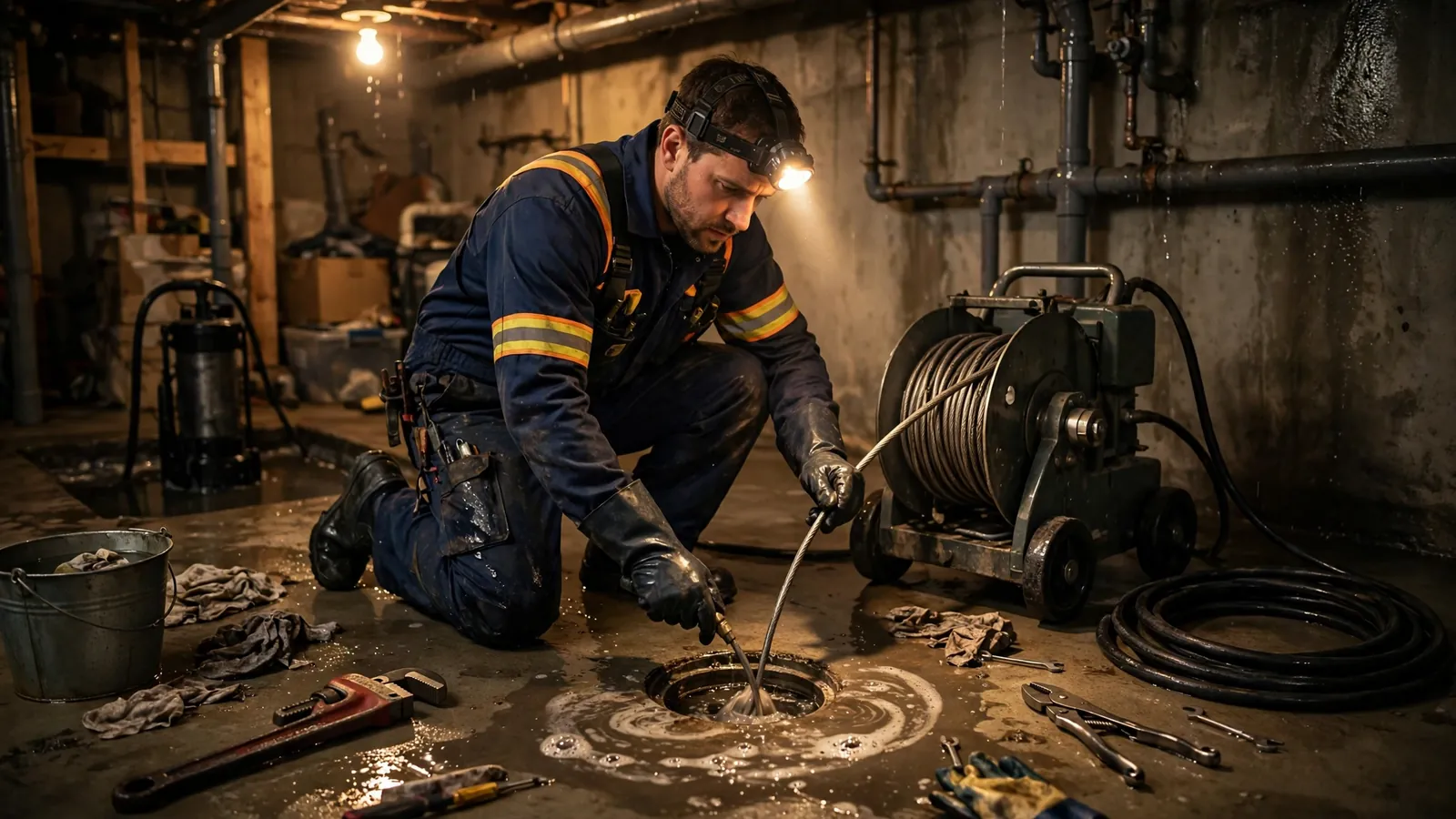
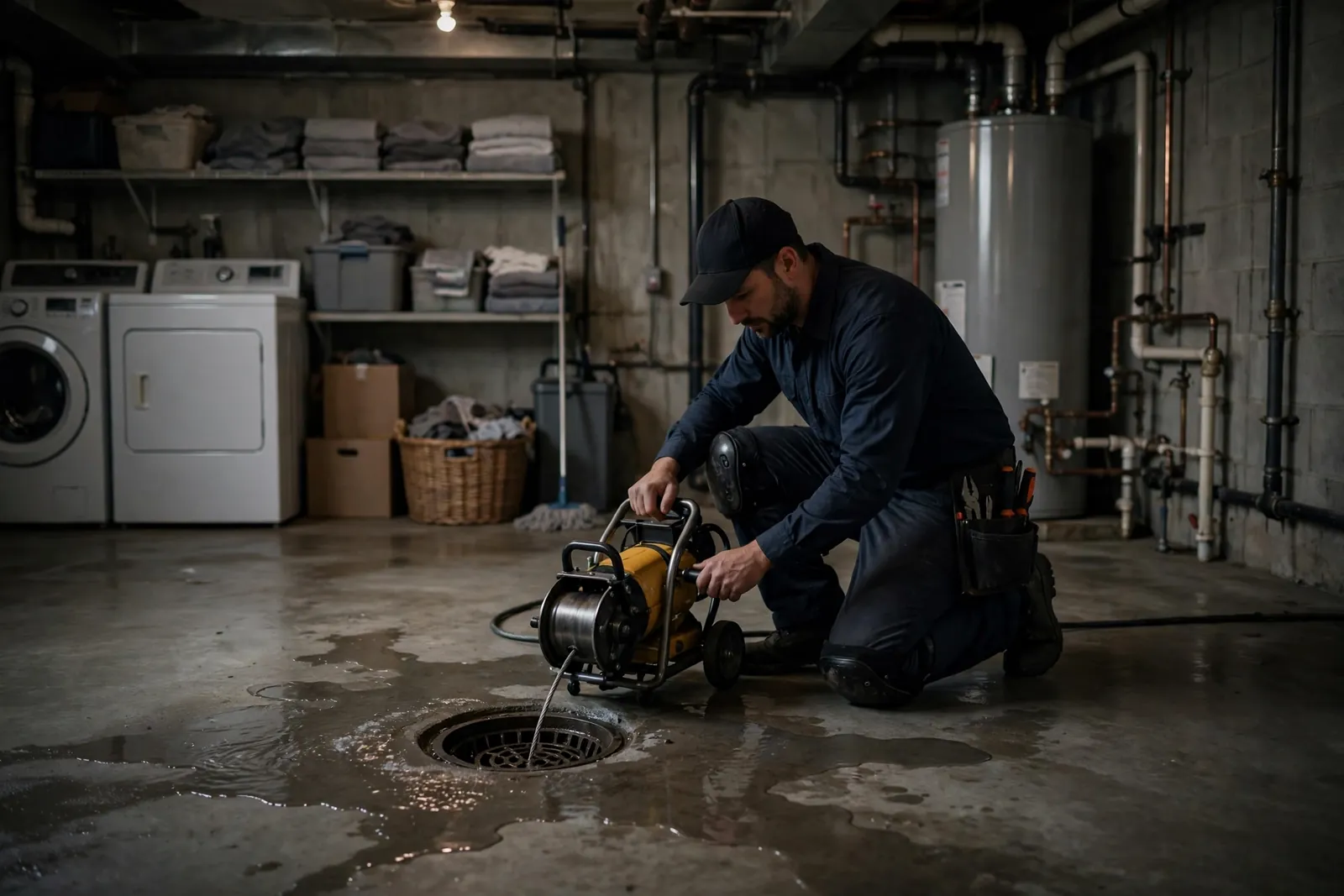
A lateral that keeps backing up will not heal — the water keeps coming back through the lowest drain in the house.
A new line, with the yard still standing
The work is checked with a camera, not a look at the surface — the new line is seen end to end before the job is called done.
Problems trenchless replacement solves
- A clay tile lateral with roots at many joints, where cleaning only buys months.
- A cast iron line that has corroded and narrowed along its length.
- A lateral that runs under a driveway or patio, where a trench would mean demolition.
- Repeat backups from a line that is cracked in several places.
- A line with separated joints that let soil and roots in.
- A replacement job where the homeowner wants the surface left intact.
Signs trenchless replacement may fit your line
- The lateral runs under a driveway, a patio, a walkway, or mature trees you want to keep.
- A camera inspection shows the pipe is cracked, root-filled, or corroded — but not collapsed flat.
- The line has needed cleaning more than once, and the problem keeps returning.
- The home is a 1950s or 1960s Parma home with its original clay tile lateral.
- You want the line replaced without a trench across the whole yard.
- The line is long, and the cost of restoring a full trench would be a job in itself.
- The connection at the street main is sound, and the damage is in the run between the ends.
- A previous camera report already shows the length and depth of the line.
Related problems
Tree Root Intrusion · Cracked Sewer Pipe · Collapsed Sewer Line
Industries that use this service
Single-Family Homes · Rental Properties · Commercial Properties · All industries →
Frequently asked questions
Questions people ask about trenchless sewer line replacement, answered plainly.
No. The line has to be passable — a bursting head or a liner has to get through it. A line that has collapsed flat, or one with a sharp sideways offset, may not allow it. The camera inspection is what decides, and a line that cannot be done trenchless may still need a trench for part or all of the run.
They solve different problems. Bursting replaces the pipe entirely and can go the same size or larger, so it fits a line that is badly damaged or undersized. Lining renews the inside of a pipe that is still structurally sound, and it leaves a smooth, jointless pipe. The camera findings decide which one fits your line.
Yes, slightly — the liner sits inside the old pipe, so the inside diameter is a little smaller. In practice the smooth interior of the liner often flows as well as the rough, scaled interior of the old pipe. The crew checks the diameter and the fall before recommending lining.
Most residential trenchless jobs are measured in days. The camera inspection and the locate come first, then the pits are dug and the bursting or lining work follows. A long or deep line, or a line under a driveway, takes longer than a short, shallow one.
That is the point of the method — the work happens between two small pits, so the surface above the line is not opened. If the line runs under a driveway, the pits are placed on either side of it. The pits themselves are backfilled and graded when the work is done.
A burst-in new pipe is a new pipe — the same material used in open-trench replacement. A cured liner is a new pipe inside the old one, with no joints for roots to enter. Either way, the finished line is checked on camera before the job is called done.
It depends on the belly. A mild belly can sometimes be lined, but a deep belly is a low spot in the line, and a liner follows the shape of the old pipe — it does not correct the fall. A bad belly usually needs a trench to re-grade that section.
Work that connects to the street main and work in the public right-of-way follows the city's rules, and permits are part of that process. The crew handling the job deals with the permit side before work starts.
Sewer line trouble in your Parma home?
Call Now to reach a local sewer professional. Describe the problem, where it is, and what the line has been doing.
Call now for sewer line help
Tap Call Now to reach a local sewer professional. Tell them where the problem is, what the line has been doing, and whether wastewater is coming into the home.
Hours: Mon–Fri 7:00 AM–10:00 PM ET · Sat 8:00 AM–10:00 PM ET · Sun 7:00 AM–9:00 PM ET
Before you call
- Stop using water if the line is backing up.
- Keep people and pets away from any wastewater.
- Note which drains are slow, and which one backs up first.
- Note whether the problem happens in heavy rain, or all the time.
- Have the age of the home ready, if you know it.