Cured-in-Place Pipe Lining Parma, OH
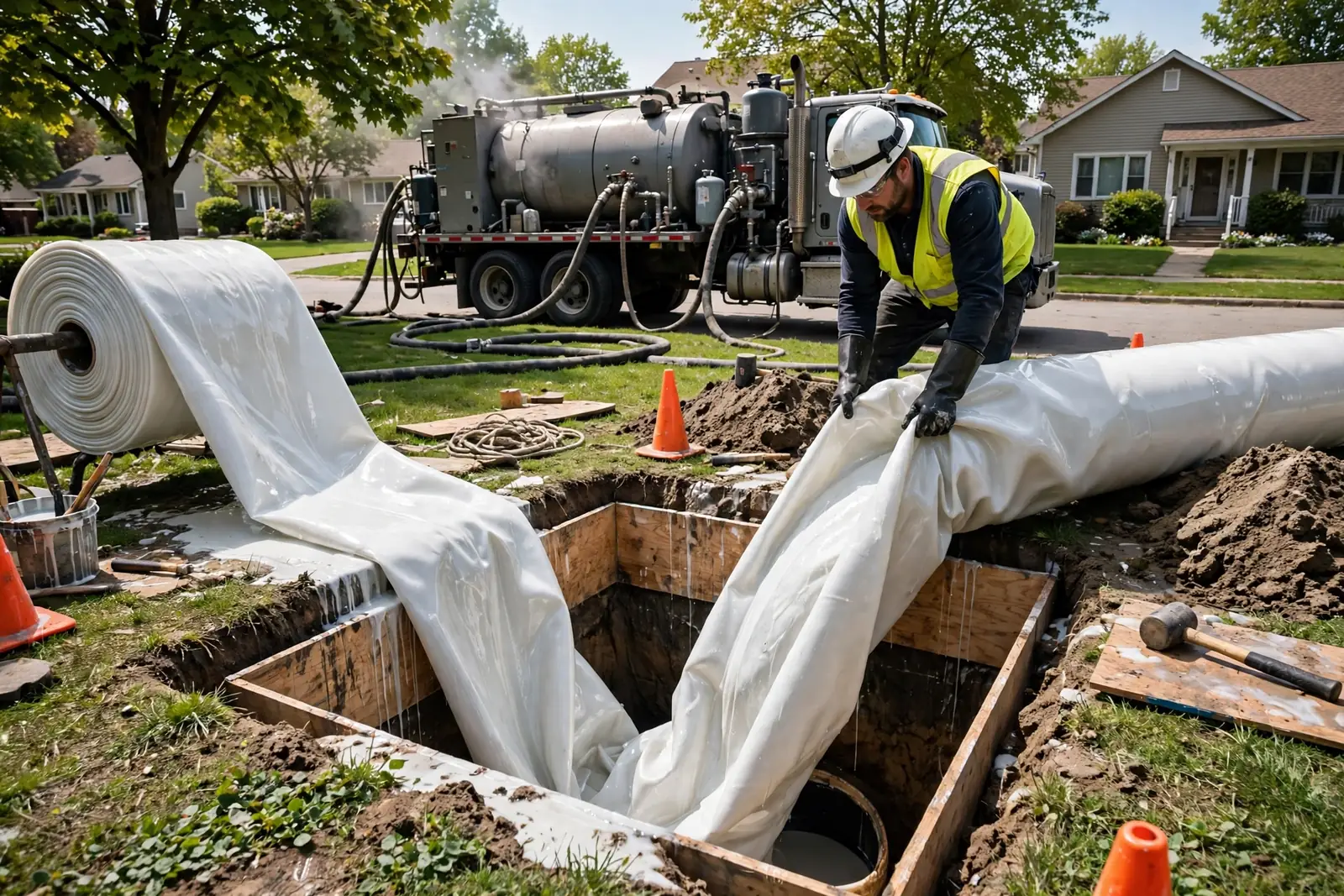
Cured-in-place lining builds a new pipe inside the old one — a resin liner, cured hard, with no joints for roots to enter and no trench across the yard.
Need help with your sewer line?
Call Now to reach a local sewer professional. Describe the problem, where it is, and what the line has been doing.
Hours: Mon–Fri 7:00 AM–10:00 PM ET · Sat 8:00 AM–10:00 PM ET · Sun 7:00 AM–9:00 PM ET
What this service does
Cured-in-place pipe lining — CIPP — is the trenchless method that renews a sewer line from the inside. A flexible liner, soaked in resin, is inserted into the old pipe and cured in place with hot water or steam. The resin hardens, and the liner becomes a new pipe inside the old one: smooth, jointless, and sealed.
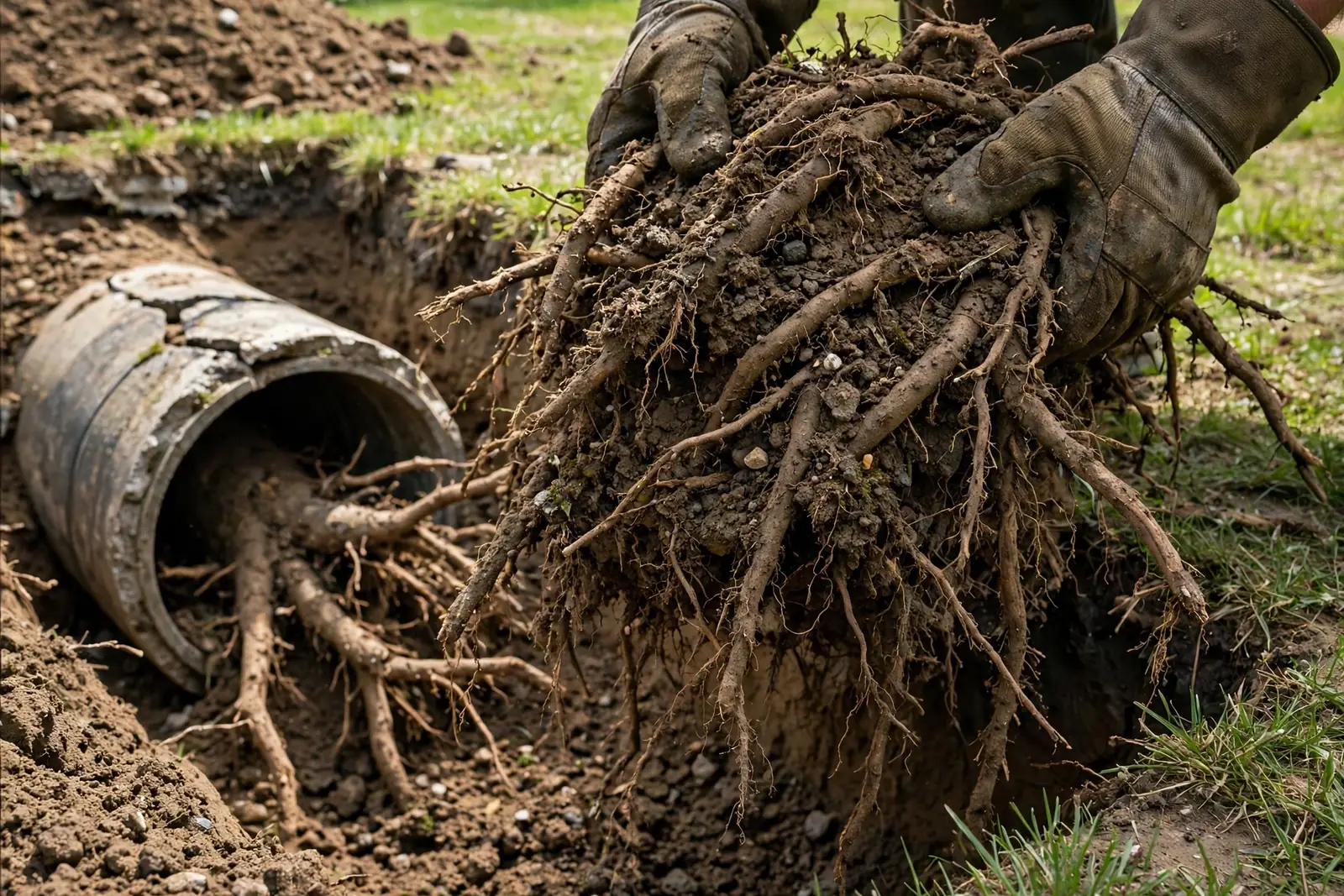
The method fits a specific kind of damage. The old pipe has to be roughly round and continuous — cracked, leaking at the joints, or root-damaged, but not collapsed. The liner follows the shape of the old pipe, so it seals the cracks and joints it covers, and it leaves a pipe with no seams at all. Roots cannot enter through joints, because the lined pipe has none.
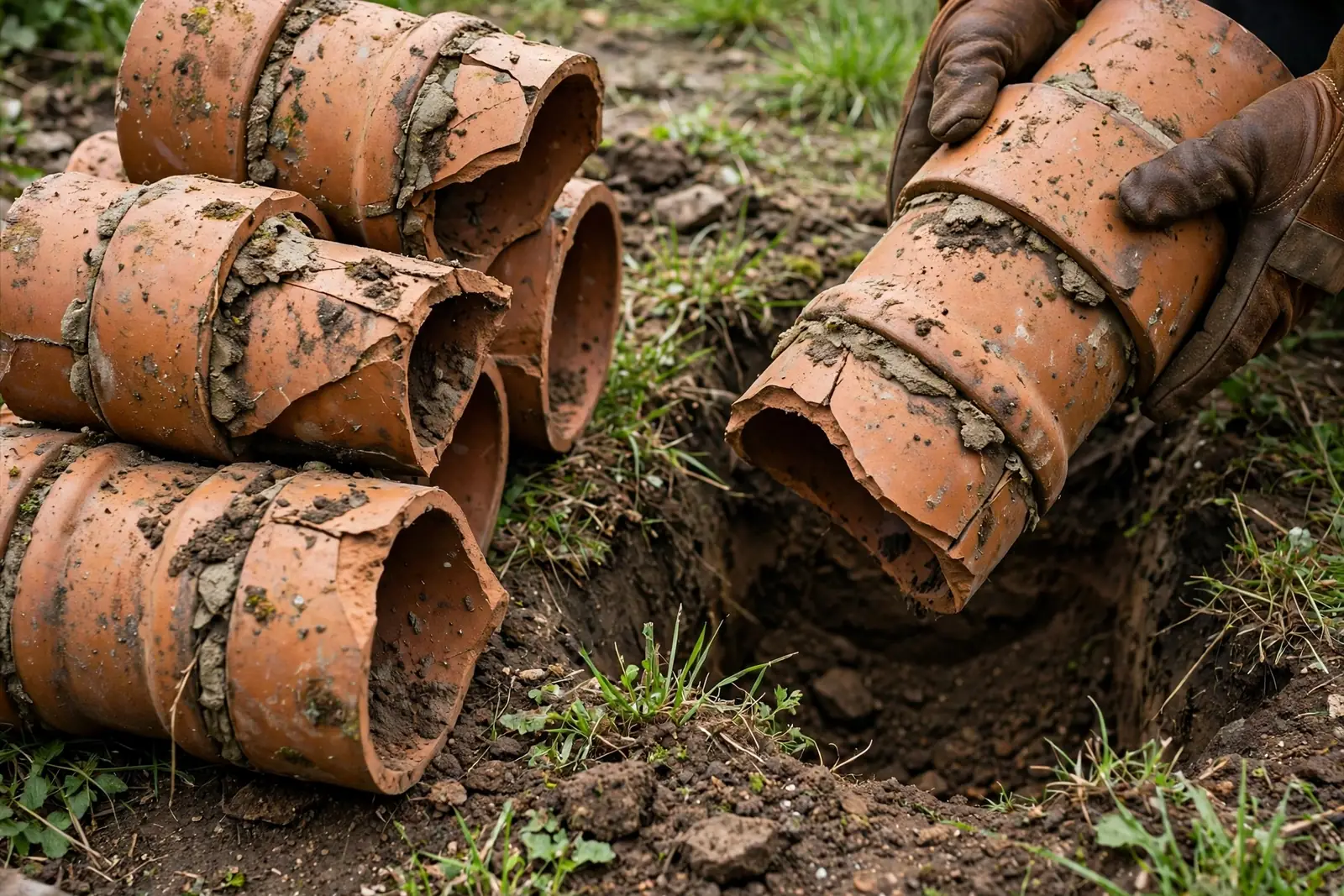
Lining suits many Parma laterals. The city's clay tile lines fail at the joints — mortar crumbles, joints open, roots enter — while the clay sections themselves often stay round. A liner seals every joint at once, which is exactly the repair a joint-failed clay line needs. But lining cannot fix a collapse, a deep belly, or a sharp offset, and the camera inspection is what decides whether it fits.
Before you call
- Stop using water if the line is backing up.
- Keep people and pets away from any wastewater.
- Note which drains are slow, and which one backs up first.
- Note whether the problem happens in heavy rain, or all the time.
- Have the age of the home ready, if you know it.
How cured-in-place lining works
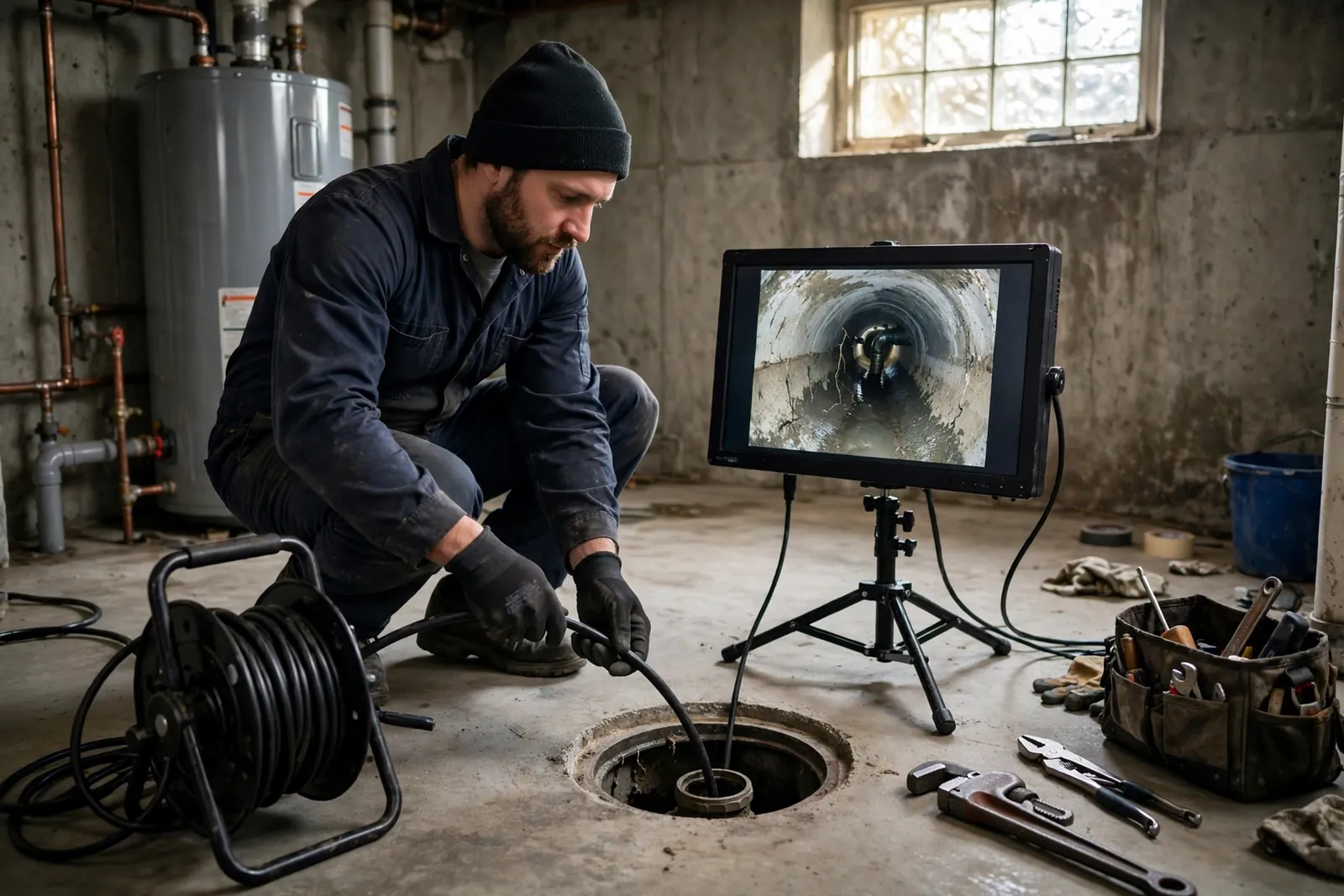
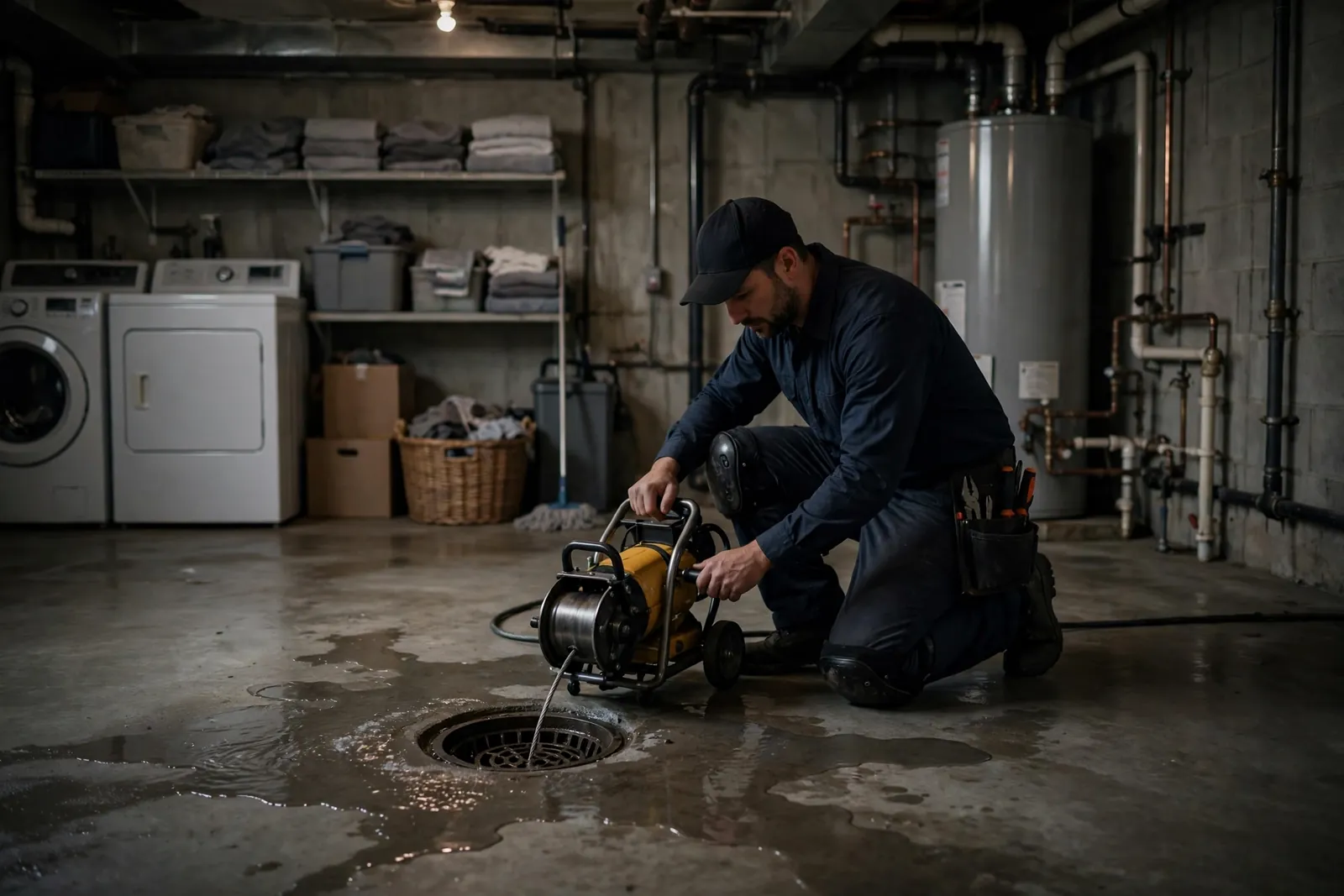
The job starts with a camera inspection and a cleaning. The camera shows the pipe material, the damage, and whether the line is round and continuous enough to hold a liner. Then the line is cleaned — usually with a hydro jetter — so the liner bonds to the pipe wall rather than to scale and debris. A liner installed over debris does not cure properly.
Next, the liner is prepared. It is cut to the length of the run, soaked in resin, and inserted into the old pipe — usually inverted with air or water pressure, so it turns inside out as it travels and presses against the pipe wall. The liner runs from one access point to the other, covering the full damaged section.
Then the liner is cured. Hot water or steam is circulated through it until the resin hardens, which usually takes hours. Once cured, the liner is a rigid, jointless pipe inside the old one. The ends are trimmed, the connections are sealed, and the finished line is camera-checked to confirm the liner is continuous and the line flows.
What the service includes
Camera inspection and cleaning
The line is camera-inspected, then cleaned with a hydro jetter, so the liner bonds to the pipe wall and not to scale or debris.
Liner measurement and preparation
The liner is cut to the length of the run and soaked in resin, sized to the diameter of the old pipe.
Liner installation
The liner is inverted or pulled into the old pipe, pressing against the wall along the full damaged section.
Curing
Hot water or steam cures the resin until the liner hardens into a rigid, jointless pipe inside the old one.
Ends trimmed and sealed
The liner ends are trimmed at the house connection and the street connection, and both are sealed.
Final camera check
The finished line is camera-checked end to end, confirming the liner is continuous, the line is clear, and the flow is correct.
How the work runs
Call and describe the problem
Repeat backups, root problems, or a camera report — and whether the line is clay tile with open joints.
Camera inspection
The camera maps the line and confirms it is round and continuous enough to hold a liner — the step that decides whether lining fits.
Clean the line
The line is jetted clean, so the liner bonds to the pipe wall rather than to scale and debris.
Install the liner
The resin-soaked liner is inverted or pulled into the old pipe, covering the damaged section from end to end.
Cure the liner
Hot water or steam cures the resin until the liner hardens into a new, jointless pipe inside the old one.
Trim, seal, and check
The ends are trimmed and sealed, and the finished line is camera-checked before the job is called done.
Tools and methods used
Sewer camera with locator
The camera confirms the line can be lined, and checks the finished liner afterwards. The locator marks the line's path and depth.
Hydro jetter
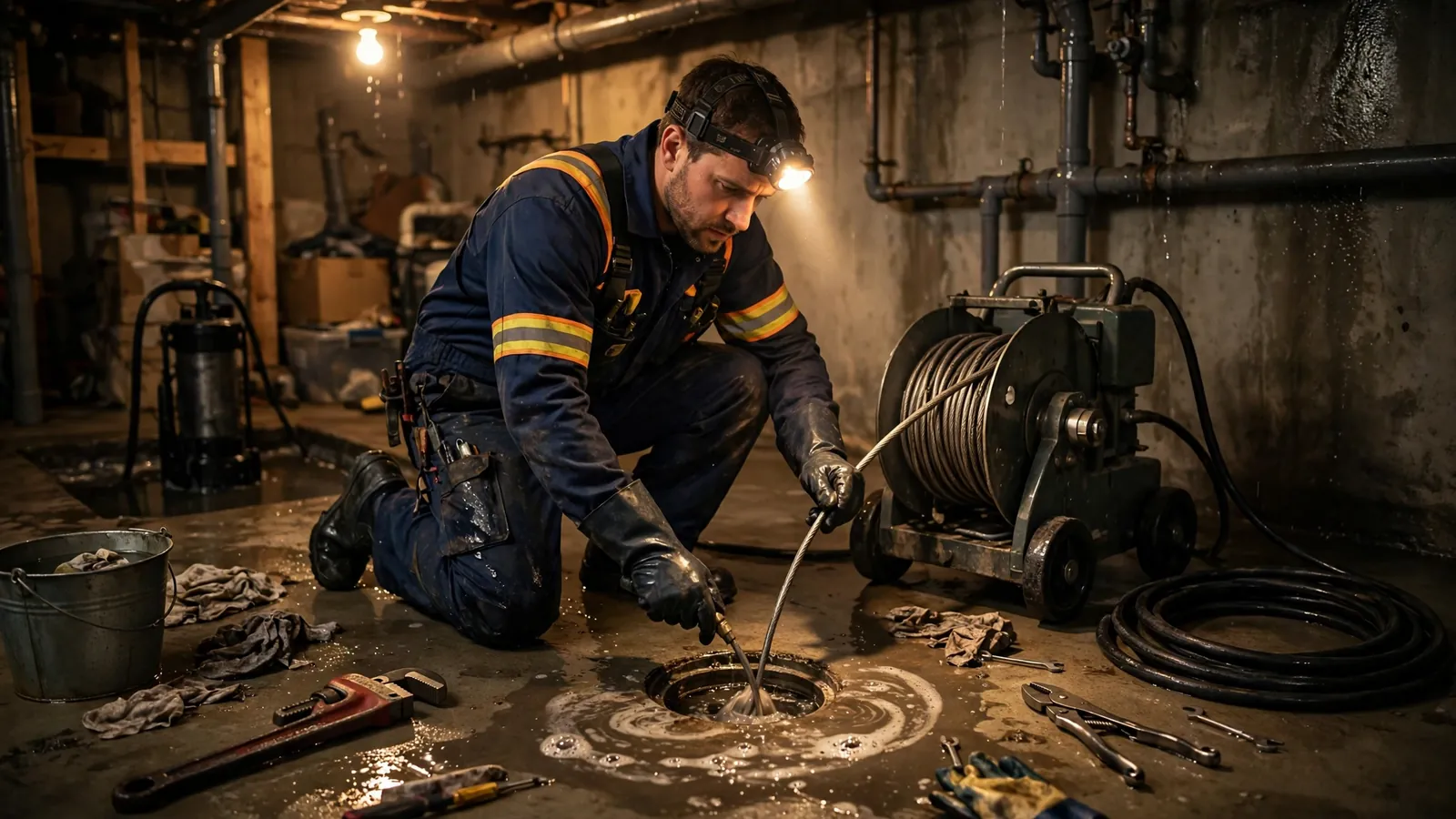
High-pressure water cleans the line before lining, so the resin bonds to the pipe wall.
CIPP inversion equipment
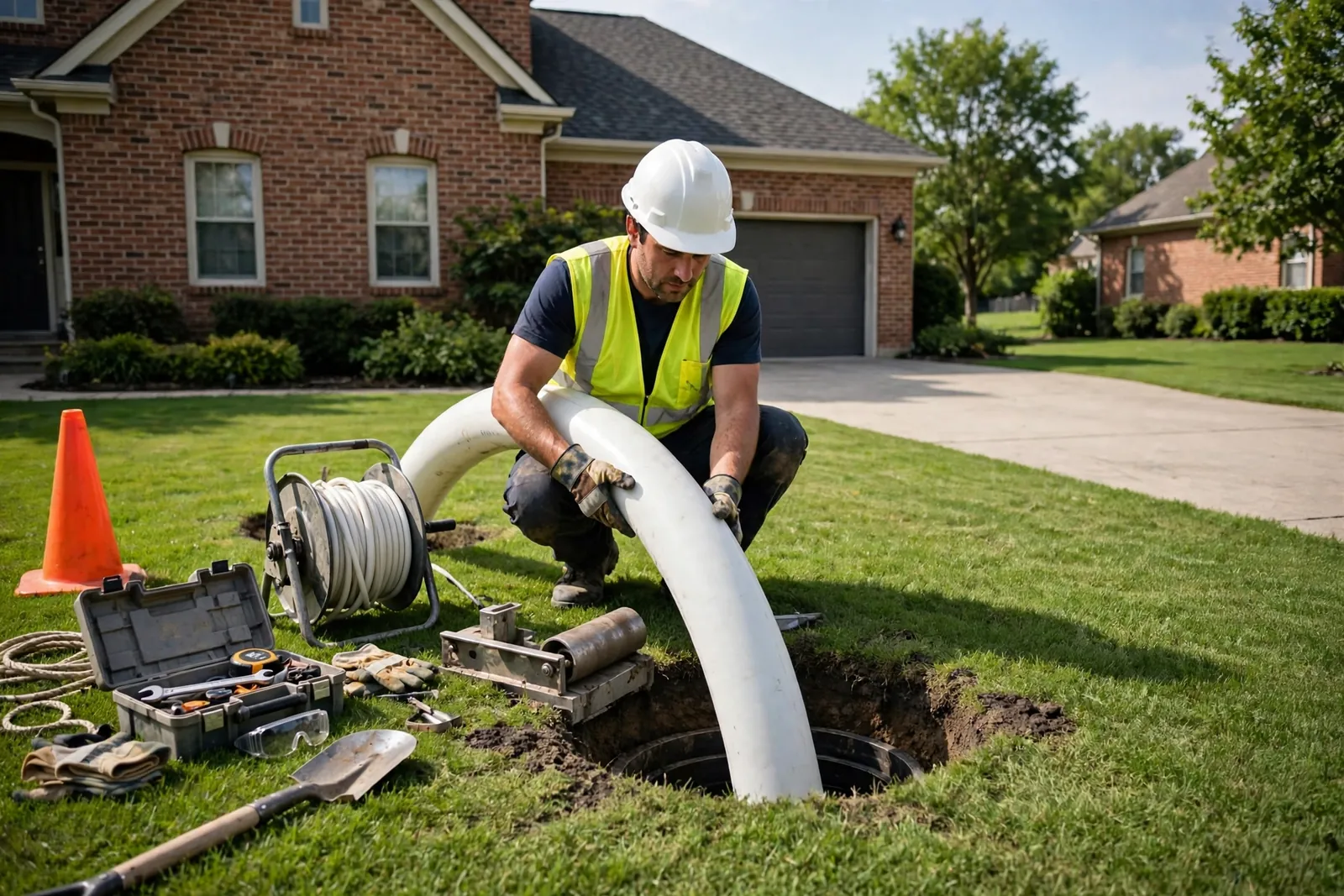
The liner is inverted into the old pipe with air or water pressure, pressing it against the wall along the full run.
Curing unit
Hot water or steam is circulated through the liner until the resin hardens into a rigid new pipe.
Lining vs bursting: the honest comparison
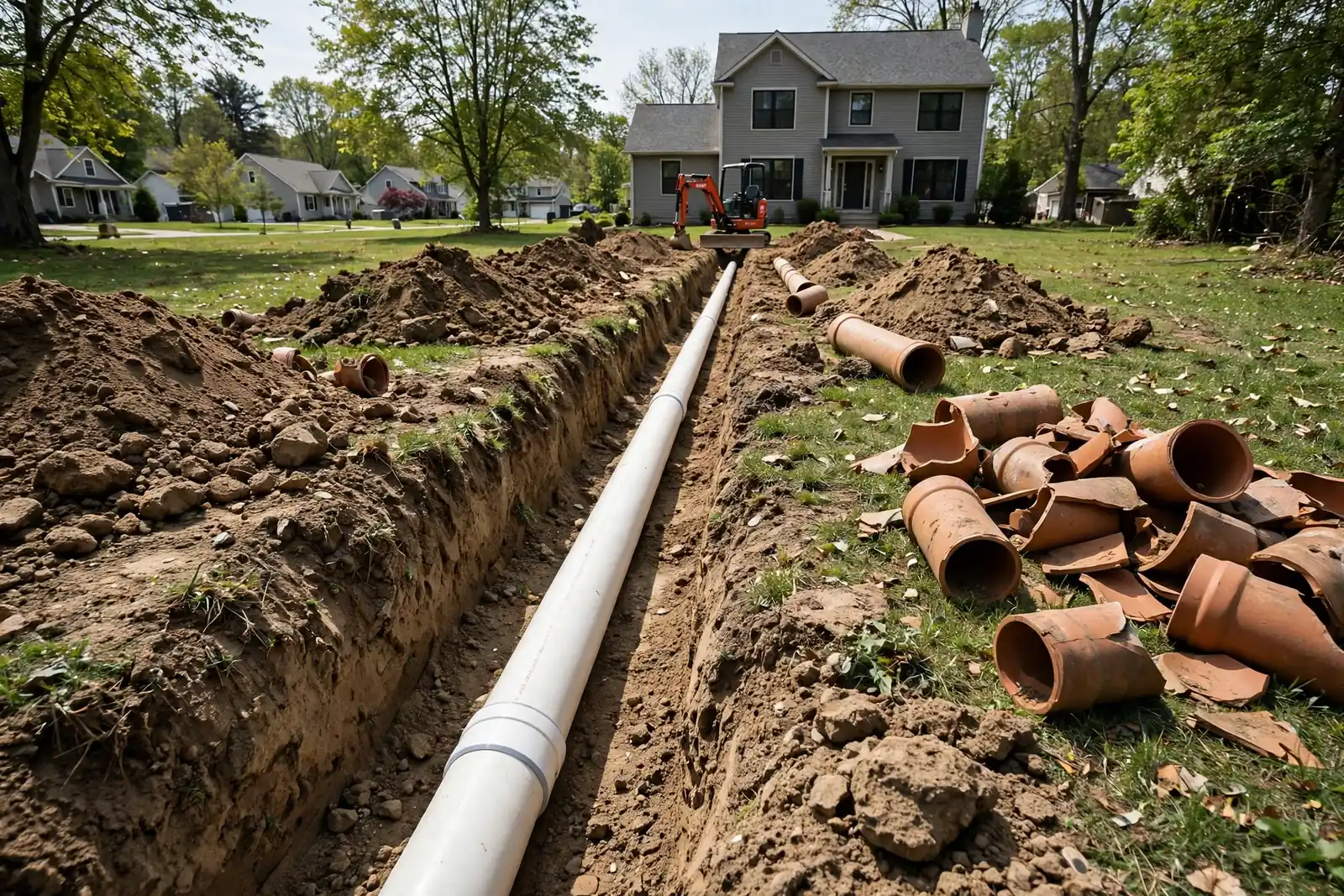
Lining and bursting are both trenchless, but they are different jobs. Lining renews the inside of a pipe that is still round and continuous — it seals the cracks and joints, and leaves a smooth, jointless pipe. It fits a clay line with open joints, or a cast iron line with a rough interior, where the pipe still holds its shape.
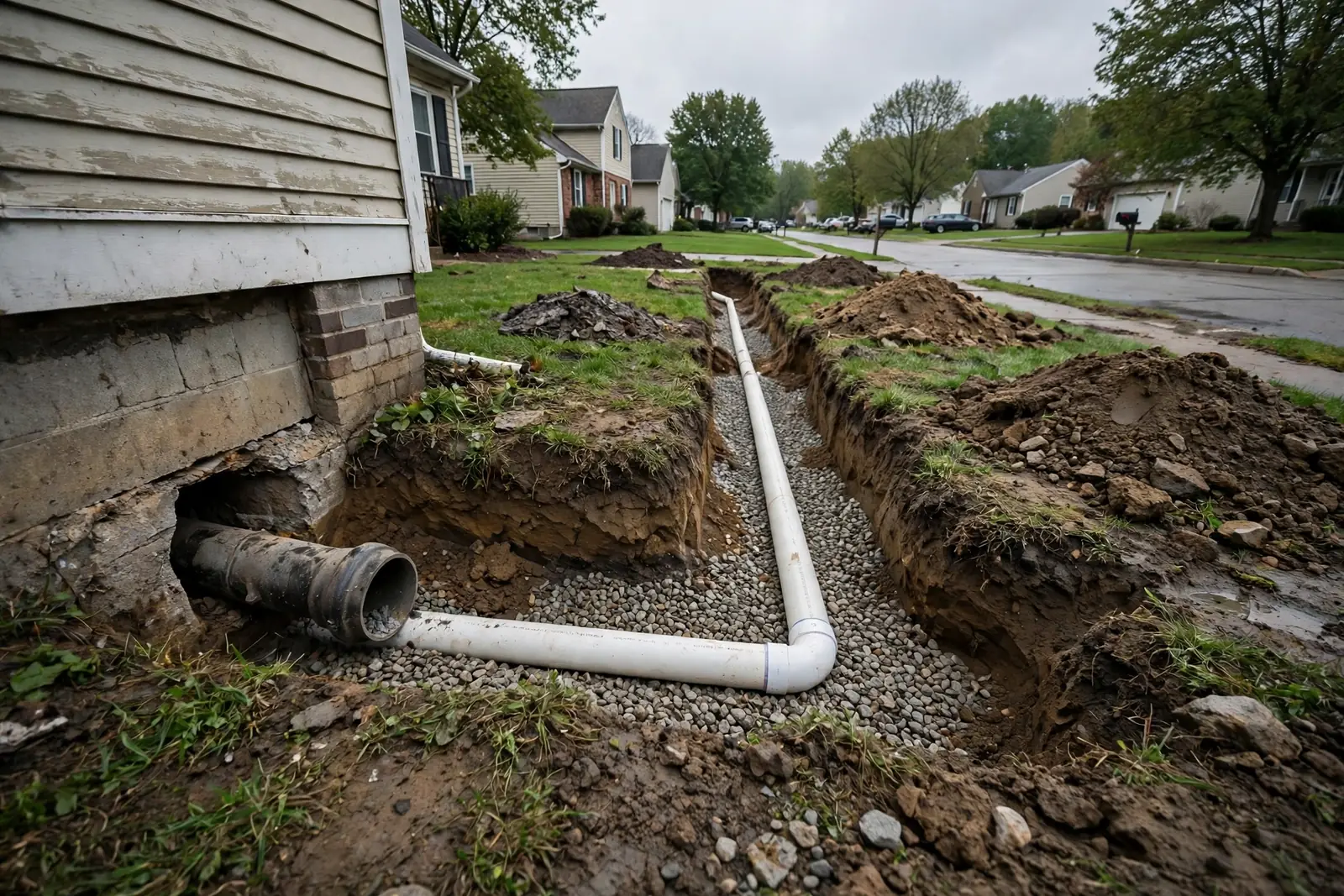
Bursting replaces the pipe entirely. It fits a line that is badly damaged, undersized, or so root-filled that a liner could not be pulled through. Bursting can also go larger than the old pipe, which lining cannot do.
The camera inspection decides between them. A line with a collapse or a severe offset goes to bursting or to a trench. A line that is damaged but still holds its shape goes to lining. The crew explains what the camera found and which method fits, before any work starts.
What lining cannot do
Lining is a renewal, not a reconstruction. It cannot fix a collapse — the liner needs a pipe to press against, and a collapsed section has no shape to follow. It cannot fix a deep belly, because the liner follows the fall of the old pipe. It cannot fix a sharp offset, where one section has shifted sideways from the next.
Lining also needs a clean pipe. The liner bonds to the wall, so the line has to be jetted clean first. A line that cannot be cleaned — because it is full of scale, debris, or a hardened blockage — cannot be lined until the cleaning succeeds.
A camera inspection that shows any of these conditions is not bad news. It is the information that keeps a lining job from becoming a failed lining job. The crew explains what the camera found and what the options are, including bursting or a trench where only part of the line needs digging.
How a liner is cured and checked
A cured-in-place liner starts as a flexible tube soaked in resin. The crew pulls or inverts it into the old pipe, then inflates it so it presses against the inside wall of the host pipe. Then the resin is cured — hardened — with hot water, steam, or ultraviolet light, depending on the system. Curing turns the soft tube into a rigid pipe inside the old one, with no joints along its length.
The cure has to be complete before the line goes back in service. An under-cured liner stays soft in places and can wrinkle or sag, which narrows the bore and catches debris. The crew checks the cure by temperature and time, and by a camera inspection after the liner has cooled. The post-liner camera is the record: it shows the liner seated against the host pipe, the ends trimmed at the connections, and the full run clear. A liner that is cured in sections, rather than all at once, is checked section by section, so no part of the run is left soft. The cure record — the method used, the temperature reached, and the time held — goes with the camera footage into the house records, so a future crew knows exactly what was installed and how it was set.
After lining, the lateral connections inside the house have to be reopened. The liner covers the branch connections where sinks, toilets, and floor drains join the lateral, and the crew cuts each one open from inside the line with a robotic cutter, then checks each opening on camera. A connection that is not reopened leaves a fixture with nowhere to drain. Ask to see the camera footage of the reopened connections before the job is called done.
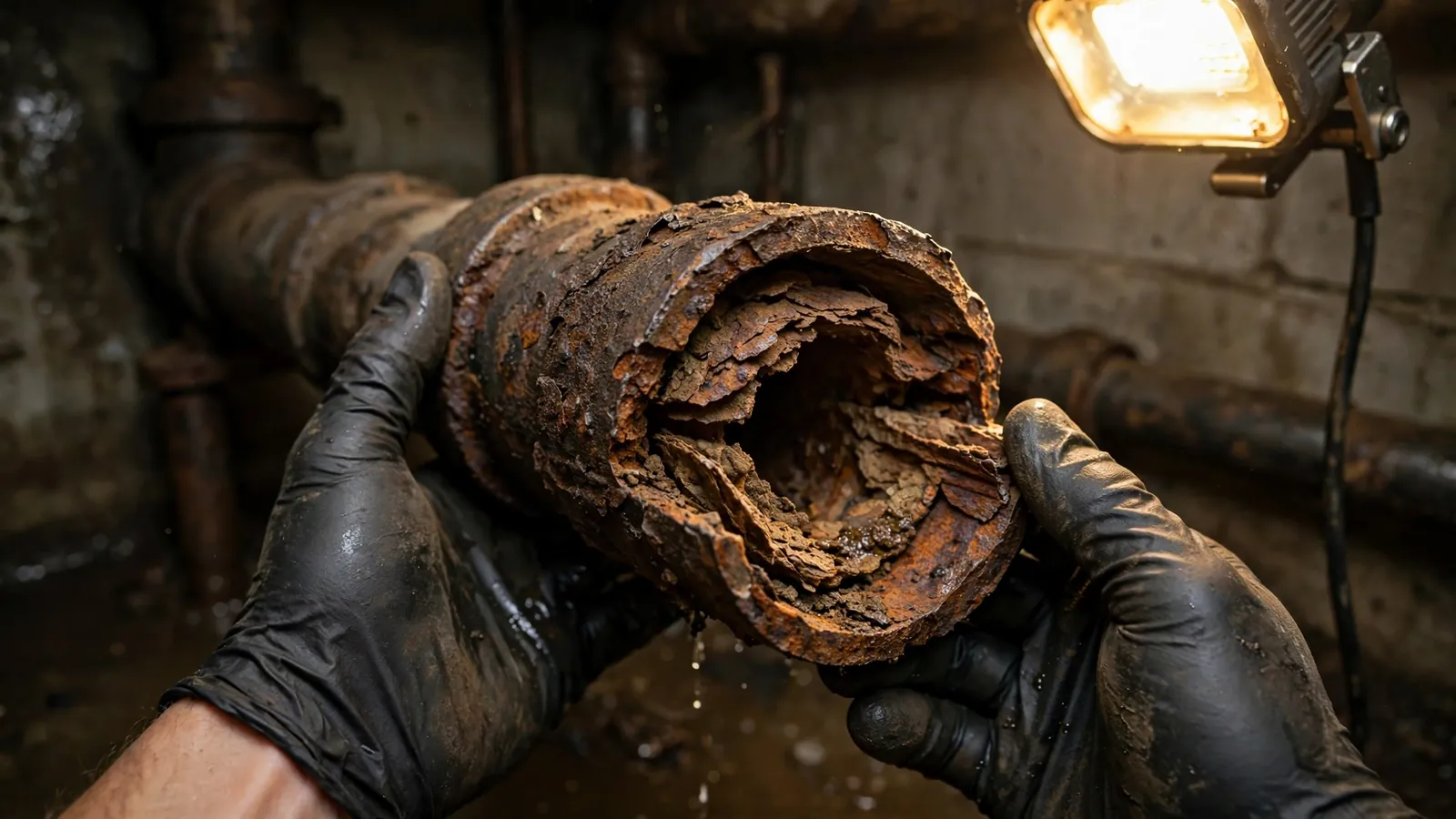
A clay line with open joints
A lateral that keeps backing up will not heal — the water keeps coming back through the lowest drain in the house.
A smooth jointless pipe inside it
The work is checked with a camera, not a look at the surface — the new line is seen end to end before the job is called done.
Problems lining solves
- Clay tile joints that have opened and let roots in along the run.
- A line that leaks at many joints, letting soil and water in.
- A cast iron line with a rough, scaled interior that catches waste.
- Repeat root blockages that return after every cleaning.
- A line that needs renewal without a trench across the yard.
- A damaged lateral under a driveway or patio that cannot be dug up.
Signs lining may fit your line
- A camera inspection shows the pipe is cracked or leaking at the joints, but still round.
- The line is clay tile with roots at many joints, and the sections themselves are intact.
- The line has been cleaned for roots more than once, and the roots keep coming back.
- The lateral runs under a driveway, a patio, or mature trees.
- The homeowner wants the line renewed without a trench across the yard.
- The line is damaged along its length, but not collapsed.
- A spot repair would fix one joint while the next joint fails soon after.
- The line needs a jointless interior that roots cannot enter.
Related problems
Tree Root Intrusion · Cracked Sewer Pipe · Bellied Sewer Line
Industries that use this service
Single-Family Homes · Rental Properties · Commercial Properties · All industries →
Frequently asked questions
Questions people ask about cured-in-place pipe lining, answered plainly.
No. The old pipe has to be roughly round and continuous. A collapsed section, a deep belly, or a sharp offset cannot be lined — the liner follows the shape of the old pipe, so it cannot correct those defects. The camera inspection decides.
Yes, slightly — the liner sits inside the old pipe, so the inside diameter is a little smaller. In practice the smooth interior of the liner often flows as well as the rough, scaled interior of the old pipe. The crew checks the diameter and the fall before recommending lining.
A cured liner is a new pipe inside the old one, with no joints for roots to enter. The finished line is checked on camera before the job is called done, and the liner is a long-term renewal of the line rather than a temporary patch.
It depends on the belly. A mild belly can sometimes be lined, but a deep belly is a low spot in the line, and the liner follows the shape of the old pipe — it does not correct the fall. A bad belly usually needs a trench to re-grade that section.
Most residential lining jobs are measured in days, including the inspection, the cleaning, the installation, and the curing time. The camera inspection and the locate give the crew the information needed to plan the schedule.
Water use in the house is paused while the liner is installed and cured, because the line has to stay dry for the resin to cure. The crew explains the timing before work starts, so the household can plan around it.
Yes, where the cast iron is still round and continuous. The liner gives the line a smooth interior that the corroded iron no longer has. A collapsed or badly offset cast iron section cannot be lined.
Work that connects to the street main and work in the public right-of-way follows the city's rules, and permits are part of that process. The crew handling the job deals with the permit side before work starts.
Sewer line trouble in your Parma home?
Call Now to reach a local sewer professional. Describe the problem, where it is, and what the line has been doing.
Call now for sewer line help
Tap Call Now to reach a local sewer professional. Tell them where the problem is, what the line has been doing, and whether wastewater is coming into the home.
Hours: Mon–Fri 7:00 AM–10:00 PM ET · Sat 8:00 AM–10:00 PM ET · Sun 7:00 AM–9:00 PM ET
Before you call
- Stop using water if the line is backing up.
- Keep people and pets away from any wastewater.
- Note which drains are slow, and which one backs up first.
- Note whether the problem happens in heavy rain, or all the time.
- Have the age of the home ready, if you know it.