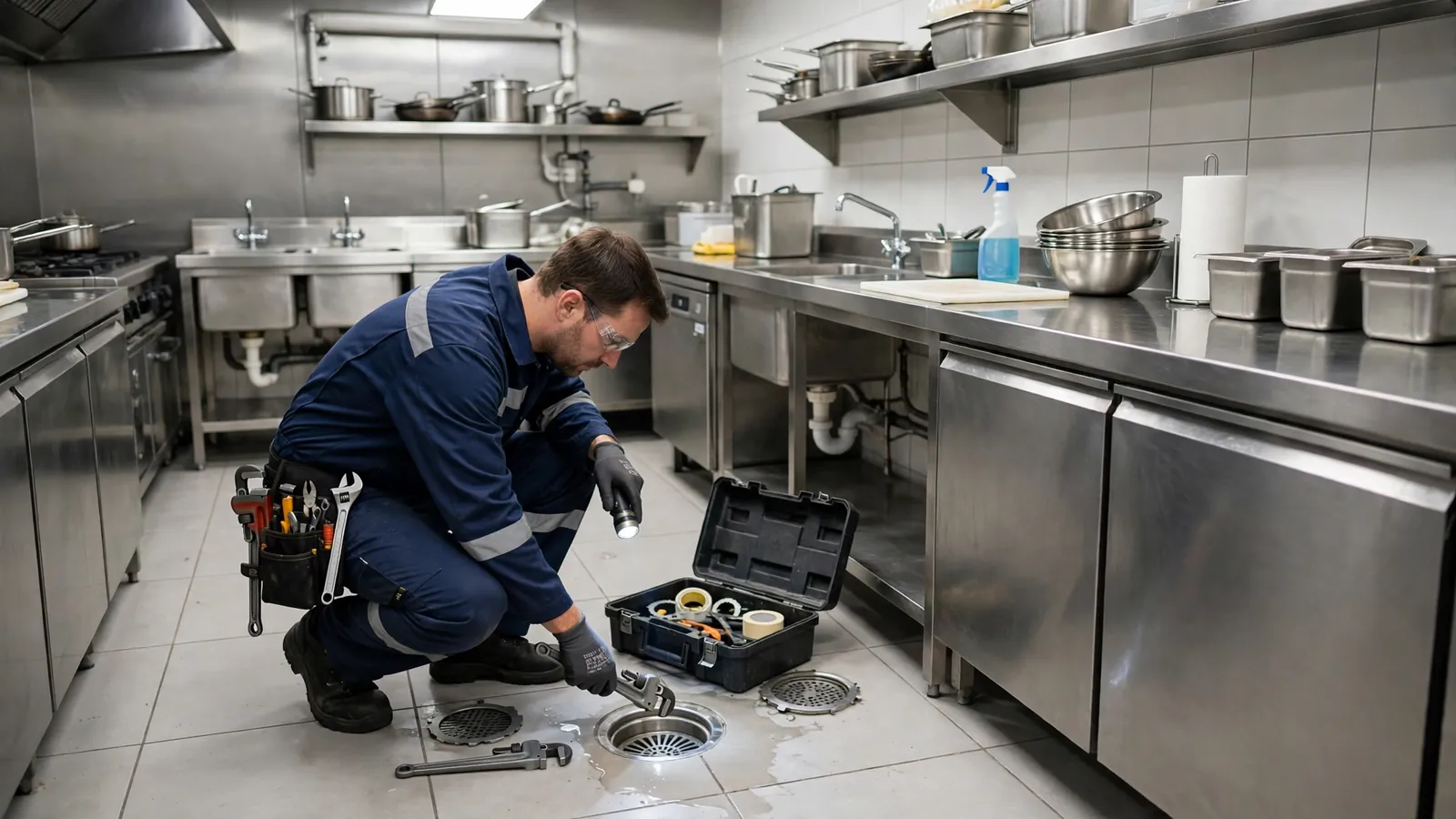
Sewer Line Replacement for Restaurants in Parma, OH
A restaurant's sewer line carries kitchen water, grease, and food waste — and a backup in a kitchen is a problem that closes the dining room.
Need help with your sewer line?
Call Now to reach a local sewer professional. Describe the problem, where it is, and what the line has been doing.
Hours: Mon–Fri 7:00 AM–10:00 PM ET · Sat 8:00 AM–10:00 PM ET · Sun 7:00 AM–9:00 PM ET
How a restaurant lateral differs
A restaurant lateral carries more than a home's lateral does: kitchen water, food waste, and grease, in larger volumes and at higher temperatures, all day long. The kitchen has floor drains, a dish machine, prep sinks, and a mop sink, and all of them drain to the same lateral. The line is worked harder than a residential line, and it fails faster when it is not maintained.
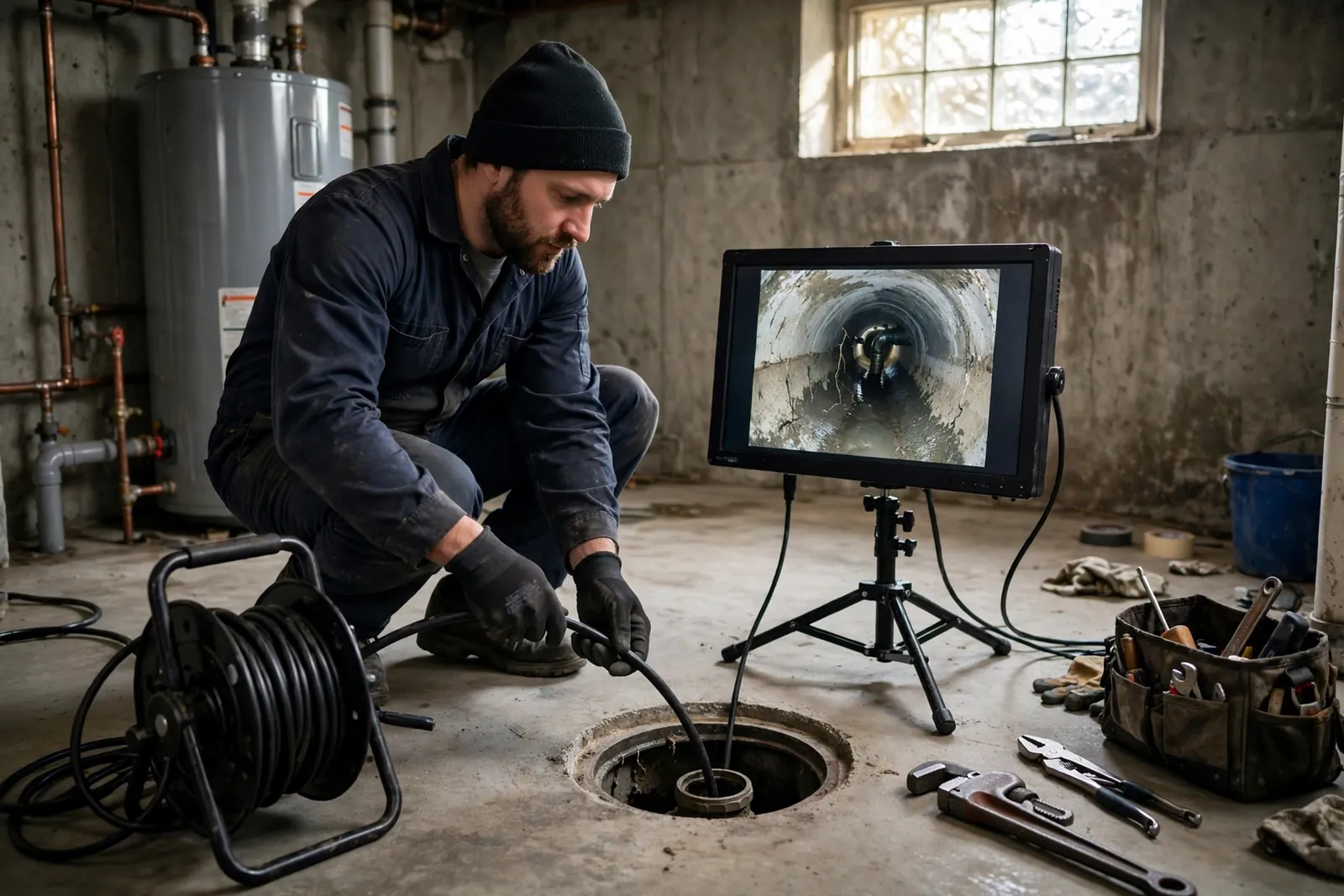
Grease is the difference that matters most. Grease poured down a kitchen drain hardens in the pipe as it cools, narrowing the bore and catching everything that follows. A grease trap — required in most commercial kitchens — catches the grease before it reaches the lateral, but a trap that is not pumped regularly overflows into the line, and the lateral fills with grease. A camera inspection of a restaurant lateral often shows a bore narrowed by grease, with a rough surface that catches waste.
The lateral itself is usually the same pipe as a home's — clay tile or cast iron in an older Parma building, plastic in a newer one — but the load on it is heavier, and the consequences of a failure are larger. A backup in a home is a problem for one household. A backup in a restaurant kitchen closes the kitchen, and a kitchen that cannot serve closes the dining room.
What to do first in a restaurant backup
Stop using water in the kitchen. Turn off the dish machine, stop the prep sinks, and keep the floor drains clear. Every gallon that goes down a kitchen drain has to go somewhere, and if the lateral is blocked, somewhere is back into the kitchen. Keep staff away from the wastewater, and keep food away from it too — a backup in a food preparation area is a food safety problem as well as a plumbing problem.
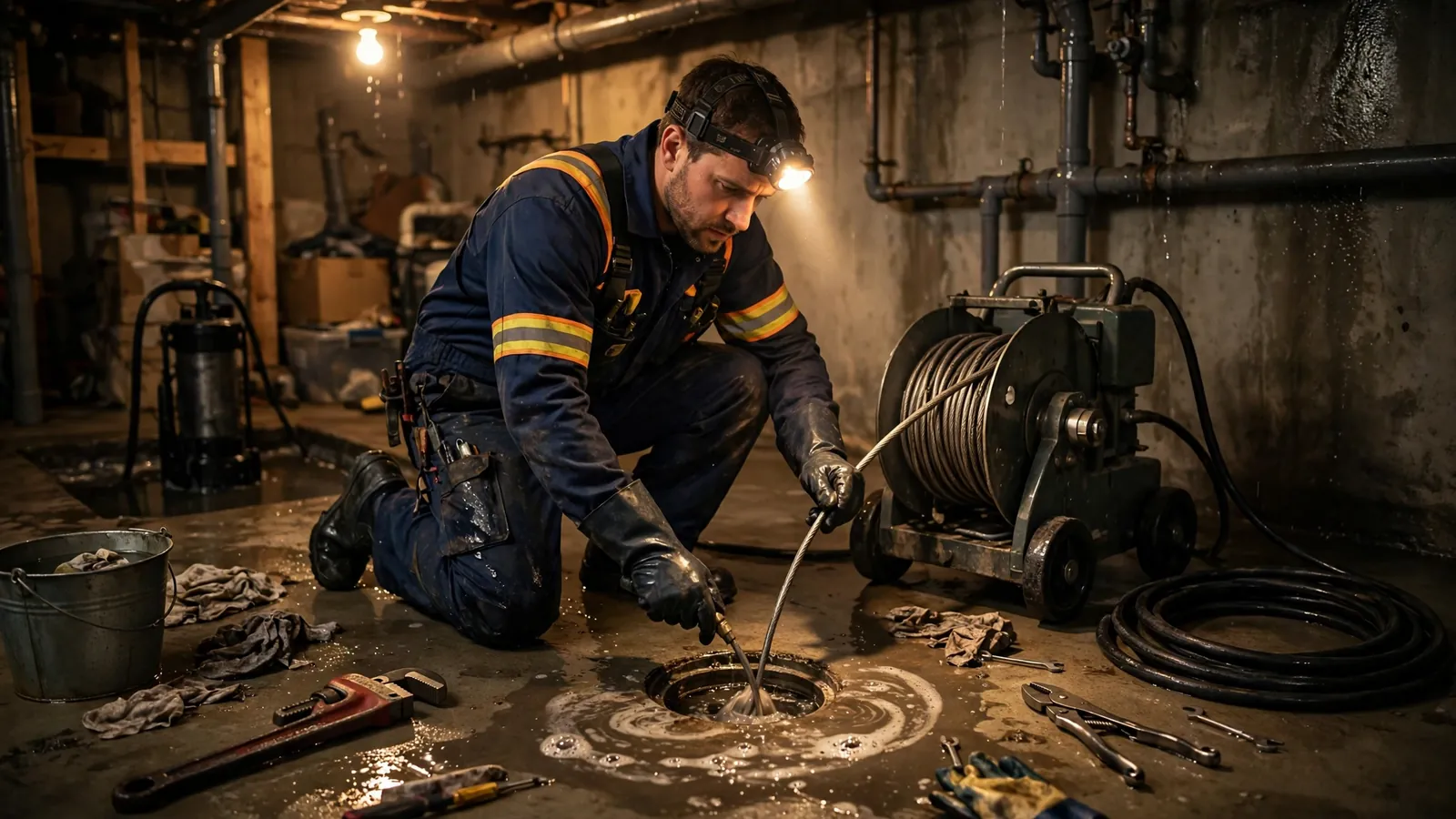
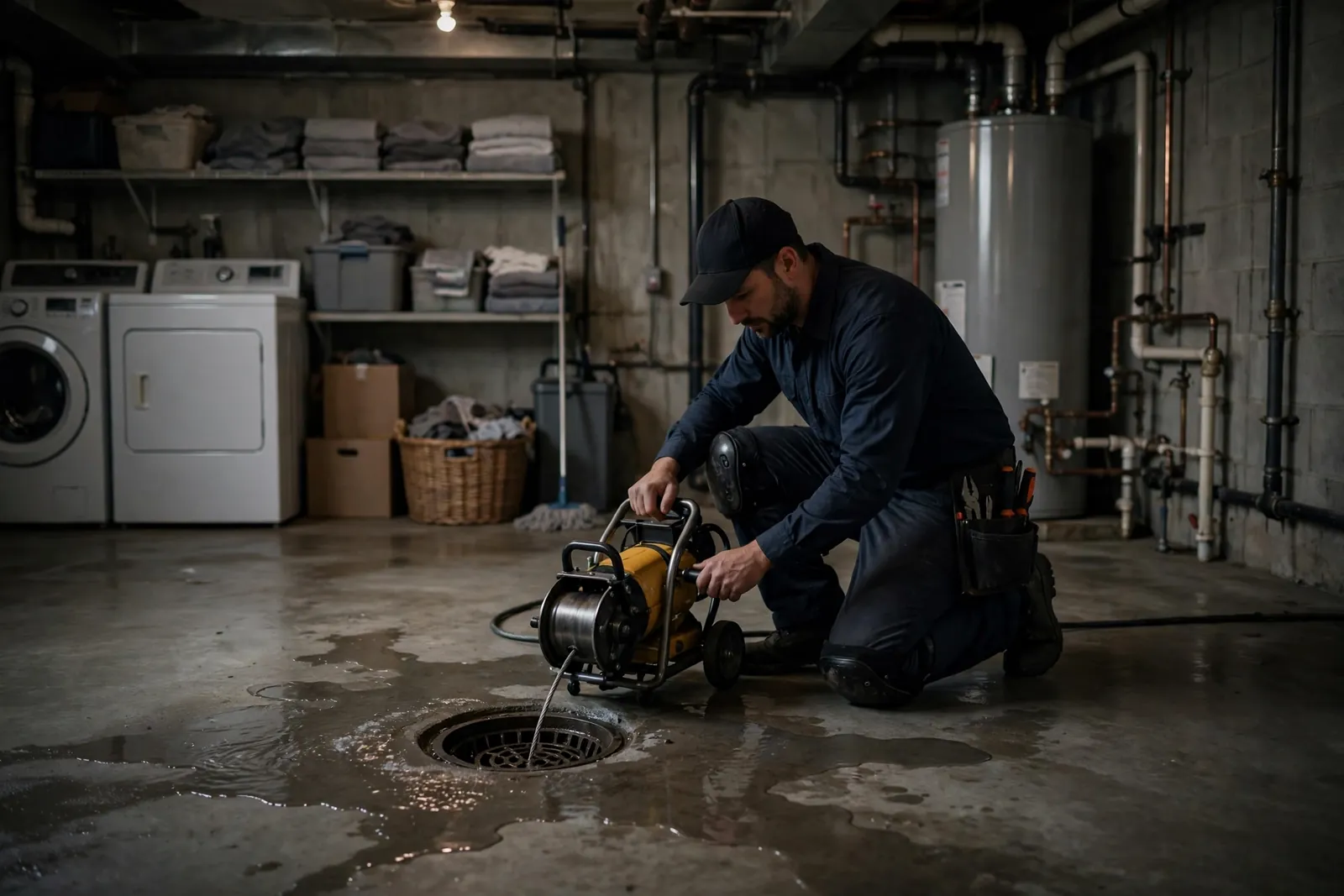
Call for help and describe the backup — where the water is coming in, how much there is, and whether it is still rising. A backup in a restaurant is handled as an urgent call, and the first job is to clear the line and restore flow, so the kitchen can reopen. The camera inspection follows, once flow is restored, and it shows whether the line needs a spot repair, lining, bursting, or a full replacement.
The health department matters here. A sewage backup in a food service establishment is a reportable event in most jurisdictions, and the kitchen may need to close until the line is cleared and the area is cleaned. The crew explains what to do about the water that came in, and what to document — and the restaurant should follow the local health department's guidance on reopening.
How the work happens in a restaurant
The work is scheduled around the kitchen. A restaurant cannot close for days while a lateral is replaced, so the work is planned for the hours the kitchen is closed — overnight, or between service periods — and the crew works to restore flow as quickly as possible. The camera inspection comes first, so the method is chosen from the findings, and the work is planned around the kitchen's hours.
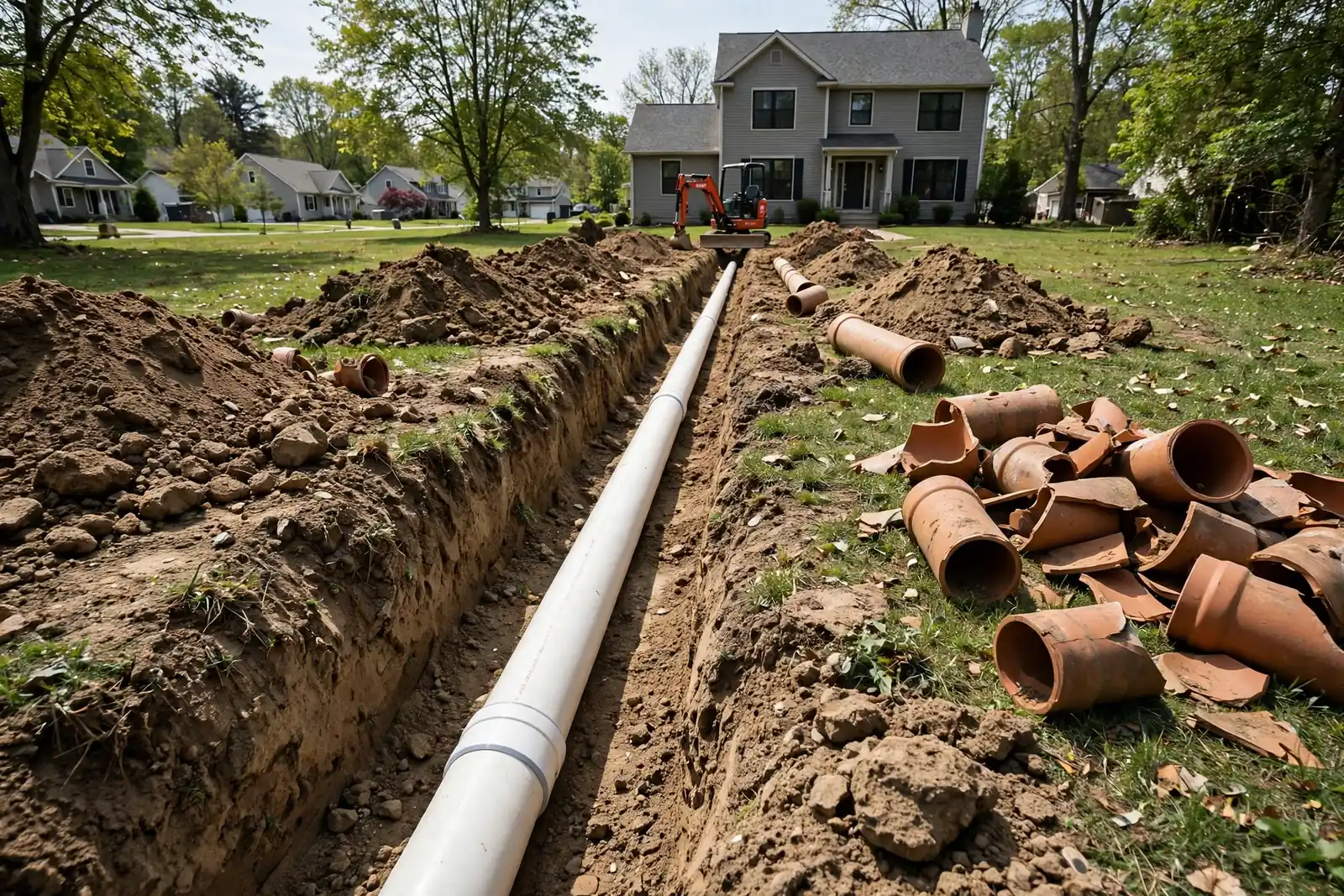
The method is chosen the same way as at a home: from the camera findings and from what sits above the line. A lateral under a parking lot or a patio is a candidate for trenchless work — pipe bursting or lining through small pits — because the surface stays open for customers. A shallow lateral through open ground may be simpler by open trench. Either way, the new line is laid with the correct slope to the street main, and it is camera-checked before the job is called done.
Grease management is part of the lasting fix. A grease trap that is pumped on schedule keeps grease out of the lateral, and the lateral stays clear. A trap that is not pumped is the reason the lateral filled with grease in the first place. The crew explains what the camera found in the line, and the restaurant should deal with the trap as part of the same job — or the new line will fill with grease the same way the old one did.
Older Parma restaurant buildings
Many Parma restaurants occupy older buildings — postwar storefronts along Ridge Road, State Road, and Pearl Road, with clay tile and cast iron laterals from the 1950s and 1960s. The laterals in those buildings are as old as the buildings, and they carry a heavier load than the residential laterals they were laid beside. A restaurant lateral from the 1950s is now older than the material it was made from, and the joints have opened, the cast iron has corroded, and the grease has narrowed the bore.
The camera inspection of an older restaurant lateral often shows all three problems at once: open clay joints with roots, a cast iron section narrowed by corrosion and grease, and a belly where the ground has settled. The fix is planned from the full picture — a spot repair for a local failure, lining for a line that still holds its shape, bursting or a full replacement for a line that is badly damaged.
A restaurant that is buying or leasing an older Parma building should have the lateral camera-inspected before signing. A lateral at the end of its life may show no symptom at all until it backs up during service, and the inspection shows the condition of the line before the lease or the purchase is final.
Keeping a restaurant lateral clear
Pump the grease trap on schedule. A grease trap that is pumped regularly keeps grease out of the lateral, and the lateral stays clear. A trap that is not pumped overflows into the line, and the lateral fills with grease. The pumping schedule depends on the size of the trap and the volume of the kitchen, and the restaurant should follow it — or the new line will fail the same way the old one did.
Do not pour grease down the drain. Grease belongs in the trap, not in the lateral. Train the kitchen staff to scrape plates and pans into the bin, not into the sink, and to pour used oil into the collection container, not down the drain. The lateral is not a grease disposal, and the grease that goes down it hardens in the pipe.
Have the lateral camera-inspected regularly, and always after a backup. A camera inspection shows the condition of the line while it is still working, and a later inspection can be compared against the footage from the replacement. A lateral that is checked is a lateral that does not surprise the kitchen during service.
Grease and the lateral
A restaurant lateral carries something a home lateral does not: grease. Fats, oils, and grease — known in the trade as FOG — cool and solidify as they travel down the line, coating the inside of the pipe and narrowing it. A home line carries a little grease from cooking; a restaurant line carries it by the gallon, every day. Without an interceptor, a restaurant lateral can close up in months rather than years.
A grease interceptor sits between the kitchen and the lateral and traps the grease before it reaches the pipe. It has to be sized for the kitchen and emptied on a schedule, and the schedule is the part that most often slips. An interceptor that is not emptied stops working, and the grease goes straight into the lateral. The camera inspection of a restaurant line usually shows the result: a pipe lined with hardened grease, sometimes along its full length.
The work on a restaurant lateral has to fit around the kitchen. The line is usually cleared and camera-inspected after hours, when the kitchen is closed, and any replacement is planned the same way. A restaurant that has to close for a day loses more than the cost of the work, so the job is scheduled to keep the closure as short as possible. The record matters too: a health inspector or an insurer may ask for the maintenance history of the line and the interceptor.
Services for restaurants & food service
Where we work
Parma, OH · Cleveland, OH · Brooklyn, OH · Middleburg Heights, OH
Services used most
Sewer Line Replacement · Emergency Sewer Line Repair · Sewer Backup Repair · Sewer Camera Inspection
Frequently asked questions
Questions people ask about sewer lines in restaurants & food service, answered plainly.
Usually grease in the lateral, a failed pipe, or both. Grease hardens in the pipe and narrows the bore, and an old clay or cast iron lateral is already narrowed by age. A camera inspection shows whether the problem is grease, the pipe, or both.
Most commercial kitchens are required to have one, and it has to be pumped on schedule. A trap that is not pumped overflows into the lateral, and the lateral fills with grease. The pumping schedule depends on the size of the trap and the volume of the kitchen.
The work is planned around the kitchen's hours — overnight, or between service periods — and the crew works to restore flow as quickly as possible. The camera inspection comes first, so the method is chosen from the findings and the work is planned around the kitchen.
Yes. Many Parma restaurants occupy older buildings with clay tile and cast iron laterals from the 1950s and 1960s. A lateral at the end of its life may show no symptom until it backs up during service, and the inspection shows the condition of the line before the lease is signed.
Stop using water in the kitchen, keep staff and food away from the wastewater, and call for help. A sewage backup in a food service establishment is a reportable event, and the kitchen may need to close until the line is cleared and the area is cleaned. Follow the local health department's guidance on reopening.
Regularly, and always after a backup. A camera inspection shows the condition of the line while it is still working, and a later inspection can be compared against the footage from the replacement. A lateral that is checked does not surprise the kitchen during service.
Sewer line trouble in your Parma home or business?
Call Now to reach a local sewer professional. Describe the problem, where it is, and what the line has been doing.
Call now for sewer line help
Tap Call Now to reach a local sewer professional. Tell them where the problem is, what the line has been doing, and whether wastewater is coming into the home.
Hours: Mon–Fri 7:00 AM–10:00 PM ET · Sat 8:00 AM–10:00 PM ET · Sun 7:00 AM–9:00 PM ET
Before you call
- Stop using water if the line is backing up.
- Keep people and pets away from any wastewater.
- Note which drains are slow, and which one backs up first.
- Note whether the problem happens in heavy rain, or all the time.
- Have the age of the home ready, if you know it.