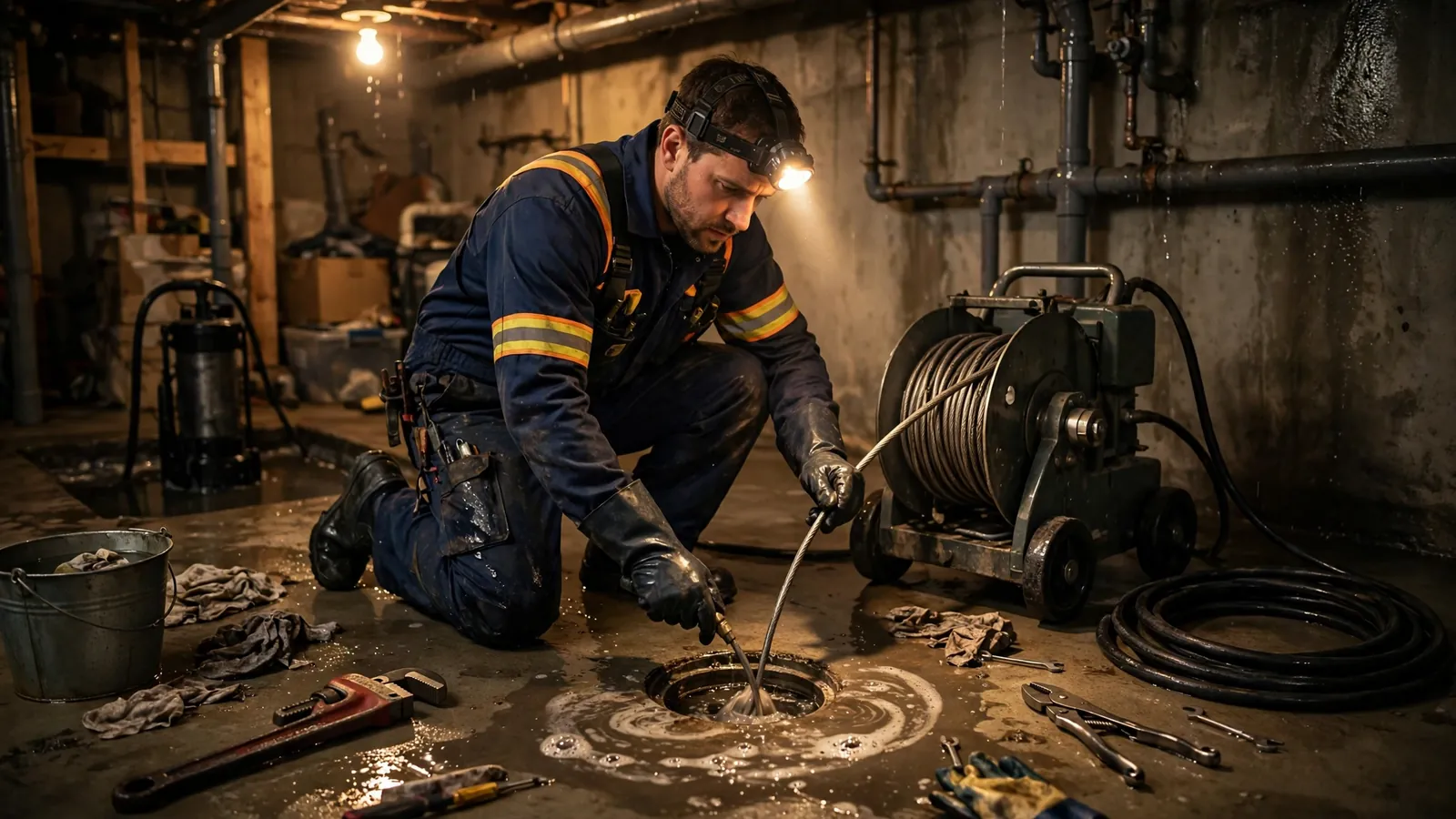
Emergency Sewer Line Repair Parma, OH
Sewage backing up into a home is an emergency. Stop using water, keep people away from the backup, and call for help.
Need help with your sewer line?
Call Now to reach a local sewer professional. Describe the problem, where it is, and what the line has been doing.
Hours: Mon–Fri 7:00 AM–10:00 PM ET · Sat 8:00 AM–10:00 PM ET · Sun 7:00 AM–9:00 PM ET
What this service does
A sewer emergency is different from a slow drain. When wastewater comes back into the house — through a basement floor drain, a shower, or a toilet — it is not a problem that can wait for a convenient appointment. The water is wastewater, it carries what it carries, and every flush or shower adds to it. The first step is to stop using water in the house.
The most common sewer emergency in Parma is a backup at the lowest drain, usually the basement floor drain. It happens when the lateral is blocked or collapsed, and the wastewater has nowhere to go but back. It also happens in heavy rain, when older sewers — including the pre-1960 common-trench sewers the Ohio EPA documented in Parma in September 2024 — push water back toward homes.
An emergency repair is not always a replacement. Sometimes the line is blocked by a root mat or a mass of paper and waste, and clearing it restores flow. Sometimes the camera shows a collapse, and the repair is a dig at that spot. The emergency work is to stop the backup, find the cause, and make the line safe — then plan the lasting fix from what the camera found.
Before you call
- Stop using water if the line is backing up.
- Keep people and pets away from any wastewater.
- Note which drains are slow, and which one backs up first.
- Note whether the problem happens in heavy rain, or all the time.
- Have the age of the home ready, if you know it.
What counts as a sewer emergency
A backup of wastewater into the home is an emergency. So is a line that has collapsed and is sending water into the yard, and a break that is undermining the ground under a driveway or walkway. A slow drain in one fixture is not an emergency — it is a problem that can be booked. The difference is whether wastewater is coming into the home, or is about to.
Sewage water is treated as contaminated water. Keep people and pets away from it. Do not run taps, flush toilets, or run the washing machine or dishwasher — every gallon that goes down a drain has to go somewhere, and if the line is blocked, somewhere is back into the house. Do not try to clean it with household tools or a shop vacuum, and do not walk through it in bare feet.
If the backup is happening during heavy rain, it may be coming from the street side — a surcharged main or an older common-trench sewer pushing water back. In that case, stopping water use in the house still helps, and the camera inspection after the rain shows whether the problem is in the lateral or further out.
What the service includes
Urgent response
A backup in progress is handled as an urgent call. The first job is to stop the water coming in and find the cause — not to book a visit for next week.
Stop the inflow
Water use in the house is stopped, and the crew checks whether the blockage is in the lateral, at the street connection, or further out in the main.
Clearing the blockage
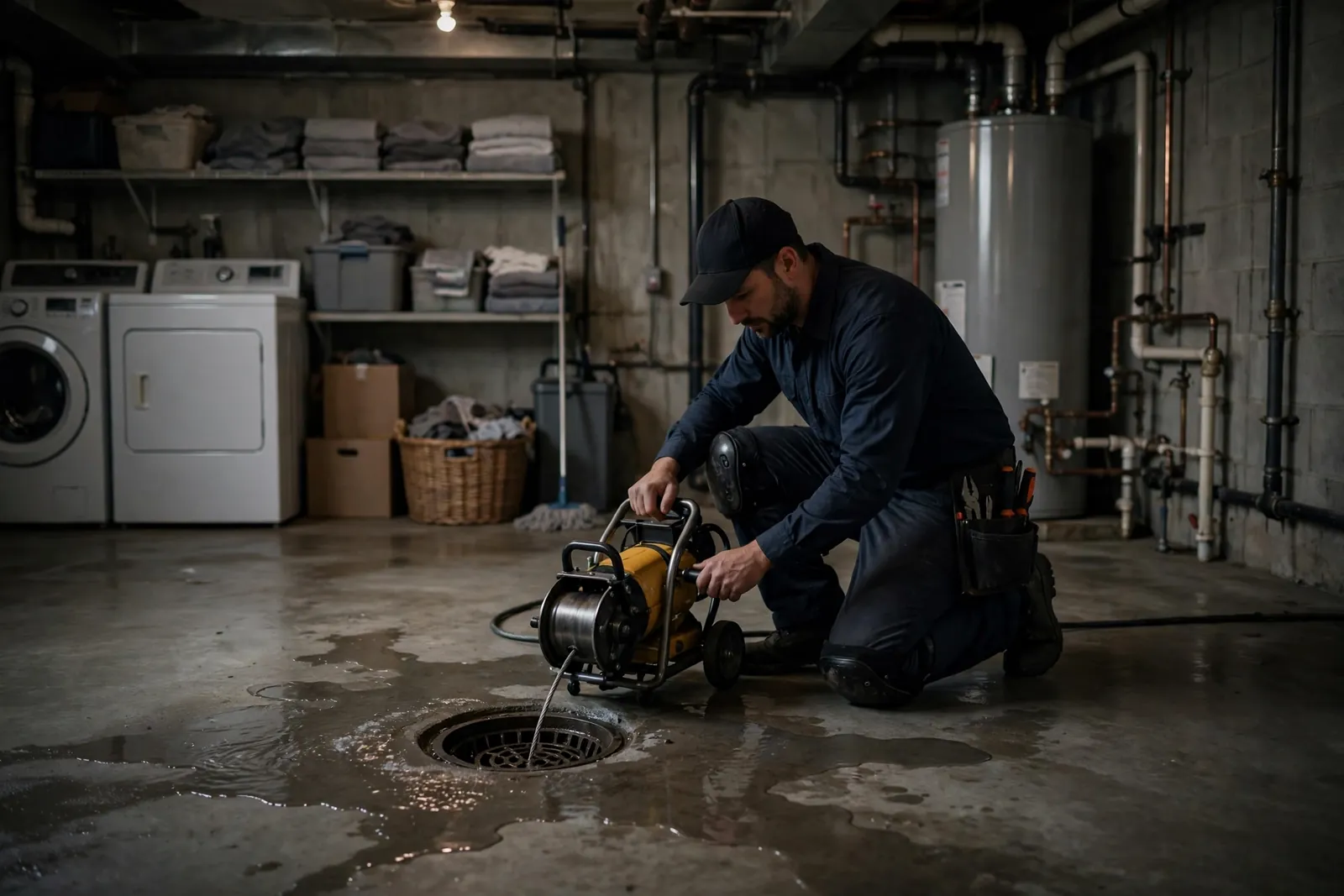
Where the line is blocked by roots or waste, the blockage is cleared with a cable machine or a hydro jetter, restoring flow so the house can be used again.
Camera inspection
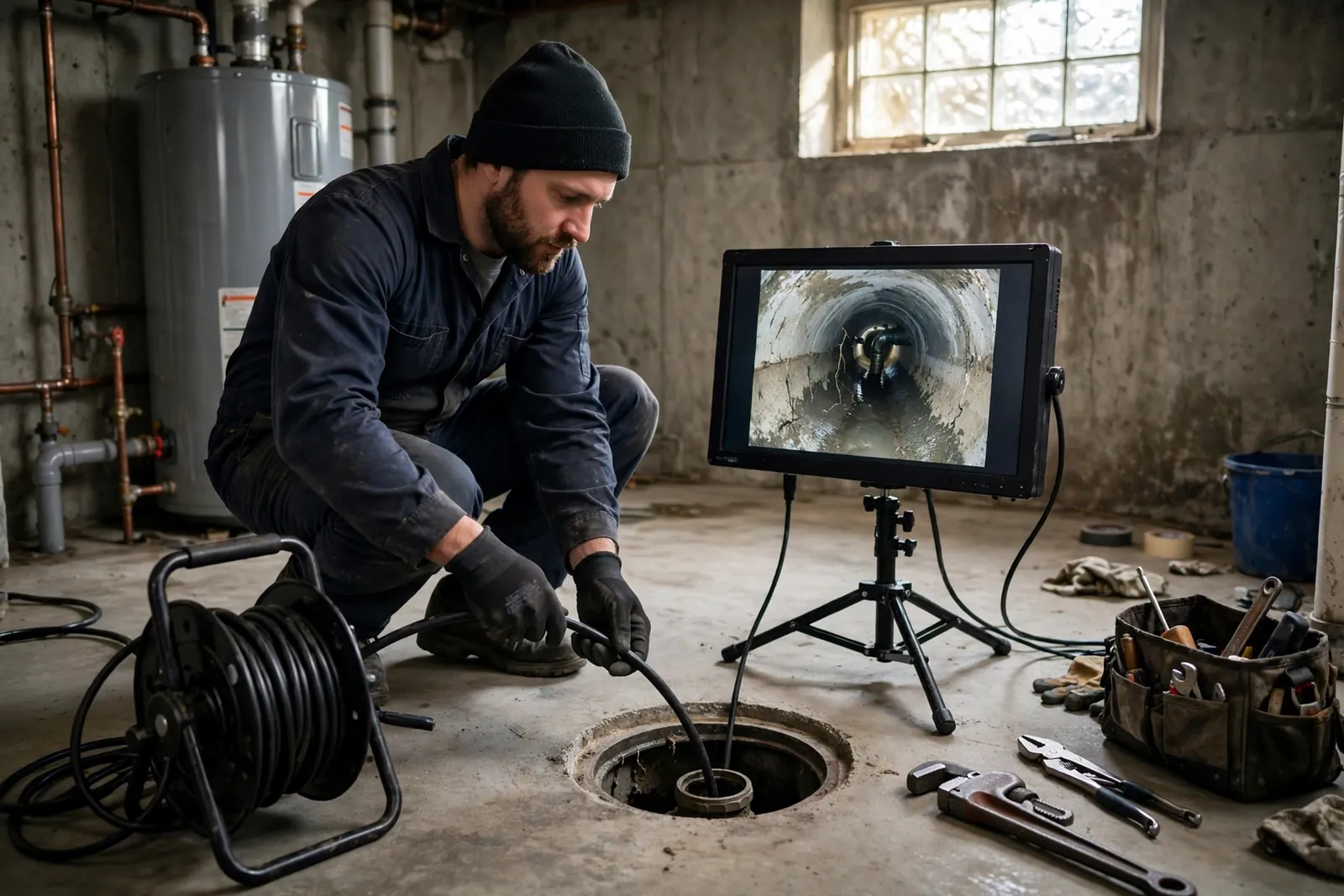
Once flow is restored, the camera shows what caused the emergency — a root mat, a collapse, a belly, or a broken connection — so the lasting fix is planned from evidence.
Spot repair or replacement
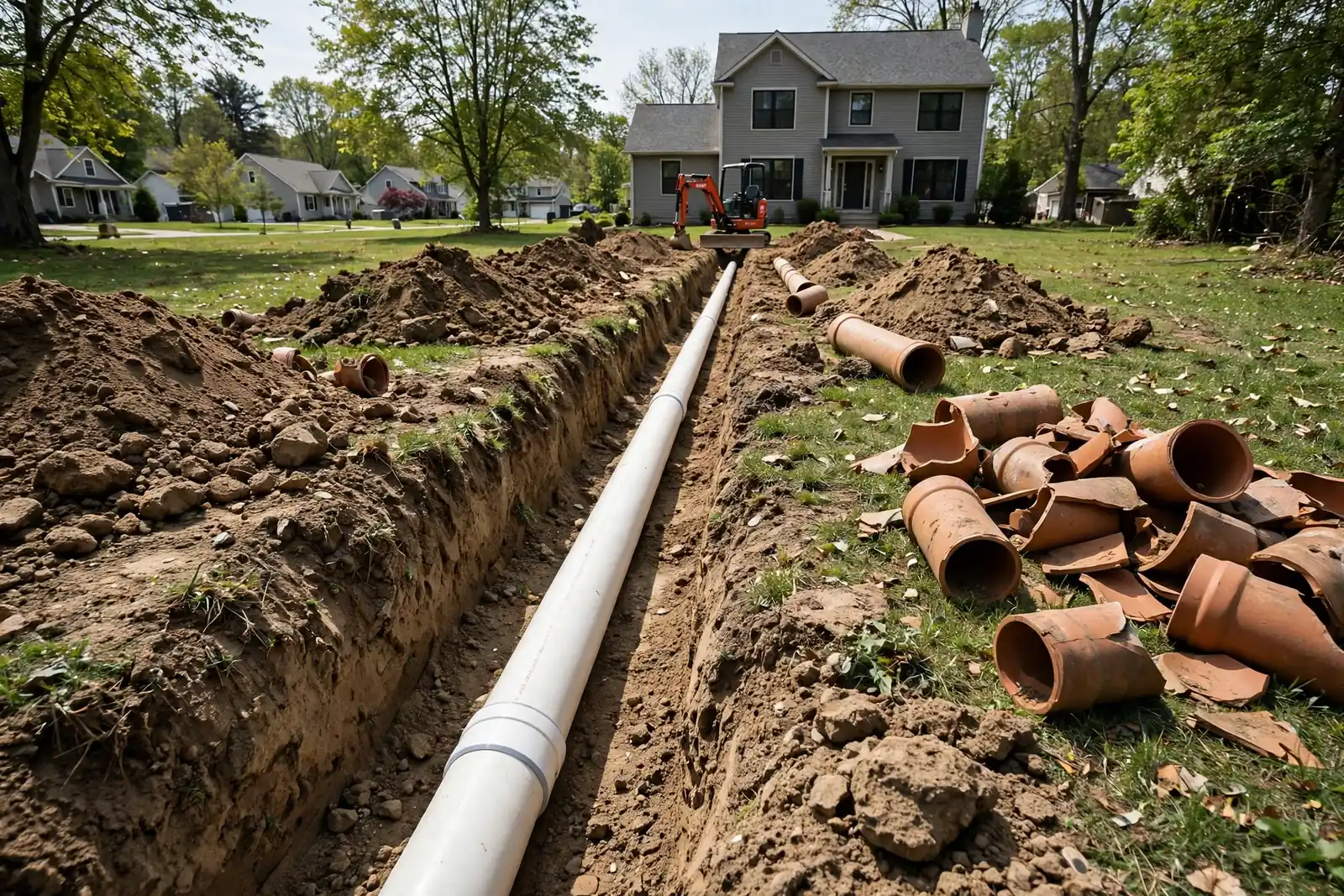
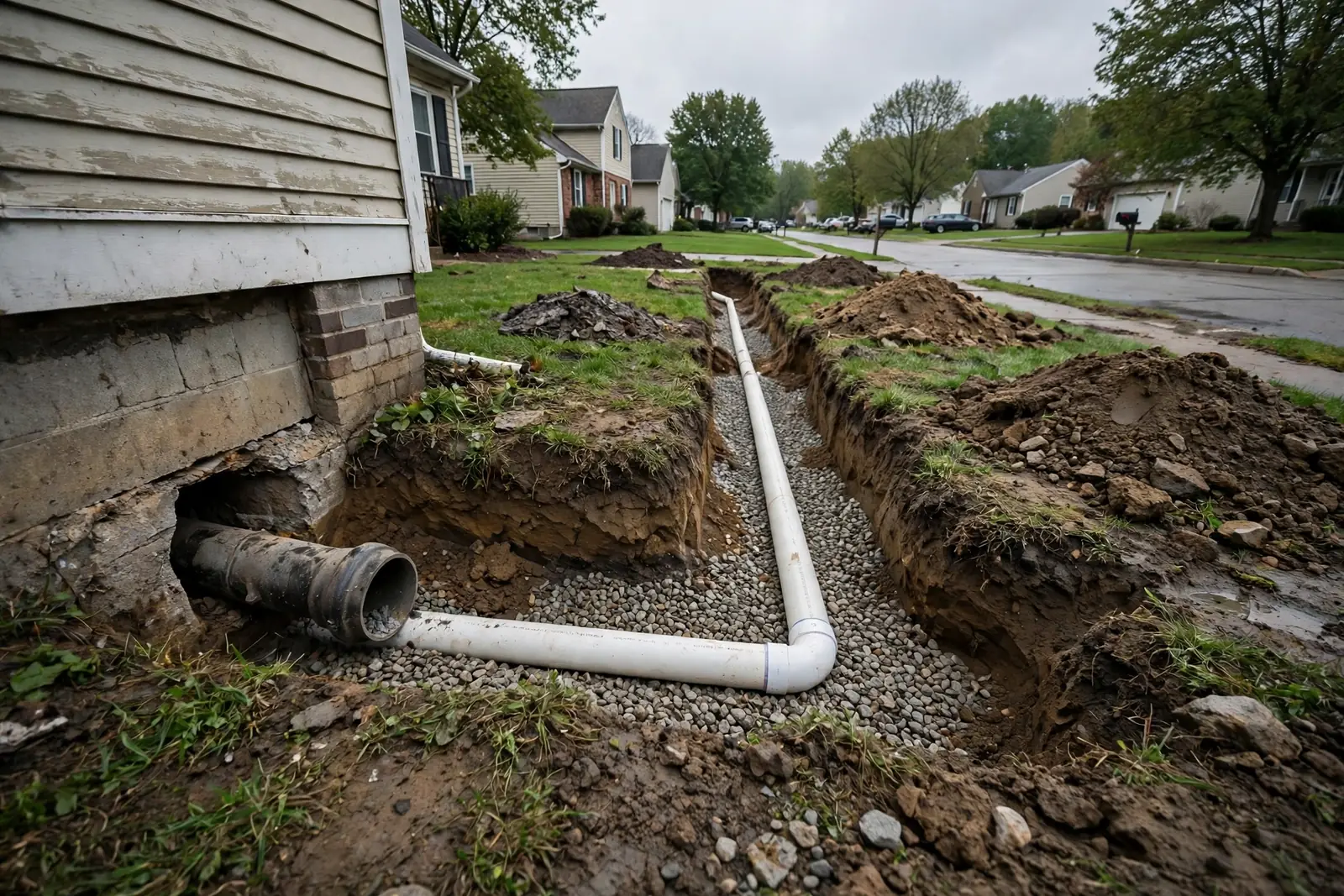
A collapsed or broken section is dug and replaced, or the line is replaced by bursting or open trench, depending on what the camera found.
Cleanup guidance
The crew explains what to do about the water that came in — keeping people away from it, and what to document for the insurer.
How the work runs
Call and stop using water
Describe the backup — where it is coming in, how much water there is, and whether it is still rising. Then stop running taps, flushing, and running appliances.
Find the blockage
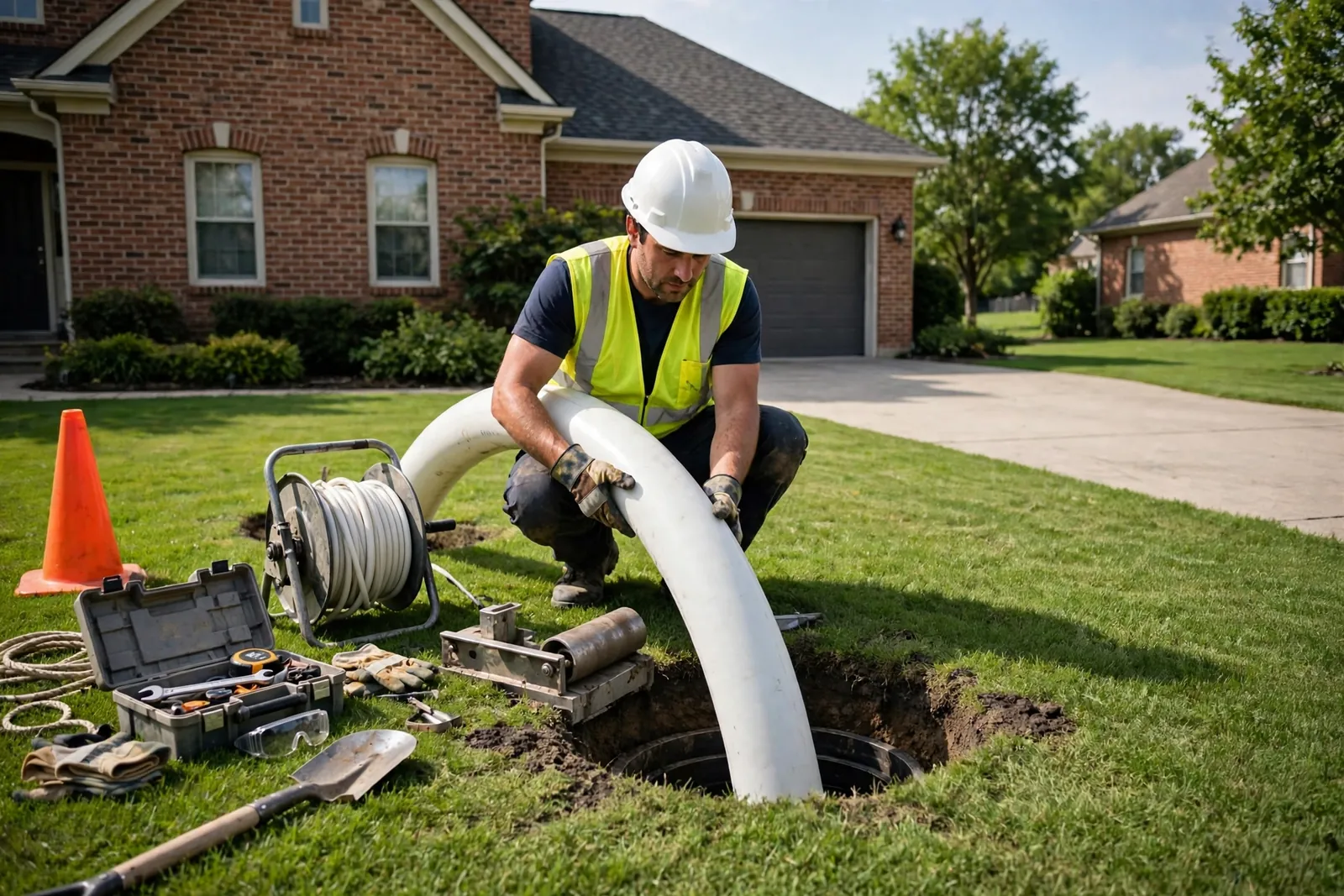
The crew checks the cleanout and the lowest drain, and runs a cable or a camera to find where the line is blocked.
Restore flow
The blockage is cleared so the line flows again and the house can be used. This is the urgent part of the job.
Camera inspection
With flow restored, the camera maps the line and shows the cause — roots, a collapse, a belly, or a broken connection at the street.
Plan the lasting fix
The crew explains what the camera found and what the lasting fix is — a spot repair, lining, bursting, or full replacement — and what it involves.
Repair and final check
The lasting fix is carried out, and the new or repaired line is camera-checked before the job is called done.
Tools and methods used
Drain cable machine
A cable machine with a cutting head clears root mats and blockages from the line, restoring flow in an emergency.
Hydro jetter
High-pressure water scours the inside of the pipe, clearing grease, scale, and root debris that a cable leaves behind.
Sewer camera with locator
The camera shows the cause of the emergency, and the locator marks its position and depth on the surface for any digging.
Mini excavator
A compact excavator digs at the failed section when the camera shows a collapse or a break that has to be replaced.
What to do while you wait for help
Stop using water in the house. Every flush, every shower, every load of laundry adds water to a line that cannot take it. If the backup is at the basement floor drain, the water will keep rising as long as water is being used upstairs. Turn off the washing machine and the dishwasher, and tell everyone in the house not to run taps or flush.
Keep people and pets out of the water. Sewage water is contaminated water, and it belongs in the pipe. Do not walk through it, do not let children or pets near it, and do not try to mop it up with household tools. If the water is near electrical outlets, switches, or appliances, stay out of the room entirely.
Take photos. Photograph the water, the drains it is coming from, and anything it has touched. The photos are the record for the insurer, and they are easier to take now than to reconstruct later. Note the time the backup started and what was happening in the house when it began.
Why backups happen in heavy rain in Parma
Parma's older streets carry a legacy that shows up in heavy rain. The Ohio EPA documented pre-1960 common-trench sewers in the city in September 2024, around the Krueger Avenue relief-sewer project, and basement backups were part of that record. In a common-trench sewer, the laterals from several homes share a trench and sometimes a connection, and heavy rain can surcharge the shared sewer and push water back toward the homes on it.
A backup that happens only in heavy rain, and clears when the rain stops, points toward the street side rather than a blockage inside the house. A backup that happens whenever water is used, rain or not, points toward the lateral itself. The camera inspection after the rain is what separates the two — it shows whether the lateral is clear to the main, and whether the main is taking the flow.
There is also the simpler rain cause: a lateral with a belly or a partial blockage can handle normal flow but not the extra water that enters during a storm. Roof downspouts tied into the lateral, a sump pump discharging into it, or groundwater entering through a cracked joint all add water during rain. The camera and the history of the problem together show which one it is.
After the emergency: what happens next
The emergency call ends the immediate problem: the backup is stopped, the wastewater is cleared, and the line is flowing again. What it does not do is fix the pipe. A cleared line with a collapsed section or a bad belly will back up again, and the next backup may come sooner than the last one. The follow-up step is a camera inspection of the full run, done when the line is clear enough for the camera to see.
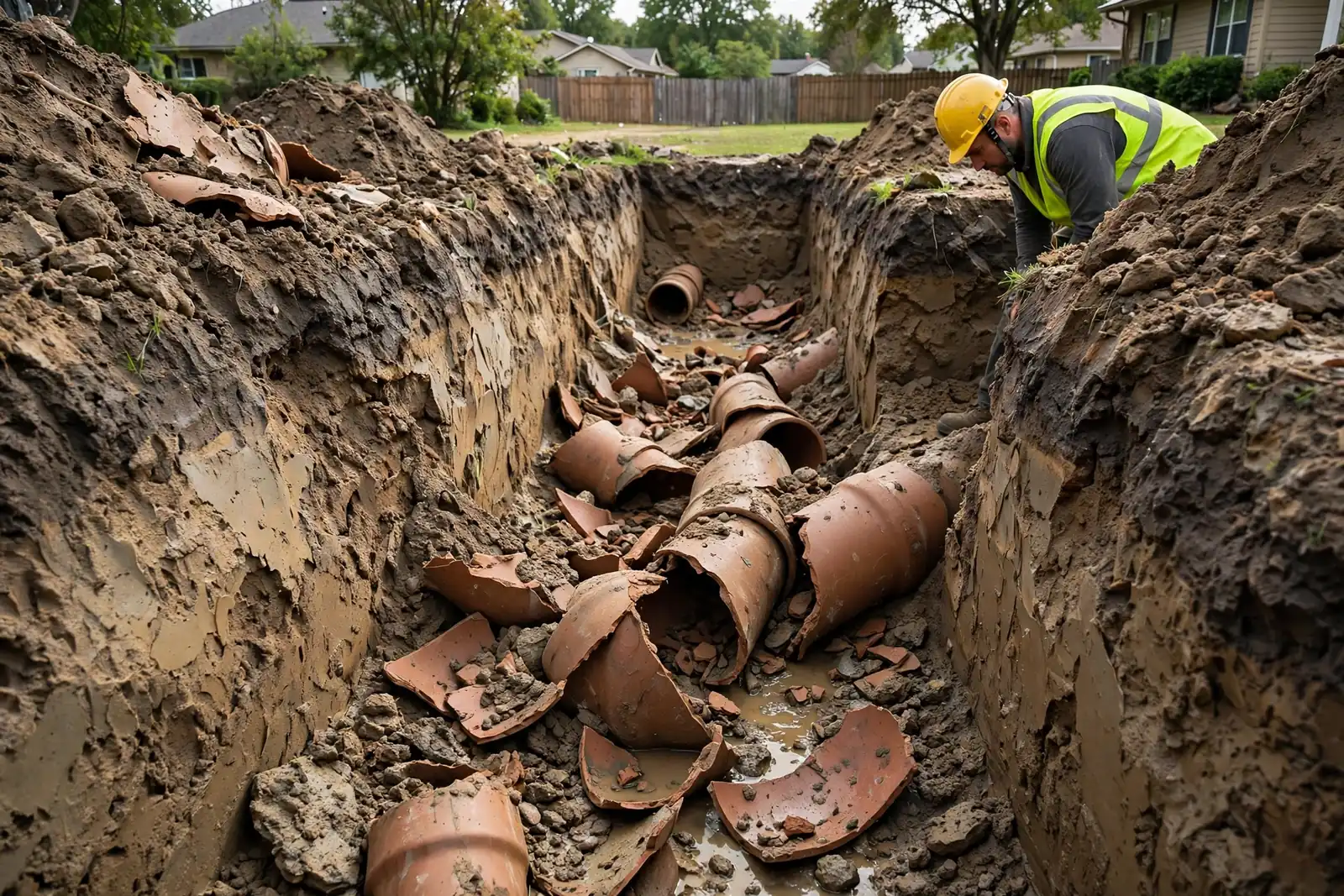
The camera findings decide the permanent fix. A single root mass at one joint may call for a spot repair. Roots at many joints, or a collapse, call for replacement of the affected run. The findings also decide the timing: a line that is open but damaged can often wait for a scheduled job, while a line that is nearly closed needs the work sooner. Either way, the decision is made from the footage, not from the memory of the emergency.
Keep the records from the emergency and the follow-up together: the date of the backup, what was found, the camera footage, and the scope of the permanent work. An insurer will ask for that sequence — what happened, what caused it, and what was done — and a complete record is easier to put together at the time than months later. If the work is delayed, note the date the permanent fix is planned for, so the line is not left in a temporary state by accident.
Wastewater coming back into the home
A lateral that keeps backing up will not heal — the water keeps coming back through the lowest drain in the house.
Flow restored, and the cause found
The work is checked with a camera, not a look at the surface — the new line is seen end to end before the job is called done.
Problems emergency repair handles
- A backup in progress at the lowest drain in the house.
- A lateral blocked by a root mat or a mass of waste.
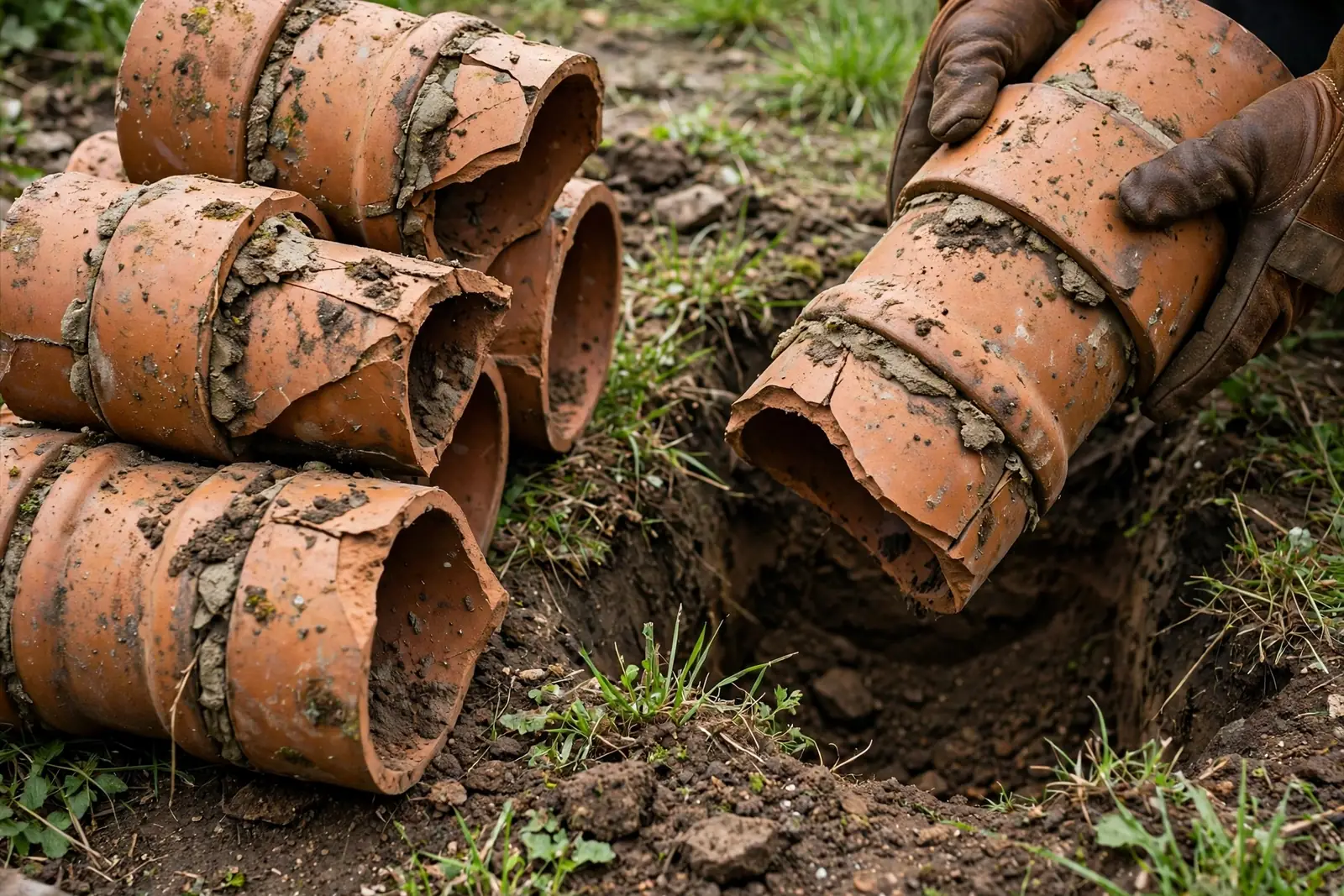
- A collapsed section that stops the line entirely.
- A break that sends wastewater into the yard.
- A backup during heavy rain from an older shared sewer.
- A line that backs up every time water is used in the house.
Signs you have a sewer emergency
- Wastewater is coming up through a basement floor drain, a shower, or a toilet.
- More than one fixture backs up at the same time.
- Flushing a toilet makes water rise in a tub or a floor drain.
- The backup is getting worse while water is being used in the house.
- There is a strong sewer smell together with standing water in the basement.
- Water is pooling in the yard over the line to the street, and the drains are slow.
- The line backed up during heavy rain and has not cleared.
- A gurgling sound comes from several fixtures at once, with water rising.
Related problems
Collapsed Sewer Line · Sewer Odors in Home · Tree Root Intrusion
Industries that use this service
Single-Family Homes · Rental Properties · Restaurants & Food Service · Commercial Properties · All industries →
Frequently asked questions
Questions people ask about emergency sewer line repair, answered plainly.
Stop using water — no taps, no flushing, no washing machine or dishwasher. Keep people and pets away from the water. Then call for help and describe where the water is coming in and whether it is still rising.
Sewage water is treated as contaminated water. Keep away from it, do not walk through it, and do not try to clean it with household tools. The crew explains what to do about the water that came in, and what to document.
A backup in progress is handled as an urgent call, and the line is staffed on the hours shown on the contact page. The urgent work — stopping the backup and restoring flow — is the priority, and the lasting fix is planned from the camera findings.
It depends on the cause. If the blockage was a one-off mass of waste, clearing it may be enough. If the camera shows a collapse, a bad belly, or roots through many joints, clearing restores flow but the pipe is still failing — and the lasting fix is a repair or a replacement.
A camera inspection shows it. If the lateral is clear to the main and the main is the problem, the crew explains what the camera showed. A problem in the street main is the city's responsibility, and the findings are the evidence for that conversation.
No. Chemical drain cleaners do not clear a main-line blockage, and they can make the work harder and less safe for the crew. Stop using water, keep away from the backup, and wait for help.
The camera inspection after the emergency is the step that answers that. It shows whether the line needs a spot repair, lining, bursting, or full replacement — and the lasting fix is the work that keeps the backup from returning.
It depends on the policy. Many standard homeowners policies do not cover sewer backups unless a specific endorsement was added. Check your policy, take photos of the water and the damage, and keep the camera findings and any invoices for the claim.
Sewer line trouble in your Parma home?
Call Now to reach a local sewer professional. Describe the problem, where it is, and what the line has been doing.
Call now for sewer line help
Tap Call Now to reach a local sewer professional. Tell them where the problem is, what the line has been doing, and whether wastewater is coming into the home.
Hours: Mon–Fri 7:00 AM–10:00 PM ET · Sat 8:00 AM–10:00 PM ET · Sun 7:00 AM–9:00 PM ET
Before you call
- Stop using water if the line is backing up.
- Keep people and pets away from any wastewater.
- Note which drains are slow, and which one backs up first.
- Note whether the problem happens in heavy rain, or all the time.
- Have the age of the home ready, if you know it.