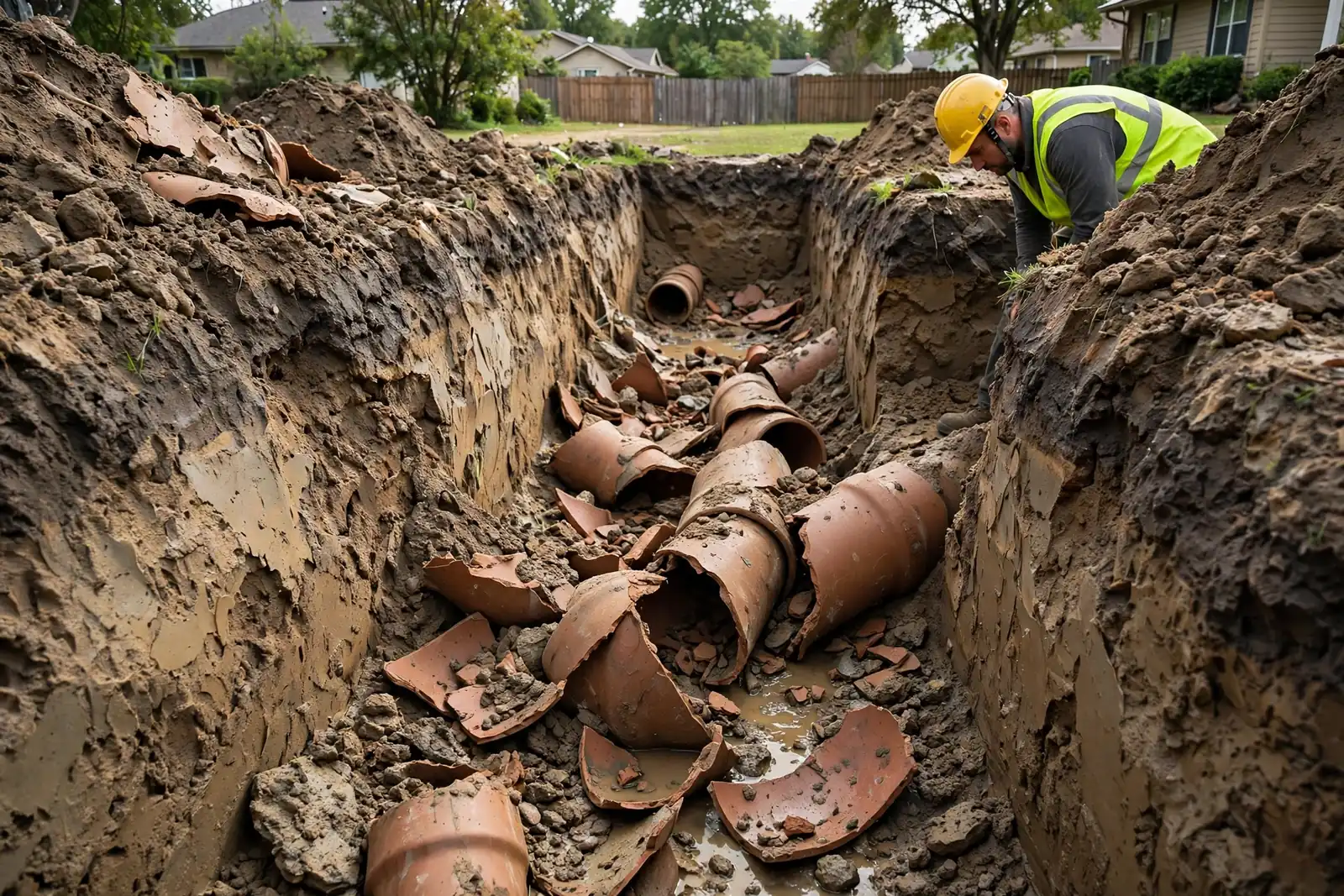
Collapsed Sewer Line Parma, OH
A collapsed sewer line stops the flow entirely — and it cannot be cleaned or lined. The collapsed section has to be dug out and replaced.
Need help with your sewer line?
Call Now to reach a local sewer professional. Describe the problem, where it is, and what the line has been doing.
Hours: Mon–Fri 7:00 AM–10:00 PM ET · Sat 8:00 AM–10:00 PM ET · Sun 7:00 AM–9:00 PM ET
What a collapsed sewer line is
A collapsed sewer line is a section of pipe that has broken and fallen in on itself, blocking the line. The pipe wall has failed — cracked, crushed, or corroded through — and the pieces have dropped into the bore, or the soil above has pressed the pipe flat. Water cannot pass a collapse. It backs up behind it, and the lowest drain in the house is where it appears first.
A collapse is different from a blockage. A blockage is something inside the pipe — roots, paper, waste — that can be cleared. A collapse is the pipe itself, and no amount of cleaning will restore it. A cable machine cannot pass a collapse, and a camera cannot pass it either. When the camera stops, and the locator marks the spot, the crew knows where the collapse is — and that the fix is a dig.
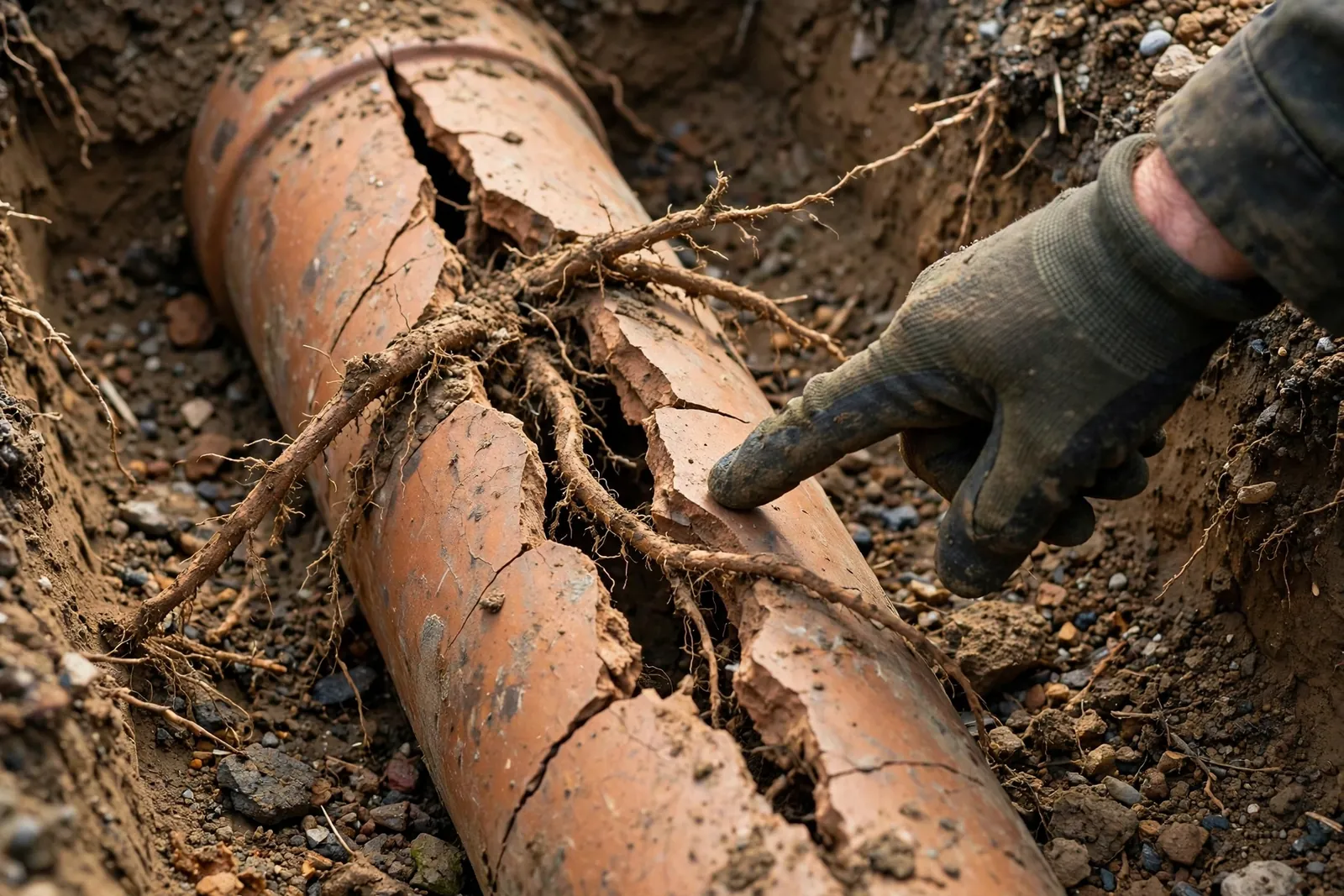
In Parma, collapses happen most often in clay tile and cast iron laterals from the 1950s and 1960s. Clay is brittle: a point load, a rock pressing against the pipe, or ground movement from freeze and thaw can crack a section, and the crack becomes a collapse under the weight of the ground above. Cast iron corrodes until the wall is too thin to carry the load, and then it breaks.
What causes a collapse
Ground movement is the most common cause in Cuyahoga County. The clay soils shift with freeze and thaw, and a section of pipe can settle, separate at a joint, and then collapse under the weight of the soil above it. A heavy vehicle over a shallow line — a delivery truck, a dumpster, a car parked on the lawn — can crush a section that was already weakened.
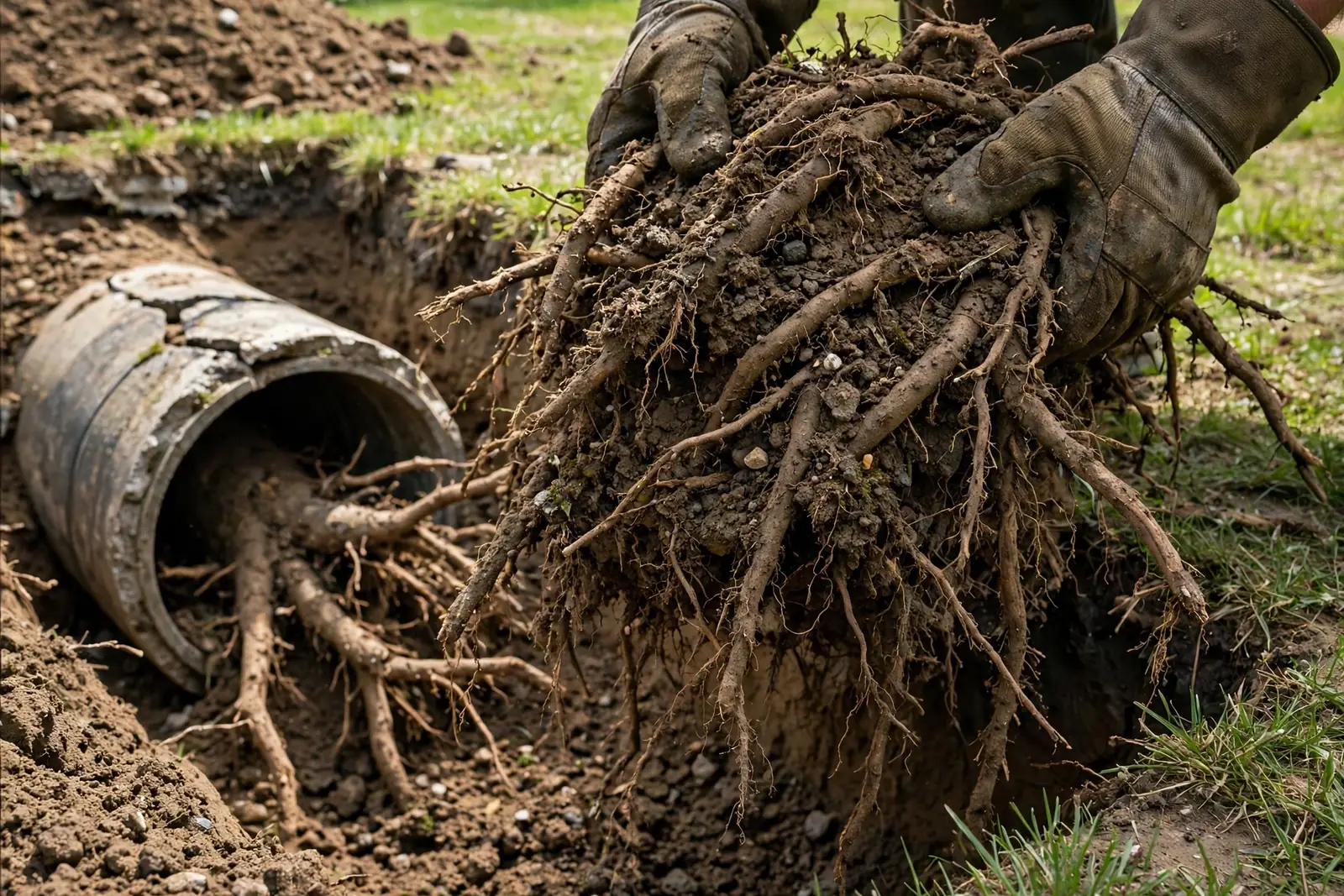
Corrosion is the second cause. Cast iron thins from the inside over decades, until the wall can no longer carry the ground above it. The break is often sudden: the line worked yesterday, and today it is blocked solid. Clay tile can also fail this way, when a crack that has been growing for years finally gives way.
The third cause is a washout. When a joint opens and soil enters the pipe, the ground around the pipe washes out with it, leaving a void. The pipe loses its support, and the section above the void collapses into it. A washout can undermine the ground above the line — a driveway, a walkway, or a patch of lawn — and the surface can sink as well.
How a collapsed line is fixed
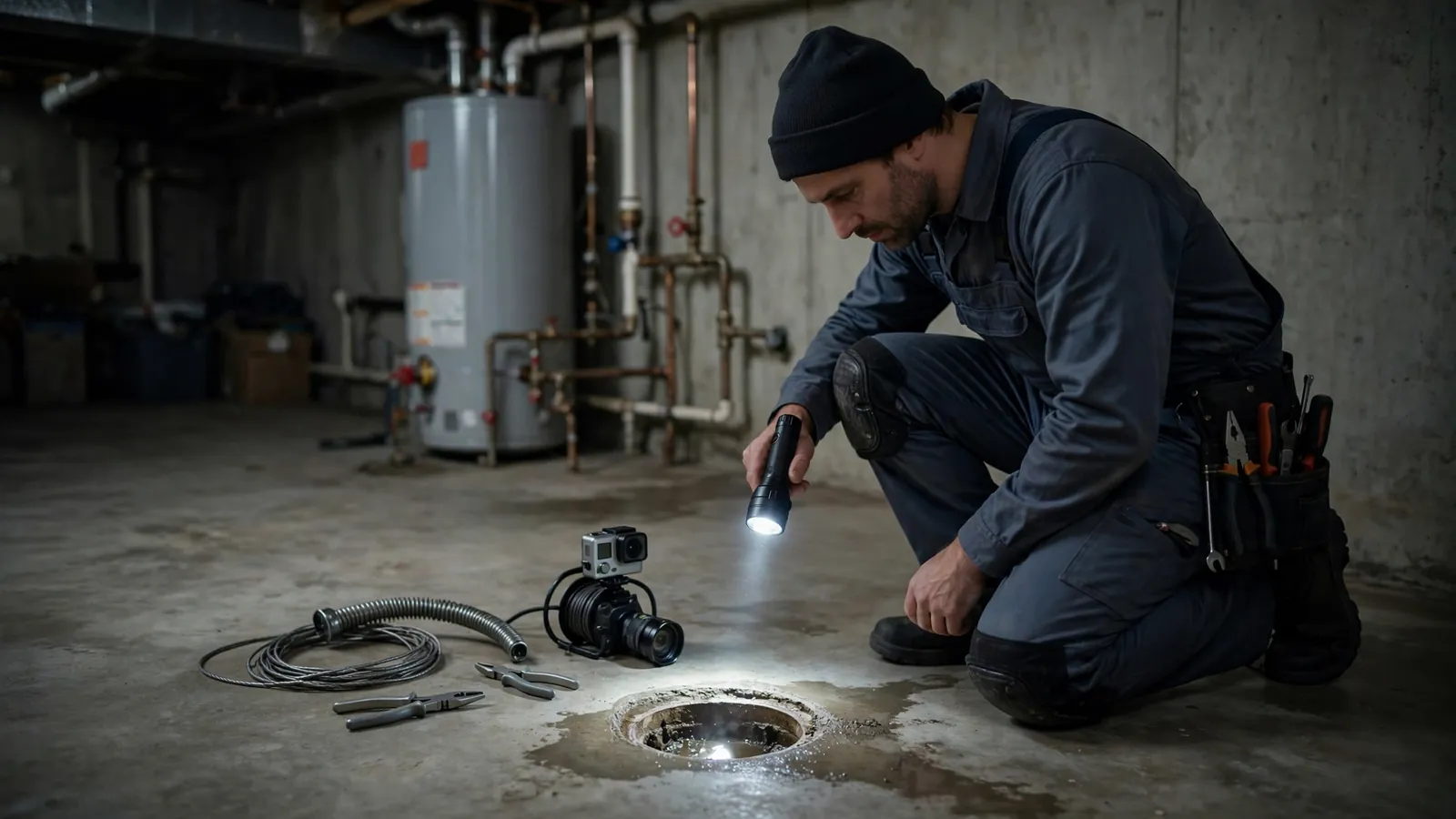
The fix starts with finding the collapse. A camera inspection runs until the camera stops, and the locator marks the spot on the surface, with the depth. That marking is the dig site. A collapse cannot be fixed trenchless — a bursting head cannot pass a collapsed section, and a liner needs a pipe to press against. The collapsed section has to be dug out.
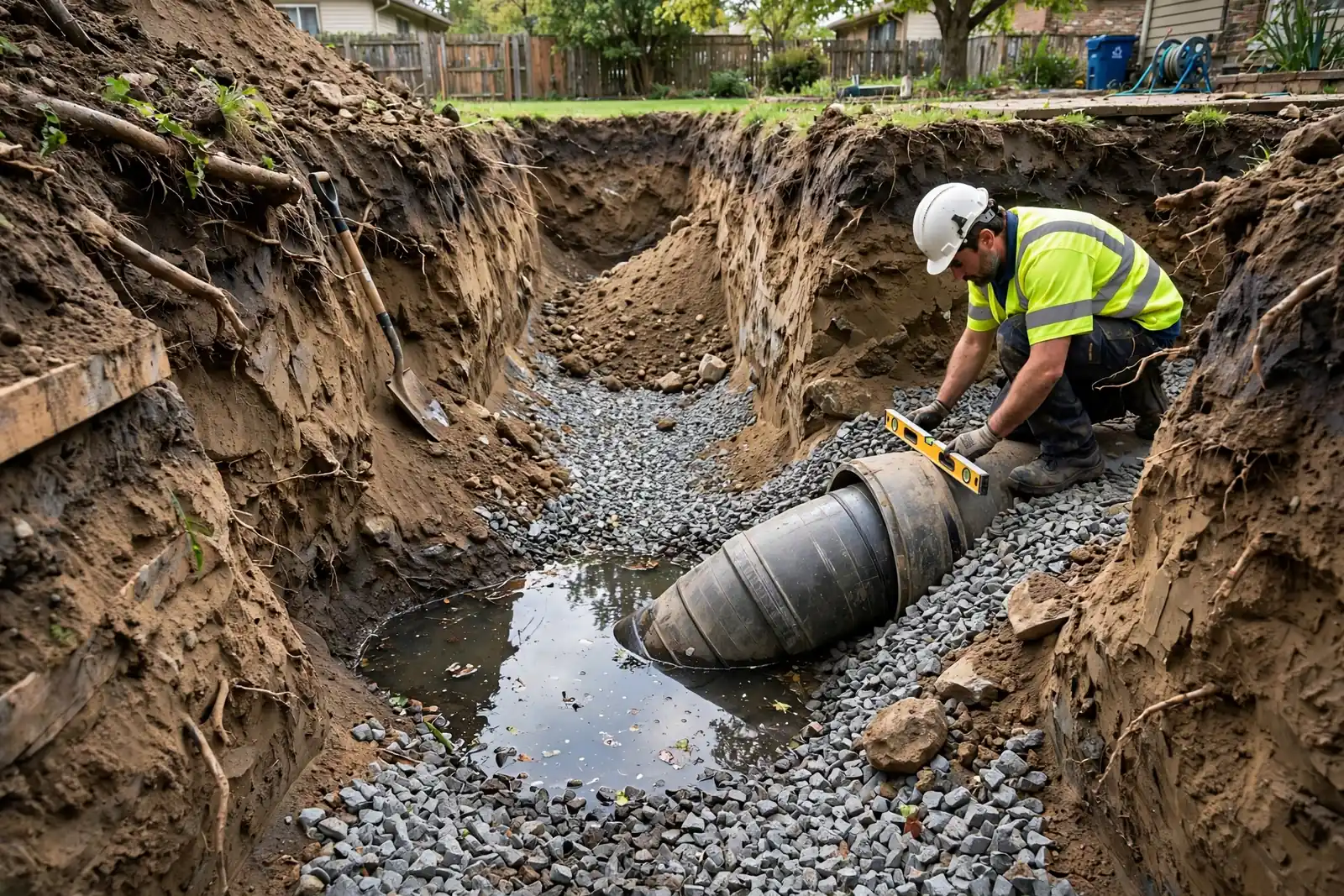
The repair itself is a spot repair or a replacement, depending on what the camera showed about the rest of the line. A single collapsed section with a sound line elsewhere is a spot repair: one pit, one new section of pipe, sealed to the sound pipe on either side. A line that is collapsed in several places, or so damaged that the camera cannot pass it at all, is a full replacement by open trench or bursting.
After the repair, the line is camera-checked end to end, confirming the new section is clear, connected, and flowing with the correct fall. The pit is backfilled in layers and the surface is graded. The job is not finished until the camera has seen the finished line.
What to do now
- Stop using water in the house, and keep away from any wastewater that has backed up.
- Call for help and describe the symptoms — and whether the line has stopped entirely.
- Have the line camera-inspected to find the collapse and mark its position and depth.
- Do not keep running a cable at the collapse — it cannot clear a broken pipe.
- Ask what the camera showed about the rest of the line, and whether a spot repair or a full replacement fits.
What causes it
Ground movement
Freeze-thaw cycles shift the clay soils, and a section can settle, separate, and collapse under the weight of the ground above.
Corrosion
Cast iron thins from the inside over decades until the wall can no longer carry the load above it.
Point loads
A heavy vehicle over a shallow line can crush a section that was already weakened by age.
Washout
Soil entering through an open joint washes out the bed under the pipe, leaving a void the pipe collapses into.
Signs of this problem
- All the drains in the house stop at once, and the line will not clear.
- A cable machine or a camera cannot pass a section of the line.
- The basement floor drain backs up, and the backup does not clear.
- A patch of lawn, driveway, or walkway sinks over the line to the street.
- There is a wet patch in the yard above the line, where soil has washed out.
- The home is a 1950s or 1960s Parma home with its original clay or cast iron lateral.
Related service: Sewer Line Replacement
Related guide: Trenchless vs Traditional Sewer Replacement
Related service: Sewer Line Replacement
Other sewer line problems
Frequently asked questions
Questions people ask about collapsed sewer line, answered plainly.
No. A collapse is the pipe itself, not something inside the pipe. A cable machine cannot pass a collapsed section, and cleaning cannot restore a broken pipe. The collapsed section has to be dug out and replaced.
No. A bursting head cannot pass a collapsed section, and a liner needs a pipe to press against. The collapsed section has to be dug. The rest of the line may still be replaced trenchless, if the camera shows it is passable.
A camera inspection shows it. The camera stops at the collapse, and the locator marks the spot on the surface, with the depth. A line that will not clear, and that a cable cannot pass, is also a strong sign.
Ground movement from freeze and thaw, corrosion in cast iron, a point load over a shallow line, or a washout where soil has entered through an open joint. Parma's clay tile and cast iron laterals from the 1950s and 1960s are at the age where all of these happen.
It depends on the depth and the length of the failed section, and on whether the rest of the line needs work too. A single collapsed section is a spot repair, measured in days. A line collapsed in several places is a full replacement.
It can. A washout under the pipe leaves a void, and the surface above it — lawn, driveway, or walkway — can sink. The crew checks the surface over the line when the collapse is located, and the repair includes backfilling and grading the void.
Dealing with this problem now?
Call Now to reach a local sewer professional. Describe the problem, where it is, and what the line has been doing.
Call now for sewer line help
Tap Call Now to reach a local sewer professional. Tell them where the problem is, what the line has been doing, and whether wastewater is coming into the home.
Hours: Mon–Fri 7:00 AM–10:00 PM ET · Sat 8:00 AM–10:00 PM ET · Sun 7:00 AM–9:00 PM ET
Before you call
- Stop using water if the line is backing up.
- Keep people and pets away from any wastewater.
- Note which drains are slow, and which one backs up first.
- Note whether the problem happens in heavy rain, or all the time.
- Have the age of the home ready, if you know it.