The short version
Problem: Traditional replacement digs a trench along the whole line; trenchless works through small pits and leaves the surface largely intact.
What to do: A camera inspection decides which fits — a collapsed line or a deep belly may still need a trench.
When to call: Call Now to have the line camera-inspected and the options explained from what the camera found.
What traditional replacement looks like
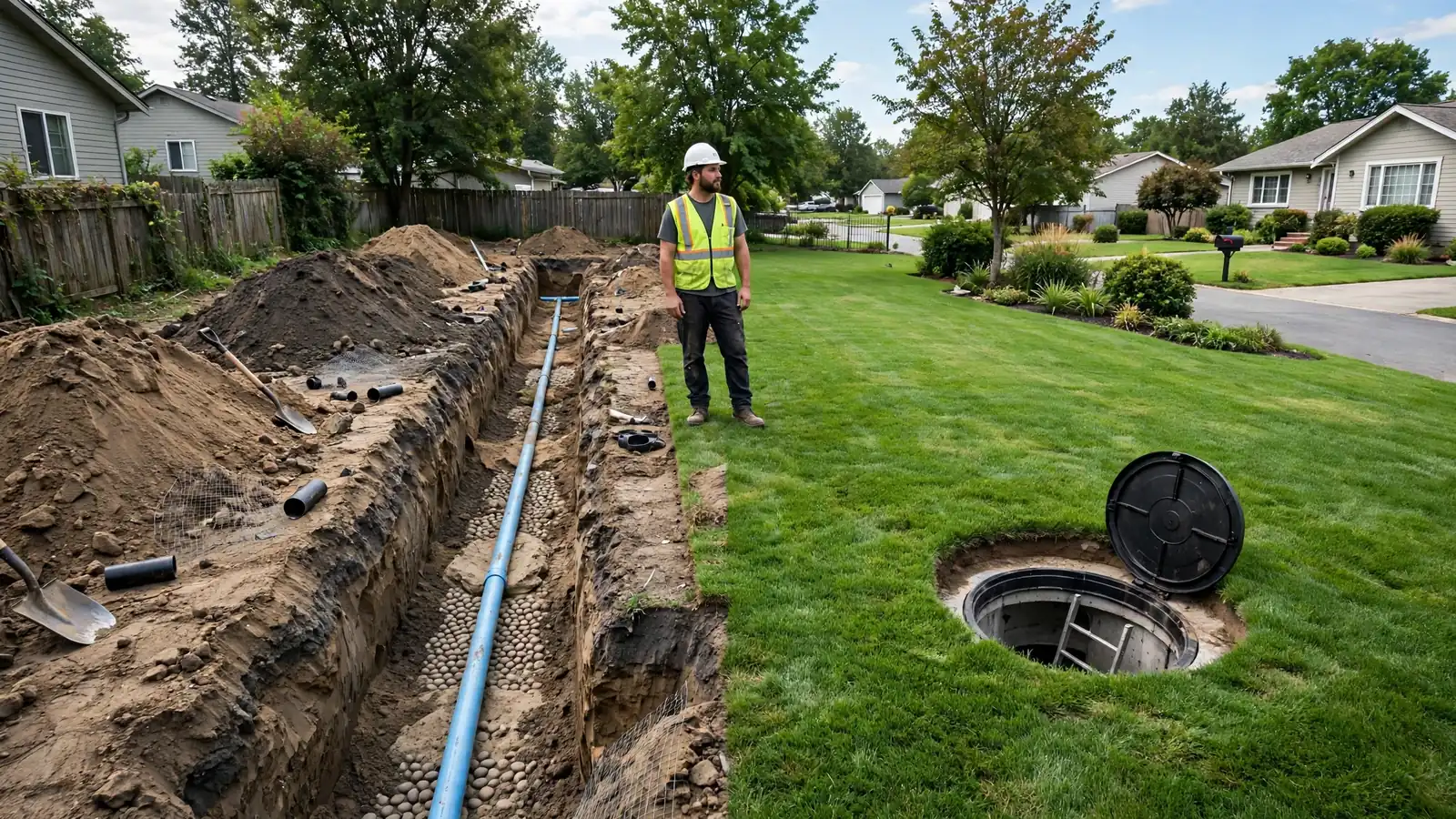
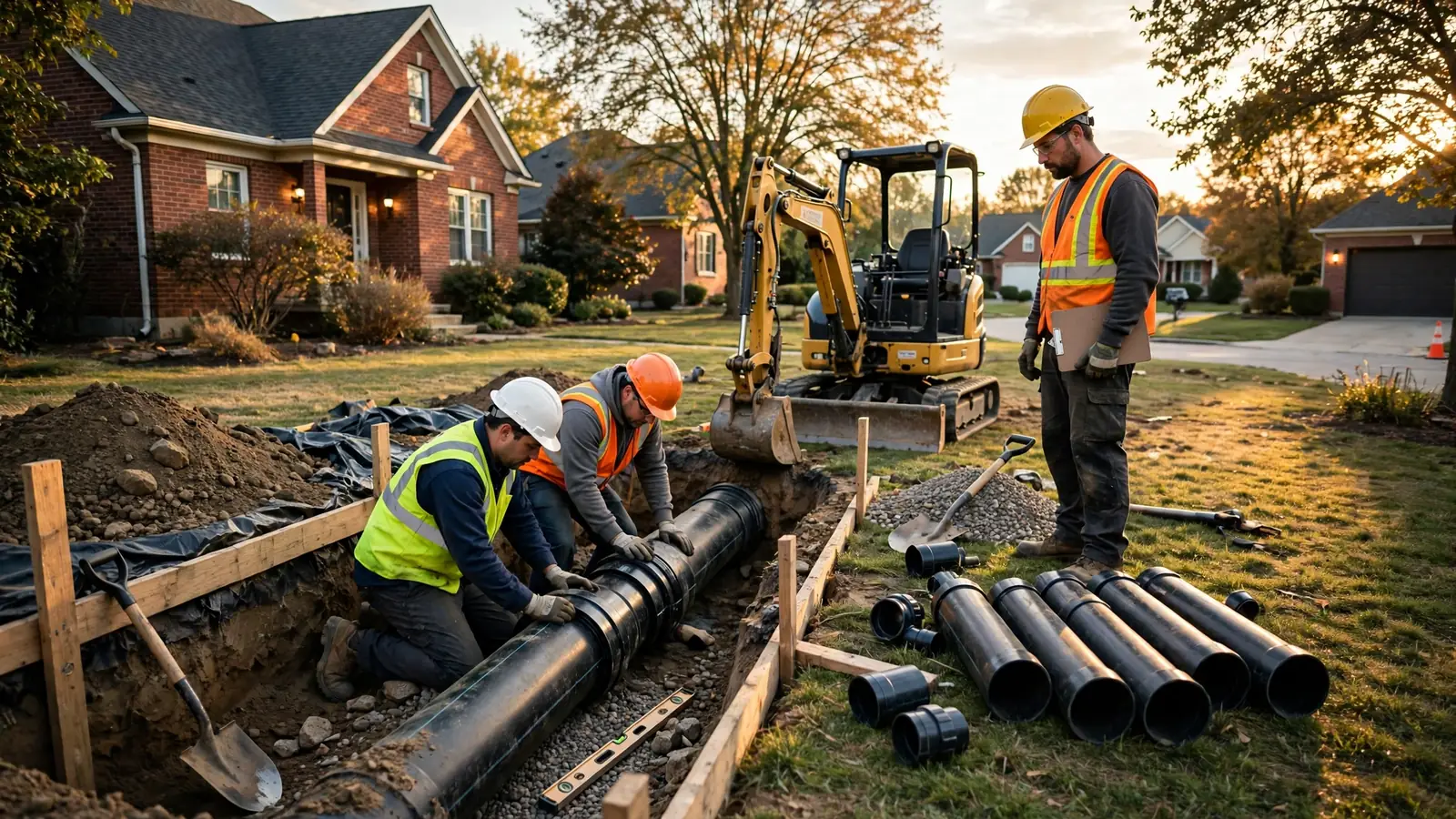
Traditional — open-trench — replacement digs a trench along the full length of the lateral, from the house to the street main. The old pipe is removed, a new pipe is laid on a prepared bed with the correct slope, the connections at both ends are made and sealed, and the trench is backfilled in layers and graded. It is the oldest method, and it is the method that works on every line, whatever its condition.
The advantage of a trench is control. The crew can see the whole line — every section, every joint, the bed it sits on, and the soil around it. A belly can be re-graded by eye. A collapsed section is visible. The new pipe is laid at the correct slope, on a bed that supports it, with the connections made by hand. There is no guessing about what is underground, because the ground is open.
The disadvantage is the surface. A trench across a front yard means the lawn over the line is dug up, and a line that runs under a driveway, a patio, or a walkway means that surface is opened too. The digging is restored — backfilled, graded, and left ready for the homeowner to restore — but the lawn, the driveway, and the walkway are disturbed, and the restoration takes time to settle.
What trenchless replacement looks like
Trenchless replacement works through small access pits instead of a trench. The crew digs a pit at each end of the line — one near the house, one near the street main — and replaces the pipe between them without opening the ground in between. The lawn, the driveway, and the walkway above the line stay in place, and the work happens underground between the two pits.
There are two trenchless methods. Pipe bursting pulls a bursting head through the old line, breaking the old pipe outward while a new pipe follows in the same path. Cured-in-place lining inserts a resin-soaked liner into the old pipe and cures it in place, forming a new pipe inside the old one. Bursting replaces the pipe entirely and can go larger; lining renews the inside of a pipe that is still round and continuous.
The advantage of trenchless work is the surface. A lateral under a driveway, a patio, or mature trees can be replaced without opening any of them. The disadvantage is the limit: trenchless methods need a line that can be entered and pulled through. A line that has collapsed flat, or one with a sharp offset or a deep belly, may not allow a bursting head or a liner to pass — and that line still needs a trench, at least for the bad section.
Which one fits your lateral
The camera inspection decides. It shows the pipe material, the damage, the depth, and the path of the line — and, most importantly, whether the line is passable. A line that is cracked, root-filled, or corroded, but still round and passable, is a candidate for trenchless work. A line that has collapsed flat, or one with a sharp sideways offset, is not — and the trench is the fix for that section, whatever the homeowner prefers.
The surface above the line matters too. A lateral under a driveway, a patio, or mature trees is a strong candidate for trenchless work, because the trench alternative means demolition and restoration. A shallow lateral through open lawn may be simpler by open trench, because the digging is small anyway and the crew can see the whole line. The method should fit the line and the yard, not the other way around.
The length of the run matters as well. A long lateral is a good candidate for trenchless work, because the cost of restoring a full trench grows with the length of the run. A very short lateral may be simpler by open trench, because the digging is small and the crew can see the whole line. The crew explains the options from the camera findings, and the homeowner decides with the full picture.
What the work looks like day by day
Both methods start the same way: a camera inspection, a locate, and the permits for work in the right-of-way and at the street main. The inspection and the locate give the crew the length, the depth, and the path of the line, and the method is chosen from what they found. The digging — a trench or two pits — comes next, and the replacement follows.
An open-trench job is measured in days, with the trench open for the digging and the pipe-laying, and then backfilled in layers. A trenchless job is also measured in days, with the pits dug first, the bursting or lining work in the middle, and the connections and the final camera check at the end. Neither method is an afternoon job, and neither should be rushed — the slope of the new line and the seals at both ends are the details that decide whether the line drains.
After the work, the finished line is camera-checked end to end, whatever the method. The camera confirms the new pipe is clear, continuous, and flowing with the correct fall toward the street main. The trench or the pits are backfilled in layers and graded, and the surface is left ready for the homeowner to restore. The job is not finished until the camera has seen the finished line.
The choice that matters most
The choice between trenchless and traditional is not a choice between a good method and a bad one. Both are proven, and both leave the home with a new line. The choice is about which method fits the line — and the line is the thing the camera inspection shows. A homeowner who chooses a method before the camera inspection is choosing blind.
The question to ask is not which method is better in general, but which method fits this lateral: its material, its damage, its depth, and what sits above it. A clay lateral with roots at many joints and a clear path is a bursting job. A clay lateral with open joints but a sound shape is a lining job. A collapsed section is a trench job, whatever the rest of the line needs. The camera findings are the answer, and the crew explains them before any digging starts.
If the camera shows a line that can be done either way, the surface above it usually decides. A driveway, a patio, or mature trees point to trenchless. Open lawn points to a trench. Either way, the finished line is the same: a new pipe, laid at the correct slope, sealed at both ends, and checked on camera.
The question to ask before you choose
The question to ask before choosing between trenchless and traditional replacement is not which method is newer. It is what the camera found. Trenchless and open-trench are two ways of doing the same job — putting a new pipe in the ground at the correct slope — and the right one depends on the condition of the old line, the depth, the access, and the ground. A method chosen before the camera inspection is a guess, and the guess is often wrong.
Trenchless fits when the old line is open enough to burst or line, when there is room for access pits, and when the line has no severe belly. Open-trench fits when the line has collapsed, when a belly has to be corrected, or when the connection at the main has to be rebuilt. Both methods end with the same check: a camera run through the finished line, showing the full run from the house to the main.
The yard is a real factor, but it is not the only one. Trenchless keeps the lawn and the driveway intact, and that matters when the line runs under a patio or a mature tree. Open-trench gives the crew full sight of the work — every joint, every connection, the slope itself — and that matters when the line is badly damaged. Ask the crew to explain the choice from the camera findings, and to show the footage that supports it. The method should follow the evidence.
Related: Collapsed Sewer Line · Trenchless Sewer Line Replacement · sewer line replacement in Parma
Related guides
 Guides
How Long Does Sewer Line Replacement Take in Parma, OH
Most residential sewer line replacements in Parma are measured in days, not weeks — but the length, the depth, and the method all affect the schedule.
 Comparisons
Clay vs Cast Iron vs PVC Sewer Pipe in Parma, OH
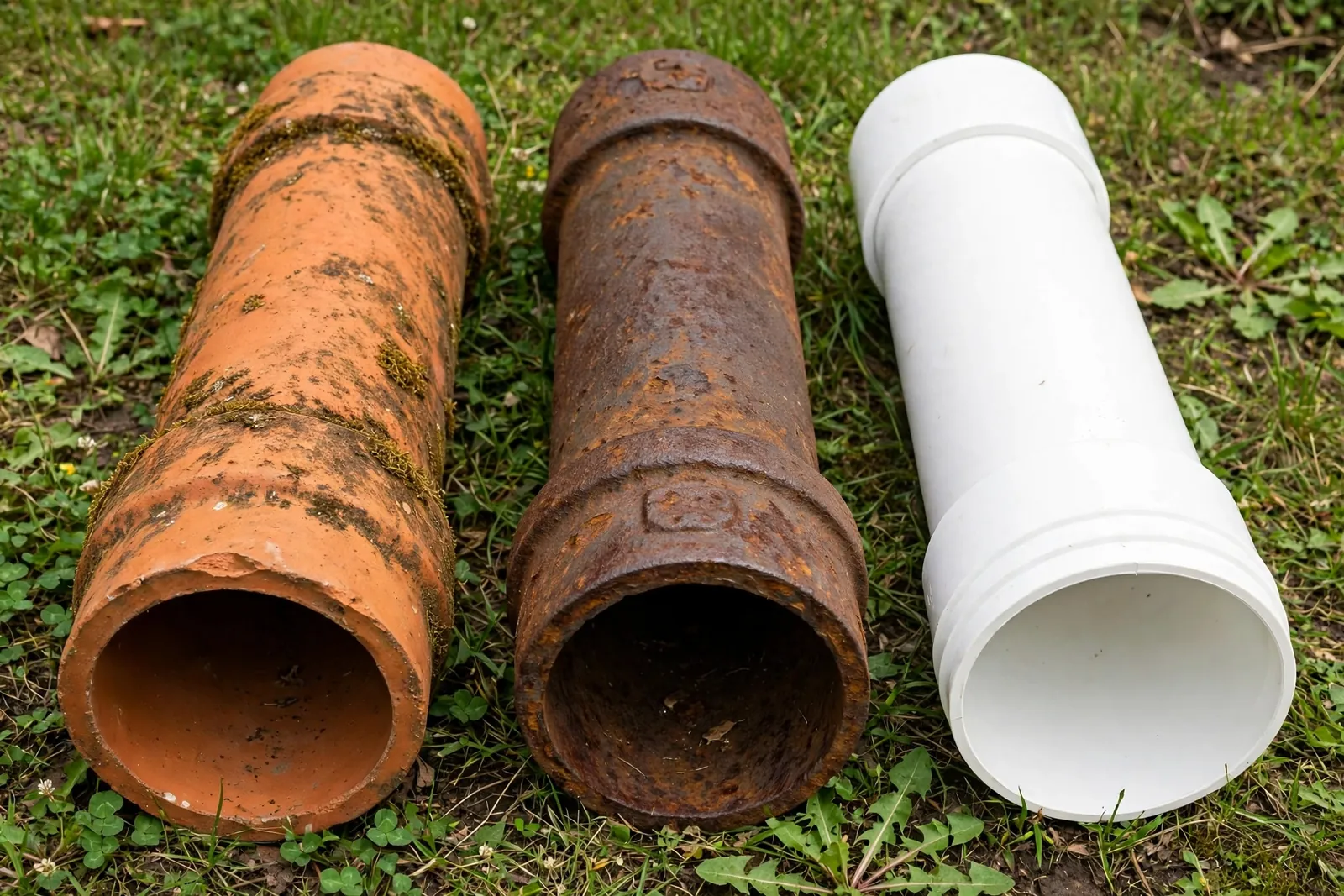
Most Parma laterals are clay tile or cast iron. Newer homes have PVC. Each material fails differently — and the replacement is chosen for the home.
 Guides
What Is a Sewer Lateral? A Parma Homeowner Guide
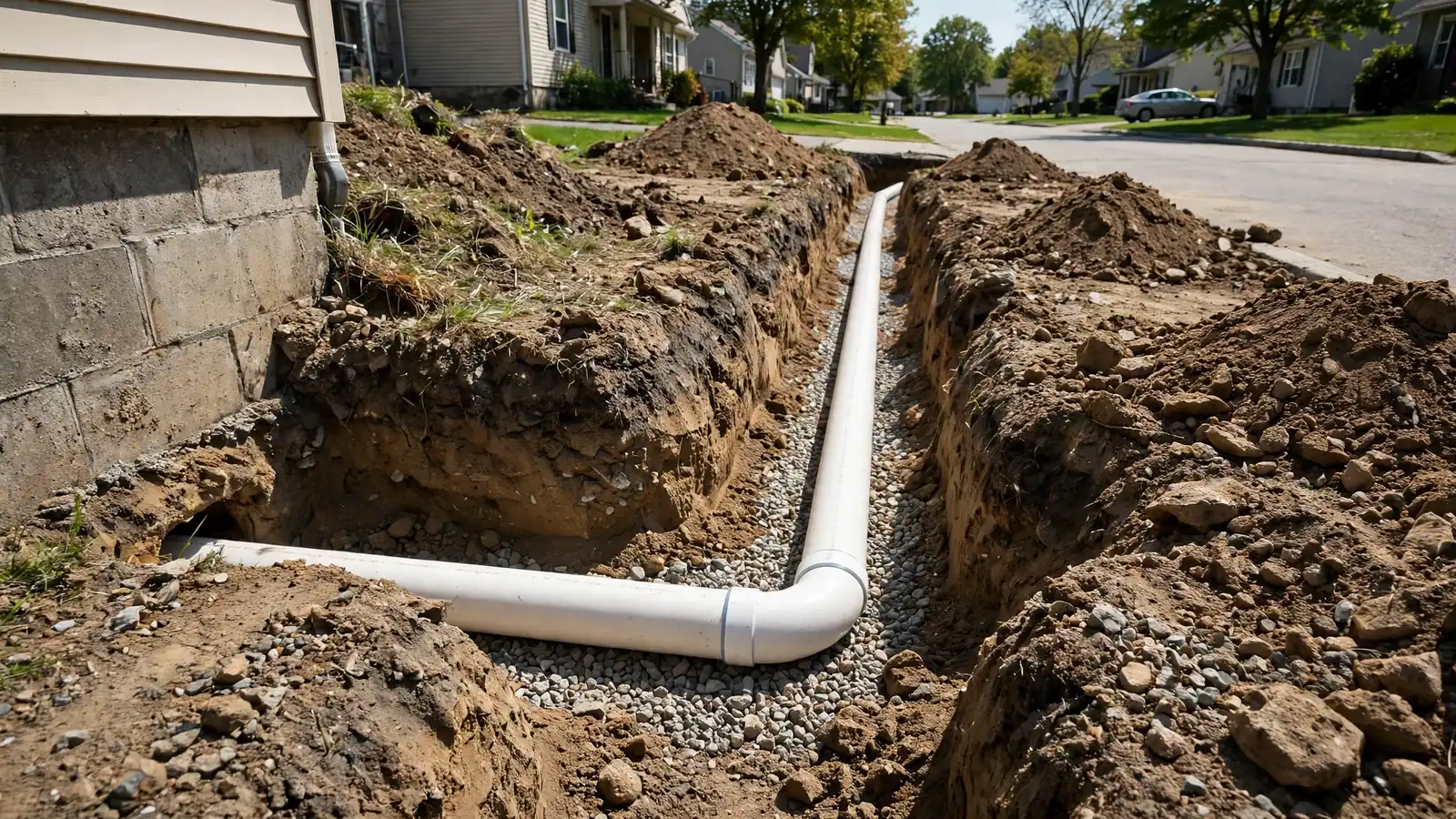
The sewer lateral is the pipe that connects your home to the street main — and in Parma, it is the homeowner's responsibility. Here is what it is and what it does.
Frequently asked questions
Questions people ask about this topic, answered plainly.
No. The line has to be passable — a bursting head or a liner has to get through it. A line that has collapsed flat, or one with a sharp sideways offset, may not allow it. The camera inspection is what decides.
They solve different problems. Bursting replaces the pipe entirely and can go the same size or larger. Lining renews the inside of a pipe that is still structurally sound, and it leaves a smooth, jointless pipe. The camera findings decide which one fits your line.
The comparison that matters is the whole job, including the restoration of the surface. A trench across a driveway or a mature lawn means demolition and restoration that trenchless work avoids. The crew explains the options from the camera findings, and the homeowner decides with the full picture.
Yes, along the line. The trench is dug, the pipe is laid, and the trench is backfilled and graded. The lawn over the line is disturbed, and a driveway or walkway above the line is opened. The surface is left ready for the homeowner to restore.
It depends on the belly. A mild belly can sometimes be lined, but a deep belly is a low spot in the line, and neither method corrects the fall — the liner and the bursting head both follow the path of the old pipe. A bad belly usually needs a trench to re-grade that section.
Have the line camera-inspected first. The camera shows the material, the damage, and whether the line is passable — and the crew explains which methods fit, and what each involves for your yard. The method follows from the findings, not from a preference made before them.
Still have questions?
Call Now to reach a local sewer professional — describe the problem and what the line has been doing.
Call now for sewer line help
Tap Call Now to reach a local sewer professional. Tell them where the problem is, what the line has been doing, and whether wastewater is coming into the home.
Hours: Mon–Fri 7:00 AM–10:00 PM ET · Sat 8:00 AM–10:00 PM ET · Sun 7:00 AM–9:00 PM ET
Before you call
- Stop using water if the line is backing up.
- Keep people and pets away from any wastewater.
- Note which drains are slow, and which one backs up first.
- Note whether the problem happens in heavy rain, or all the time.
- Have the age of the home ready, if you know it.