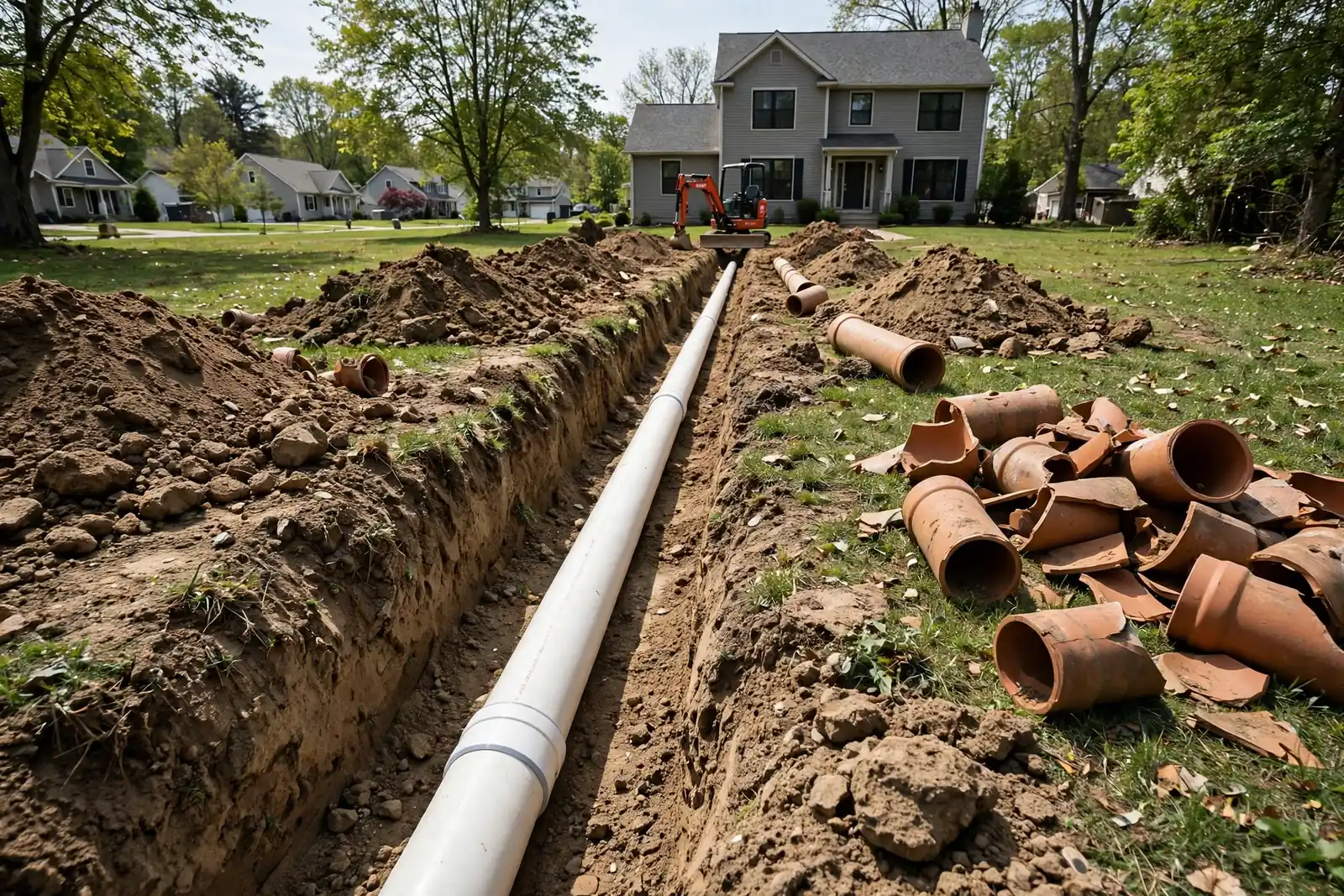
Sewer Line Replacement Parma, OH
Most Parma homes were built when clay tile and cast iron were the standard sewer pipe — and those pipes are now at or past the end of their working life. When a lateral fails, replacement is the work that fixes it for good.
Need help with your sewer line?
Call Now to reach a local sewer professional. Describe the problem, where it is, and what the line has been doing.
Hours: Mon–Fri 7:00 AM–10:00 PM ET · Sat 8:00 AM–10:00 PM ET · Sun 7:00 AM–9:00 PM ET
What this service does
Parma is a postwar city. The median Parma home was built in 1958, and about 68 percent of the city's 36,157 housing units went up between 1940 and 1969 — roughly 39 percent in the 1950s alone, according to Census ACS data for 2020 to 2024. The sewer laterals under those homes were laid at the same time, from clay tile or cast iron, and clay tile generally lasts about 50 to 60 years. That means a large share of Parma's laterals are now older than the material they were made from.
A sewer line is the pipe that carries everything that leaves your home — toilets, showers, sinks, laundry — from the house to the street main. It runs underground, usually from the foundation to the curb, and you cannot see it fail. What you see instead are the symptoms: drains that keep slowing down, a basement floor drain that backs up after rain, a patch of lawn that stays green and soft, or a smell near a floor drain that never quite goes away.
Replacement means the old lateral comes out and a new line goes in, from the house connection to the street main. It is the right answer when the pipe itself is finished — collapsed, crushed, badly bellied, or so cracked and root-filled that cleaning it only buys a few months. A replacement is a bigger job than a cleaning or a spot repair, and it is the job that ends the cycle of repeat backups.
Before you call
- Stop using water if the line is backing up.
- Keep people and pets away from any wastewater.
- Note which drains are slow, and which one backs up first.
- Note whether the problem happens in heavy rain, or all the time.
- Have the age of the home ready, if you know it.
What a sewer line is, and what happens when it fails
Your home has two separate water systems. The supply system brings clean water in under pressure. The sewer system takes wastewater out by gravity — the lateral slopes gently down from the house to the street main, and everything flows downhill. Because it works by gravity, the line has no pump to force things along. A dip, a break, or a root mass in the line slows the flow, and the line has no way to clear itself.
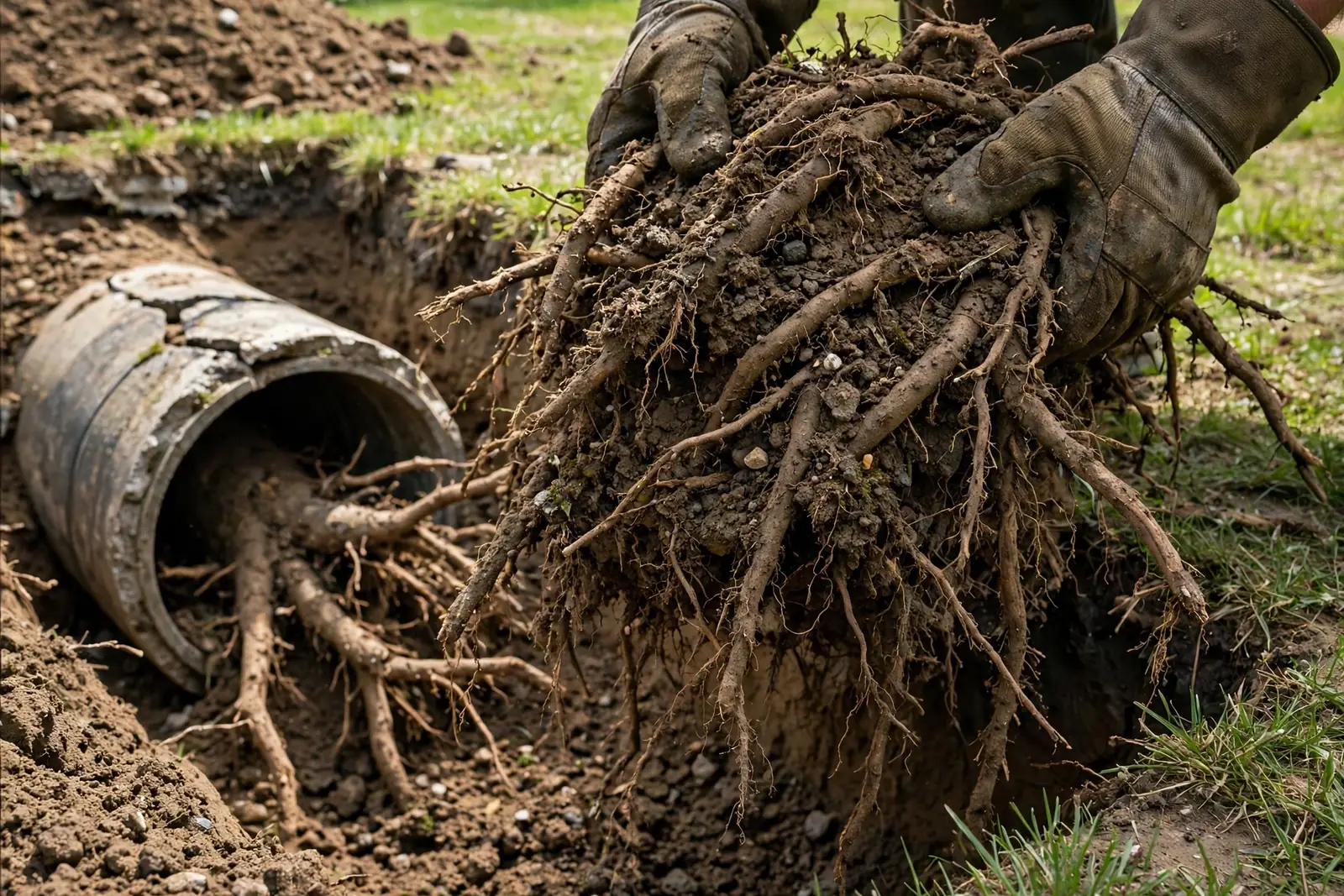
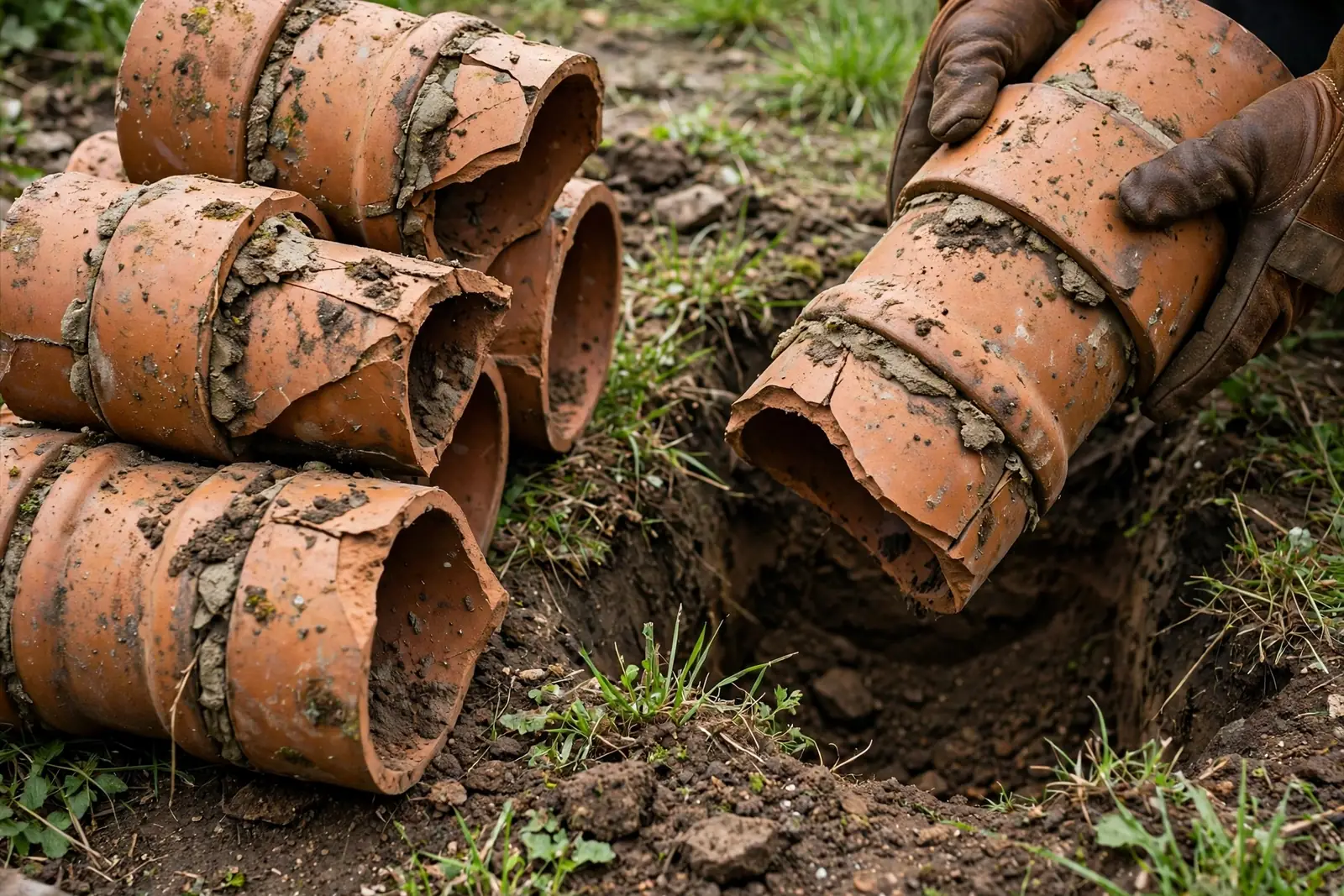
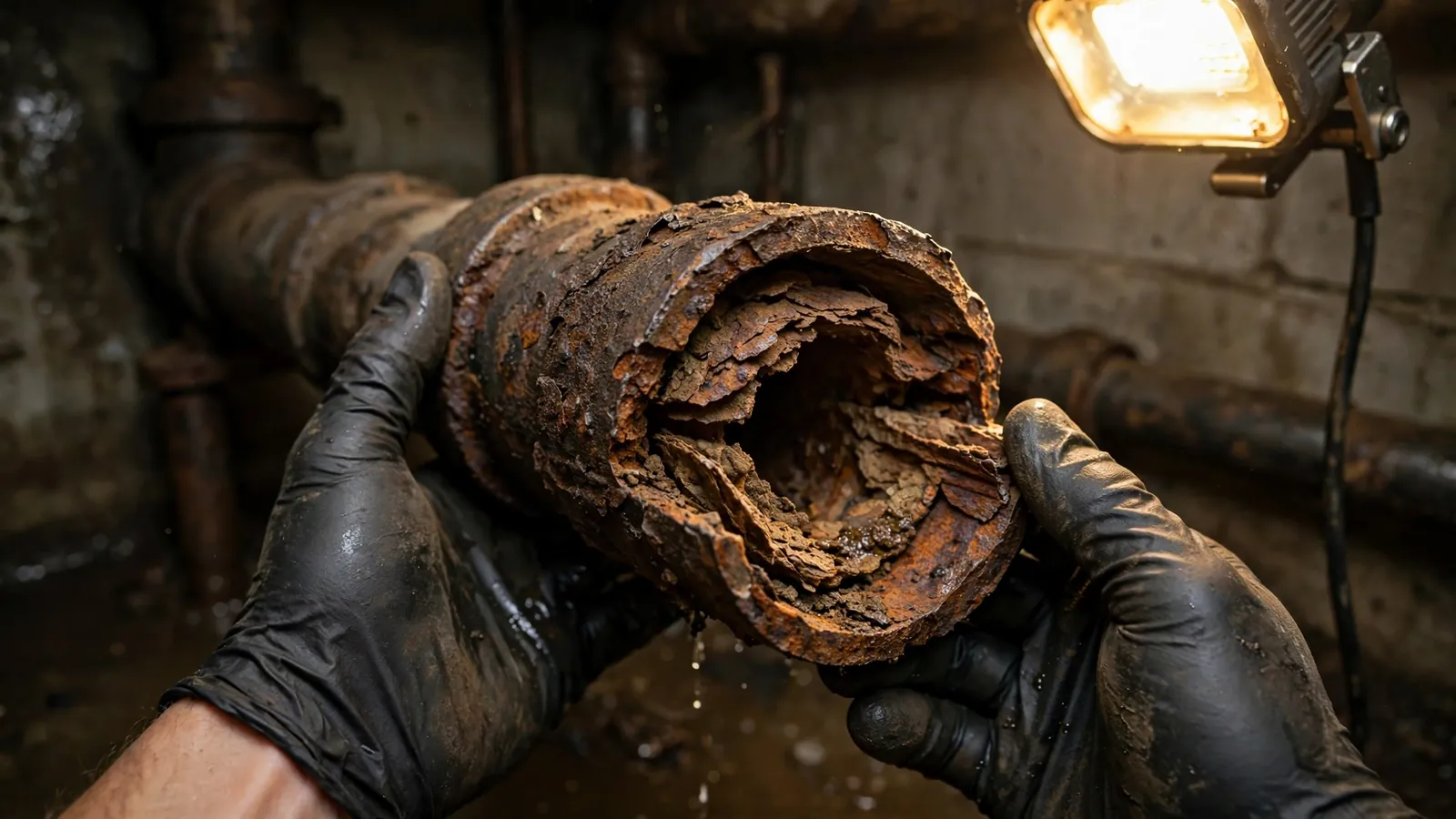
Clay tile was the standard sewer material in Parma's building boom. It came in short sections, usually two to three feet long, joined with mortar or a simple bell-and-spigot fit. Every joint is a place where roots can enter and where the ground can shift the sections apart. Cast iron was the other common material, used heavily for the part of the line inside and just outside the house. It corrodes from the inside over decades, narrowing until the line can barely pass water.
When a lateral fails, the failure is usually gradual. Roots enter a joint and grow into a mat that catches paper and waste. A section settles and creates a belly — a low spot where water and solids sit instead of flowing. A heavy vehicle or years of freeze and thaw can crack or crush a section outright. Each of these makes the line slower, and a slow line backs up at the lowest drain in the house, which is usually the basement floor drain.
What the service includes
Camera inspection first
A camera is run through the line before any digging starts, so the crew knows the pipe material, the depth, where the damage is, and how long the run is. The inspection decides whether replacement is needed at all, and which method fits.
Locating and marking the line
The line is located from the house to the street and marked on the surface, along with other underground utilities. Marking keeps the digging on the line and away from gas, water, and electric service.
Open-trench replacement
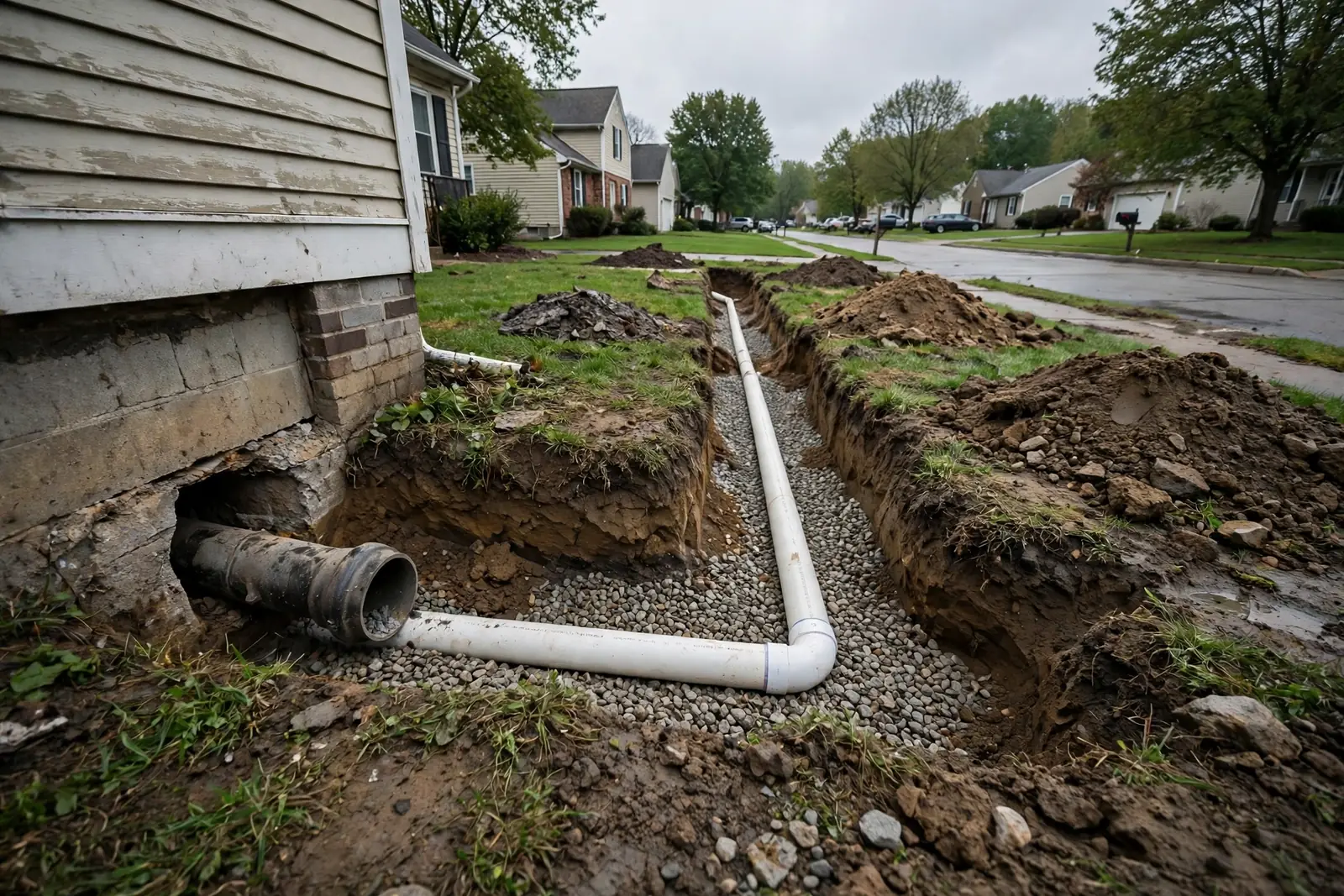
The traditional method: a trench is dug along the line, the old pipe is removed, and new pipe is laid on a prepared bed with the correct slope. It is the method used when the line is shallow, the ground is open, or the damage is extensive.
Trenchless replacement
Pipe bursting or lining replaces the line through small access pits instead of a full trench. The lawn, driveway, and walkway stay largely intact. It is the method most Parma homeowners ask about first, and it fits many — but not every — failed line.
New pipe and proper slope
The replacement line is laid with a steady fall toward the street main, with joints that seal and a bed that supports the pipe. Slope matters more than material: a line that does not fall correctly will hold water no matter what it is made of.
Backfill, grading, and final check
The trench or pits are backfilled in layers, the surface is graded, and the line is camera-checked again to confirm the new pipe is clear, connected, and flowing. The job is not finished until the new line is seen on camera.
How the work runs
Call and describe the symptoms
Slow drains, backups, smells, or a wet patch in the yard — and where in the house the problem shows up. The lowest drain that backs up tells the crew a lot about where the trouble is.
Camera inspection
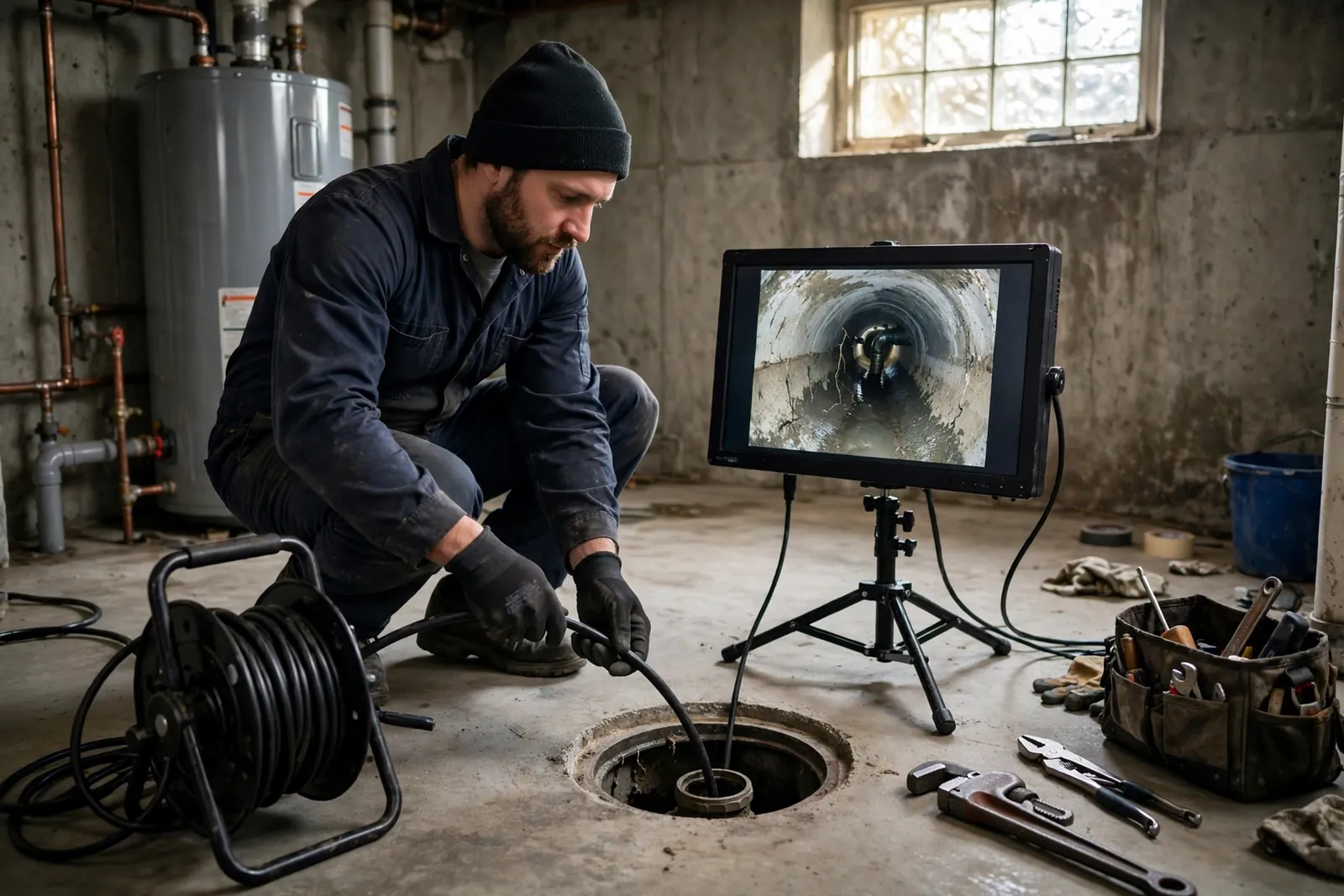
A camera is fed through the line from a cleanout or a pulled toilet. The screen shows the pipe material, joints, roots, cracks, bellies, and the connection at the street main.
Findings and options
The crew explains what the camera found and which options fit: cleaning, spot repair, lining, pipe bursting, or full open-trench replacement. The decision is based on the condition of the pipe, not on a guess.
Locating and permits
The line is located and marked, and any required local permits are handled before digging. Parma work follows the city's rules for work in the right-of-way and the connection at the street main.
Replacement work
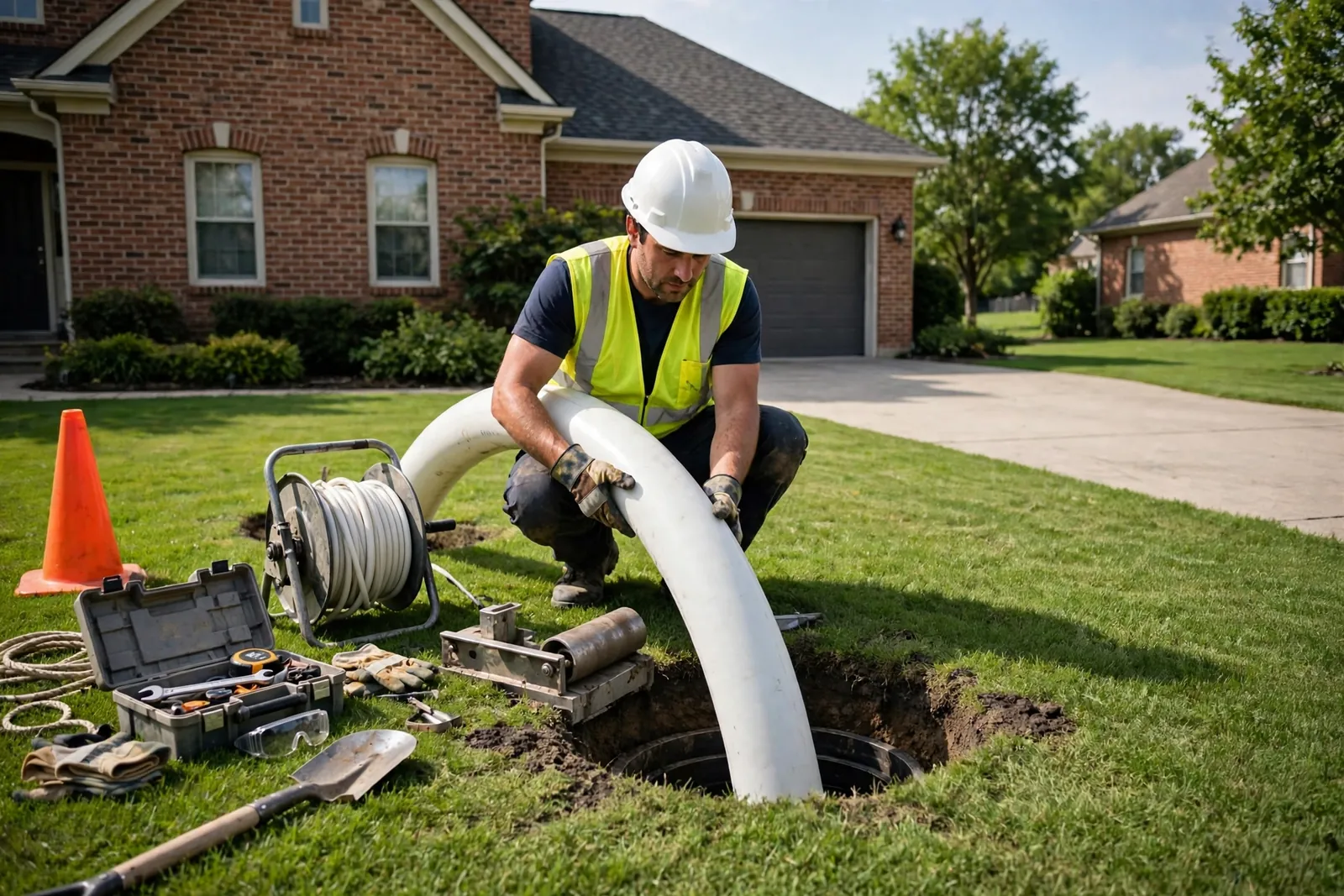
The old line is removed or burst in place, the new line is laid with the correct slope, and the connection at the house and at the street main are made and sealed.
Final camera check and restore
The new line is camera-checked end to end. Then the trench or pits are backfilled, the ground is graded, and the surface is left ready for the homeowner to restore.
Tools and methods used
Sewer camera
A waterproof camera on a push cable, with a locator beacon, shows the inside of the line on a monitor — the material, the joints, and every defect, with the depth and distance marked.
Pipe locator
A locator reads the camera's beacon and the signal on the pipe itself, so the line's path and depth are marked on the surface before any digging begins.
Mini excavator
A compact tracked excavator digs the trench or the access pits in a residential yard without tearing up the whole lot. It is sized for the narrow side yards common in Parma.
Pipe bursting head
A bursting head is pulled through the old line, breaking it outward while a new pipe follows behind it in the same path. The old pipe never has to be dug out.
Replacement or repair: how the decision is made
Not every failed lateral needs a full replacement. The camera inspection is what separates a line that can be repaired from a line that cannot. A single cracked section with good pipe on either side is a candidate for a spot repair. A line with one bad belly and otherwise sound joints may be a candidate for lining. A line that is collapsed in several places, or so root-filled that the camera can barely pass, is a replacement.
The decision also weighs the age of the pipe. A clay lateral from the 1950s that has failed in one place is likely to fail in the next place soon, because the whole line is the same age and the same material. In that situation, replacing the full run ends the cycle of repeat digs. A newer line that failed because of one bad joint or one root entry is a different case, and a targeted repair may be the sensible answer.
Homeowners sometimes ask whether they should wait. A line that backs up occasionally will not heal, and the water that backs up is wastewater — it carries what it carries, and it belongs in the pipe, not in a basement. Waiting usually means the next backup, and the next one may be worse than the last.
What a Parma home's sewer line is usually made of
If your Parma home was built between 1940 and 1969 — and about two in three were — the original lateral is most likely clay tile, with cast iron for the section inside the house and just outside the foundation. Clay tile came in short sections joined with mortar, and every joint is a seam that roots can find and ground movement can open. Cast iron corrodes from the inside, narrowing the pipe over decades until flow is restricted.
Homes built later, from the 1970s onward, more often have PVC or ABS plastic laterals, which have sealed joints and a smooth bore. Those lines still fail — usually from ground settlement, a crushed section, or roots at a bad joint — but they fail less often and later than clay tile.
The Ohio EPA's September 2024 documentation of pre-1960 common-trench sewers and basement backups in Parma, around the Krueger Avenue relief-sewer project, is a reminder that the problem is not only the pipe in one yard. Some Parma streets share older common-trench sewers, and heavy rain can push water back toward homes. A camera inspection of your own lateral shows whether the problem is in your line or further out.
What happens to the old pipe
The old lateral does not stay in the ground in most open-trench replacements. Once the new line is laid, the old clay tile or cast iron is lifted out in sections and removed from the property. In a pipe-bursting job the old pipe is different: it is broken apart underground and pushed outward into the surrounding soil as the new pipe is pulled through, so nothing is hauled away. Either way, the trench is backfilled in layers, and each layer is compacted so the ground does not settle into a dip over the line later.
Surface restoration follows the backfill. A lawn is regraded and reseeded or re-sodded. A section of driveway or walkway that was cut is repoured to match the surrounding surface as closely as the material allows. The work area is left tidy, with the spoil and the old pipe removed. What the restoration does not do is return a mature lawn or an old concrete slab to the exact state it was in before the work — new grass takes a season to blend in, and new concrete cures to a slightly different shade.
The final step is the camera check, and it matters more than the surface work. The camera runs from the house to the street main and shows the full length of the new line: the joints, the slope, and the connection at the main. If the camera shows a low spot or a joint that is not seated, the crew corrects it before the job is called done. Keep the camera findings with the other records for the house — the date of the replacement, the material used, and the footage are the record a future buyer or insurer will ask for.
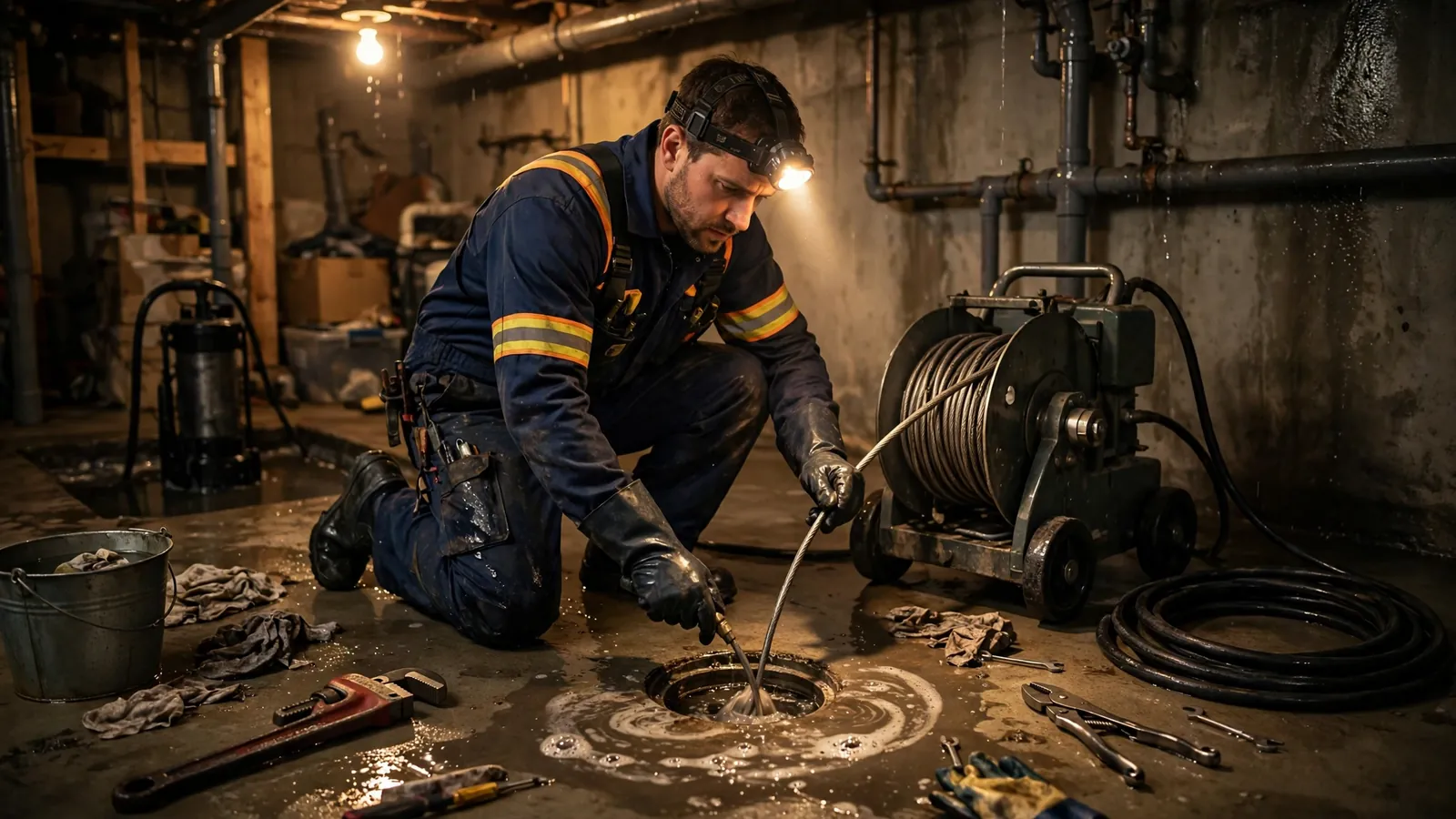
A lateral that keeps backing up
A lateral that keeps backing up will not heal — the water keeps coming back through the lowest drain in the house.
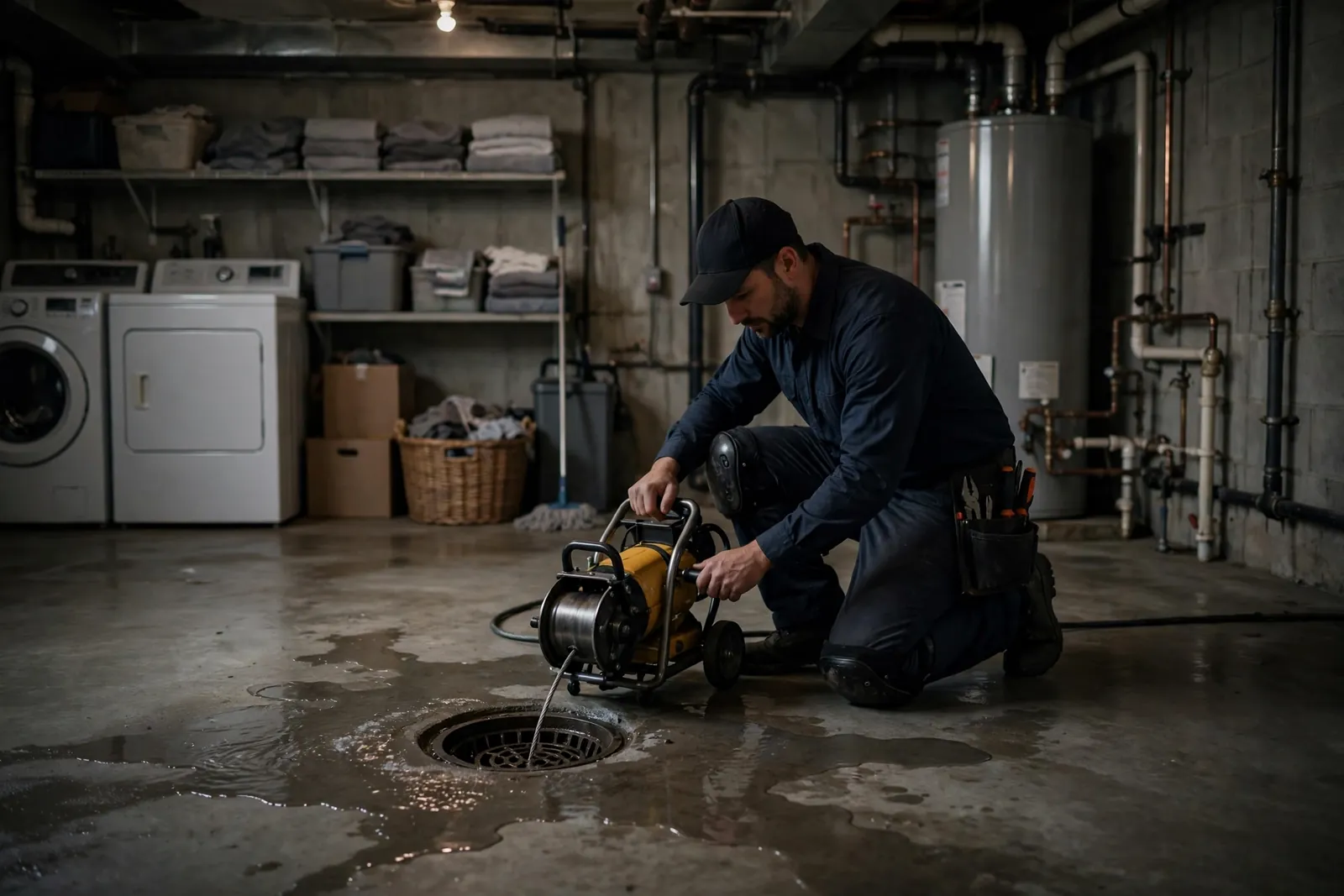
A new line, checked on camera
The work is checked with a camera, not a look at the surface — the new line is seen end to end before the job is called done.
Problems a replacement solves
- Repeat backups at the lowest drain in the house, after every heavy use of water.
- A lateral that is collapsed or crushed, where cleaning cannot restore flow.
- Clay tile joints that have separated and filled with roots.
- A bellied section that holds water and solids instead of draining.
- Cast iron that has corroded and narrowed until the line barely passes water.
- A line that has been cleaned several times and fails again within months.
Signs your sewer line may need replacement
- More than one drain in the house is slow at the same time — a single slow drain is usually a local clog, but several slow drains point to the main line.
- The basement floor drain backs up when the washing machine runs, after a shower, or during heavy rain.
- A gurgling sound comes from a toilet or tub when another fixture drains.
- A patch of lawn stays greener, softer, or wetter than the rest of the yard, especially along the line from the house to the street.
- A sewer smell comes from a floor drain, a basement corner, or a spot in the yard.
- The line has needed cleaning more than once in a year, and the problem keeps coming back.
- The home was built in the 1950s or 1960s and still has its original clay or cast iron lateral.
- A camera inspection shows a collapsed section, a bad belly, or joints packed with roots.
Related problems
Tree Root Intrusion · Collapsed Sewer Line · Bellied Sewer Line
Industries that use this service
Single-Family Homes · Rental Properties · Commercial Properties · All industries →
Frequently asked questions
Questions people ask about sewer line replacement, answered plainly.
A camera inspection decides it. If the pipe is intact and the problem is a blockage, cleaning usually handles it. If the camera shows a collapse, a bad belly, separated joints, or heavy root intrusion through many joints, cleaning only buys time — replacement is the work that fixes the pipe itself.
Open-trench replacement digs a trench along the full line, removes the old pipe, and lays new pipe. Trenchless replacement — pipe bursting or lining — works through small access pits and leaves the surface largely intact. Trenchless fits many Parma laterals, but a badly collapsed line or a line with no straight path may still need a trench.
Most residential replacements are measured in days, not weeks. A short, shallow line with clear access can be done quickly; a long or deep line, a line under a driveway, or a job that needs work in the street takes longer. The camera inspection and the locate give the crew the information needed to plan the schedule.
It depends on the method. Open-trench work digs along the line, so the lawn over the line is disturbed and then backfilled and graded. Trenchless work digs only small pits at each end, so most of the lawn stays as it is. The crew explains which method fits your line before work starts.
Most residential replacements today use PVC or a similar modern plastic pipe, with sealed joints and a smooth interior that roots cannot easily enter. The exact material and diameter are chosen for the home, the length of the run, and the connection at the street main.
Work that connects to the street main and work in the public right-of-way follows the city's rules, and permits are part of that process. The crew handling the job deals with the permit side before digging starts.
In most Ohio cities, the homeowner is responsible for the lateral from the house to the street main, including the connection at the main. The city maintains the main itself. That is why lateral problems are handled by calling a local professional, not the city.
Yes, with planning. Frozen ground makes digging slower and the work takes longer, but replacements do happen in Ohio winters. A backup that is happening now is handled as an urgent job regardless of the season.
Sewer line trouble in your Parma home?
Call Now to reach a local sewer professional. Describe the problem, where it is, and what the line has been doing.
Call now for sewer line help
Tap Call Now to reach a local sewer professional. Tell them where the problem is, what the line has been doing, and whether wastewater is coming into the home.
Hours: Mon–Fri 7:00 AM–10:00 PM ET · Sat 8:00 AM–10:00 PM ET · Sun 7:00 AM–9:00 PM ET
Before you call
- Stop using water if the line is backing up.
- Keep people and pets away from any wastewater.
- Note which drains are slow, and which one backs up first.
- Note whether the problem happens in heavy rain, or all the time.
- Have the age of the home ready, if you know it.