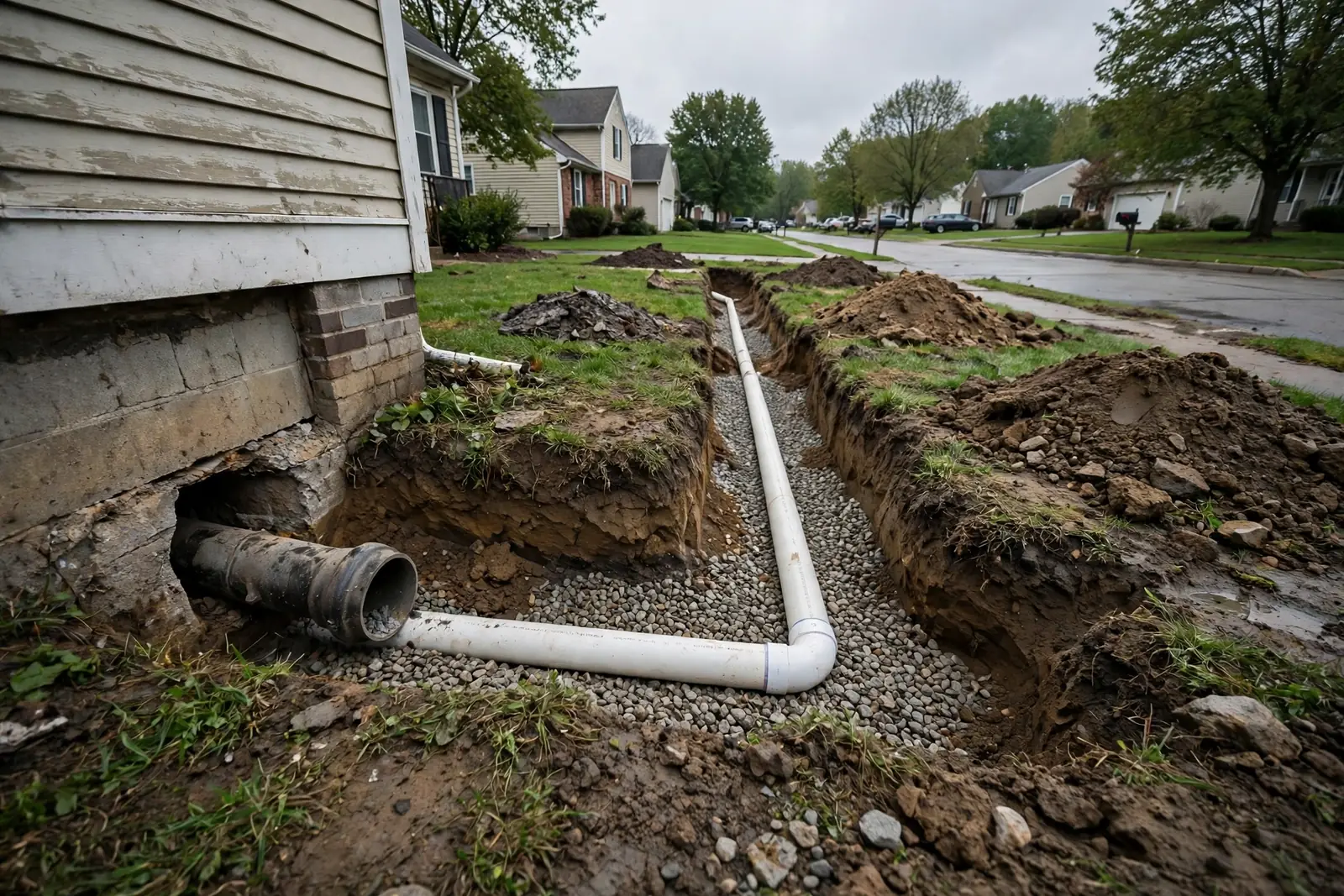
Sewer Lateral Replacement Parma, OH
The lateral is the pipe that connects your home to the street sewer main — and in Parma, it is the homeowner's responsibility. When it fails, replacing it is the fix.
Need help with your sewer line?
Call Now to reach a local sewer professional. Describe the problem, where it is, and what the line has been doing.
Hours: Mon–Fri 7:00 AM–10:00 PM ET · Sat 8:00 AM–10:00 PM ET · Sun 7:00 AM–9:00 PM ET
What this service does
The sewer lateral is the pipe that runs from your house to the street sewer main. It starts at the foundation, where the indoor drain system leaves the house, and it runs underground — under the lawn, sometimes under a driveway — to the connection at the main in the street. Everything that leaves your home travels through it.
In most Ohio cities, including Parma, the lateral is the homeowner's responsibility, from the house all the way to the street main. The city maintains the main in the street. That split is the reason lateral problems are handled by calling a local professional, and why the lateral's condition is part of buying a home here.
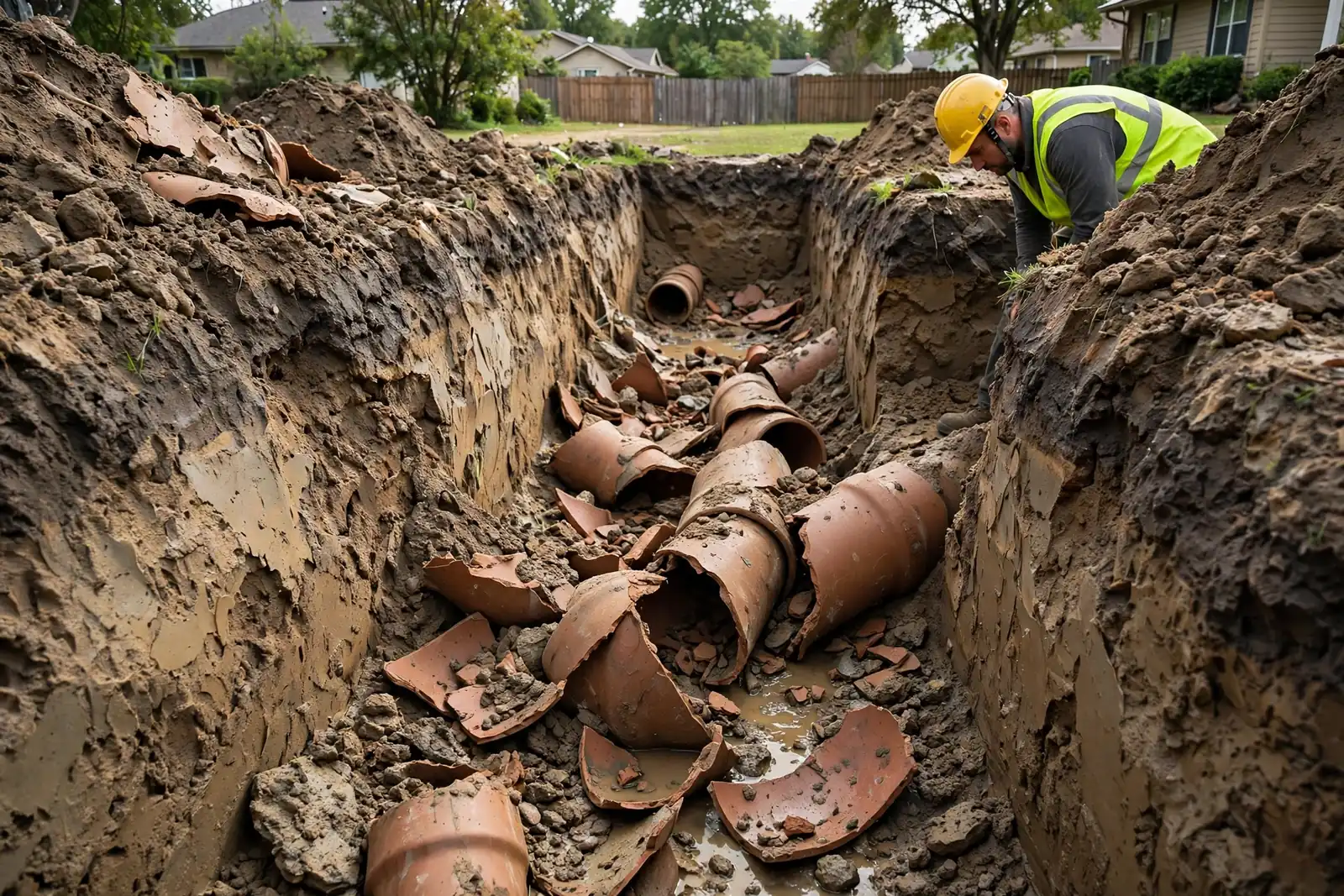
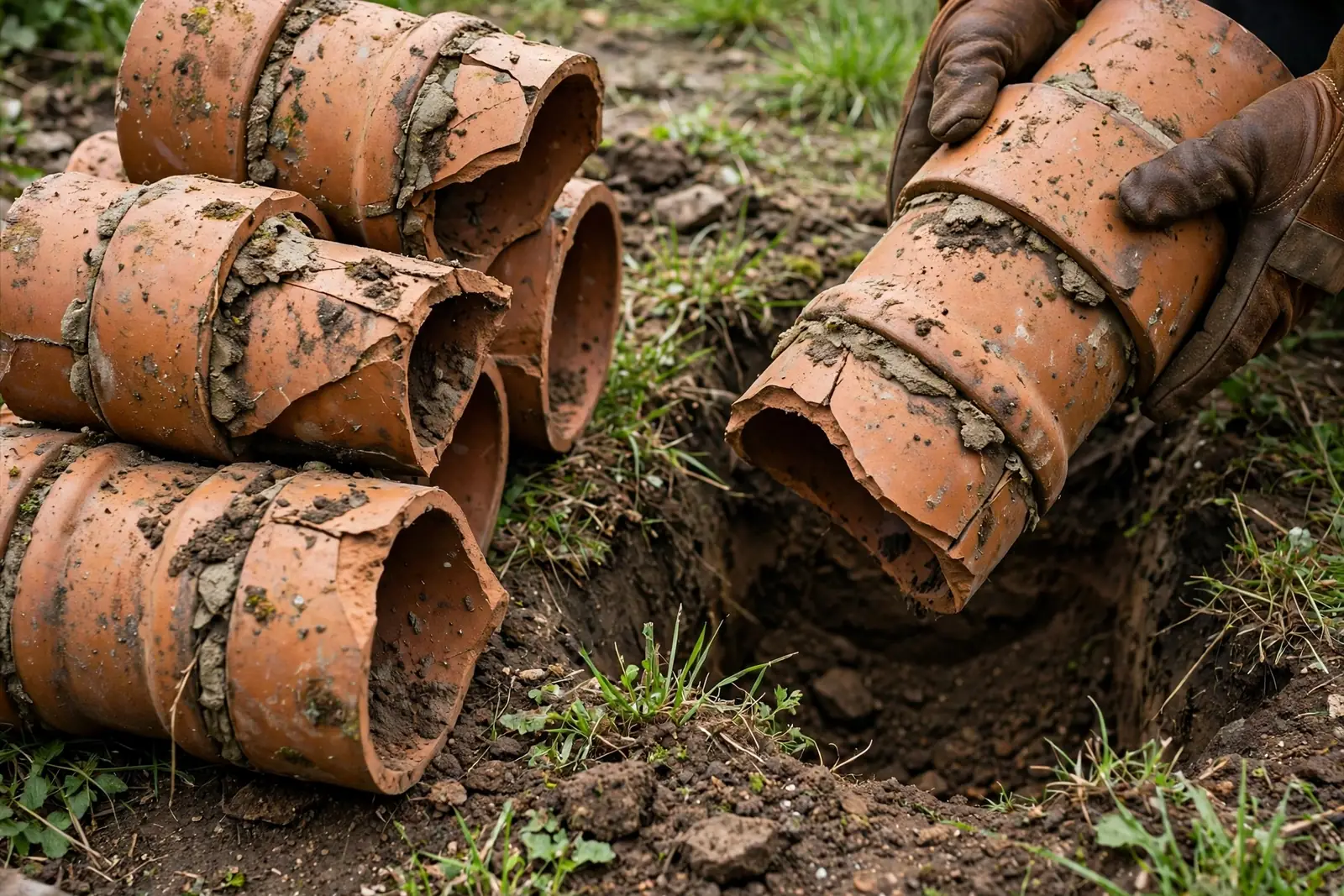
Parma's laterals are old. The median Parma home was built in 1958, and about 68 percent of the city's housing units went up between 1940 and 1969. The laterals laid with those homes were clay tile or cast iron, and clay tile generally lasts about 50 to 60 years. A lateral from the 1950s is now older than the material it was made from, and replacement is the work that gives the home a new line.
Before you call
- Stop using water if the line is backing up.
- Keep people and pets away from any wastewater.
- Note which drains are slow, and which one backs up first.
- Note whether the problem happens in heavy rain, or all the time.
- Have the age of the home ready, if you know it.
What the lateral is, and who owns it
The lateral has two parts, though the homeowner is responsible for both. The upper lateral runs from the house to the property line or the curb. The lower lateral runs from there to the street main, including the connection at the main itself. The work that connects to the main, and any digging in the public right-of-way, follows the city's rules and needs the proper permits.
The lateral works by gravity. It slopes gently down from the house to the main, and wastewater flows downhill. That slope is the reason a belly — a low section where the pipe has settled — causes so much trouble: water and solids sit in the belly instead of flowing, and the line backs up at the lowest drain in the house.
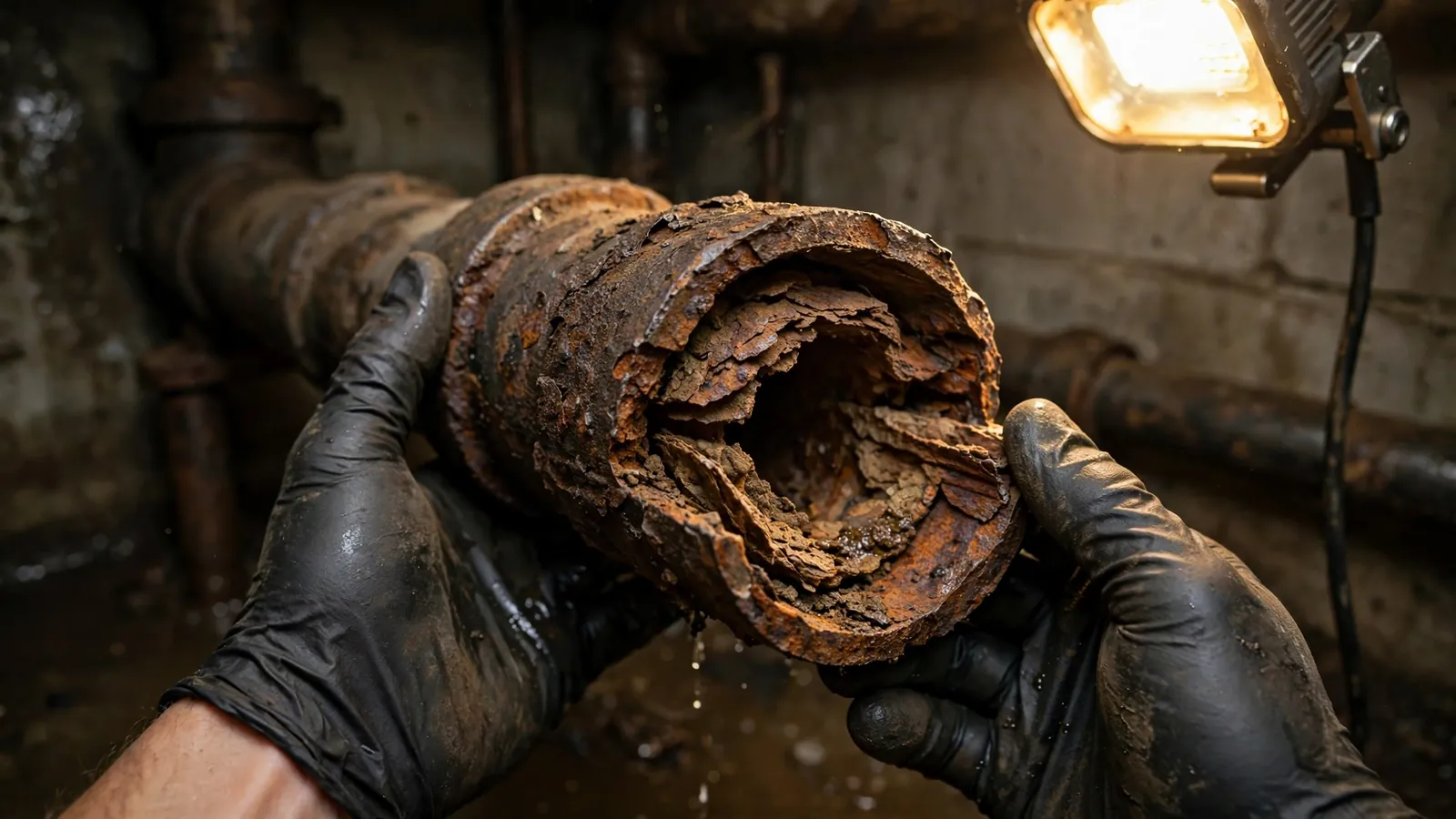
Laterals fail in a few familiar ways. Clay tile joints separate and let roots in. Cast iron corrodes from the inside and narrows. Ground settlement creates bellies. Heavy vehicles and freeze-thaw cycles crack or crush sections. And in some Parma streets, the Ohio EPA documented pre-1960 common-trench sewers in September 2024, where older shared sewers can push water back toward homes in heavy rain.
What the service includes
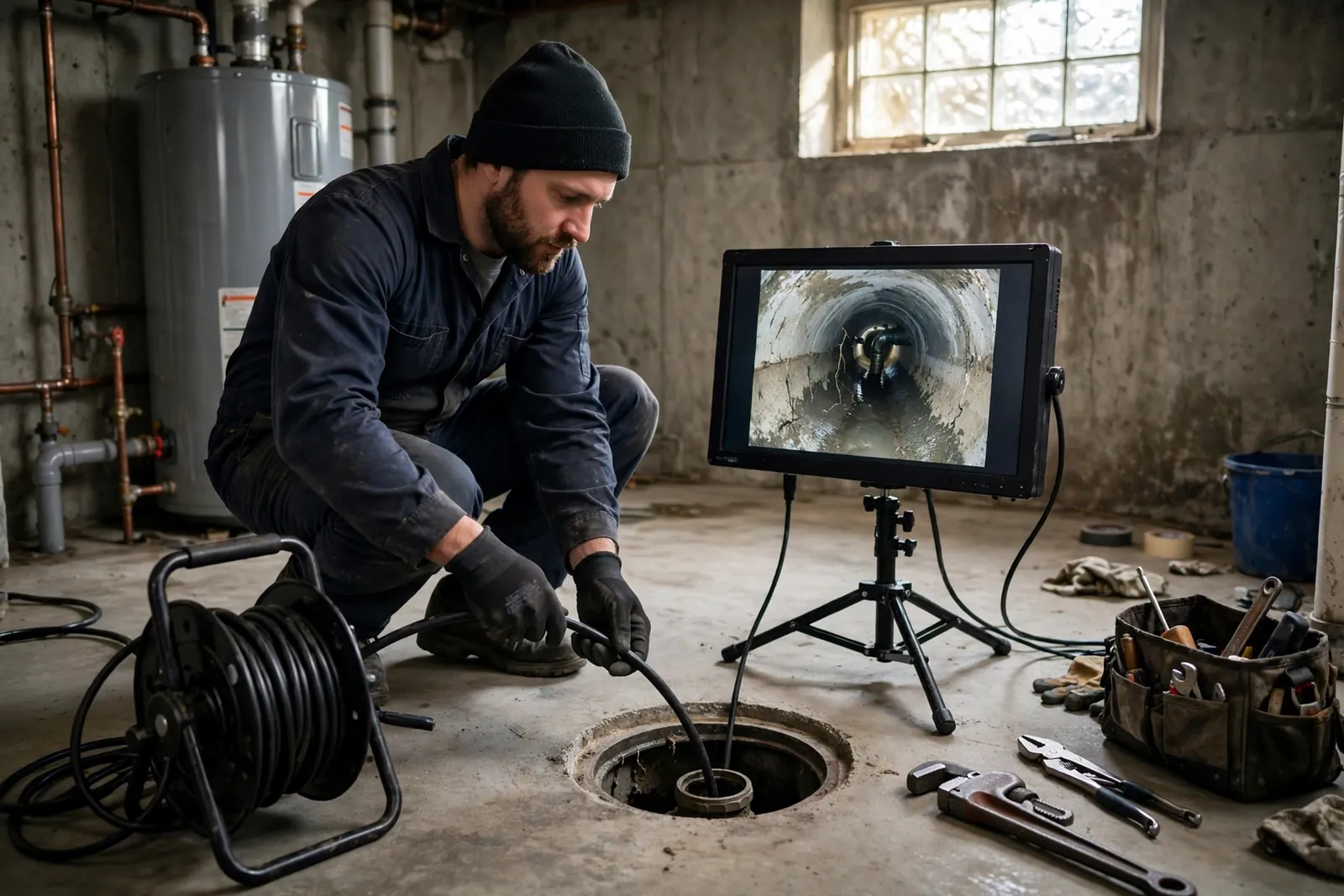
Camera inspection of the full lateral
The camera runs from the house to the street main, showing the material, the damage, and the connection — the evidence the replacement is planned from.
Locating the lateral
The line is located and marked on the surface, with the depth, so the work goes to the right place and stays clear of other utilities.
Open-trench or trenchless replacement
The lateral is replaced by open trench or by pipe bursting or lining, depending on the condition of the line, the depth, and what sits above it.
New pipe with correct slope
The replacement lateral is laid with a steady fall from the house to the main, with sealed joints and a prepared bed, so the line drains as it should.
Connection at the street main
The connection to the main is made and sealed, and the work in the right-of-way follows the city's rules. A replacement that leaks at the main is not a replacement.
Final camera check
The new lateral is camera-checked end to end, confirming it is clear, connected, and flowing — before the trench or pits are closed up.
How the work runs
Call and describe the symptoms
Backups, slow drains, smells, or a camera report — and whether the problem is worst at the lowest drain in the house.
Camera inspection
The camera maps the lateral from the house to the main: material, joints, damage, depth, and the connection at the street.
Method choice
Open trench, pipe bursting, or lining — chosen from the camera findings, the depth of the line, and what sits above it.
Locating and permits
The lateral is located and marked, and the permits for work in the right-of-way and at the main are handled before digging.
Replacement
The old lateral is removed or burst in place, the new line is laid with the correct slope, and the connections at both ends are made and sealed.
Final check and restore
The new lateral is camera-checked, then the trench or pits are backfilled in layers and the surface is graded.
Tools and methods used
Sewer camera with locator
The camera shows the inside of the lateral, and the locator marks its path and depth on the surface — the map the replacement is planned from.
Mini excavator
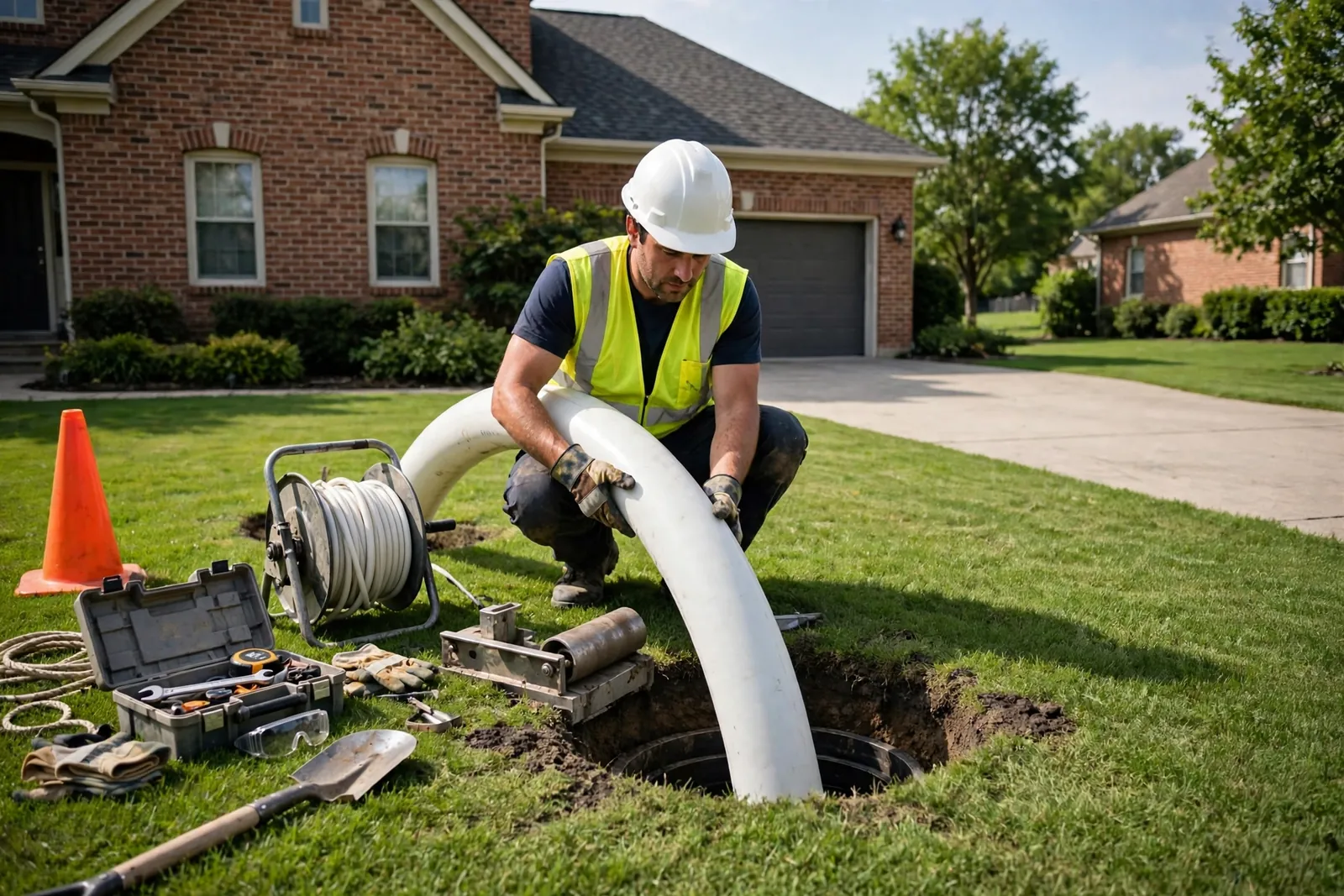
A compact excavator digs the trench or the access pits in a residential yard, sized for the narrow side yards common in Parma.
Pipe bursting rig
For trenchless replacement, the rig pulls the bursting head and the new pipe through the old lateral, breaking the old pipe outward as it goes.
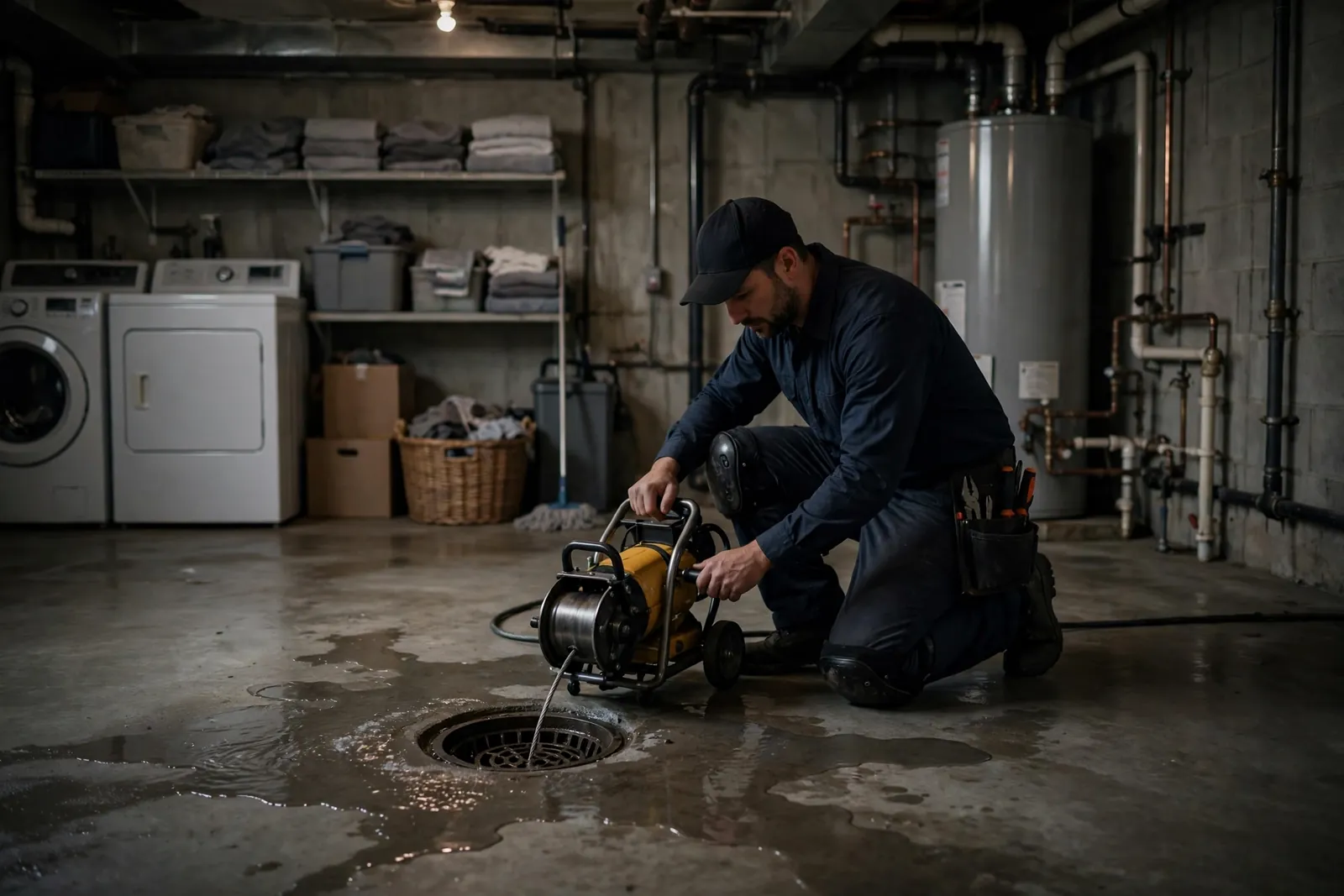
Hydro jetter
A jetter clears a blocked lateral with high-pressure water before the camera inspection, so the inspection sees the pipe rather than the blockage.
Upper lateral, lower lateral, and the connection
People talk about the lateral as one pipe, but it helps to know its parts. The upper lateral runs from the house to the property line. The lower lateral runs from the property line to the street main, including the tap — the connection where the lateral meets the main. The homeowner is responsible for the whole run in most Ohio cities, including the tap.
The tap matters because it is a common failure point. An old tap can crack, settle, or separate from the main, and the camera can see it. A lateral that is sound for its whole length can still back up if the tap is broken. That is why a camera inspection runs all the way to the main, not just to the curb.
Work on the lower lateral and the tap happens in the public right-of-way and sometimes in the street itself. That work follows the city's rules, and it is scheduled and permitted accordingly. A replacement job that ignores the tap is not a complete replacement.
Why Parma laterals fail when they do
Parma's laterals fail when they do because of when they were built. The city's housing boom ran from the late 1940s through the 1960s, and the laterals laid then were clay tile or cast iron. Clay tile lasts roughly 50 to 60 years. A lateral laid in 1958 passed that age years ago, and the joints — short sections joined with mortar — are the first thing to go.
Roots do the rest. Parma's streets are lined with mature maples and oaks, and a root will find a joint that has opened even slightly. Once inside, the root grows into a mat that catches everything the line carries. The line is cleaned, the mat grows back, and the cycle repeats until the pipe itself is replaced.
Ground movement adds the third cause. Northeast Ohio's freeze-thaw cycles and clay soils shift the ground around the pipe, and a section can settle into a belly or separate at a joint. The Ohio EPA's September 2024 documentation of pre-1960 common-trench sewers and basement backups in Parma shows the same pattern at street level — older shared sewers that back up in heavy rain.
The connection at the street main
The most overlooked part of a lateral replacement is the last few feet — the connection where the lateral meets the city main. A new line that is laid well but connected badly will back up just as the old one did. The connection is usually made with a saddle or a tap into the main, and it has to be sealed so groundwater and roots cannot enter at the joint. In older Parma neighborhoods the original connection may be a clay wye or a direct tap that has shifted with the ground.
The connection is also where responsibility changes hands. The homeowner owns the lateral up to the main; the city owns the main itself. When the connection is damaged, the question of who fixes it depends on where the damage sits, and the camera inspection is what shows that. Some cities inspect the connection before the trench is closed, and the work has to pass that inspection before the line is put back in service.
Because the connection is deep and under the street or the tree lawn, it is the part of the job most often left short. A crew that replaces the run from the house but stops short of the main has left the oldest and weakest part of the line in place. Ask whether the replacement runs all the way to the main, and ask to see the camera footage of the connection when the work is done.
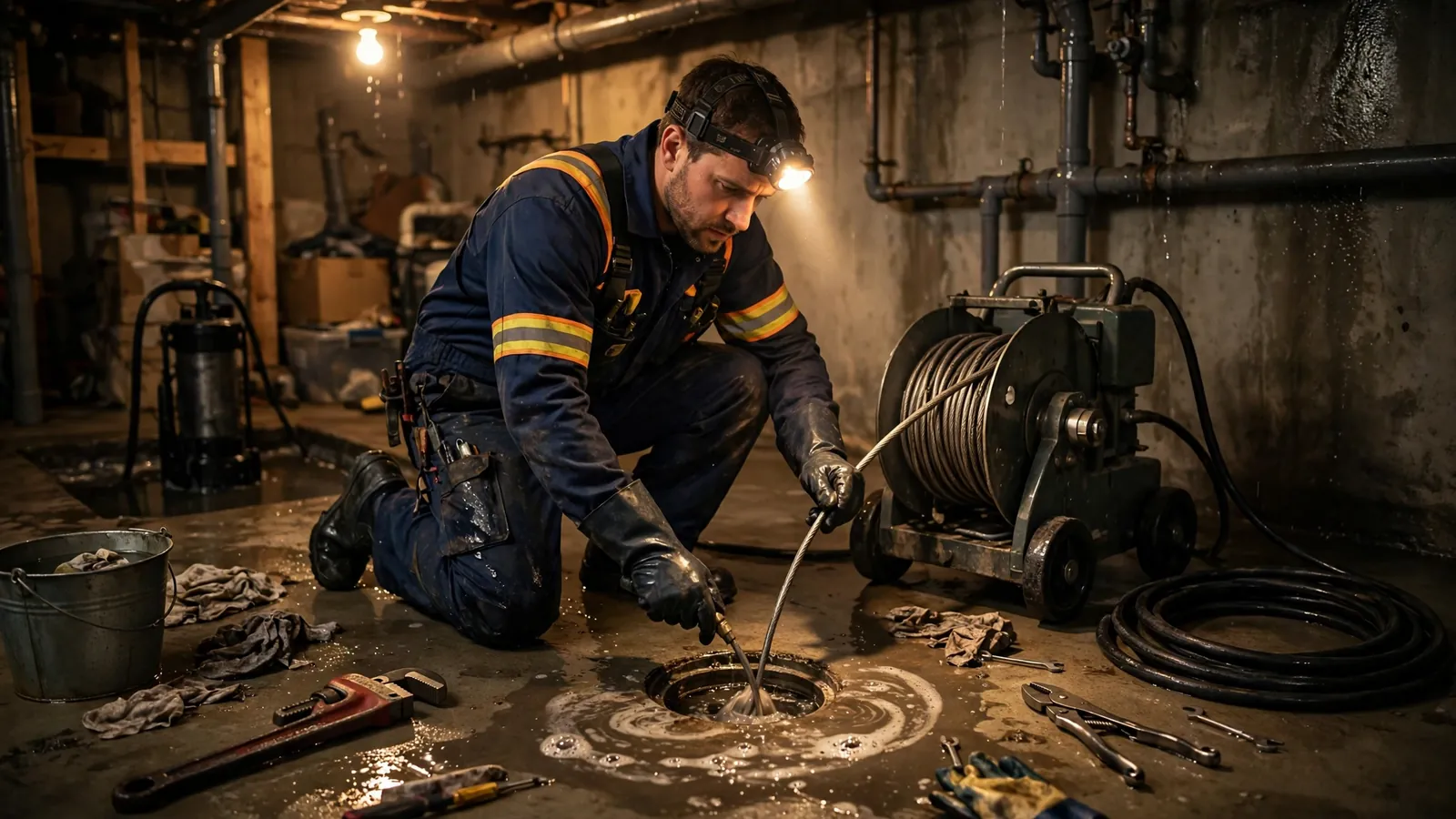
A lateral that backs up at the lowest drain
A lateral that keeps backing up will not heal — the water keeps coming back through the lowest drain in the house.
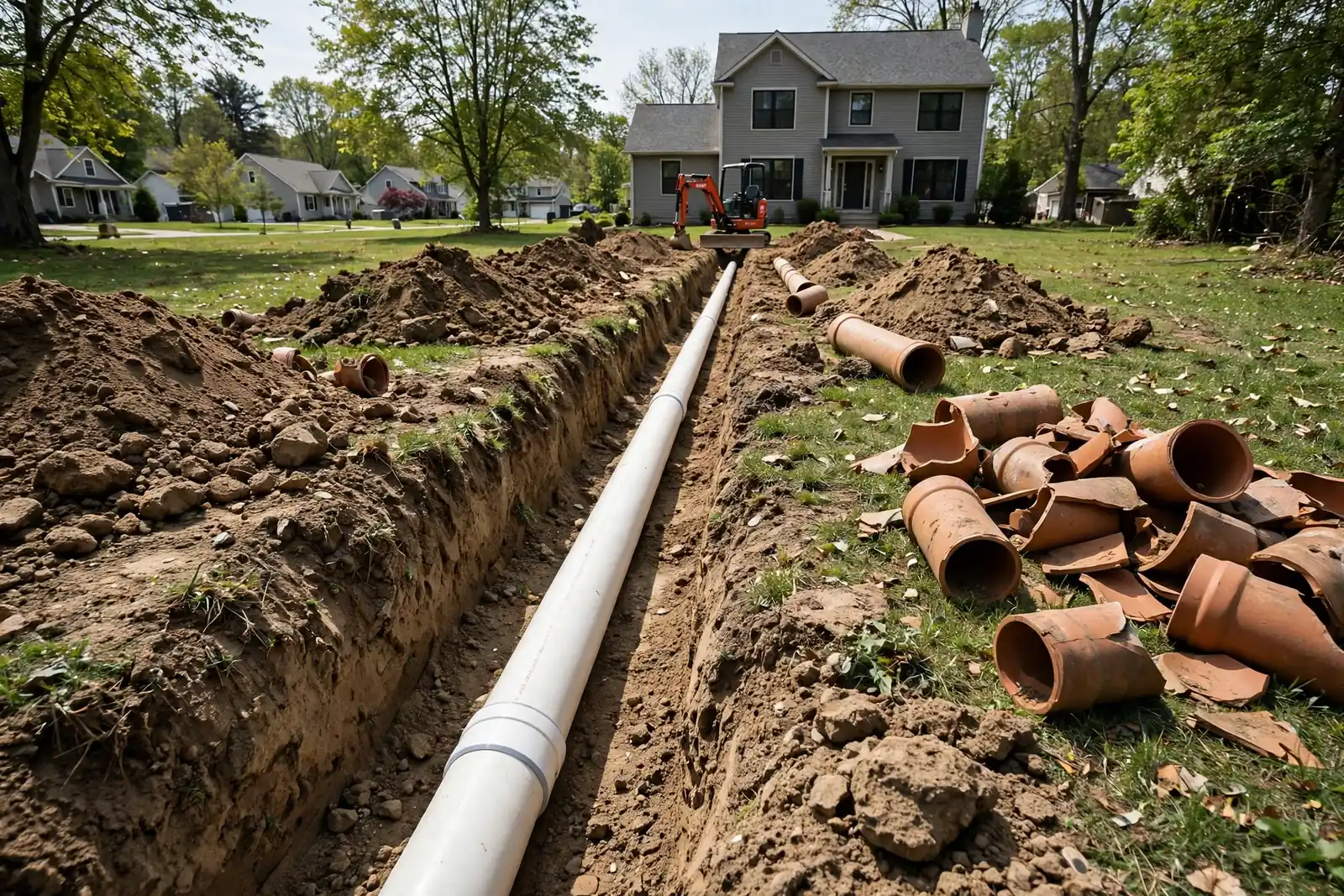
A new lateral, clear to the street main
The work is checked with a camera, not a look at the surface — the new line is seen end to end before the job is called done.
Problems a lateral replacement solves
- Repeat backups at the basement floor drain, after every heavy use of water.
- A lateral collapsed or crushed under a driveway or the yard.
- Clay tile joints separated and packed with roots along the run.
- A bellied lateral that holds water instead of draining to the main.
- Cast iron that has corroded and narrowed along the lateral.
- A lateral that fails again within months of each cleaning.
Signs your lateral needs replacement
- The basement floor drain backs up when water is used anywhere in the house.
- Several drains are slow at the same time, and cleaning them does not hold.
- A sewer smell comes from the lowest drain in the house or from the yard.
- The lateral has been cleaned more than once in a year.
- A camera inspection shows a collapse, a bad belly, or roots at many joints.
- The home is a 1950s or 1960s Parma home with its original clay tile lateral.
- There is a wet or unusually green strip in the yard, running from the house toward the street.
- The line backs up during heavy rain, even when the house fixtures are not being used.
Related problems
Collapsed Sewer Line · Bellied Sewer Line · Tree Root Intrusion
Industries that use this service
Single-Family Homes · Rental Properties · Commercial Properties · All industries →
Frequently asked questions
Questions people ask about sewer lateral replacement, answered plainly.
The lateral is the pipe that connects one home to the street sewer main. The main is the larger pipe in the street that collects the laterals from many homes and carries the flow onward. The homeowner is responsible for the lateral; the city maintains the main.
A camera inspection shows it. If the camera reaches the street main and the main is clear, the problem is in the lateral. If the camera cannot get through, or the main itself is the problem, the crew explains what the camera showed and what happens next — which may involve the city.
The lateral runs to the street main, and the connection at the main is part of the job. Work in the street and the right-of-way follows the city's rules, and the permits for that work are handled before digging starts.
Often, yes. Trenchless methods — pipe bursting or lining — replace the lateral through small pits, so a driveway or walkway above the line is not opened. Whether trenchless fits depends on the camera findings, and the crew explains the options before work starts.
Most residential lateral replacements are measured in days. The length of the run, the depth, and whether the line goes under a driveway all affect the schedule. The camera inspection and the locate give the crew the information needed to plan it.
Most residential laterals today are replaced with PVC or a similar modern plastic pipe, with sealed joints and a smooth interior. Trenchless bursting often uses HDPE. The material and diameter are chosen for the home and the connection at the main.
Work that connects to the street main and work in the public right-of-way follows the city's rules, and permits are part of that process. The crew handling the job deals with the permit side before digging starts.
Yes, with planning. Frozen ground makes digging slower, but lateral replacements do happen in Ohio winters. A lateral that is backing up now is handled as an urgent job regardless of the season.
Sewer line trouble in your Parma home?
Call Now to reach a local sewer professional. Describe the problem, where it is, and what the line has been doing.
Call now for sewer line help
Tap Call Now to reach a local sewer professional. Tell them where the problem is, what the line has been doing, and whether wastewater is coming into the home.
Hours: Mon–Fri 7:00 AM–10:00 PM ET · Sat 8:00 AM–10:00 PM ET · Sun 7:00 AM–9:00 PM ET
Before you call
- Stop using water if the line is backing up.
- Keep people and pets away from any wastewater.
- Note which drains are slow, and which one backs up first.
- Note whether the problem happens in heavy rain, or all the time.
- Have the age of the home ready, if you know it.