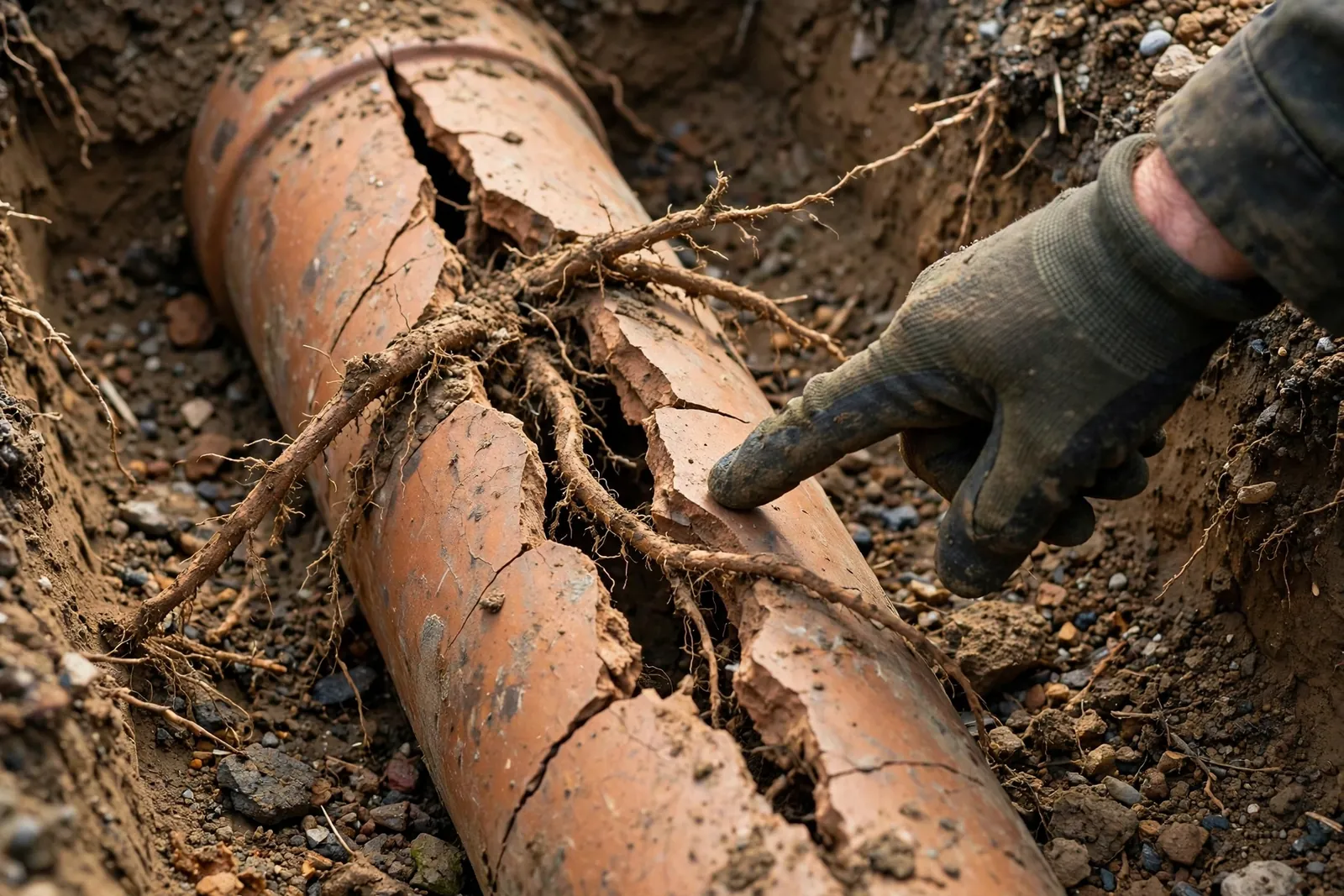
Cracked Sewer Pipe Parma, OH
A cracked sewer pipe lets roots and soil in, and wastewater out — and a crack in an old clay or cast iron line is usually the first failure, not the last.
Need help with your sewer line?
Call Now to reach a local sewer professional. Describe the problem, where it is, and what the line has been doing.
Hours: Mon–Fri 7:00 AM–10:00 PM ET · Sat 8:00 AM–10:00 PM ET · Sun 7:00 AM–9:00 PM ET
How sewer pipes crack
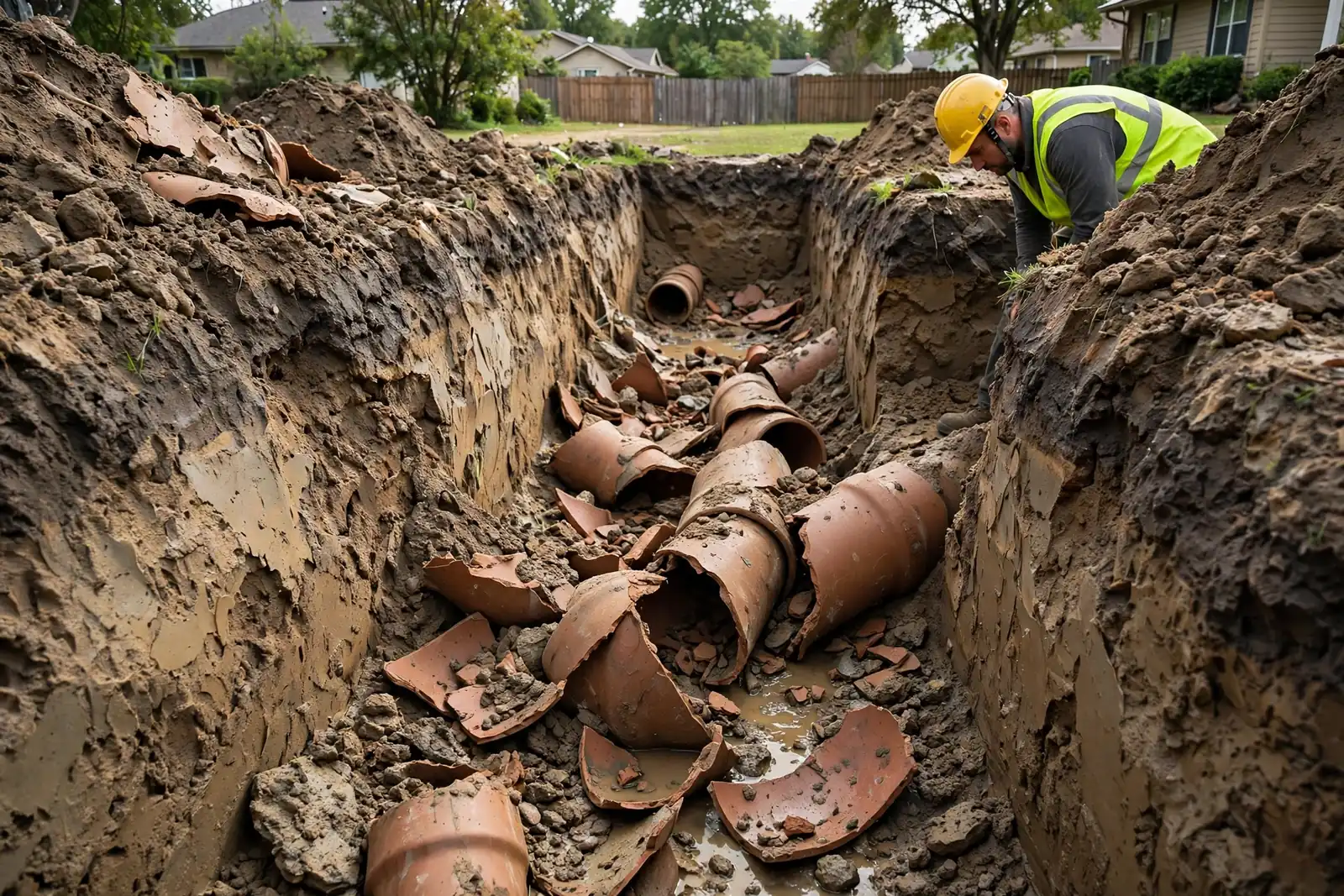
Clay tile cracks because it is brittle. It is strong under even compression, but a point load — a rock pressing against the pipe, a heavy vehicle over a shallow line, or ground movement that bends a section — can crack it. Once cracked, the section lets roots and soil in, and the crack grows as the ground keeps moving.
Cast iron cracks differently. It corrodes from the inside, thinning the wall until it can no longer carry the weight of the ground above it. The crack often starts at a joint or at the transition to clay tile outside the house, where the two materials move differently with the ground. A cast iron section can also crack from a sudden load, once the wall has thinned enough.
Ground movement is the common thread. Cuyahoga County's clay soils shift with freeze and thaw, and a section of pipe can be bent or loaded unevenly as the ground moves. A crack that starts small grows with each season, and the pipe that cracked in one place is often cracked — or about to crack — in another.
What a crack lets in — and out
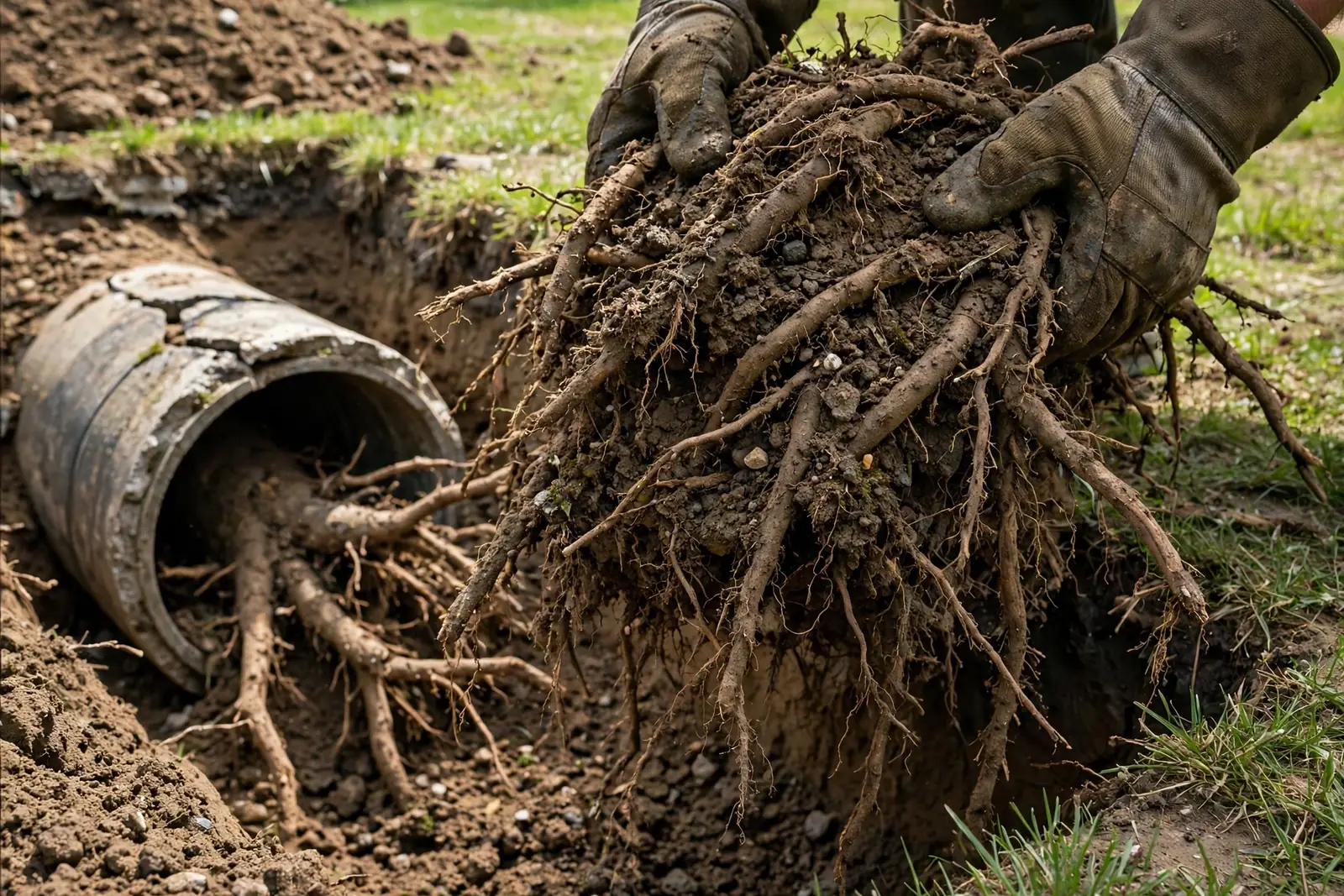
A crack lets roots in. A root that finds a crack grows into the pipe, and the mat it forms catches paper and waste until the line slows or blocks. A crack also lets soil in, and the soil washes out the bed under the pipe, letting the section settle or separate. And a crack lets wastewater out, into the soil around the pipe — which is why a wet or unusually green patch in the yard can be a sign of a cracked line.
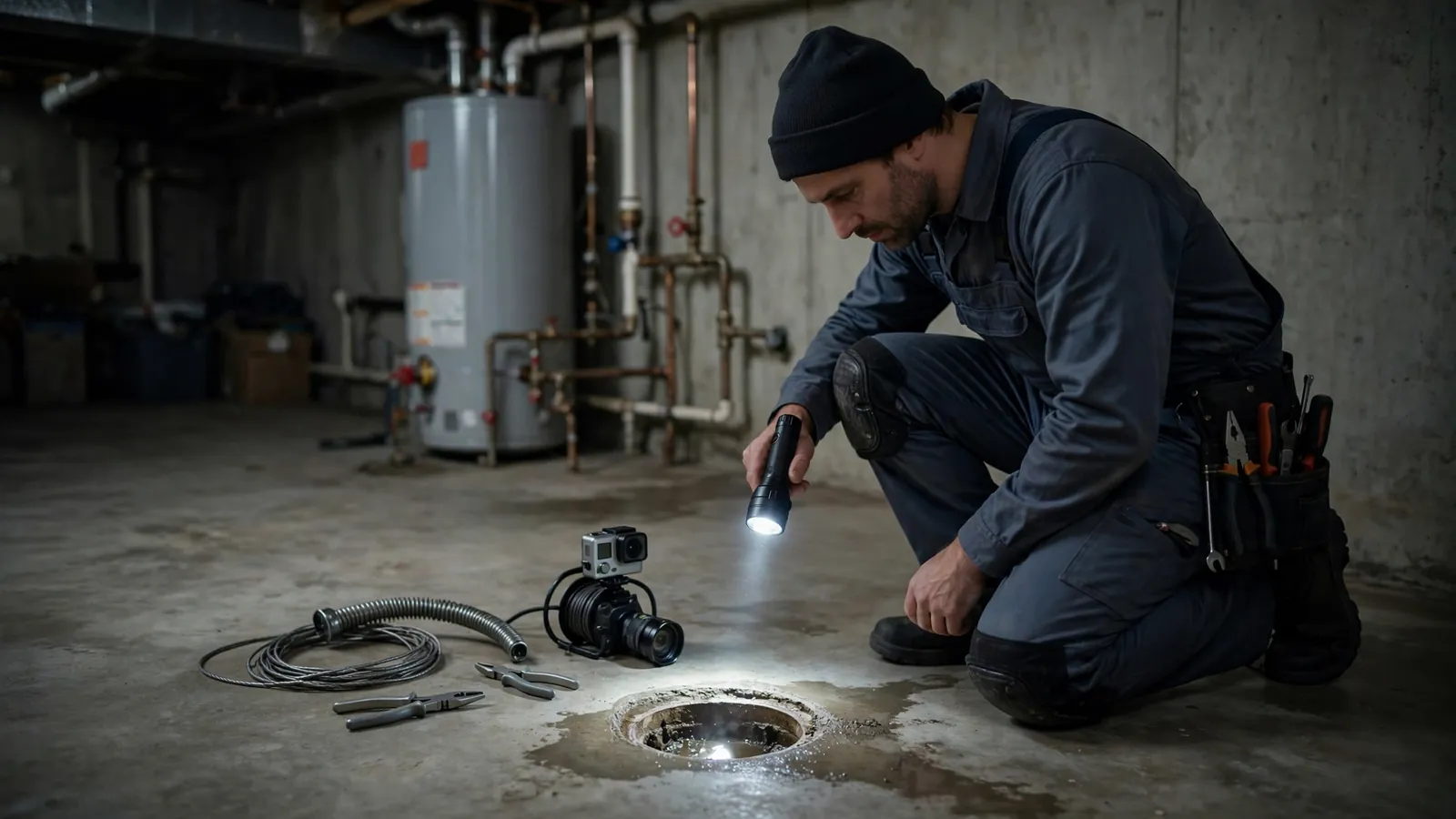
The camera shows a crack directly. On the monitor, the operator sees the fracture in the pipe wall, the roots growing through it, and the soil entering. The camera also shows whether the crack is local — one section, with good pipe on either side — or spread along the line. A single crack is a spot repair. Cracks in many places mean the line is failing as a whole.
A cracked line that is cleaned will block again. The cleaning removes the roots and the waste, but the crack is still there, and the roots grow back through it. The fix is in the pipe — a spot repair, lining, bursting, or full replacement, depending on what the camera found.
How a cracked pipe is fixed
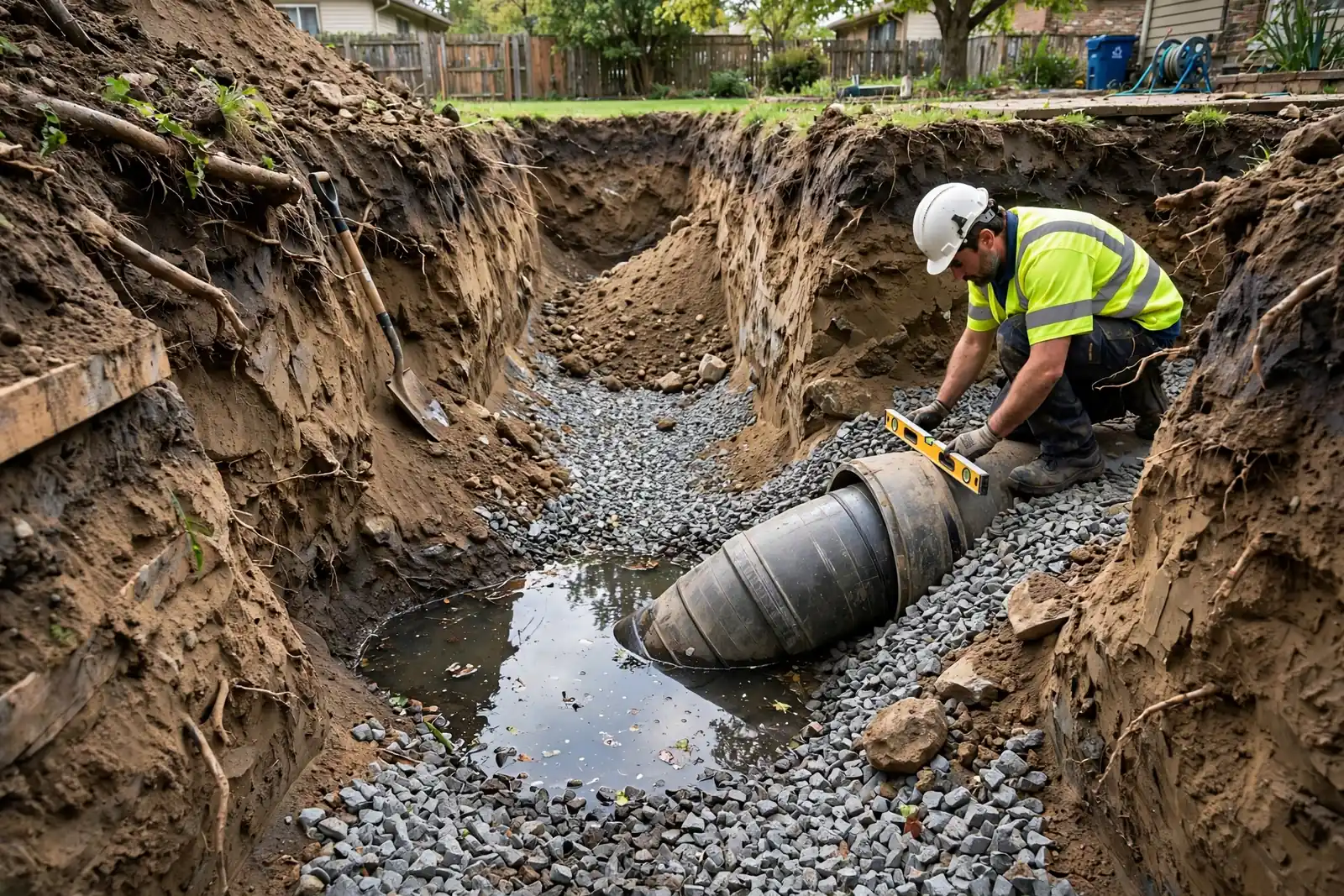
A single cracked section with good pipe on either side is a spot repair: one pit, the cracked section removed, and a new section laid at the correct slope, sealed to the sound pipe on either side. The line is camera-checked afterwards, and the pit is backfilled and graded.
Cracks at several joints may be a candidate for lining, which seals every crack at once with a jointless new pipe inside the old one — where the line is still round and continuous enough to hold a liner. Cracks that have become collapses, or a line cracked in many places, mean a full replacement by bursting or open trench.
The key question is always the rest of the line. A 1950s clay lateral with one cracked section often has more cracks coming, because the whole line is the same age and the same material. The crew explains the camera findings, and the homeowner decides with the full picture — a spot repair now, or a replacement that ends the cycle.
What to do now
- Stop using water if the line is backing up, and keep away from any wastewater.
- Call for help and describe the symptoms — and whether the line has been cleaned before.
- Have the line camera-inspected to find the crack and see how many sections are involved.
- Do not keep cleaning the line — cleaning does not fix a crack.
- Ask whether a spot repair fits, or the line needs lining, bursting, or a full replacement.
What causes it
Point loads
A rock pressing against the pipe, or a heavy vehicle over a shallow line, can crack brittle clay tile.
Corrosion
Cast iron thins from the inside until the wall can no longer carry the ground above it, and then it cracks.
Ground movement
Freeze-thaw cycles shift the clay soils, bending or loading a section unevenly until it cracks.
Age
A clay or cast iron line from the 1950s has had seventy years for its joints to open and its sections to crack.
Signs of this problem
- A camera inspection shows a fracture in the pipe wall.
- Roots are growing through a crack in the line.
- There is a wet or unusually green patch in the yard above the line.
- The line has been cleaned for roots, and the problem came back.
- The basement floor drain backs up after heavy water use.
- The home is a 1950s or 1960s Parma home with its original clay or cast iron lateral.
Related service: Sewer Line Replacement
Related guide: Clay vs Cast Iron vs PVC Sewer Pipe
Related service: Clay Sewer Pipe Replacement
Other sewer line problems
Frequently asked questions
Questions people ask about cracked sewer pipe, answered plainly.
Yes, if the crack is local. A single cracked section with good pipe on either side is a spot repair — one pit, one new section. Cracks in many places mean the line is failing as a whole, and the fix is lining, bursting, or a full replacement.
Yes, where the line is still round and continuous. A cured liner seals every crack at once with a jointless new pipe inside the old one. A cracked section that has collapsed cannot be lined, and needs a dig.
A camera inspection shows it. On the monitor, the operator sees the fracture in the pipe wall, and the roots and soil coming through it. The camera also shows whether the crack is local or spread along the line.
Point loads on brittle clay tile, corrosion thinning cast iron, and ground movement from freeze and thaw in the clay soils. Parma's clay and cast iron laterals from the 1950s and 1960s are at the age where all of these happen.
It can. A crack lets wastewater out into the soil around the pipe, which is why a wet or unusually green patch in the yard can be a sign of a cracked line. The camera and the wet patch together point to where the line is failing.
Yes, usually. The crack lets roots and soil in, and the soil washes out the bed under the pipe, letting the section settle further. A crack that backs up occasionally will back up more often, and the next failure may be a collapse.
Dealing with this problem now?
Call Now to reach a local sewer professional. Describe the problem, where it is, and what the line has been doing.
Call now for sewer line help
Tap Call Now to reach a local sewer professional. Tell them where the problem is, what the line has been doing, and whether wastewater is coming into the home.
Hours: Mon–Fri 7:00 AM–10:00 PM ET · Sat 8:00 AM–10:00 PM ET · Sun 7:00 AM–9:00 PM ET
Before you call
- Stop using water if the line is backing up.
- Keep people and pets away from any wastewater.
- Note which drains are slow, and which one backs up first.
- Note whether the problem happens in heavy rain, or all the time.
- Have the age of the home ready, if you know it.