Sewer Line Spot Repair Parma, OH
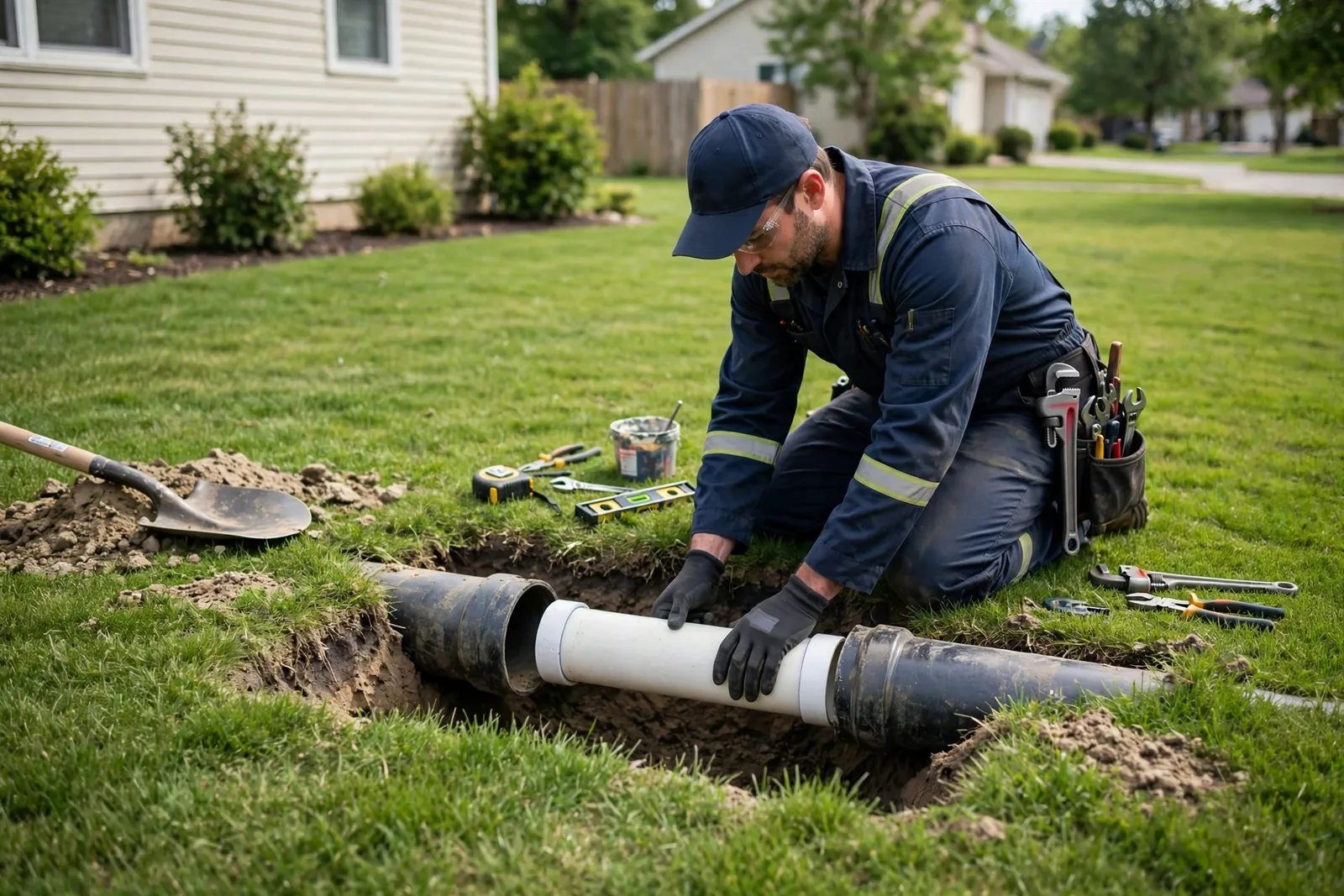
When one section of the line has failed and the rest is sound, a spot repair fixes that section — one dig, one new section of pipe, and the line is whole again.
Need help with your sewer line?
Call Now to reach a local sewer professional. Describe the problem, where it is, and what the line has been doing.
Hours: Mon–Fri 7:00 AM–10:00 PM ET · Sat 8:00 AM–10:00 PM ET · Sun 7:00 AM–9:00 PM ET
What this service does
A spot repair is the smallest fix that solves the problem: one failed section of pipe is dug up and replaced, while the rest of the line stays in place. It is the right answer when the camera shows a single crack, a single collapsed section, or one bad joint — and the rest of the lateral is sound.
Not every line qualifies. A spot repair makes sense when the failure is local. A clay lateral with one cracked section and good joints elsewhere is a spot repair. A lateral with roots at many joints, a belly, and a collapse is not — the next section will fail soon after the first is fixed, and the homeowner pays for a second dig.
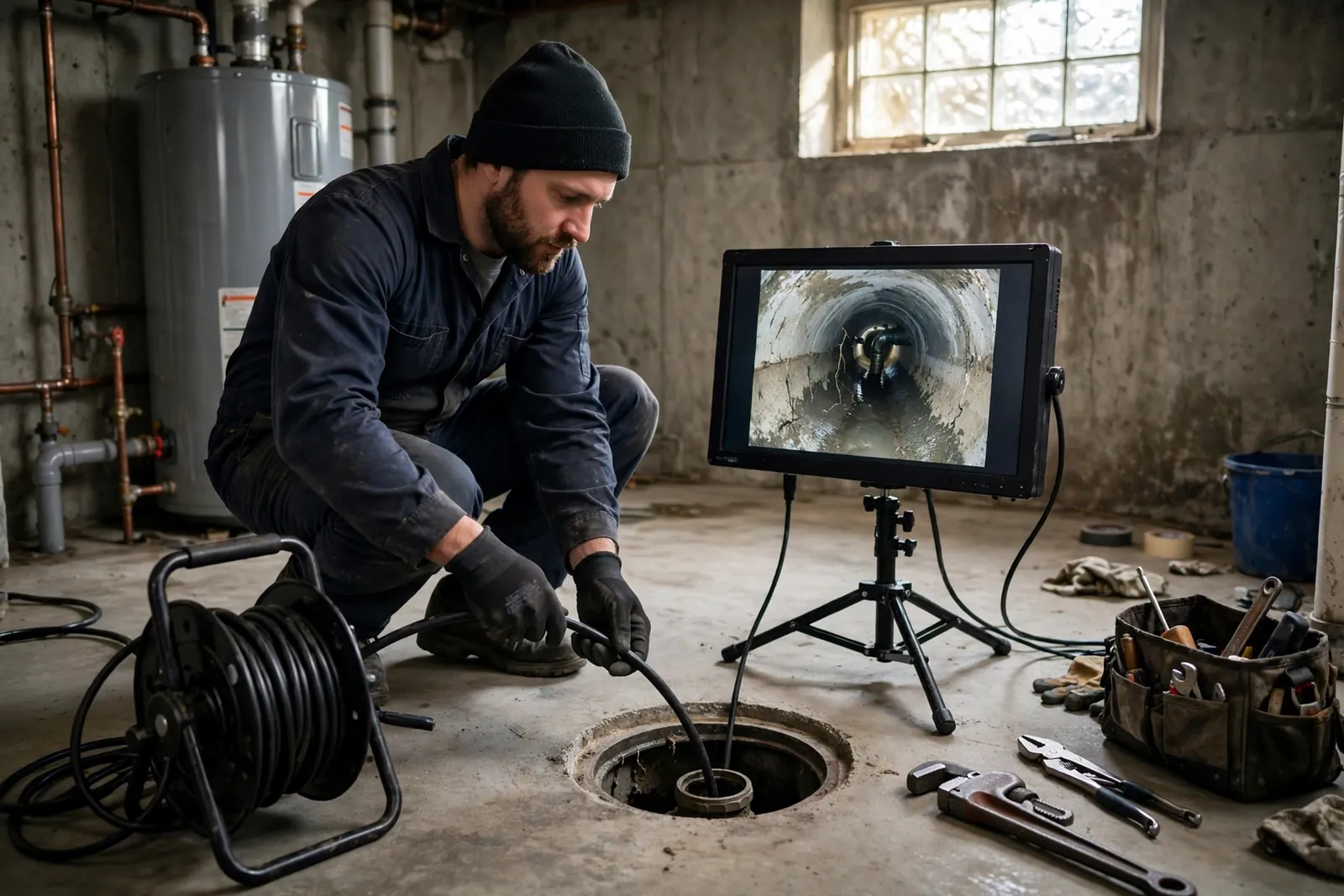
The camera inspection is what decides. It shows the whole line, section by section, so the crew can see whether the failure is one place or everywhere. A spot repair planned from a camera inspection is a precise fix. A spot repair guessed from symptoms alone is a gamble.
Before you call
- Stop using water if the line is backing up.
- Keep people and pets away from any wastewater.
- Note which drains are slow, and which one backs up first.
- Note whether the problem happens in heavy rain, or all the time.
- Have the age of the home ready, if you know it.
When a spot repair is the right fix
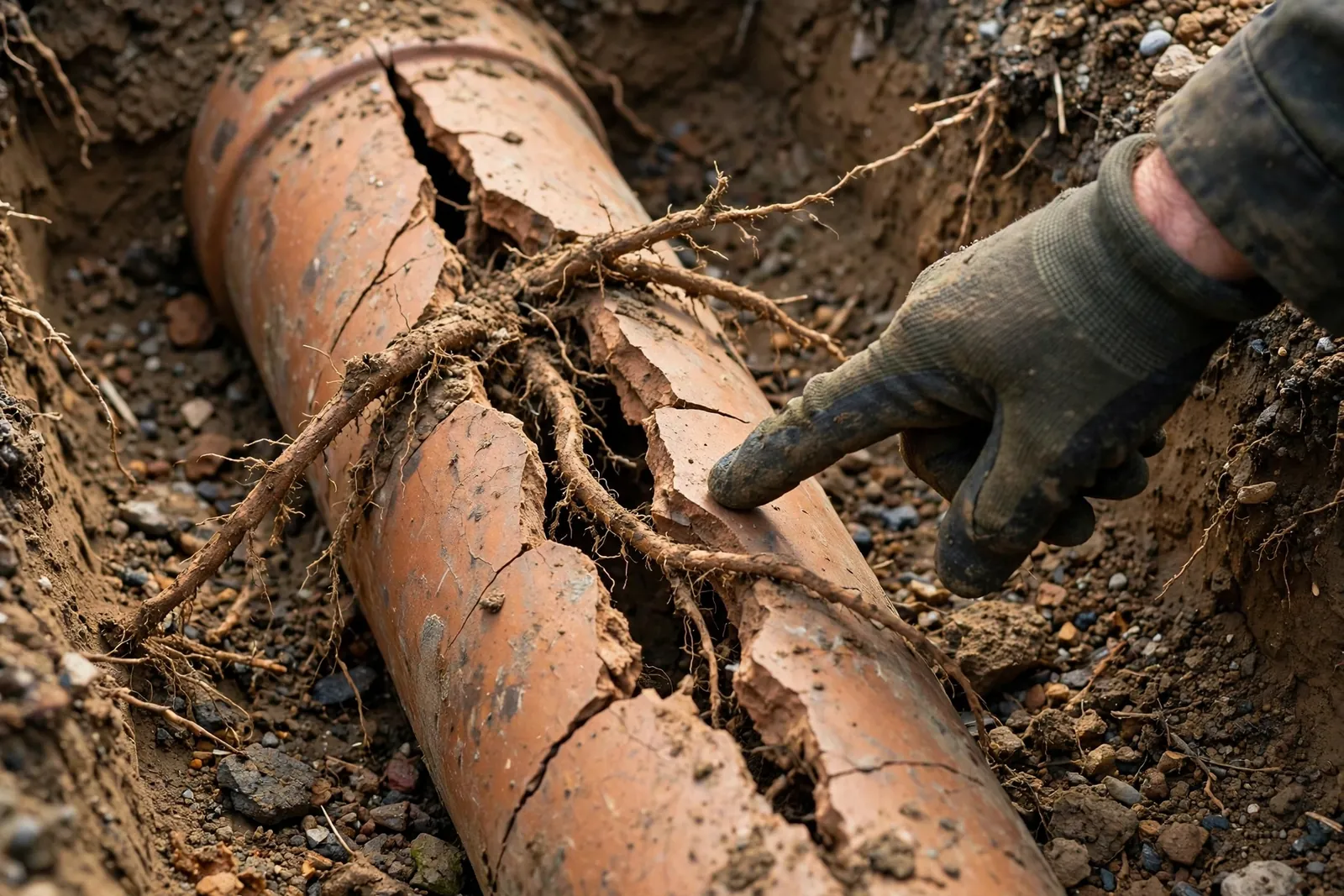
A spot repair fits a local failure: one cracked section, one collapsed section, one separated joint, or one root entry that has broken a section. The rest of the line has to be sound — the joints tight, the fall correct, the material in reasonable condition for its age. The camera inspection shows all of that, section by section.
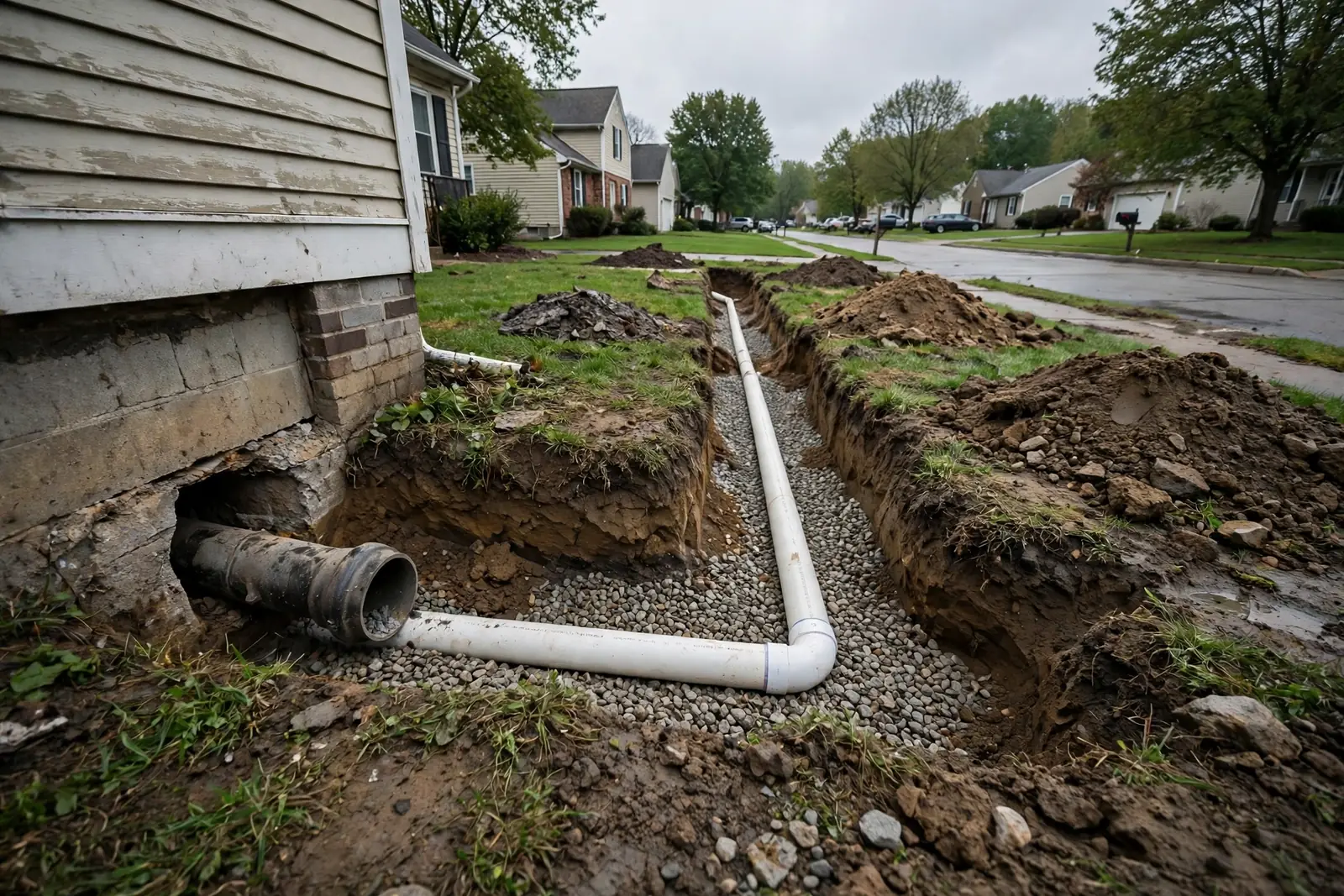
The repair itself is straightforward. The failed section is located and marked on the surface, with the depth. A pit is dug at that spot, the failed section is removed, and a new section of pipe is laid in its place, with the correct slope and sealed connections to the sound pipe on either side. The line is camera-checked, and the pit is backfilled and graded.
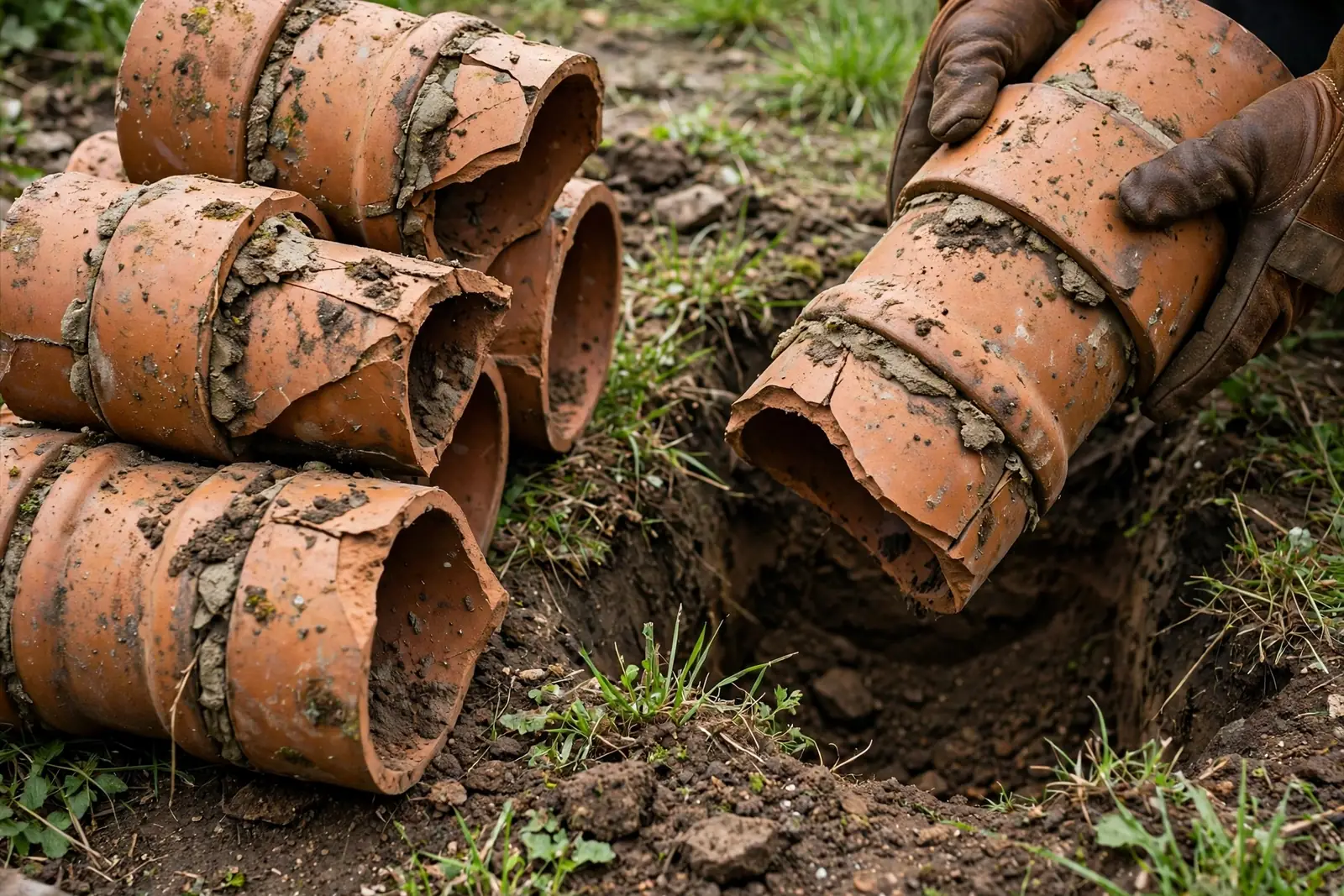
The key question is always the rest of the line. A 1950s clay lateral with one failed joint is often a line with many joints at the same age, and the next joint may fail soon. In that case the crew explains the choice honestly: a spot repair now, or a full replacement that ends the cycle. The decision belongs to the homeowner, made with the camera findings in front of them.
What the service includes
Camera inspection of the full line
The camera runs from the house to the street main, showing whether the failure is local or spread along the line — the evidence the spot repair is planned from.
Locating the failed section
The locator marks the exact position and depth of the failed section on the surface, so the dig goes to the right spot.
One pit, one section
A single pit is dug at the failed section. The rest of the line is not disturbed, and the lawn beyond the pit stays in place.
New section with sealed joints
The failed section is replaced with new pipe, laid at the correct slope and sealed to the sound pipe on either side.
Final camera check
The repaired line is camera-checked end to end, confirming the new section is clear, connected, and flowing.
Backfill and grading
The pit is backfilled in layers and the surface is graded, ready for the homeowner to restore.
How the work runs
Call and describe the symptoms
A backup, a slow drain, or a camera report — and whether the problem seems to be in one place or everywhere.
Camera inspection
The camera maps the full line, showing the failed section and the condition of the rest of the pipe.
Decide: spot repair or replacement
If the failure is local and the rest of the line is sound, a spot repair fits. If the line is failing in many places, the crew explains the replacement option.
Locate and dig the pit
The failed section is located and marked, and a single pit is dug at that spot.
Replace the section
The failed pipe is removed and a new section is laid at the correct slope, sealed to the sound pipe on either side.
Check and restore
The line is camera-checked, and the pit is backfilled and graded.
Tools and methods used
Sewer camera with locator
The camera shows the failed section and the condition of the rest of the line, and the locator marks the dig spot on the surface.
Mini excavator
A compact excavator digs the single pit at the failed section, sized for a residential yard.
Pipe cutter and fittings
The failed section is cut out cleanly, and the new section is fitted and sealed to the sound pipe on either side.
Hydro jetter
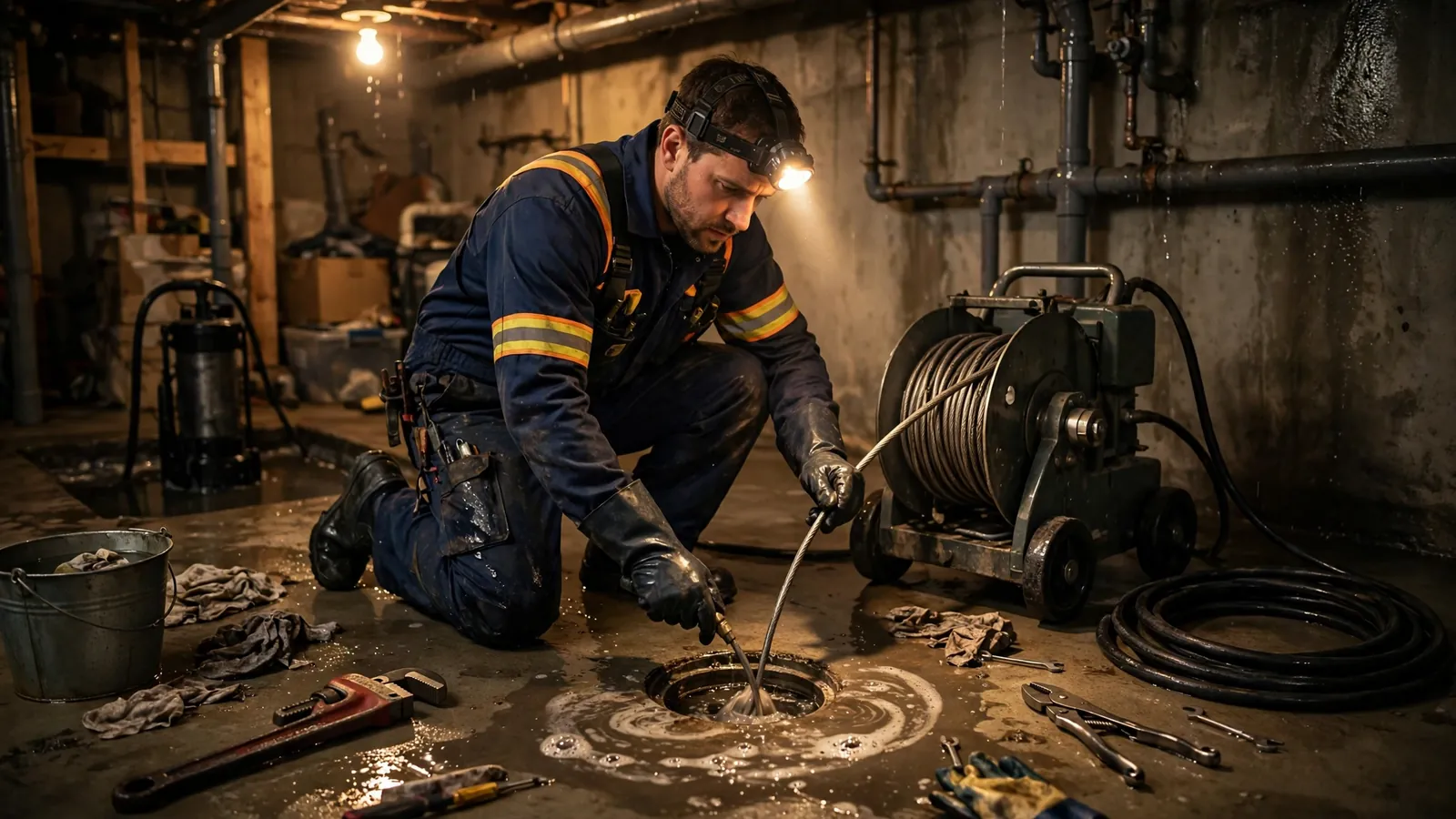
The line is jetted before and after the repair, so the camera sees the pipe clearly and the finished line is clean.
Spot repair vs replacement: the honest choice
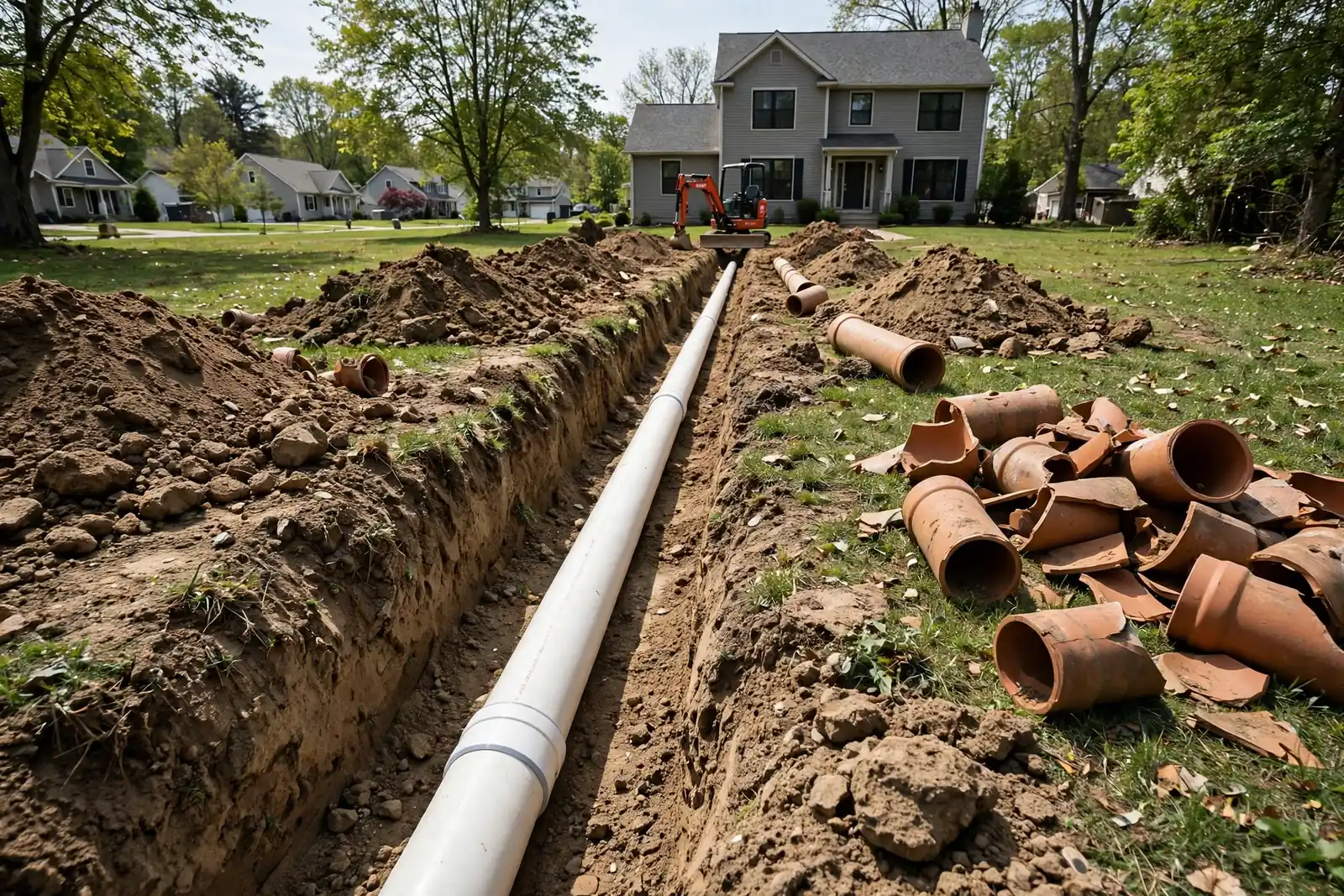
The choice between a spot repair and a full replacement is a choice about the rest of the line. A spot repair fixes one section. A replacement fixes the whole lateral. The camera inspection is what makes the choice an informed one, by showing the condition of every section, not just the failed one.
A spot repair is the right answer when the rest of the line is sound. The failure is local — one crack, one collapse, one bad joint — and the pipe on either side has years of life left. The repair is smaller, the digging is smaller, and the line is whole again.
A replacement is the right answer when the line is failing in many places. A clay lateral with roots at a dozen joints, a belly, and a collapse is not a line with one problem — it is a line at the end of its life. Fixing one section leaves the next failure waiting, and the homeowner pays for a second dig. The crew explains the camera findings, and the homeowner decides with the full picture.
What a spot repair does not fix
A spot repair fixes the section that is dug up. It does not fix the joints on either side, the fall of the line, or the material of the rest of the lateral. If the rest of the line is sound, that is fine. If it is not, the spot repair is a pause, not a solution.
A spot repair also does not fix a problem that comes from the street side. A backup caused by a surcharged main or a shared common-trench sewer will return after the repair, because the cause was never in the lateral. The camera inspection and the history of when the backups happen are what separate a lateral problem from a street-side problem.
That is why the inspection covers the full line, from the house to the street main, and why the crew explains the findings before the repair is chosen. A spot repair planned from a full picture is a good fix. A spot repair planned from a symptom alone is a guess.
When a spot repair is the right call
A spot repair is the right call when the camera shows one defect and the rest of the line is sound. A single cracked section, one separated joint, or one root mass at a single joint can be dug up and replaced without touching the rest of the run. The key word is single: the repair works because the remaining pipe has years of life left, and the camera is what proves that.
The camera has to show the whole run, not just the bad section. A line with one visible defect and five joints that are starting to open is not a spot-repair candidate — it is a line that will need the next repair within a year or two. The crew should show the footage of the full run and explain why the rest of the line is sound, not just why the one section is bad.
A spot repair is also the right call when access is limited. A defect under a driveway or a walkway can be reached through a small excavation, while replacing the full run would mean opening the whole surface. In that case the spot repair buys time and keeps the surface intact, and the camera record shows what remains for the future. Keep the footage with the house records, so the next crew knows what was fixed and what was left.
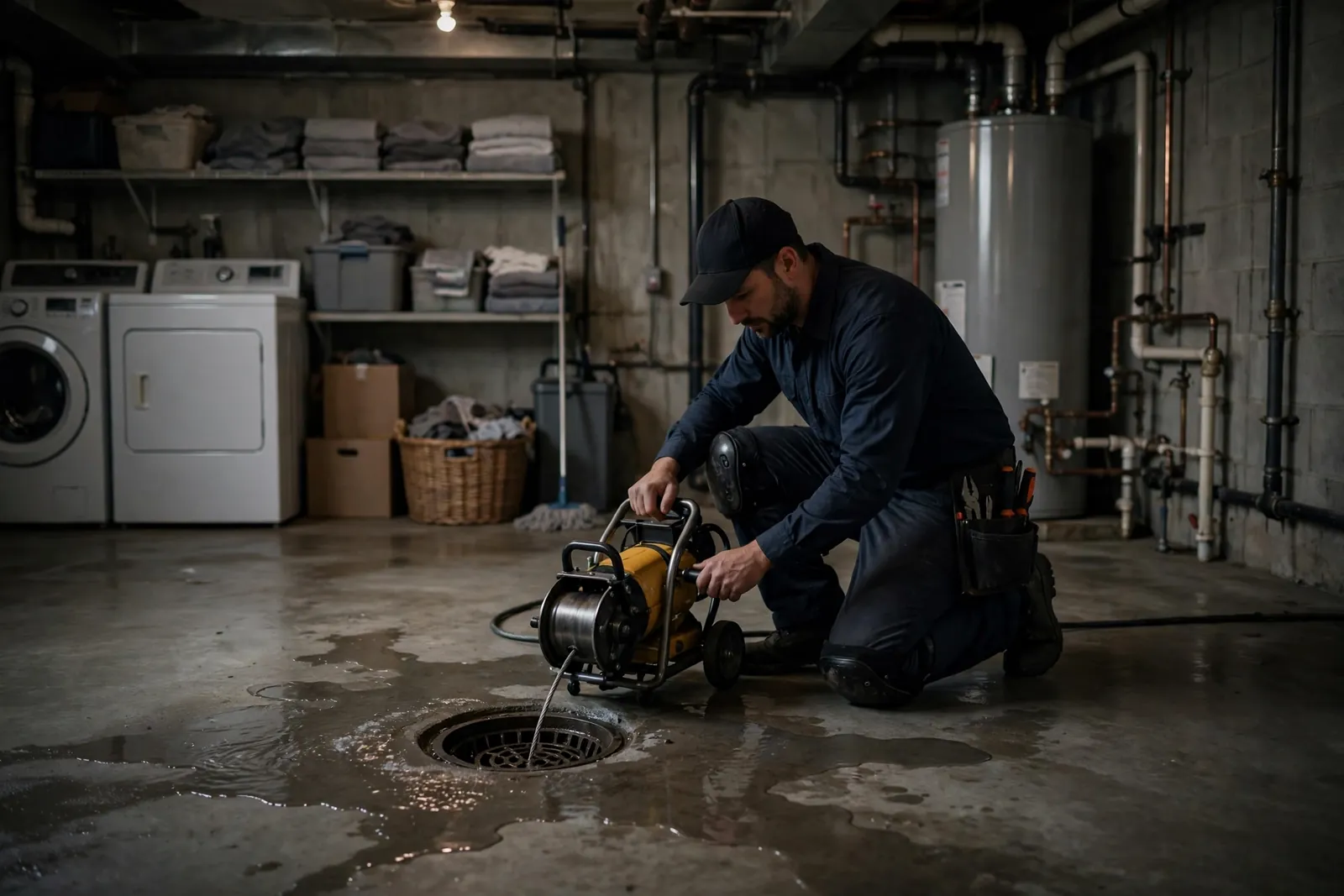
One failed section in an otherwise sound line
A lateral that keeps backing up will not heal — the water keeps coming back through the lowest drain in the house.
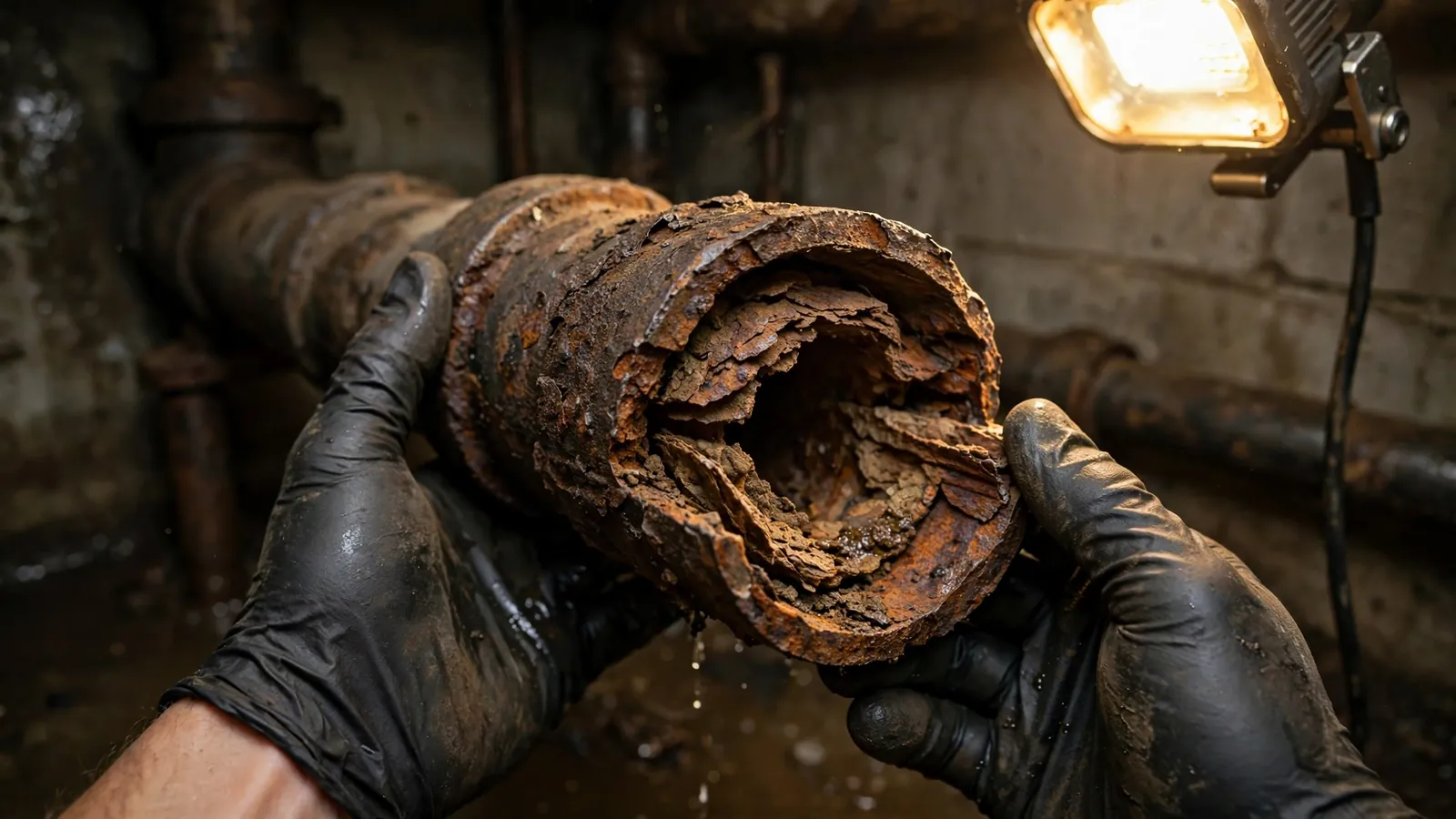
One new section, sealed and checked
The work is checked with a camera, not a look at the surface — the new line is seen end to end before the job is called done.
Problems a spot repair solves
- A single cracked or collapsed section of pipe.
- One separated joint that lets roots and soil in.
- A section crushed by a heavy vehicle or a digging accident.
- A bad connection at the house or at the street main.
- One root entry that has broken a single section.
- A section that settled into a shallow belly on its own.
Signs a spot repair may fit
- A camera inspection shows one failed section and a sound line elsewhere.
- The backup or blockage is at one place in the line, not throughout it.
- The home's lateral is newer, or was partly replaced before.
- The failure was caused by one event — a heavy vehicle, a digging accident, a single root entry.
- The rest of the line has tight joints and the correct fall.
- The line is plastic, with one cracked or crushed section.
- The homeowner wants the smallest fix that solves the problem.
- A previous camera report already shows the rest of the line is sound.
Related problems
Cracked Sewer Pipe · Collapsed Sewer Line · Tree Root Intrusion
Industries that use this service
Frequently asked questions
Questions people ask about sewer line spot repair, answered plainly.
A camera inspection of the full line decides it. If the camera shows one failed section and the rest of the line is sound — tight joints, correct fall, no other damage — a spot repair fits. If the camera shows failures in many places, the line needs a larger fix.
It involves less digging and less pipe, so the work is smaller. But the comparison that matters is the whole cost over time: a spot repair on a line that fails again in a year means a second dig. The crew explains the camera findings so the choice is made with the full picture.
Most spot repairs are measured in a day or two of work on site, once the section is located. The camera inspection and the locate come first, then the pit is dug and the section is replaced.
It depends on the age and condition of the rest of the line. A newer line with one failed section usually holds. A 1950s clay lateral with one failed joint often has more joints at the same age, and the crew explains that risk before the repair is chosen.
Sometimes. A short liner can be installed over a single failed section, renewing it from the inside without digging. Whether that fits depends on the camera findings — a collapsed section cannot be lined, and needs a dig.
Work that connects to the street main and work in the public right-of-way follows the city's rules, and permits are part of that process. A spot repair in the yard, away from the street, is simpler — and the crew handling the job deals with the permit side before digging starts.
Yes, with planning. Frozen ground makes digging slower, but spot repairs do happen in Ohio winters. A line that is backing up now is handled as an urgent job regardless of the season.
The camera inspection before the repair is meant to prevent that surprise, by showing the full line first. If the dig reveals something the camera could not see, the crew explains what was found and what the options are before the work continues.
Sewer line trouble in your Parma home?
Call Now to reach a local sewer professional. Describe the problem, where it is, and what the line has been doing.
Call now for sewer line help
Tap Call Now to reach a local sewer professional. Tell them where the problem is, what the line has been doing, and whether wastewater is coming into the home.
Hours: Mon–Fri 7:00 AM–10:00 PM ET · Sat 8:00 AM–10:00 PM ET · Sun 7:00 AM–9:00 PM ET
Before you call
- Stop using water if the line is backing up.
- Keep people and pets away from any wastewater.
- Note which drains are slow, and which one backs up first.
- Note whether the problem happens in heavy rain, or all the time.
- Have the age of the home ready, if you know it.