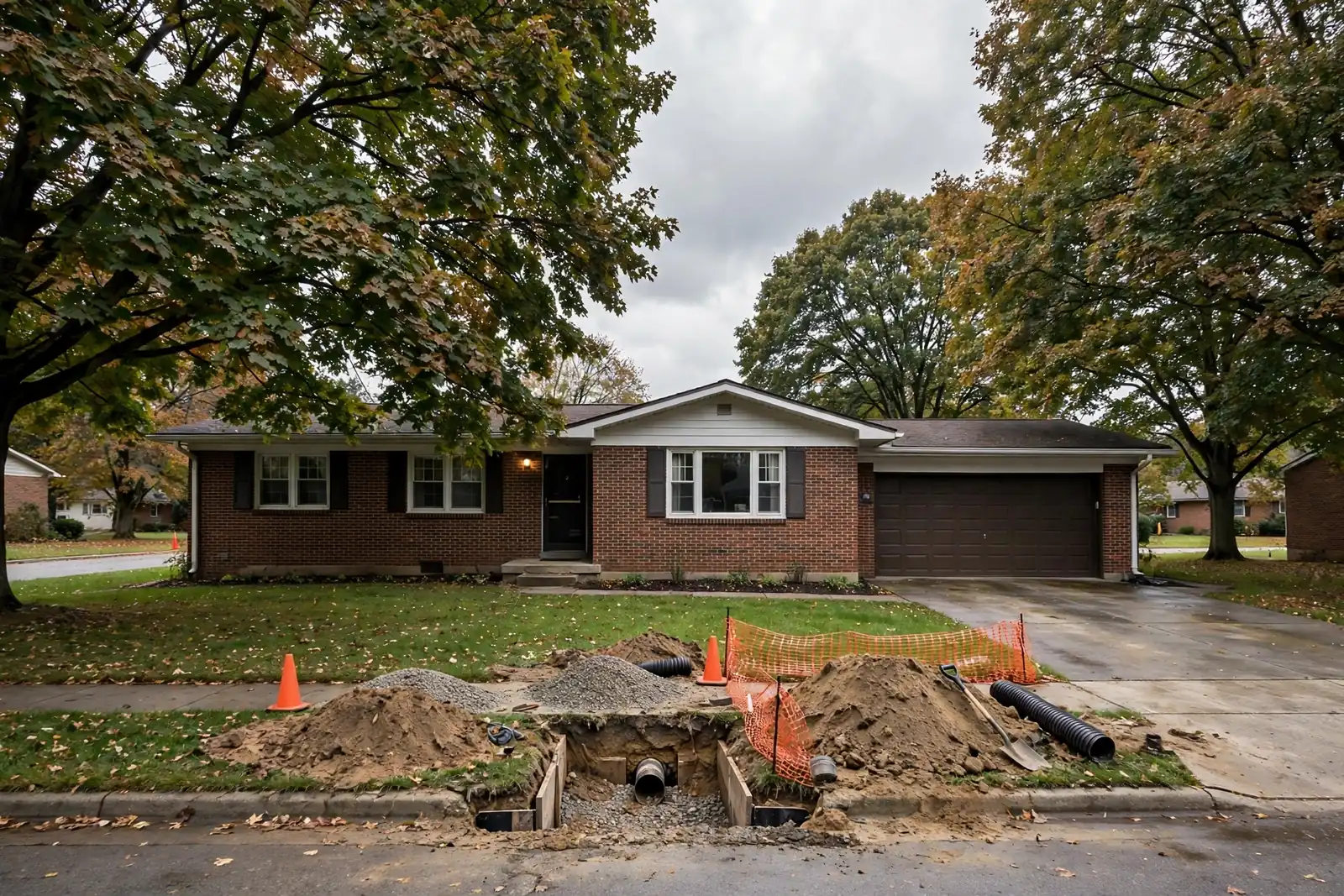
Sewer Line Replacement for Single-Family Homes in Parma, OH
Most Parma homes are single-family houses built in the postwar boom — and their sewer laterals are the same age as the houses themselves.
Need help with your sewer line?
Call Now to reach a local sewer professional. Describe the problem, where it is, and what the line has been doing.
Hours: Mon–Fri 7:00 AM–10:00 PM ET · Sat 8:00 AM–10:00 PM ET · Sun 7:00 AM–9:00 PM ET
The Parma single-family lateral
Most Parma homes are single-family houses — brick ranches, Cape Cods, and split-levels built between 1940 and 1969, on modest lots along Ridge Road, State Road, Snow Road, and Broadview Road. The median Parma home was built in 1958, and about 68 percent of the city's housing units date from that postwar era. The sewer lateral under each of those homes was laid at the same time, from clay tile or cast iron, and it is now at or past the end of its working life.
A single-family lateral is a short run, usually from the foundation to the street main across the front yard. It serves one household, and the household is the decision-maker — there is no landlord, no manager, and no shared system to coordinate. That makes the work simpler than in a multi-unit building, but it also means the homeowner carries the whole responsibility: the lateral is theirs from the house to the street main, including the connection at the main.
The single-family lateral fails the way Parma's laterals fail: clay joints open, roots enter, cast iron corrodes and narrows, and the ground settles into bellies. The symptoms arrive in order — several drains slow at once, the basement floor drain backs up, a sewer smell appears at the lowest drain, or a wet patch shows in the yard above the line. A camera inspection shows the material, the damage, and where the problem is.
What a homeowner needs to know first
The first thing a homeowner needs to know is who owns the lateral. In most Ohio cities, the homeowner is responsible for the lateral from the house to the street main, including the connection at the main. The city maintains the main itself. That split is the reason lateral problems are handled by calling a local professional, and why the lateral's condition is part of buying a home in Parma.
The second thing is the age of the line. A Parma home built in the 1950s or 1960s almost always has a clay tile lateral with cast iron at the house end, unless it has already been replaced. Clay tile generally lasts about 50 to 60 years, so a lateral from the 1950s is now older than the material it was made from. The joints are the first thing to go, and the roots from the mature maples and oaks find every opening.
The third thing is the camera. A camera inspection is the step that turns a symptom into a diagnosis. It shows the pipe material, every joint, every crack, every root, and the connection at the street main — and the locator marks each defect on the surface, with the depth. The fix is chosen from what the camera found, not from a guess.
How the work happens at a single-family home
The work starts with a camera inspection, through a cleanout or a pulled toilet. The camera runs from the house to the street main, and the operator notes every defect, joint, and change in material. The locator marks the line's path and the position of each defect on the surface, with the depth. The crew then explains what the camera found, and which options fit: cleaning, spot repair, lining, bursting, or full replacement.
The method is chosen from the camera findings and from what sits above the line. A lateral under a driveway or mature trees is a candidate for trenchless work — pipe bursting or lining through small pits. A shallow lateral through open lawn may be simpler by open trench. Either way, the new line is laid with the correct slope to the street main, and it is camera-checked before the job is called done.
Water use in the house is paused while the line is open, and the crew explains the timing before work starts so the household can plan around it. The yard is a work site while the job runs — a trench or two pits, a mini excavator, pipe sections, and backfill material — and the backfill and grading at the end leave the surface ready for the homeowner to restore. The camera footage of the finished line is the record of the job, and the homeowner should keep it.
Buying a Parma home: the lateral check
A camera inspection of the lateral is one of the most useful inspections a buyer can order in Parma. Many homes still have their original clay tile laterals, and a lateral at the end of its life may show no symptom at all until it backs up. The drains work, the basement is dry, and the first backup comes after the purchase. The inspection shows the condition of the line before the purchase is final.
If the inspection finds a failing lateral, the buyer and seller can deal with it as part of the purchase — the same way they would deal with a roof or a furnace at the end of its life. If the lateral is sound, the buyer moves in knowing the sewer is not a hidden problem. Either way, the information belongs in the buying decision, not discovered afterwards.
Ask for the camera footage and the written findings when the inspection is done. The footage is the record of the lateral's condition, and it is useful for any later work on the line, and for an insurer who asks about the sewer. A lateral that has been inspected is a known quantity; a lateral that has not been inspected is a guess.
Keeping a new lateral sound
A new lateral with sealed joints has no openings for roots to find, and a smooth interior that resists buildup. The trees above the line do not need to go — the roots can press against the new pipe, but they cannot enter it, because there is no opening to enter through. The homeowner should know where the line runs, though, so the next tree is not planted directly above it.
The line should be inspected every few years, and always after a backup. A camera inspection shows the condition of the line while it is still working, and a later inspection can be compared against the footage from the replacement. A lateral that is checked is a lateral that does not surprise its owner.
Downspouts and sump pumps matter too. Roof downspouts tied into the lateral, and a sump pump discharging into it, add water during a storm — and a lateral that handles normal flow can fail under storm flow. The crew explains what the camera found, and whether the downspouts or the sump discharge are part of the problem.
Selling a home with an old lateral
A home sale is the moment an old lateral is most likely to be discovered. Many buyers now ask for a camera inspection as part of the purchase, and a clay lateral from the 1950s is exactly what the camera is looking for. A seller who has the inspection done first knows what the buyer will find, and can decide whether to replace the line, adjust the price, or disclose the condition and let the buyer decide.
Disclosure is the part sellers most often get wrong. A known sewer problem that is not disclosed can come back as a dispute after the sale, and the cost of the dispute is usually larger than the cost of the repair. A camera report, a replacement invoice, or a written record of the line's condition is the evidence that the disclosure was made. Keep the records with the other papers for the house.
For a buyer, the camera inspection is worth doing before the purchase, not after. It shows the material, the condition, and the connection at the main, and it gives the buyer a basis for negotiating the price or asking for the repair. A home with a new lateral is a different purchase from a home with an original clay line, and the difference should be reflected in the price. The inspection is a small expense next to the price of the house, and it answers a question that matters for decades.
Services for single-family homes
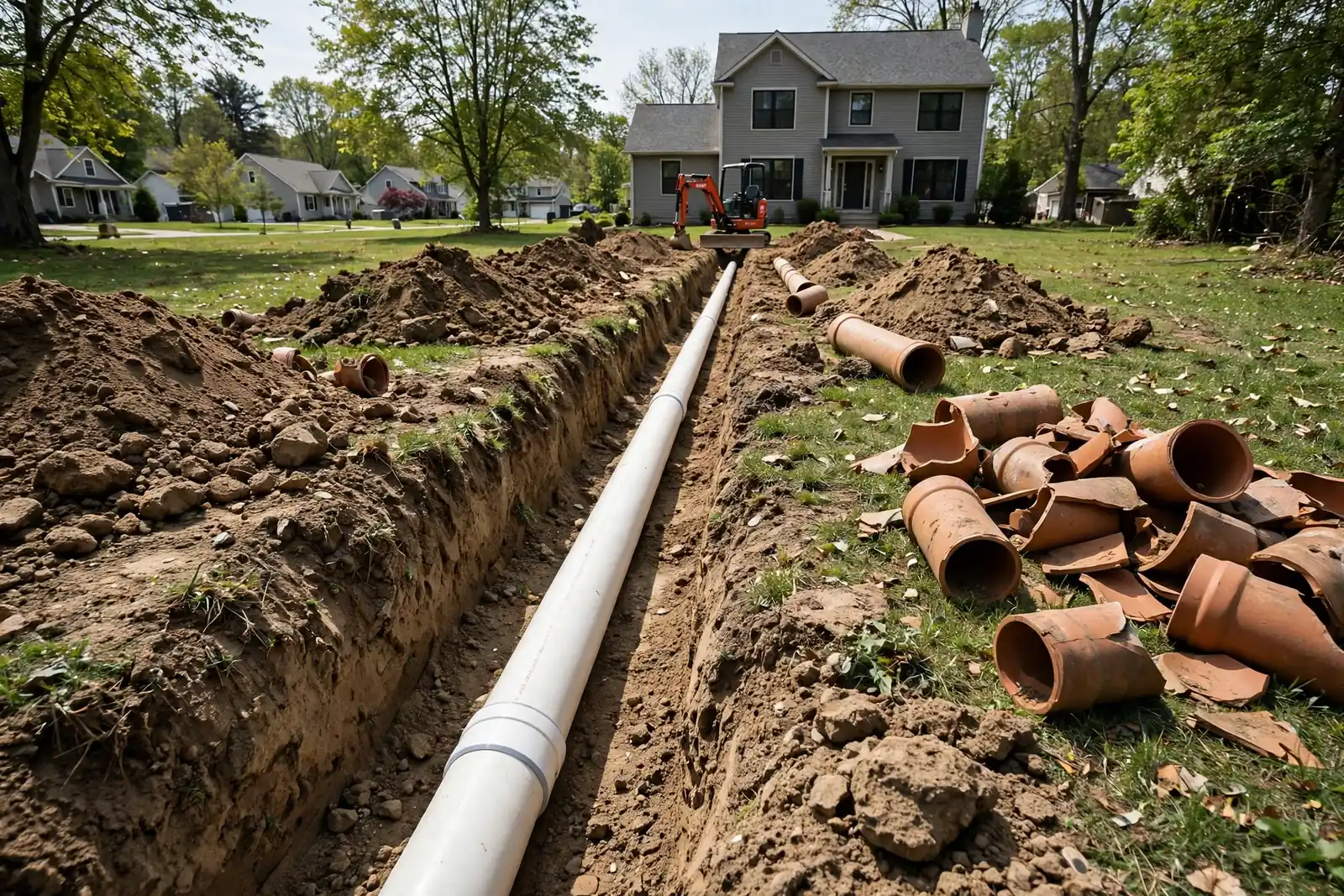 Sewer Line Replacement
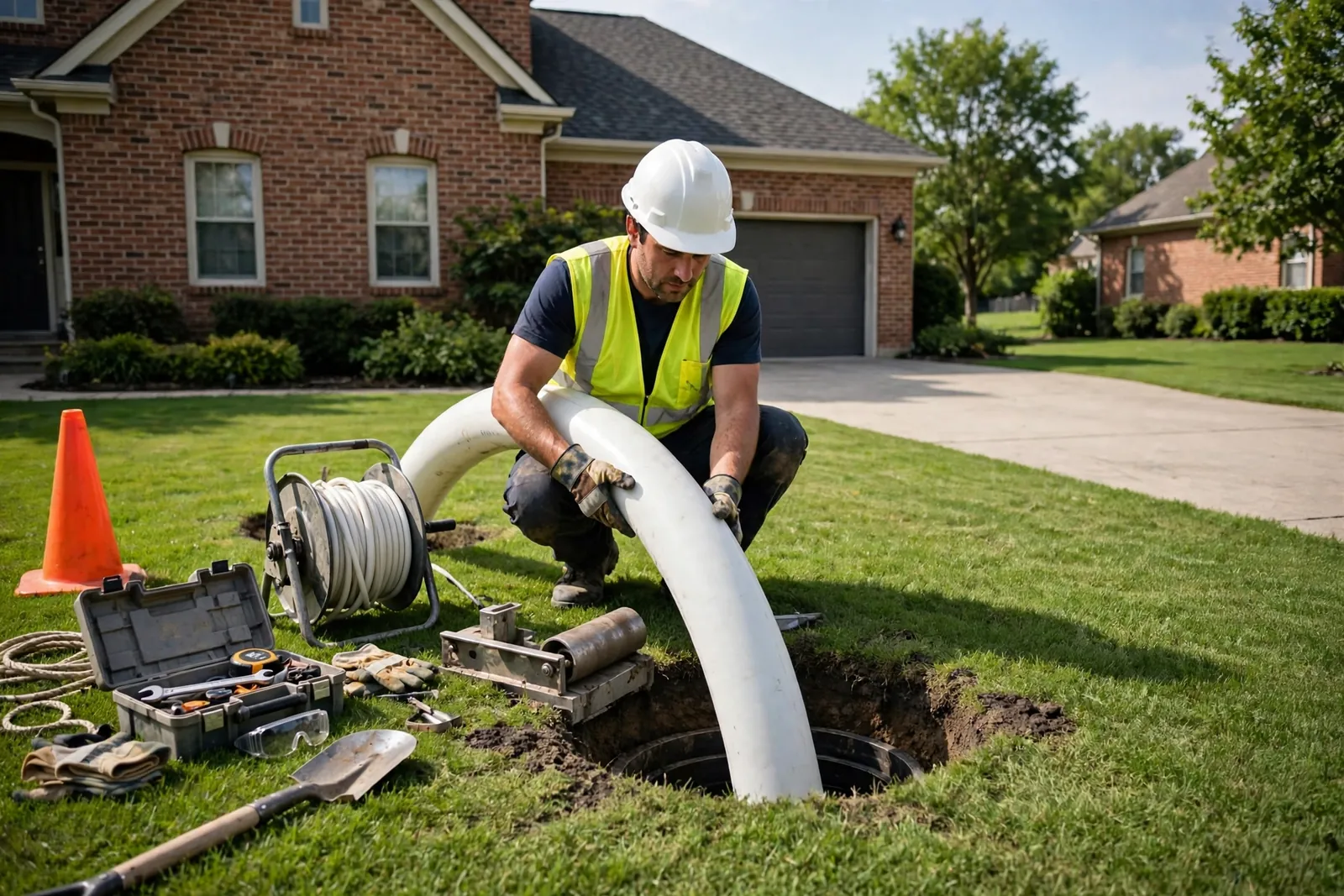 Trenchless Sewer Line Replacement
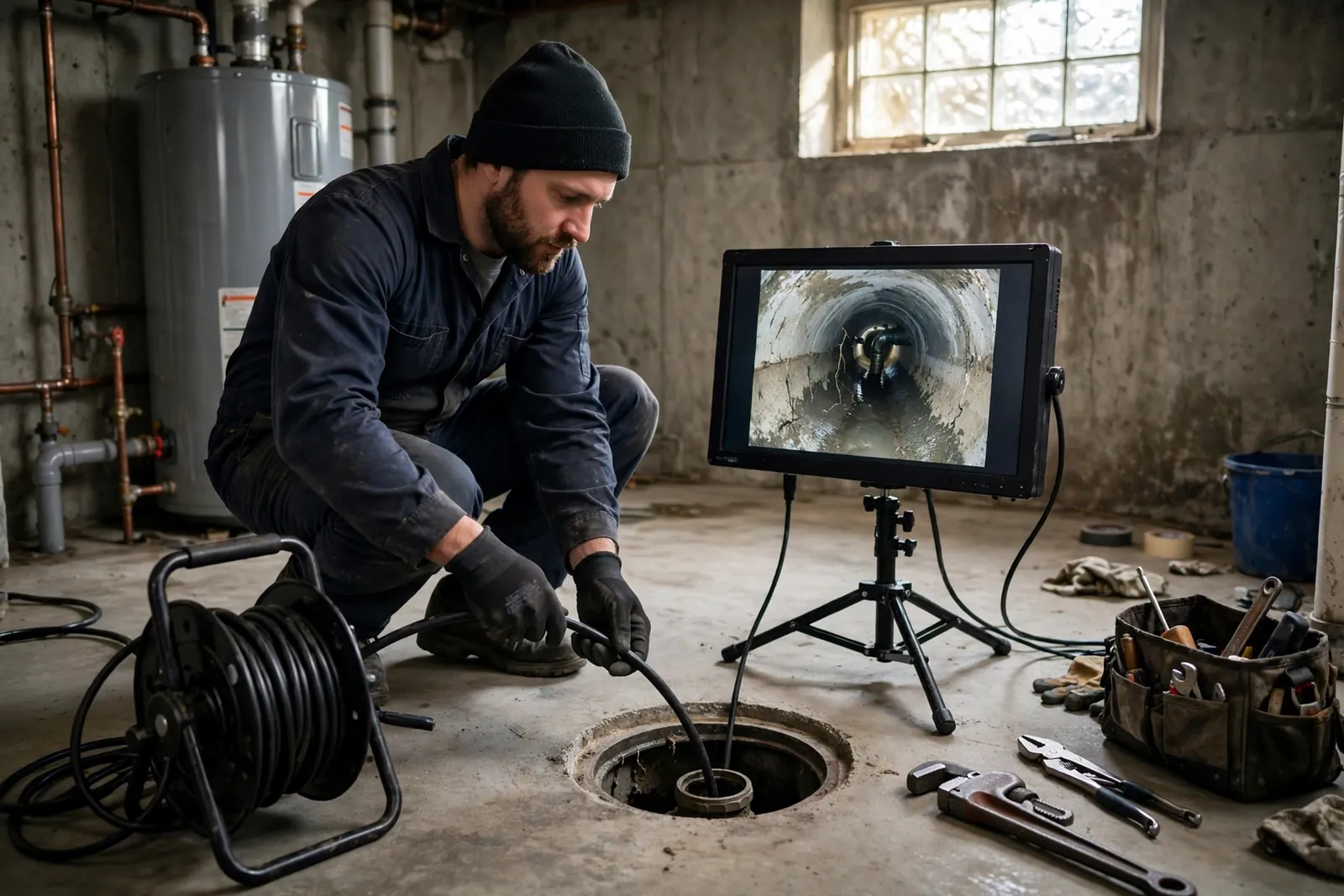 Sewer Camera Inspection
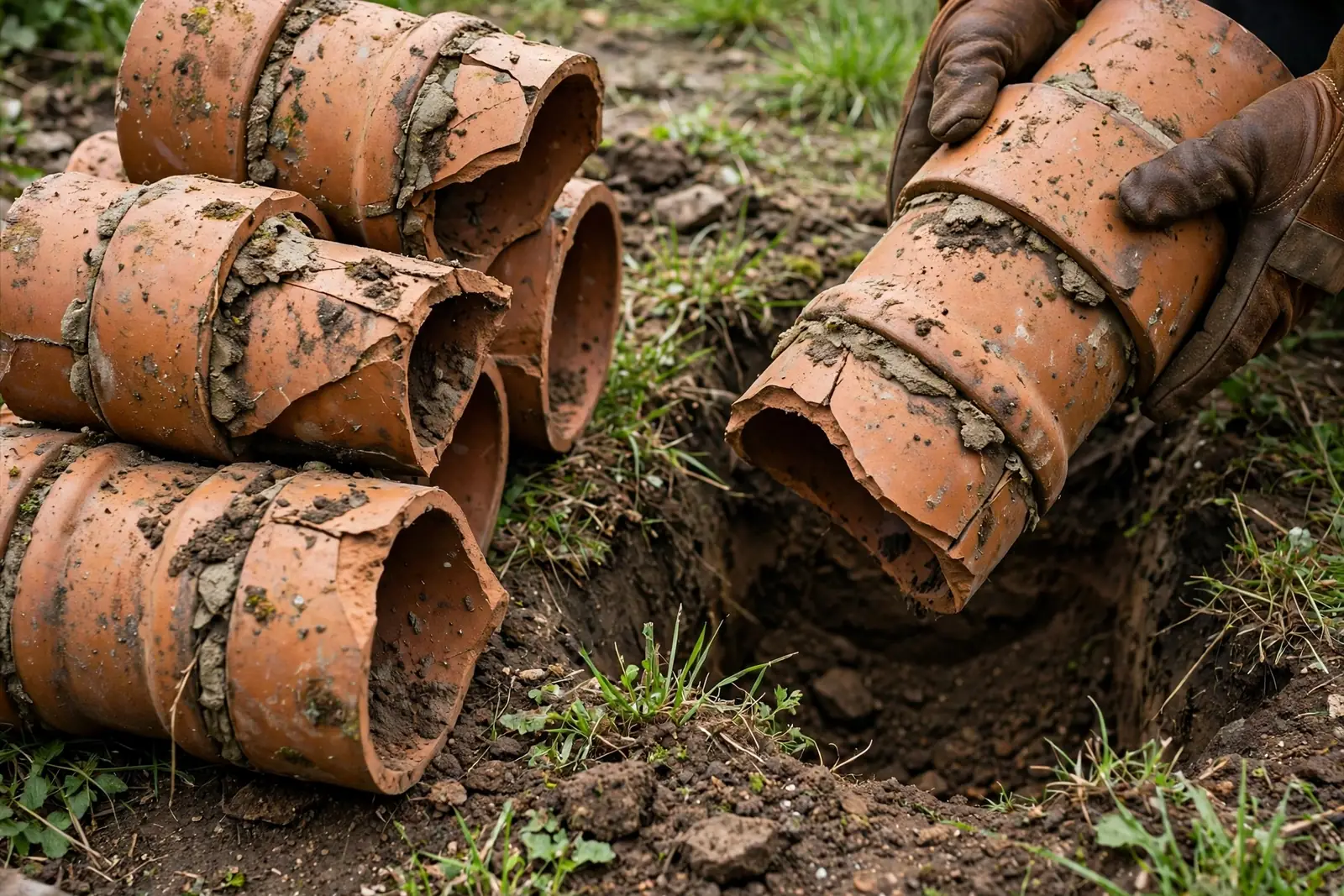 Clay Sewer Pipe Replacement
Where we work
Parma, OH · Brooklyn, OH · Parma Heights, OH · Seven Hills, OH · North Royalton, OH
Services used most
Sewer Line Replacement · Trenchless Sewer Line Replacement · Sewer Camera Inspection · Clay Sewer Pipe Replacement
Related guides
Signs You Need Sewer Line Replacement · What Is a Sewer Lateral? · Sewer Camera Inspection: What It Shows
Related problems
Tree Root Intrusion · Collapsed Sewer Line · Bellied Sewer Line
Frequently asked questions
Questions people ask about sewer lines in single-family homes, answered plainly.
A camera inspection shows it. A Parma home built in the 1950s or 1960s almost always has a clay tile lateral with cast iron at the house end, unless it has already been replaced. The camera shows the material section by section.
In most Ohio cities, the homeowner is responsible for the lateral from the house to the street main, including the connection at the main. The city maintains the main itself.
Often, yes. Trenchless methods — pipe bursting or lining — replace the lateral through small pits, so a driveway or walkway above the line is not opened. Whether trenchless fits depends on the camera findings.
Yes — it is one of the most useful inspections a buyer can order in the city. Many homes still have their original clay tile laterals, and a lateral at the end of its life may show no symptom at all until it backs up.
Most residential replacements are measured in days. A short, shallow line with clear access is faster; a long or deep line, or a line under a driveway, takes longer. The camera inspection and the locate give the crew the information needed to plan the schedule.
The replacement pipe is a modern plastic pipe with sealed joints and a smooth interior — a different kind of pipe from clay tile or cast iron. The finished line is checked on camera before the job is called done.
Sewer line trouble in your Parma home or business?
Call Now to reach a local sewer professional. Describe the problem, where it is, and what the line has been doing.
Call now for sewer line help
Tap Call Now to reach a local sewer professional. Tell them where the problem is, what the line has been doing, and whether wastewater is coming into the home.
Hours: Mon–Fri 7:00 AM–10:00 PM ET · Sat 8:00 AM–10:00 PM ET · Sun 7:00 AM–9:00 PM ET
Before you call
- Stop using water if the line is backing up.
- Keep people and pets away from any wastewater.
- Note which drains are slow, and which one backs up first.
- Note whether the problem happens in heavy rain, or all the time.
- Have the age of the home ready, if you know it.