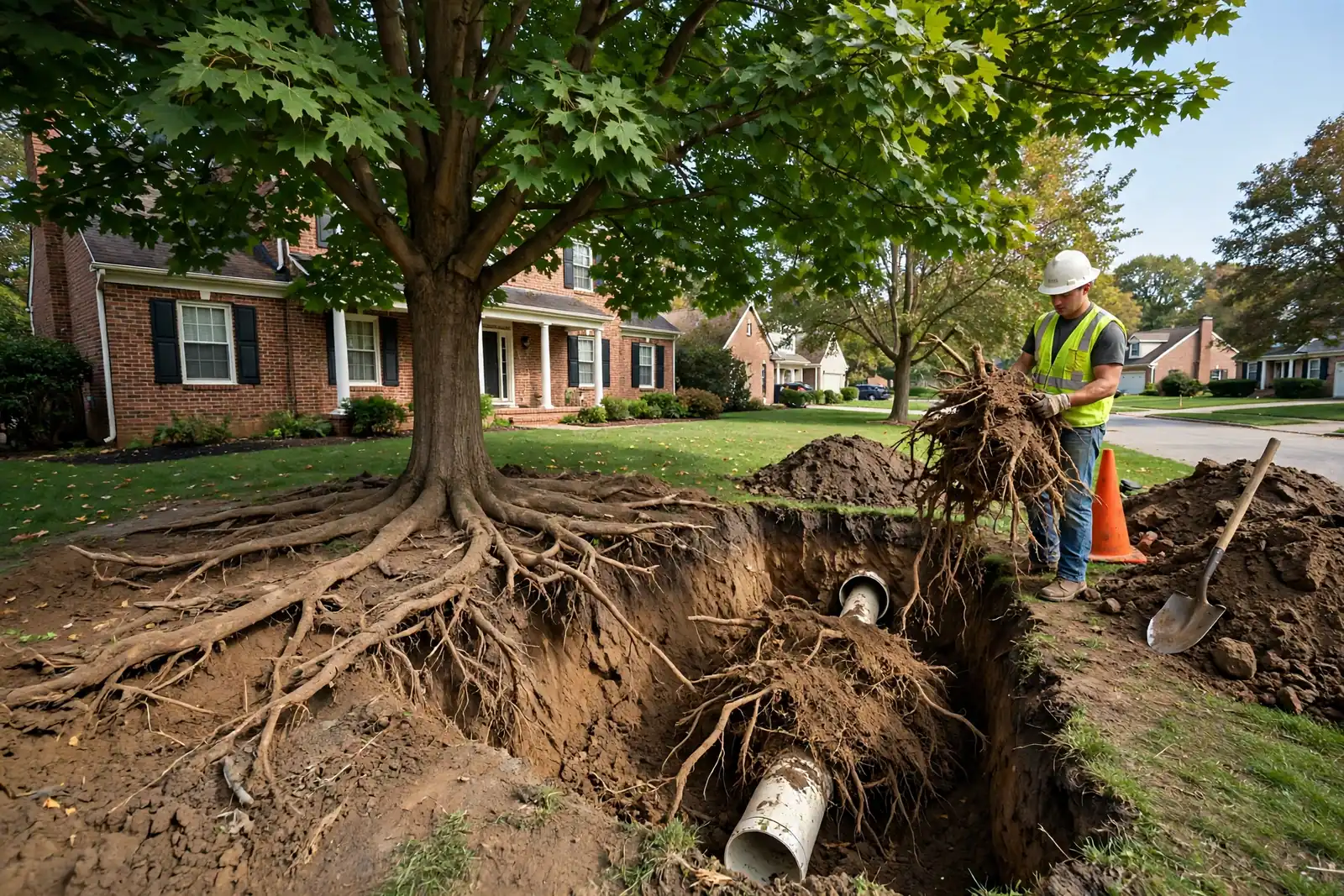
Sewer Line Problems We Solve in Parma
Tree roots, collapsed lines, bellies, cracked pipes, and sewer odors — what each one looks like, what causes it, and what to do first.
Need help with your sewer line?
Call Now to reach a local sewer professional. Describe the problem, where it is, and what the line has been doing.
Hours: Mon–Fri 7:00 AM–10:00 PM ET · Sat 8:00 AM–10:00 PM ET · Sun 7:00 AM–9:00 PM ET
Sewer lines in Parma fail at the joints
Parma's laterals are clay tile and cast iron from the 1940s, 1950s, and 1960s, and they fail in a few familiar ways. The joints open and roots enter. The ground settles and a section bellies. The cast iron corrodes and narrows. A section cracks or collapses under ground movement. The five problems on this page are the ones Parma homeowners actually call about, in the order they happen.
Each problem page follows the same shape: what it is, what causes it, what to do first, and how the fix works. The first steps matter most — stopping water use if the line is backing up, keeping away from wastewater, and getting a camera inspection — because the line keeps failing while you decide.
Common sewer line problems in Parma
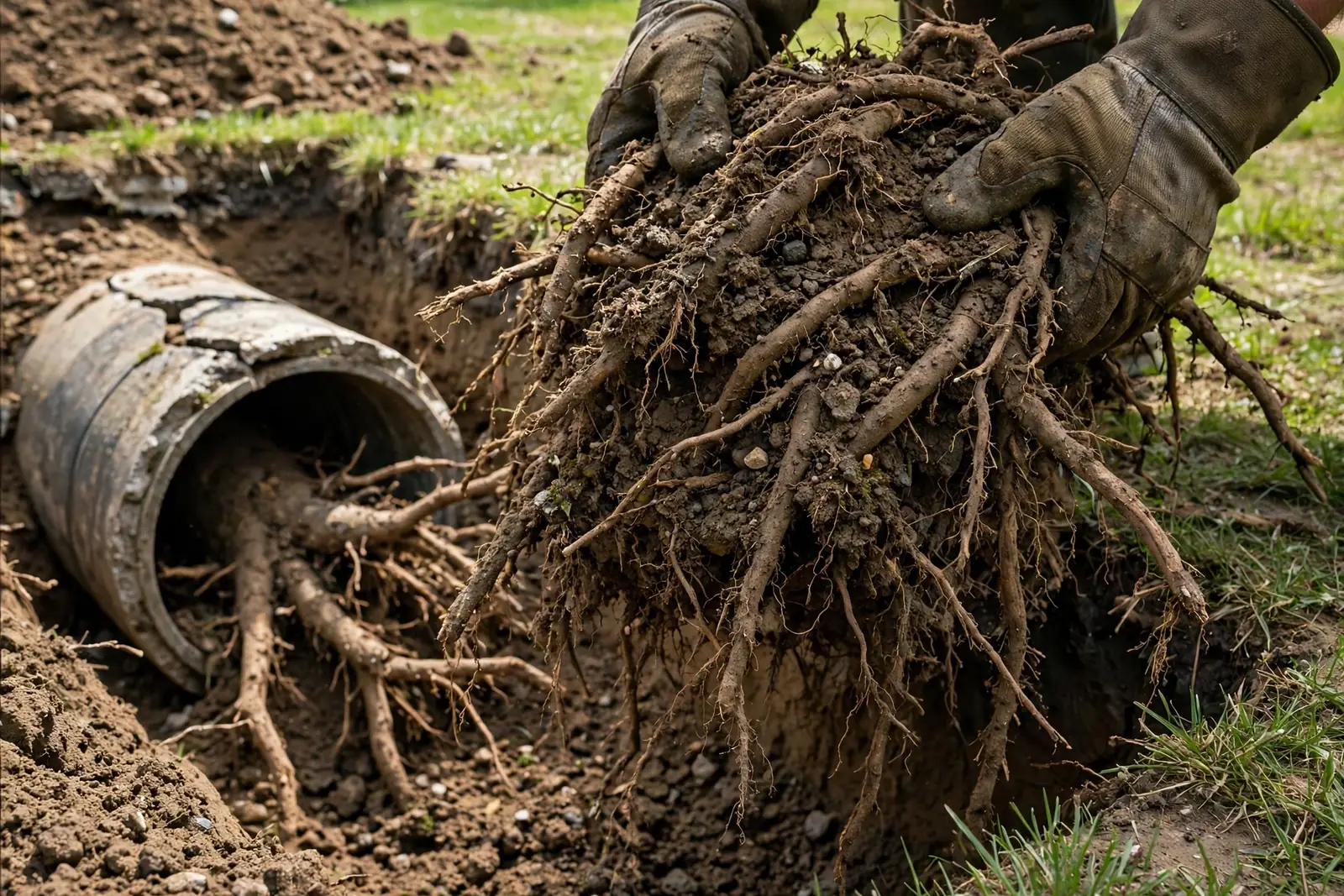 Tree Root Intrusion
Parma's mature maples and oaks are part of the city's charm — and the main reason its clay sewer laterals keep blocking. Roots fin...
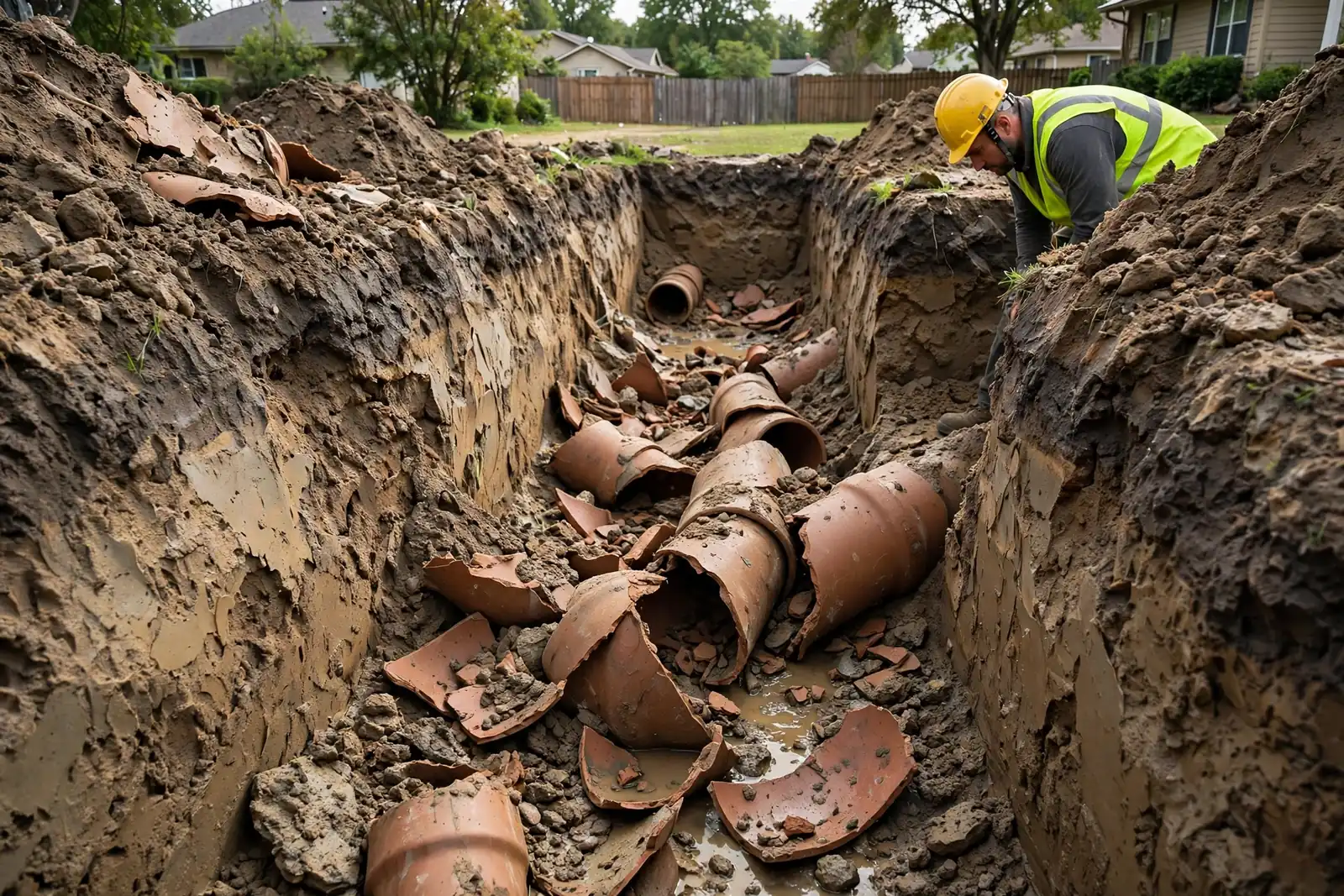 Collapsed Sewer Line
A collapsed sewer line stops the flow entirely — and it cannot be cleaned or lined. The collapsed section has to be dug out and re...
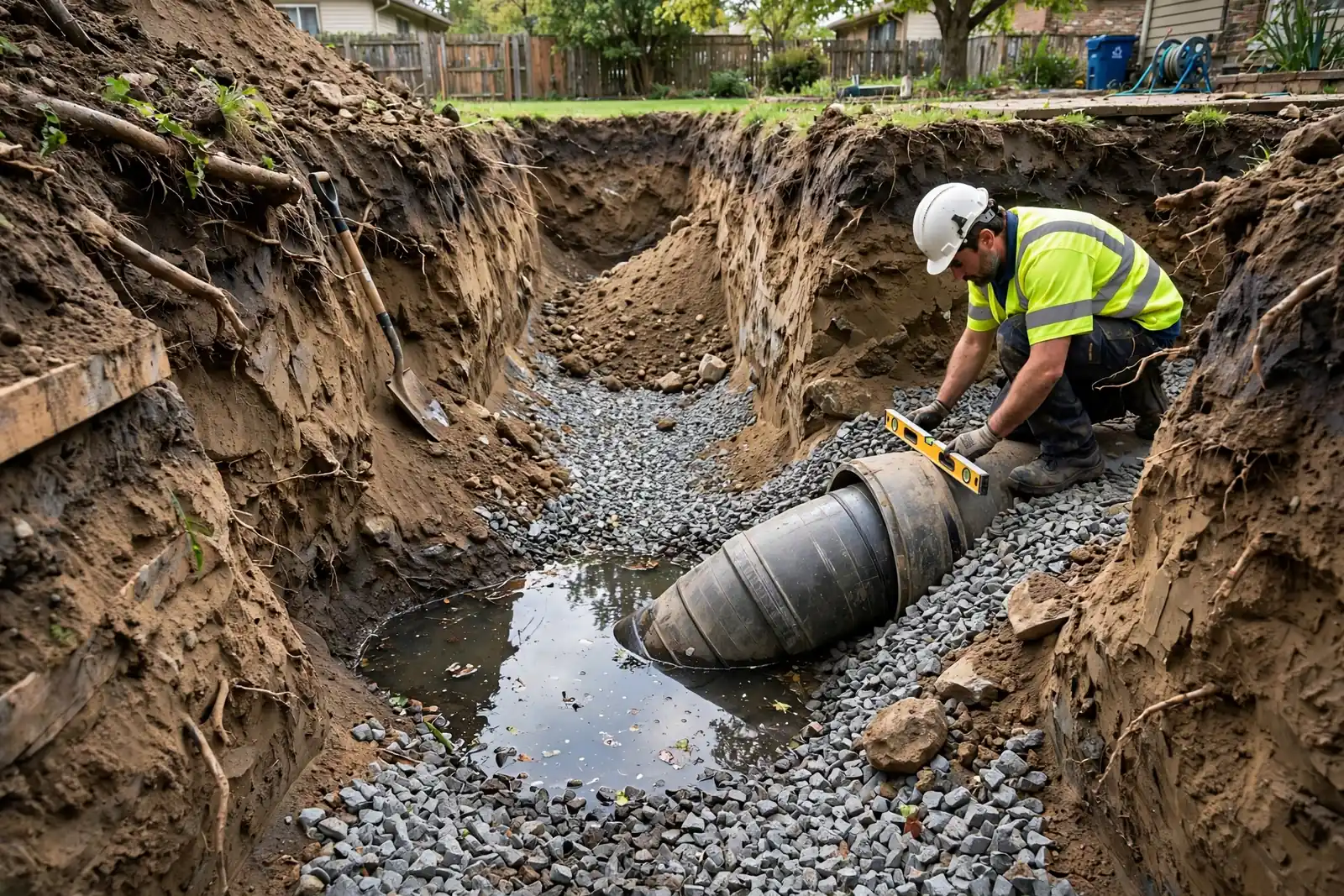 Bellied Sewer Line
A bellied sewer line is a low section where water and solids sit instead of flowing — and no amount of cleaning will fix a pipe th...
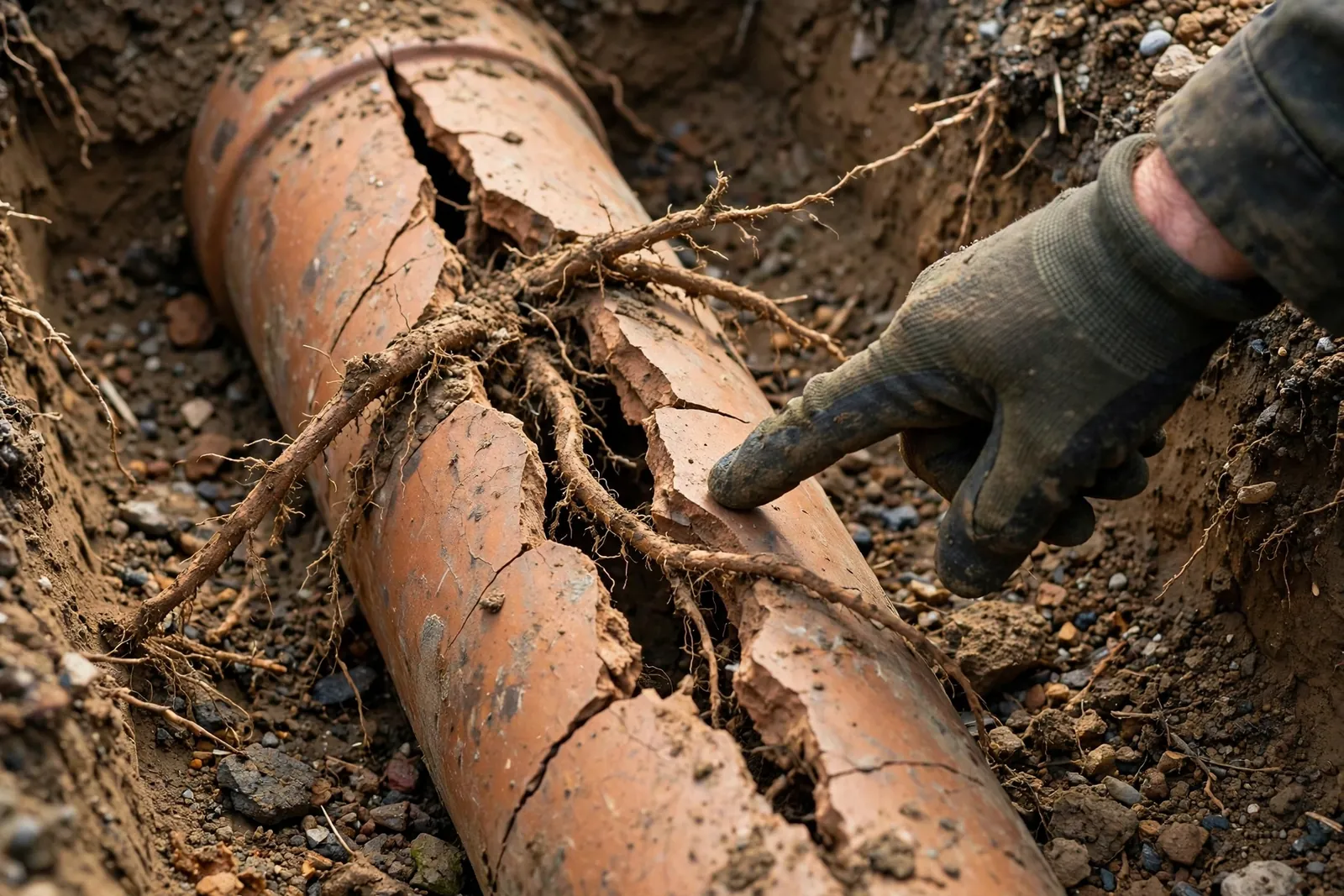 Cracked Sewer Pipe
A cracked sewer pipe lets roots and soil in, and wastewater out — and a crack in an old clay or cast iron line is usually the firs...
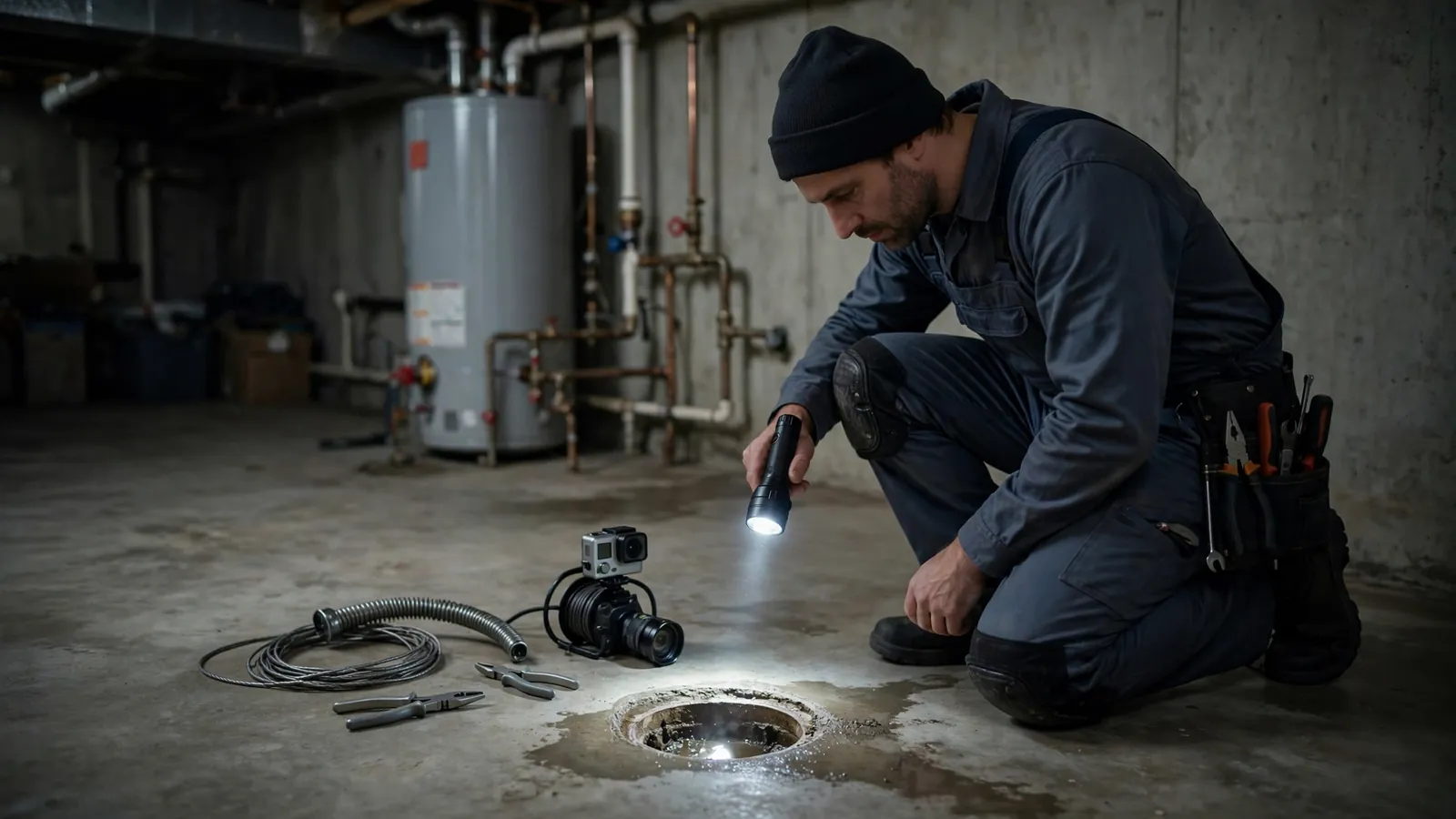 Sewer Odors in Home
A sewer smell in the home is a symptom, not a problem on its own — and the source is usually a dry trap, a cracked pipe, or a line...
Help shaped around Parma homes
Sewer lines in Parma fail in a particular way, because the city's homes were built in a particular era. Most of them went up between 1940 and 1969, with clay tile or cast iron laterals that are now at or past the end of their working life.
Parma-shaped knowledge
Postwar clay tile and cast iron laterals, mature street trees, freeze-thaw ground movement, and the pre-1960 common-trench sewers the Ohio EPA documented in Parma — the pages on this site are built around the way sewer lines actually fail here.
One call, the right help
Describe the problem and where it shows up. You are connected with a local professional who handles that kind of sewer work.
Clear next steps
Every page explains what to do first, what the work looks like, and what to check afterwards — no jargon, no guessing.
Evidence before digging
A camera inspection and a locate come before any digging, so the work goes to the right spot and the method fits the line.
Frequently asked questions
Questions about sewer line problems, answered plainly.
Stop using water if the line is backing up, keep people and pets away from any wastewater, note which drains are slow and which one backs up first, then call for help.
Wastewater coming into the home, several drains slow at once, a sewer smell that persists after the traps are filled, or a wet patch in the yard above the line — all of these need a call. A single slow drain can be a local clog; the main line is a different problem.
It depends on the policy. Many standard homeowners policies do not cover sewer backups unless a specific endorsement was added. Check your policy, take photos, and keep the camera findings and any invoices for the claim.
Most residential replacements are measured in days. A short, shallow line with clear access is faster; a long or deep line, or a line under a driveway, takes longer. The camera inspection and the locate give the crew the information needed to plan the schedule.
Dealing with one of these problems?
Call Now to reach a local sewer professional. Describe the problem, where it is, and what the line has been doing.
Call now for sewer line help
Tap Call Now to reach a local sewer professional. Tell them where the problem is, what the line has been doing, and whether wastewater is coming into the home.
Hours: Mon–Fri 7:00 AM–10:00 PM ET · Sat 8:00 AM–10:00 PM ET · Sun 7:00 AM–9:00 PM ET
Before you call
- Stop using water if the line is backing up.
- Keep people and pets away from any wastewater.
- Note which drains are slow, and which one backs up first.
- Note whether the problem happens in heavy rain, or all the time.
- Have the age of the home ready, if you know it.