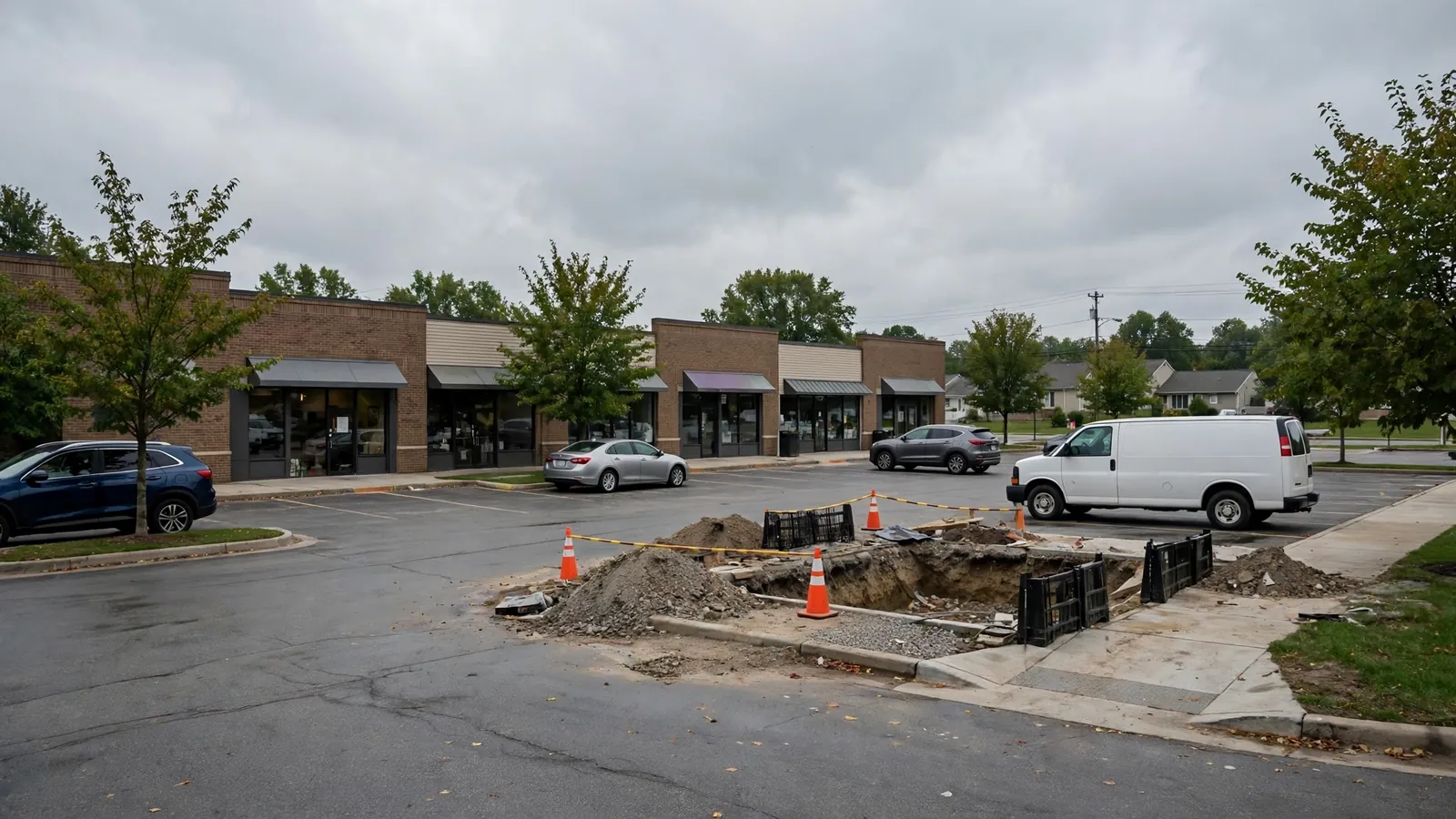
Sewer Line Replacement for Commercial Properties in Parma, OH
A commercial property's sewer lateral serves a business, not a household — and a backup there closes the business, not just a bathroom.
Need help with your sewer line?
Call Now to reach a local sewer professional. Describe the problem, where it is, and what the line has been doing.
Hours: Mon–Fri 7:00 AM–10:00 PM ET · Sat 8:00 AM–10:00 PM ET · Sun 7:00 AM–9:00 PM ET
How a commercial lateral differs
A commercial lateral serves a business — an office, a shop, a small warehouse, a medical office, or a storefront along Ridge Road or Pearl Road — and the load on it is different from a home's. The fixtures are used by more people, the flow is higher during business hours, and the line is worked harder. A lateral that serves a business with restrooms for staff and customers carries more water, more often, than a lateral that serves one household.
The buildings are often older, too. Many Parma commercial properties occupy postwar storefronts and small office buildings from the 1950s and 1960s, with clay tile and cast iron laterals from the same era. The laterals in those buildings are as old as the buildings, and they fail the same way Parma's residential laterals do — joints that open, roots that enter, cast iron that corrodes and narrows, and ground that settles into bellies.
The consequences of a failure are larger. A backup in a home is a problem for one household. A backup in a shop closes the shop, and a backup in an office sends the staff home. A backup in a medical office or a food business is a compliance problem as well as a plumbing problem. The lateral is not a household convenience — it is part of the business, and the business cannot operate without it.
What to do first in a commercial backup
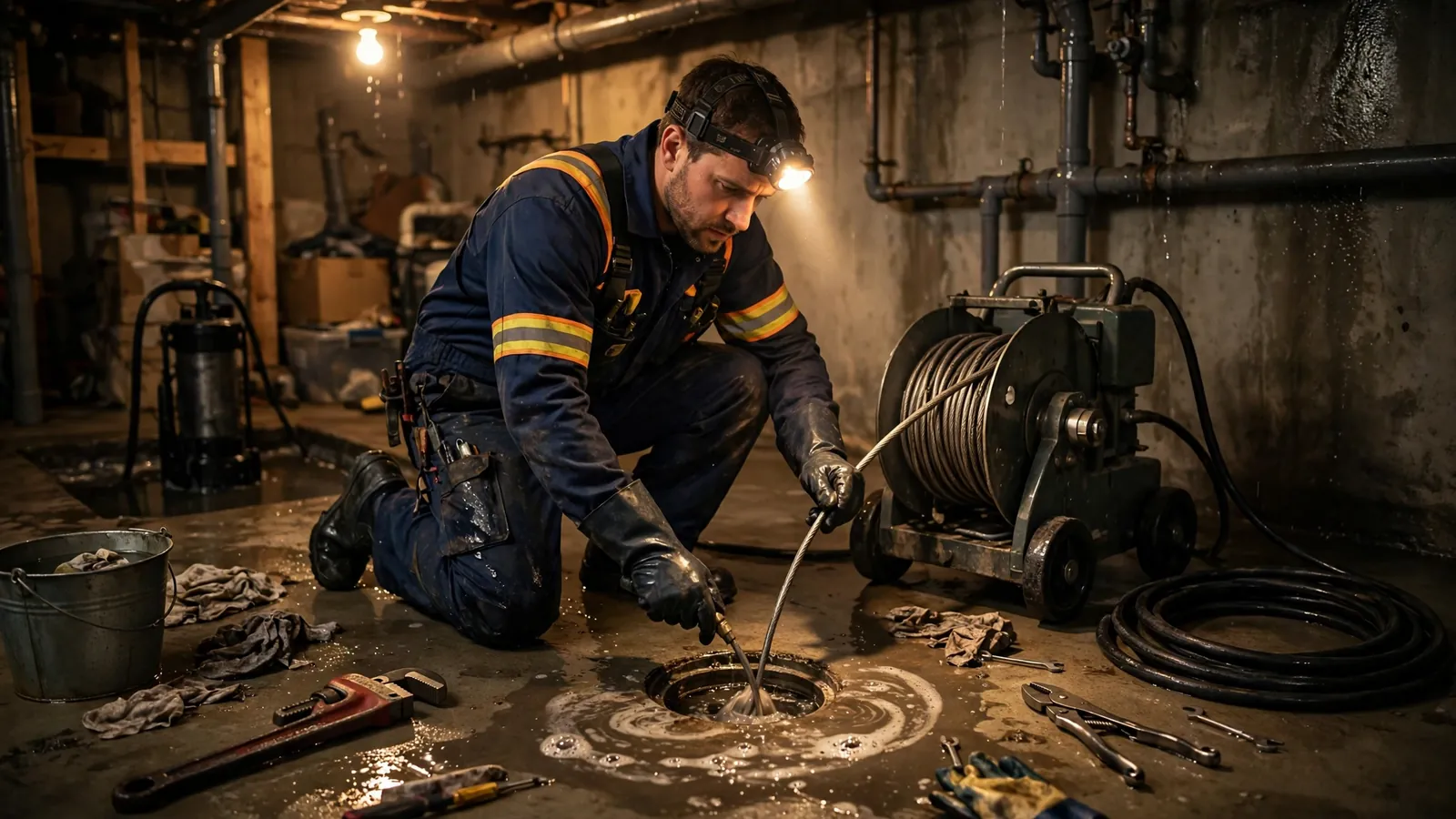
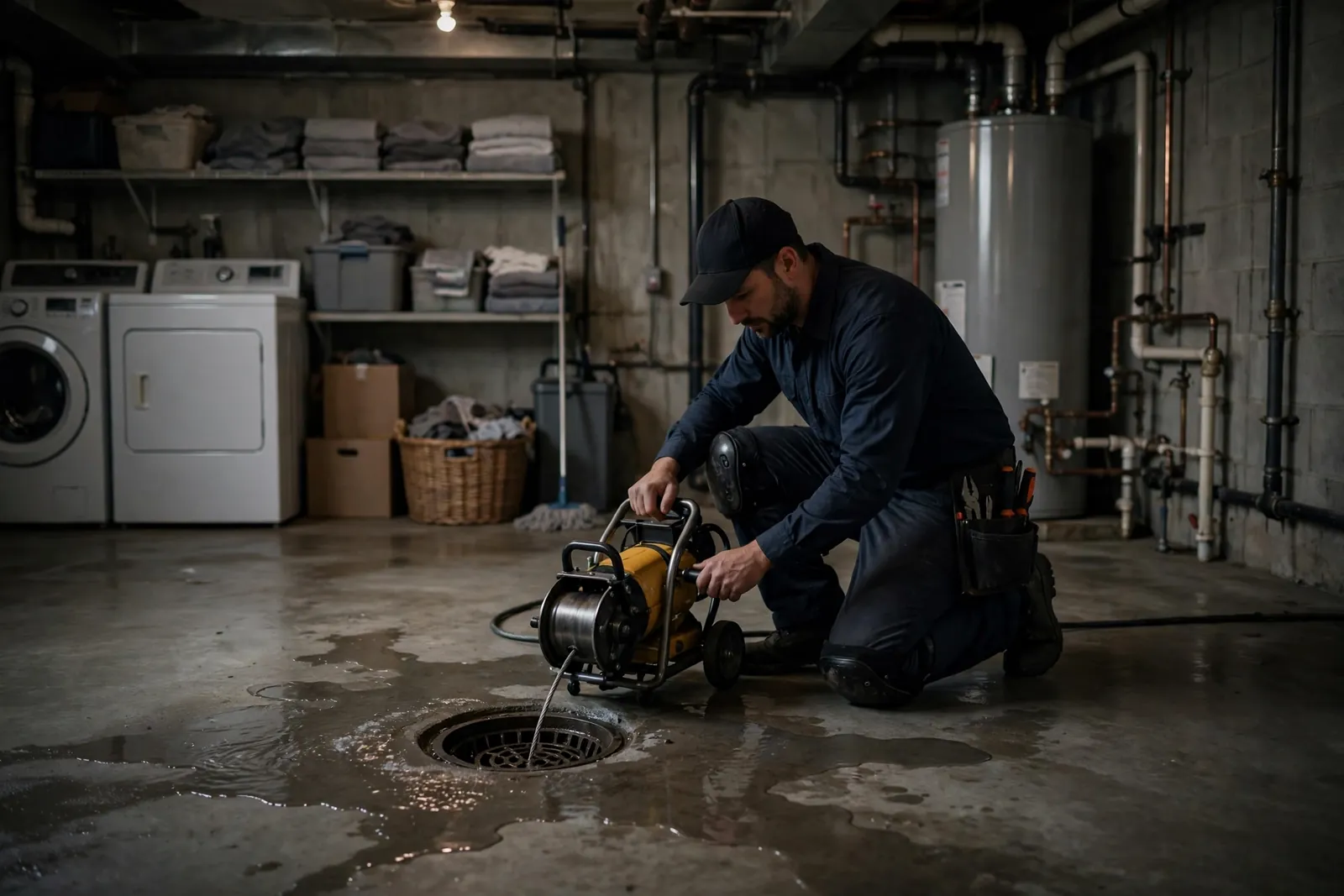
Stop using water in the building. Turn off the restrooms, the kitchenette, and any equipment that drains to the lateral, and keep staff and customers away from the wastewater. A backup in a commercial property is handled as an urgent call, and the first job is to clear the line and restore flow, so the business can reopen.
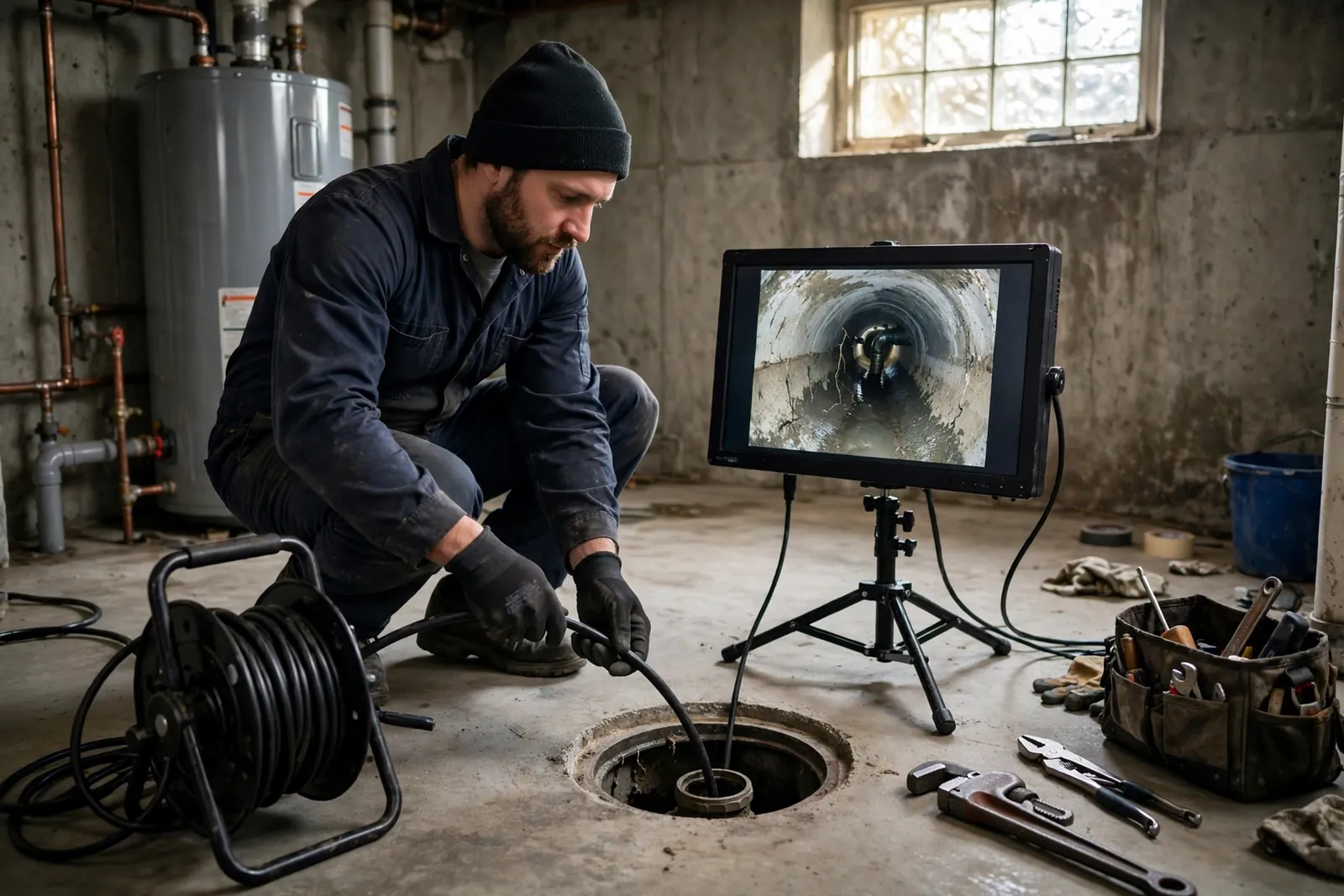
Call for help and describe the backup — where the water is coming in, how much there is, and whether it is still rising. The crew needs to know whether the backup is in progress, and whether it is getting worse. The camera inspection follows, once flow is restored, and it shows whether the line needs a spot repair, lining, bursting, or a full replacement.
Document the backup. Take photos of the water, the drains it came from, and everything it touched, before anything is cleaned. Note the time the backup started and what was happening in the building. The photos and the camera findings are the record for the insurer, and they are useful for any later work on the line.
How the work happens at a commercial property
The work is scheduled around the business. A shop cannot close for days while a lateral is replaced, so the work is planned for the hours the business is closed — overnight, or over a weekend — and the crew works to restore flow as quickly as possible. The camera inspection comes first, so the method is chosen from the findings, and the work is planned around the business hours.
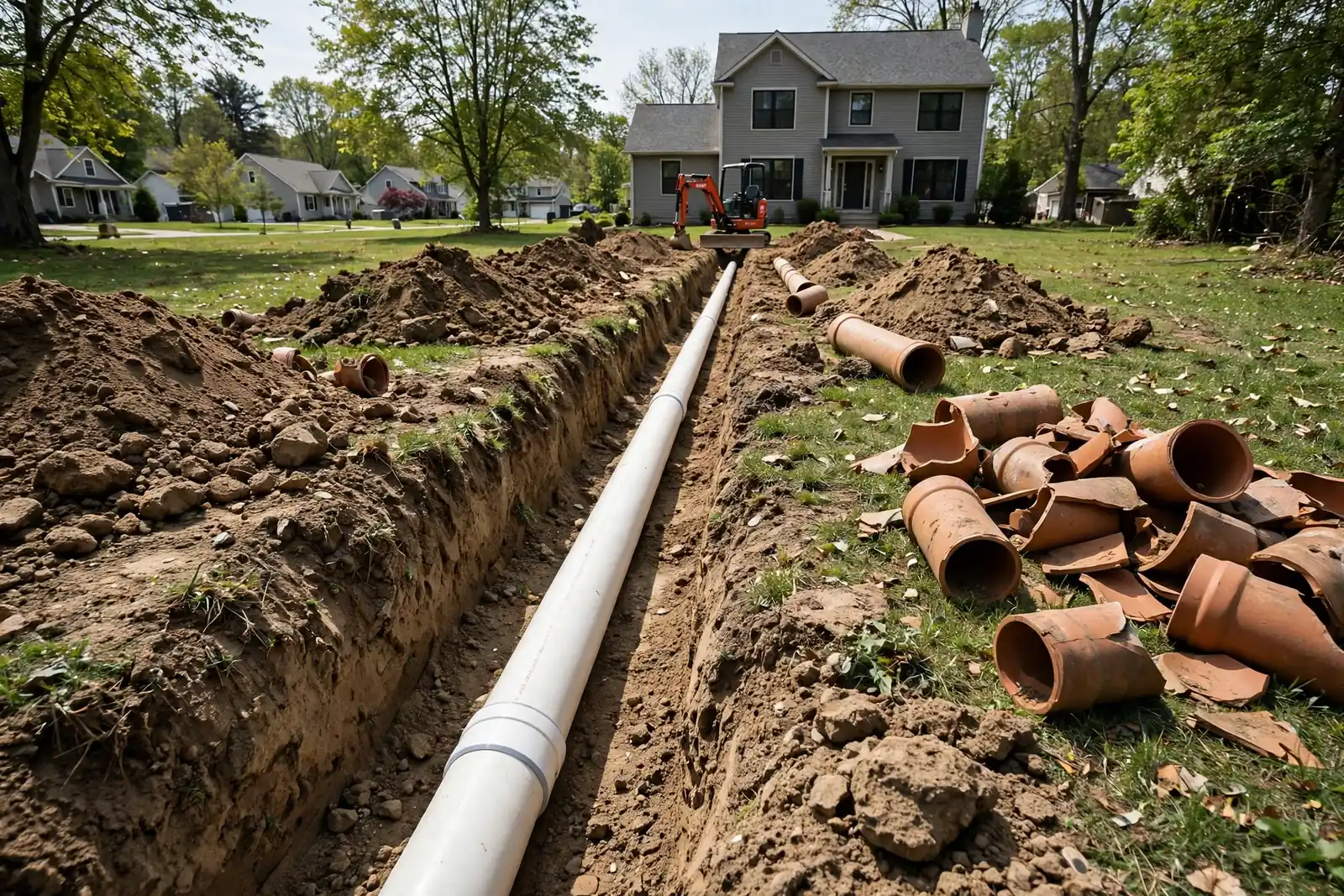
The method is chosen the same way as at a home: from the camera findings and from what sits above the line. A lateral under a parking lot is a candidate for trenchless work — pipe bursting or lining through small pits — because the parking lot stays open for customers. A shallow lateral through open ground may be simpler by open trench. Either way, the new line is laid with the correct slope to the street main, and it is camera-checked before the job is called done.
Shared lines add a difference. A small strip property or an office building may have several businesses sharing one lateral, or several laterals sharing a connection at the street main. The camera inspection shows whether the problem is in the shared lateral or in one tenant's drain, and the work is planned accordingly. The coordination — access, water off for all tenants, and the decision about the fix — is arranged through the property owner or manager.
Older Parma commercial buildings
Many Parma commercial properties occupy postwar buildings along the city's main corridors — Ridge Road, State Road, Pearl Road, and Snow Road — with clay tile and cast iron laterals from the 1950s and 1960s. The laterals in those buildings are as old as the buildings, and they carry a heavier load than the residential laterals they were laid beside. A commercial lateral from the 1950s is now older than the material it was made from, and the joints have opened, the cast iron has corroded, and the ground has settled.
The camera inspection of an older commercial lateral often shows all three problems at once: open clay joints with roots, a cast iron section narrowed by corrosion, and a belly where the ground has settled. The fix is planned from the full picture — a spot repair for a local failure, lining for a line that still holds its shape, bursting or a full replacement for a line that is badly damaged.
A business that is buying or leasing an older Parma building should have the lateral camera-inspected before signing. A lateral at the end of its life may show no symptom at all until it backs up during business hours, and the inspection shows the condition of the line before the lease or the purchase is final.
Keeping a commercial lateral clear
Have the lateral camera-inspected regularly, and always after a backup. A camera inspection shows the condition of the line while it is still working, and a later inspection can be compared against the footage from the replacement. A lateral that is checked is a lateral that does not surprise the business during operating hours.
Keep grease and waste out of the line. A commercial kitchen should have a grease trap, pumped on schedule. A shop or office should keep wipes, paper towels, and foreign objects out of the drains. The lateral is not a waste disposal, and what goes down it stays in it until the crew clears it.
Know where the line runs. A business that is digging, paving, or building in the parking lot should know where the lateral is, so the work stays clear of it. The camera and locator map the line, and the map is useful for any later work on the property. A lateral that is dug into by accident is a backup waiting to happen.
Planning sewer work around business hours
Commercial sewer work is planned around the business, not the other way around. A shop, an office, or a clinic cannot close its drains in the middle of the day, so the camera inspection and the repair are usually scheduled after hours or between busy periods. The work has to be phased: isolate the affected area, keep the rest of the building in service, and complete the disruptive part when the building is empty.
Access is the second planning problem. A commercial lateral may run under a parking lot, a loading dock, or a landscaped entrance, and the work has to be staged so customers and deliveries can still reach the building. The crew marks the line, plans the pits or the trench, and arranges the surface restoration so the entrance is usable again as soon as possible. A trenchless method is often the better fit here, because it keeps the surface intact.
Documentation is heavier on a commercial job than on a home job. The tenant, the building owner or manager, and the insurer may all need the record: the camera findings, the scope of the work, the dates the business was affected, and the cost of any closure. The record should be kept with the building's maintenance files, not with the tenant's papers, because the lateral belongs to the building and the next tenant will ask the same questions. A complete file also protects the owner when the work is reviewed later — the footage shows what was wrong, the scope shows what was done, and the dates show when the building was back in full service. Without that file, the next problem starts from scratch, with a fresh inspection and a fresh round of questions from everyone involved.
Services for commercial properties
Where we work
Parma, OH · Cleveland, OH · Middleburg Heights, OH · Brooklyn, OH
Services used most
Sewer Line Replacement · Emergency Sewer Line Repair · Sewer Backup Repair · Sewer Camera Inspection
Related guides
Sewer Backup in Basement: First Steps · Signs You Need Sewer Line Replacement · What Is a Sewer Lateral?
Related problems
Collapsed Sewer Line · Cracked Sewer Pipe · Bellied Sewer Line
Frequently asked questions
Questions people ask about sewer lines in commercial properties, answered plainly.
Usually a failed lateral — roots in clay joints, a collapsed section, a belly, or cast iron narrowed by corrosion — or a blockage from what was put down the drains. A camera inspection shows whether the problem is the pipe or the blockage.
The work is planned around the business hours — overnight, or over a weekend — and the crew works to restore flow as quickly as possible. The camera inspection comes first, so the method is chosen from the findings and the work is planned around the business.
The property owner is responsible for the lateral from the building to the street main, including the connection at the main. The city maintains the main itself. Tenants should report a problem to the owner or manager promptly.
Yes. Many Parma commercial properties occupy older buildings with clay tile and cast iron laterals from the 1950s and 1960s. A lateral at the end of its life may show no symptom until it backs up during business hours.
Stop using water in the building, keep staff and customers away from the wastewater, and call for help. Take photos of the water and the damage before anything is cleaned, and keep the camera findings and any invoices for the insurer.
Regularly, and always after a backup. A camera inspection shows the condition of the line while it is still working, and a later inspection can be compared against the footage from the replacement.
Sewer line trouble in your Parma home or business?
Call Now to reach a local sewer professional. Describe the problem, where it is, and what the line has been doing.
Call now for sewer line help
Tap Call Now to reach a local sewer professional. Tell them where the problem is, what the line has been doing, and whether wastewater is coming into the home.
Hours: Mon–Fri 7:00 AM–10:00 PM ET · Sat 8:00 AM–10:00 PM ET · Sun 7:00 AM–9:00 PM ET
Before you call
- Stop using water if the line is backing up.
- Keep people and pets away from any wastewater.
- Note which drains are slow, and which one backs up first.
- Note whether the problem happens in heavy rain, or all the time.
- Have the age of the home ready, if you know it.