The short version
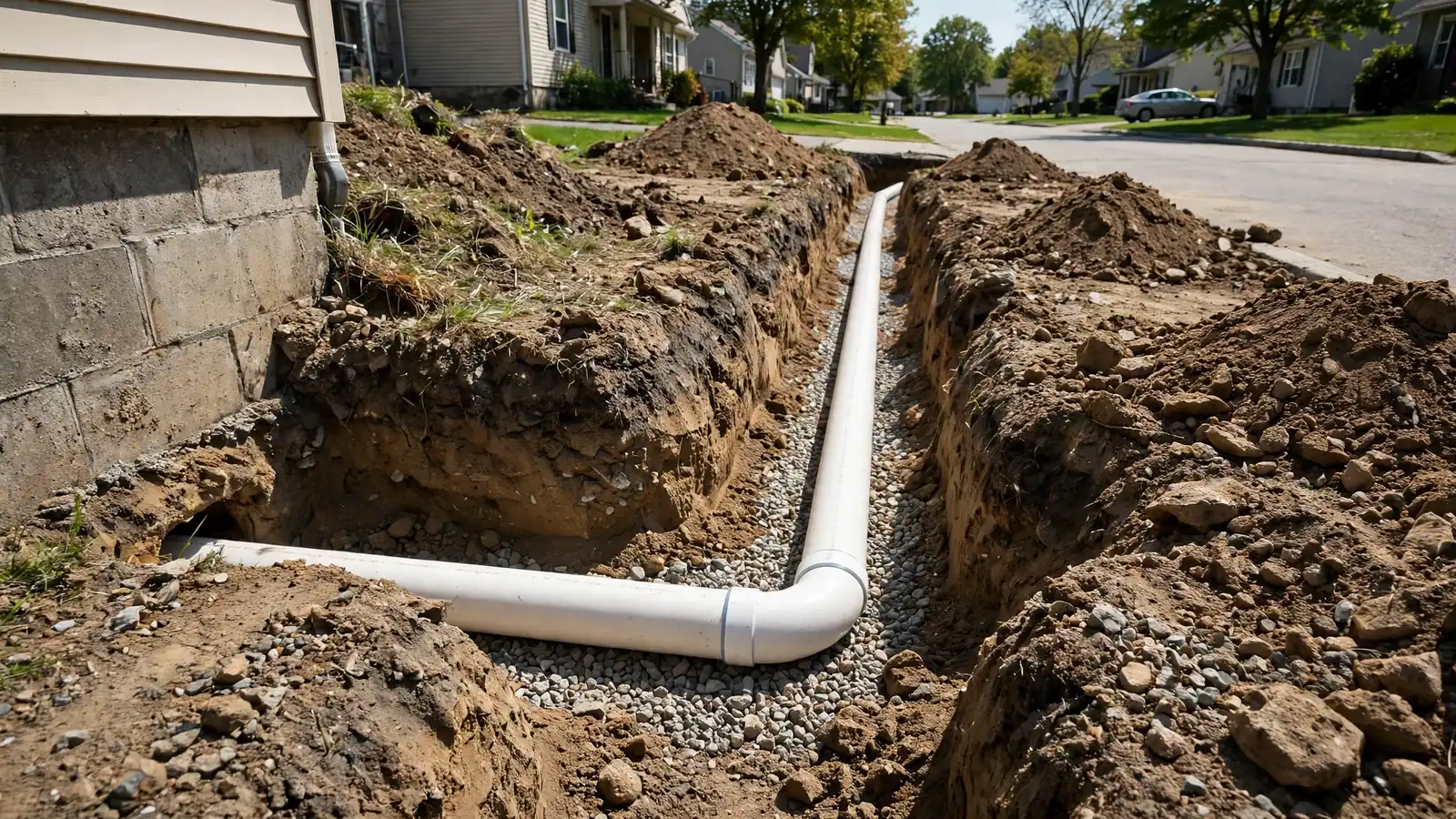
Problem: The lateral is the pipe from your house to the street sewer main. It carries everything that leaves your home.
What to do: In most Ohio cities, the homeowner owns the lateral all the way to the main. The city owns the main.
When to call: Call Now if the lateral backs up, or have it camera-inspected before buying a Parma home.
The pipe that connects your home to the street
The sewer lateral is the pipe that runs from your house to the street sewer main. It starts at the foundation, where the indoor drain system leaves the house, and it runs underground — under the lawn, sometimes under a driveway — to the connection at the main in the street. Everything that leaves your home travels through it: toilets, showers, sinks, laundry, and the dishwasher.
The lateral is a gravity pipe. It slopes gently down from the house to the main, and wastewater flows downhill. There is no pump. That slope is the reason the lateral's condition matters so much: a dip, a break, or a root mass in the line slows the flow, and the line has no way to clear itself. A lateral that does not fall correctly will hold water no matter what it is made of.
The lateral is not the same as the sewer main. The main is the larger pipe in the street that collects the laterals from many homes and carries the flow onward to treatment. The lateral serves one home. The main serves the street. And the two are owned differently — which is the part that surprises most homeowners.
Who owns the lateral
In most Ohio cities, including Parma, the homeowner is responsible for the lateral from the house to the street main, including the connection at the main itself. The city maintains the main in the street. That split is the reason lateral problems are handled by calling a local professional, not the city — and why the lateral's condition is part of buying a home here.
The lateral has two parts, though the homeowner is responsible for both. The upper lateral runs from the house to the property line or the curb. The lower lateral runs from there to the street main, including the tap — the connection where the lateral meets the main. Work on the lower lateral and the tap happens in the public right-of-way and sometimes in the street itself, and it follows the city's rules.
The tap matters because it is a common failure point. An old tap can crack, settle, or separate from the main, and the camera can see it. A lateral that is sound for its whole length can still back up if the tap is broken. That is why a camera inspection runs all the way to the main, not just to the curb — and why a replacement that ignores the tap is not a complete replacement.
What a lateral is made of in Parma
If your Parma home was built between 1940 and 1969 — and about two in three were — the original lateral is most likely clay tile, with cast iron for the section inside the house and just outside the foundation. Clay tile came in short sections joined with mortar, and every joint is a seam that roots can find and ground movement can open. Cast iron corrodes from the inside, narrowing the pipe over decades until flow is restricted.
Homes built later, from the 1970s onward, more often have PVC or ABS plastic laterals, which have sealed joints and a smooth bore. Those lines still fail — usually from ground settlement, a crushed section, or roots at a bad joint — but they fail less often and later than clay tile. A camera inspection shows which material your lateral is, section by section, and how far it has failed.
The median Parma home was built in 1958, and about 68 percent of the city's housing units date from 1940 to 1969. The laterals laid with those homes were clay tile or cast iron, and clay tile generally lasts about 50 to 60 years. A lateral from the 1950s is now older than the material it was made from, and the joints — short sections joined with mortar — are the first thing to go.
What happens when a lateral fails
A lateral fails gradually, and the symptoms arrive in order. First, the drains slow down — several at once, because the lateral carries them all. Then the basement floor drain backs up when water is used elsewhere in the house. Then a sewer smell appears at the lowest drain, or a wet patch shows in the yard above the line. Each symptom is the lateral telling you it cannot carry the flow.
The causes are the familiar ones: roots entering through open clay joints, a section settling into a belly, cast iron corroding and narrowing, or a section cracking or collapsing under ground movement. In some Parma streets, the Ohio EPA documented pre-1960 common-trench sewers and basement backups in September 2024, where older shared sewers can push water back toward homes in heavy rain — and a lateral problem can look like a street problem, and the reverse.
The fix depends on what the camera found. A single failed section is a spot repair. A line with roots at many joints may be lined. A badly damaged line is burst or replaced by open trench. And a line that is sound except for a blockage is cleaned. The camera inspection is the step that turns a symptom into a diagnosis, and the diagnosis into a fix that matches the problem.
The lateral and buying a home
A camera inspection of the lateral is one of the most useful inspections a buyer can order in Parma. Many homes still have their original clay tile laterals, and a lateral at the end of its life may show no symptom at all until it backs up. The drains work, the basement is dry, and the first backup comes after the purchase. The inspection shows the condition of the line before the purchase is final.
If the inspection finds a failing lateral, the buyer and seller can deal with it as part of the purchase — the same way they would deal with a roof or a furnace at the end of its life. If the lateral is sound, the buyer moves in knowing the sewer is not a hidden problem. Either way, the information belongs in the buying decision, not discovered afterwards.
Ask for the camera footage and the written findings when the inspection is done. The footage is the record of the lateral's condition, and it is useful for any later work on the line, and for an insurer who asks about the sewer. A lateral that has been inspected is a known quantity; a lateral that has not been inspected is a guess.
Where the lateral ends and the city main begins
The lateral ends where it meets the city main, and that meeting point is the line between homeowner responsibility and city responsibility. Everything from the house to the main — the pipe under the yard, the connection at the street, the cleanout — belongs to the homeowner. The main itself, running down the center of the street, belongs to the city. When a backup happens, the first question is which side of that line the problem sits on.
The camera inspection is what answers that question. If the camera shows a blockage or a break in the lateral, the fix is the homeowner's. If the camera runs clean to the main and the main itself is surcharging, the problem is on the city's side, and the city is the one to call. A camera that stops short of the main cannot answer the question, which is why a proper inspection runs the full length of the lateral.
The connection itself deserves attention. In older Parma neighborhoods the lateral meets the main through a clay wye or a direct tap that may have shifted as the ground settled. A damaged connection lets groundwater and roots into the lateral, and it lets wastewater leak out into the surrounding soil. When a lateral is replaced, the replacement should run all the way to the main, including the connection — stopping short leaves the oldest part of the line in place.
Related: Collapsed Sewer Line · Sewer Lateral Replacement · sewer line replacement in Parma
Related guides
 Guides
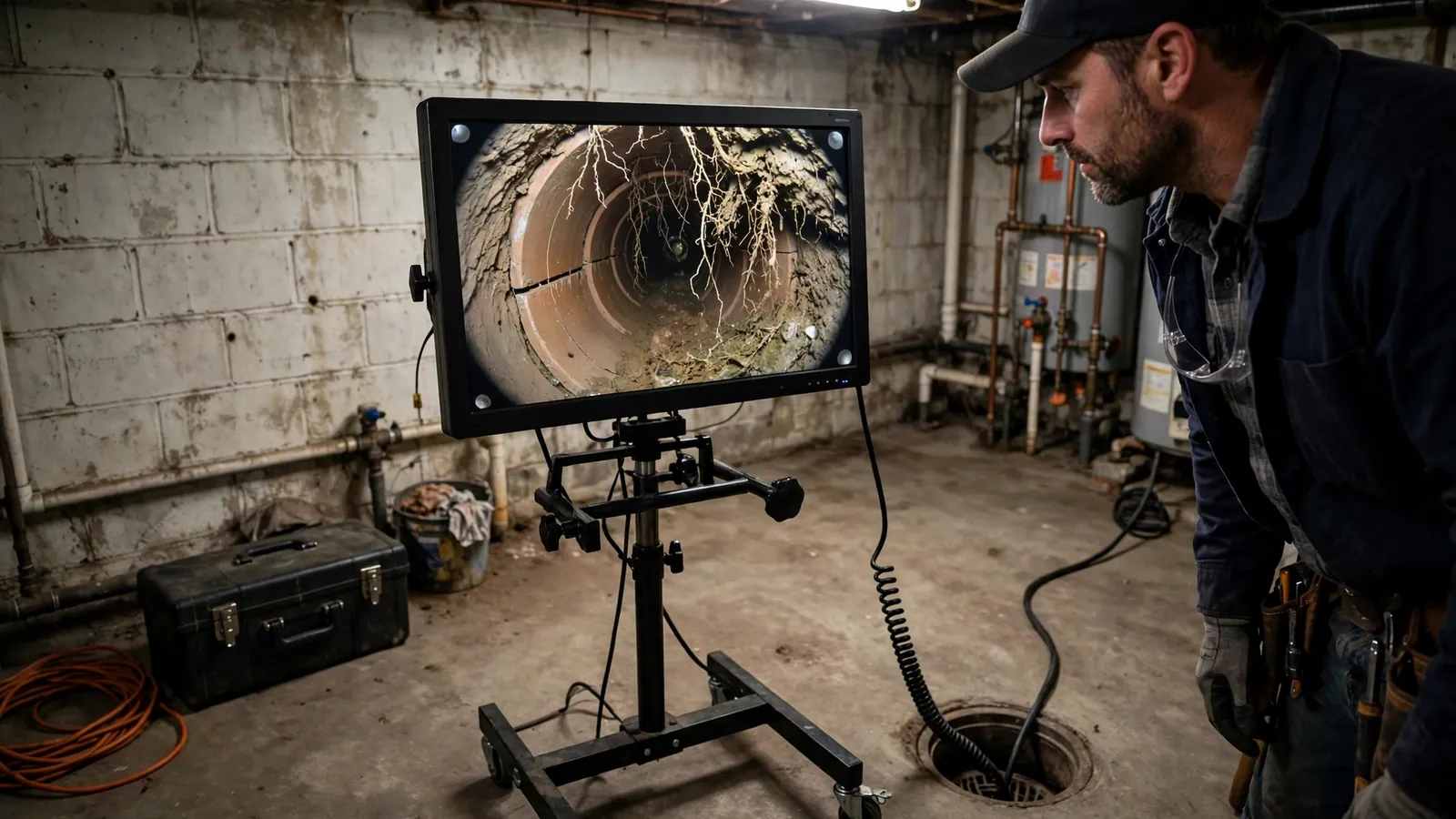
Sewer Camera Inspection: What It Shows in Parma, OH
A camera inspection shows the inside of your lateral — the material, the damage, and the location — so the fix matches the problem instead of the guess.
 Guides
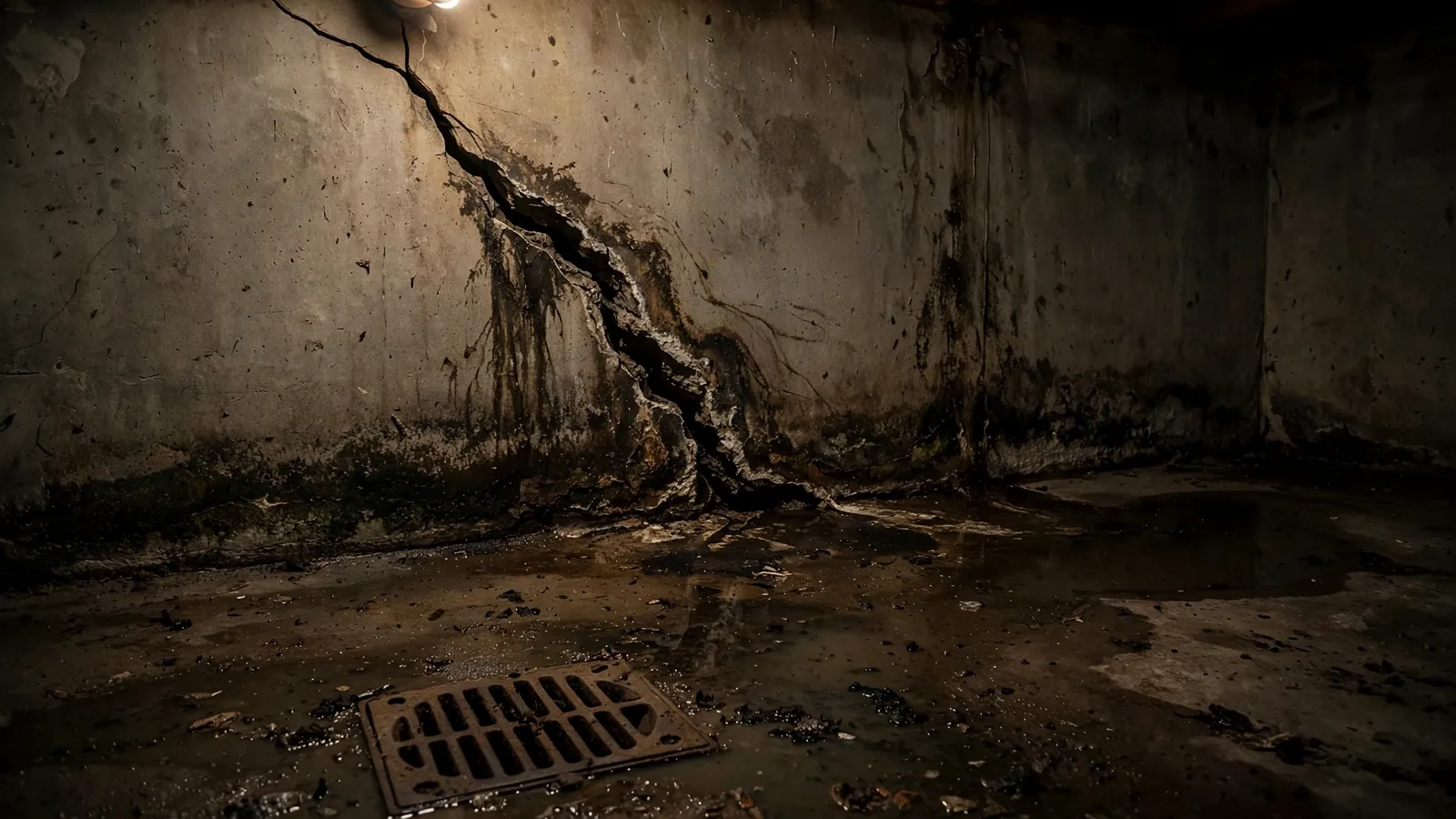
Signs You Need Sewer Line Replacement in Parma, OH
Most Parma laterals are past the age clay tile was made to last. These are the signs that yours is failing — and what a camera inspection shows.
 Comparisons
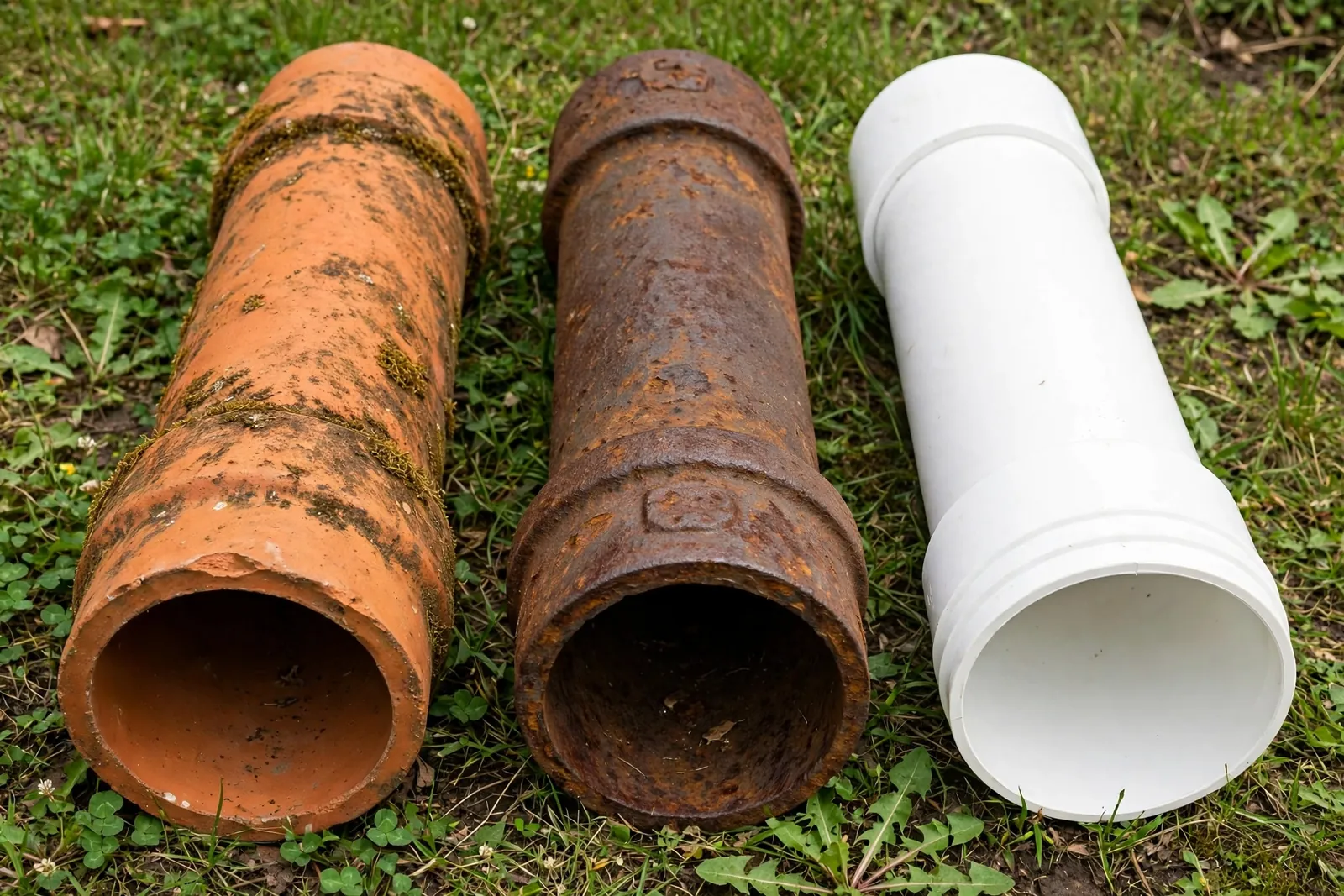
Clay vs Cast Iron vs PVC Sewer Pipe in Parma, OH
Most Parma laterals are clay tile or cast iron. Newer homes have PVC. Each material fails differently — and the replacement is chosen for the home.
Frequently asked questions
Questions people ask about this topic, answered plainly.
The lateral is the pipe that connects one home to the street sewer main. The main is the larger pipe in the street that collects the laterals from many homes and carries the flow onward. The homeowner is responsible for the lateral; the city maintains the main.
It runs from the house to the street main — usually the length of the front yard, sometimes under a driveway as well. The camera inspection and the locate show the length, the depth, and the path of the line.
In most Ohio cities, the homeowner is responsible for the lateral from the house to the street main, including the connection at the main. The city maintains the main itself.
Several drains slowing at once, the basement floor drain backing up, a sewer smell at the lowest drain, or a wet patch in the yard above the line are the usual signs. A camera inspection shows the condition of the line and what is causing the symptoms.
Yes — and in Parma it is one of the most useful inspections a buyer can order. Many homes still have their original clay tile laterals, and a lateral at the end of its life may show no symptom until it backs up.
The lateral runs to the street main, and the connection at the main is part of the job. Work in the street and the right-of-way follows the city's rules, and the permits for that work are handled before digging starts.
Still have questions?
Call Now to reach a local sewer professional — describe the problem and what the line has been doing.
Call now for sewer line help
Tap Call Now to reach a local sewer professional. Tell them where the problem is, what the line has been doing, and whether wastewater is coming into the home.
Hours: Mon–Fri 7:00 AM–10:00 PM ET · Sat 8:00 AM–10:00 PM ET · Sun 7:00 AM–9:00 PM ET
Before you call
- Stop using water if the line is backing up.
- Keep people and pets away from any wastewater.
- Note which drains are slow, and which one backs up first.
- Note whether the problem happens in heavy rain, or all the time.
- Have the age of the home ready, if you know it.