The short version
Problem: Stop using water, keep people and pets away from the wastewater, and call for help.
What to do: Do not use chemical drain cleaners, and do not try to clean the backup with household tools.
When to call: Call Now if wastewater is coming into the home, or if the backup is getting worse.
What to do first
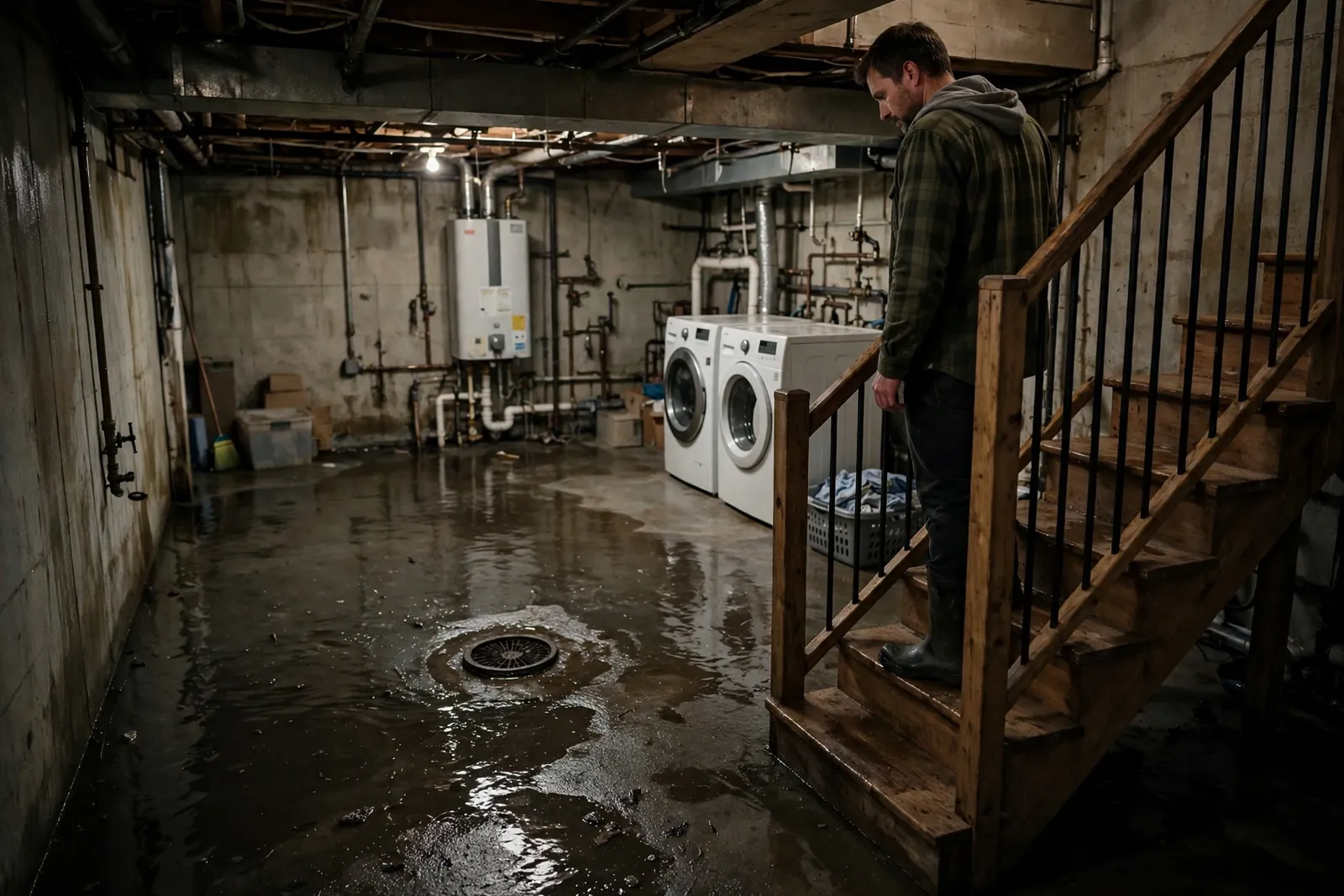
Stop using water in the house. Every flush, every shower, every load of laundry adds water to a line that cannot take it. If the backup is at the basement floor drain, the water will keep rising as long as water is being used upstairs. Turn off the washing machine and the dishwasher, and tell everyone in the house not to run taps or flush.
Keep people and pets out of the water. Sewage water is treated as contaminated water, and it belongs in the pipe. Do not walk through it, do not let children or pets near it, and do not try to mop it up with household tools. If the water is near electrical outlets, switches, or appliances, stay out of the room entirely — water and electricity together are a hazard that needs a professional, not a homeowner with a mop.
Then call for help, and describe the backup: where the water is coming in, how much water there is, and whether it is still rising. The crew needs to know whether the backup is in progress, and whether it is getting worse. A backup in progress is handled as an urgent call, and the first job is to stop the water coming in and find the cause.
What not to do
Do not use a chemical drain cleaner. It will not clear a main-line blockage, and it can make the work harder and less safe for the crew that follows. The chemicals sit in the line, and the crew has to work around them. A main-line backup is not a drain cleaner problem — it is a lateral problem, and the fix is in the line.
Do not keep running water to 'flush it through'. The water has nowhere to go but back into the house, and every gallon adds to the backup. Do not run the washing machine, the dishwasher, or the showers, and do not flush the toilets. The line is blocked, and the water will come back through the lowest drain.
Do not try to clear the line yourself with a rented cable or a shop vacuum. A main-line blockage is not a fixture clog, and a cable in untrained hands can damage the pipe — or push the blockage further in. And a shop vacuum spreads contaminated water through the air and the machine. The crew has the equipment and the experience for this work, and the backup is their job, not the homeowner's.
Why backups happen in Parma
The most common cause in Parma is a failed lateral. The city's laterals are old — the median home was built in 1958 — and the common causes are roots in clay joints, a collapsed section, a belly that holds water, or a line that has narrowed with age. When the lateral cannot carry the flow, the wastewater comes back through the lowest drain in the house, which is usually the basement floor drain.
Heavy rain adds a second pattern. The Ohio EPA documented pre-1960 common-trench sewers and basement backups in Parma in September 2024, around the Krueger Avenue relief-sewer project. In a common-trench sewer, the laterals from several homes share a trench, and heavy rain can surcharge the shared sewer and push water back toward the homes on it. A backup that happens only in heavy rain, and clears when the rain stops, points toward the street side rather than a blockage inside the house.
The third cause is a lateral that takes in storm water. Roof downspouts tied into the lateral, a sump pump discharging into it, or groundwater entering through cracked joints all add water during a storm. A lateral that handles normal flow can fail under storm flow. The camera inspection after the backup is cleared, together with the history of when the backups happen, is what separates these causes.
How the cause is found
The urgent work is to clear the line and restore flow, so the house can be used again. A cable machine with a cutting head clears the blockage, and a hydro jetter scours the pipe afterwards. That is the emergency part of the job — and it is not the lasting fix. Clearing restores flow, but it does not fix the pipe.
The lasting fix starts with a camera inspection, once flow is restored. The camera runs from the house to the street main, showing the cause: a root mat, a collapse, a belly, a broken connection, or a problem at the street main. The locator marks the position and depth of each defect on the surface, so any digging goes to the right spot.
The crew then explains what the camera found, and what the lasting fix is — a spot repair, lining, bursting, or a full replacement. The fix is planned from the evidence, not from a guess. And the camera findings are kept as the record of the line's condition, useful for the insurer and for any later work on the line.
What to document, and what to do next
Take photos. Photograph the water, the drains it came from, and everything it touched, before anything is cleaned. The photos are the record for the insurer, and they are easier to take now than to reconstruct later. Note the time the backup started, what was happening in the house, and whether it was raining. If neighbours had the same problem, note that too — a backup that affected several homes on a street points toward the street side.
Keep the camera findings and any invoices. The footage and the written findings are the evidence of what the line looked like, and they are what an insurer or a future crew will ask for. Keep the notes about the work done, including the date and what was cleared or repaired.
Check the policy. Many standard homeowners policies do not cover sewer backups unless a specific endorsement was added. Check the policy, and keep the photos, the camera findings, and the invoices for the claim. And ask about a backwater valve, where the backups come from the street side in heavy rain — a one-way valve in the lateral that lets wastewater flow out but closes when water tries to flow back in, where the layout of the lateral allows it.
What to do after the water is gone
Once the water is gone and the line is flowing again, the work is not over. The affected area has to be dried and cleaned, because wastewater carries bacteria that a simple mopping does not remove. Porous materials that were soaked — carpet, drywall, stored cardboard — usually have to be removed rather than cleaned. Hard surfaces can be washed and disinfected. The drying has to be thorough: moisture left in walls and floors becomes a problem of its own.
Documentation comes next, and it should happen while the details are fresh. Photograph the affected areas, the water line on the walls, and any damaged belongings. Keep the invoice from the emergency call, the camera findings, and the scope of any repair work. An insurer will ask for that sequence — what happened, what caused it, and what was done — and a complete record is easier to put together at the time than months later.
The last step is the follow-up camera inspection, done when the line is clear. It shows whether the backup was caused by a blockage that is now gone, or by a defect in the pipe that will cause the next backup. A line that backed up because of a single root mass is a different situation from a line that backed up because a section has collapsed. The inspection decides whether the job is done or whether the permanent fix is still to come.
Related: Sewer Odors in Home · Emergency Sewer Line Repair · sewer line replacement in Parma
Related guides
 Guides
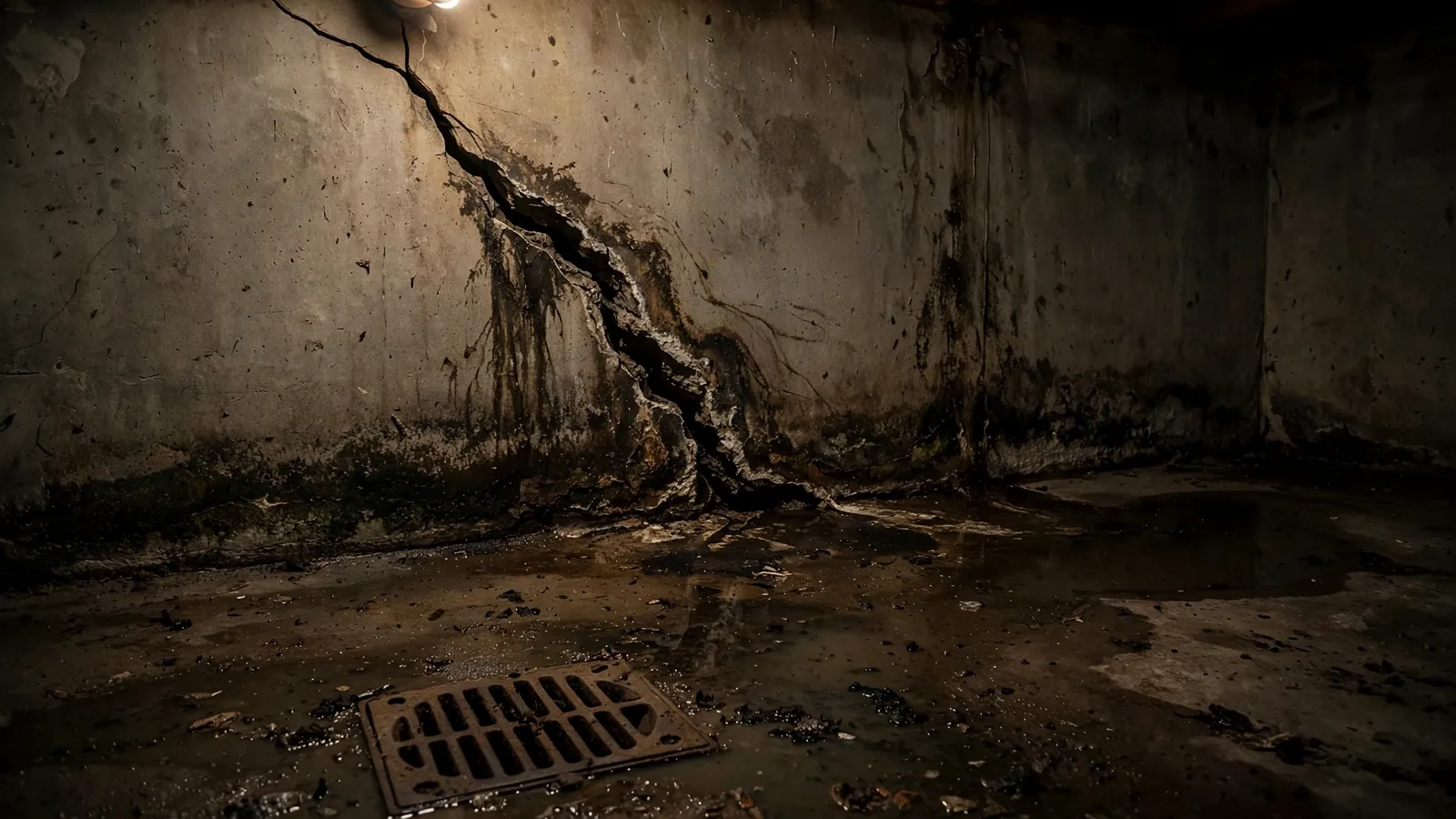
Signs You Need Sewer Line Replacement in Parma, OH
Most Parma laterals are past the age clay tile was made to last. These are the signs that yours is failing — and what a camera inspection shows.
 Guides
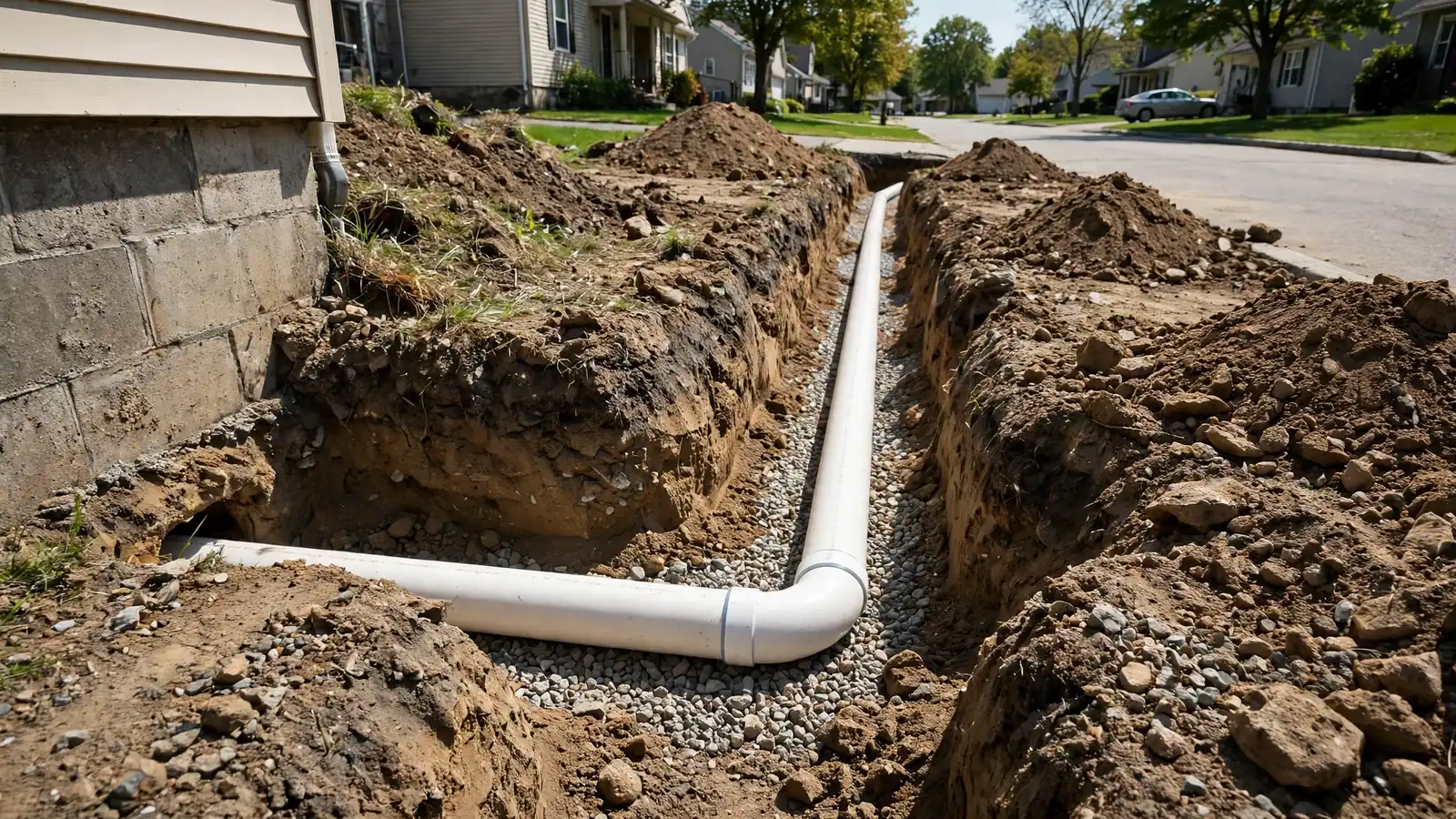
What Is a Sewer Lateral? A Parma Homeowner Guide
The sewer lateral is the pipe that connects your home to the street main — and in Parma, it is the homeowner's responsibility. Here is what it is and what it does.
 Guides
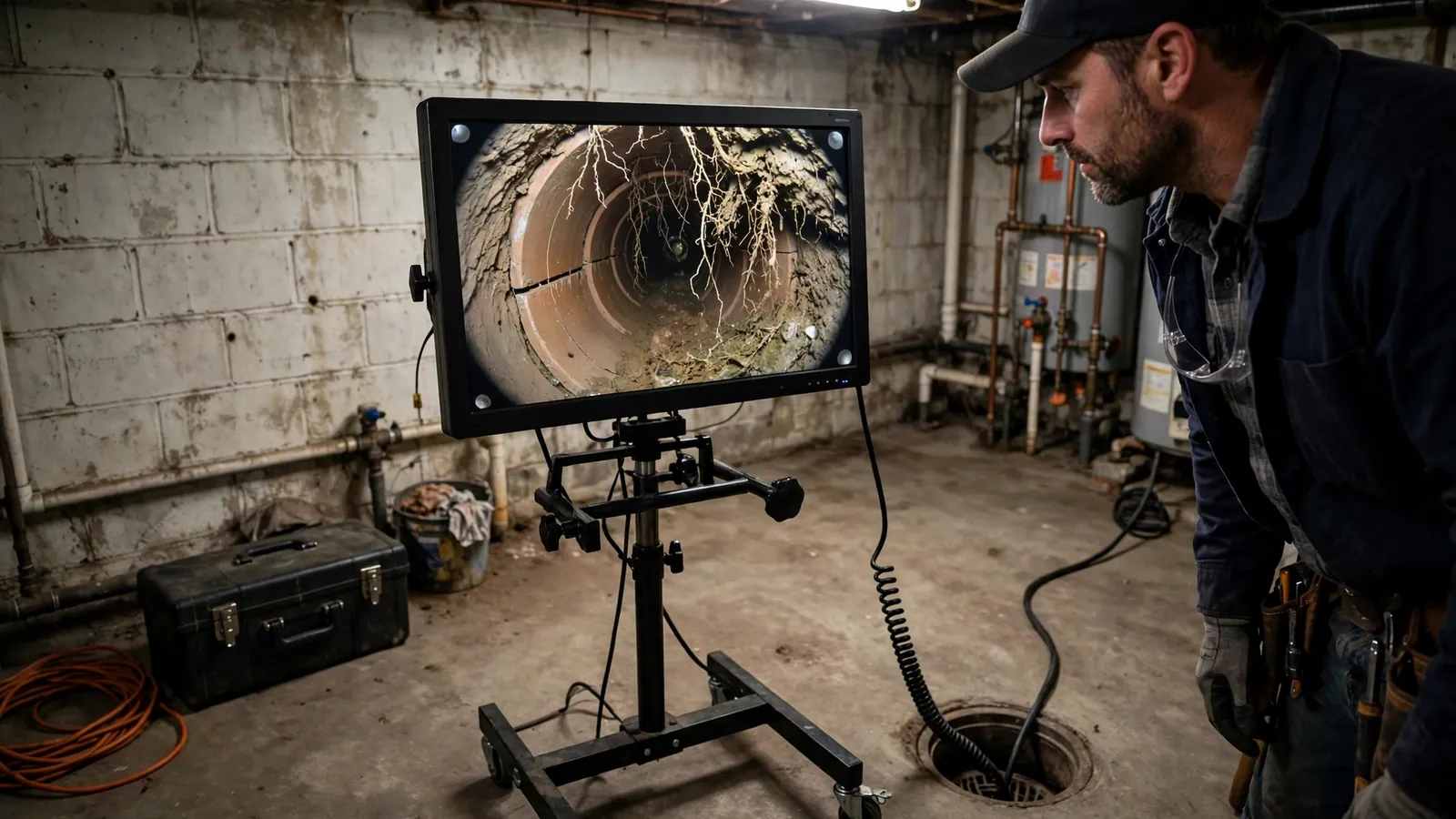
Sewer Camera Inspection: What It Shows in Parma, OH
A camera inspection shows the inside of your lateral — the material, the damage, and the location — so the fix matches the problem instead of the guess.
Frequently asked questions
Questions people ask about this topic, answered plainly.
Stop using water — no taps, no flushing, no washing machine or dishwasher. Keep people and pets away from the water. Then call for help and describe where the water is coming in and whether it is still rising.
Sewage water is treated as contaminated water. Keep away from it, do not walk through it, and do not try to clean it with household tools. If the water is near electrical outlets or appliances, stay out of the room entirely.
No. Chemical drain cleaners do not clear a main-line blockage, and they can make the work harder and less safe for the crew. Stop using water, keep away from the backup, and wait for help.
Clearing restores flow, but it only lasts if the cause was a one-off blockage. If the camera shows a collapse, a bad belly, or roots through many joints, the line will back up again — and the lasting fix is a repair or a replacement of the failed pipe.
It depends on the policy. Many standard homeowners policies do not cover sewer backups unless a specific endorsement was added. Check your policy, take photos of the water and the damage, and keep the camera findings and any invoices for the claim.
A backwater valve is a one-way valve in the lateral that lets wastewater flow out but closes when water tries to flow back in from the street. It helps where backups come from the street side in heavy rain. Whether one fits your home depends on the layout of the lateral and where the lowest drain sits.
Still have questions?
Call Now to reach a local sewer professional — describe the problem and what the line has been doing.
Call now for sewer line help
Tap Call Now to reach a local sewer professional. Tell them where the problem is, what the line has been doing, and whether wastewater is coming into the home.
Hours: Mon–Fri 7:00 AM–10:00 PM ET · Sat 8:00 AM–10:00 PM ET · Sun 7:00 AM–9:00 PM ET
Before you call
- Stop using water if the line is backing up.
- Keep people and pets away from any wastewater.
- Note which drains are slow, and which one backs up first.
- Note whether the problem happens in heavy rain, or all the time.
- Have the age of the home ready, if you know it.