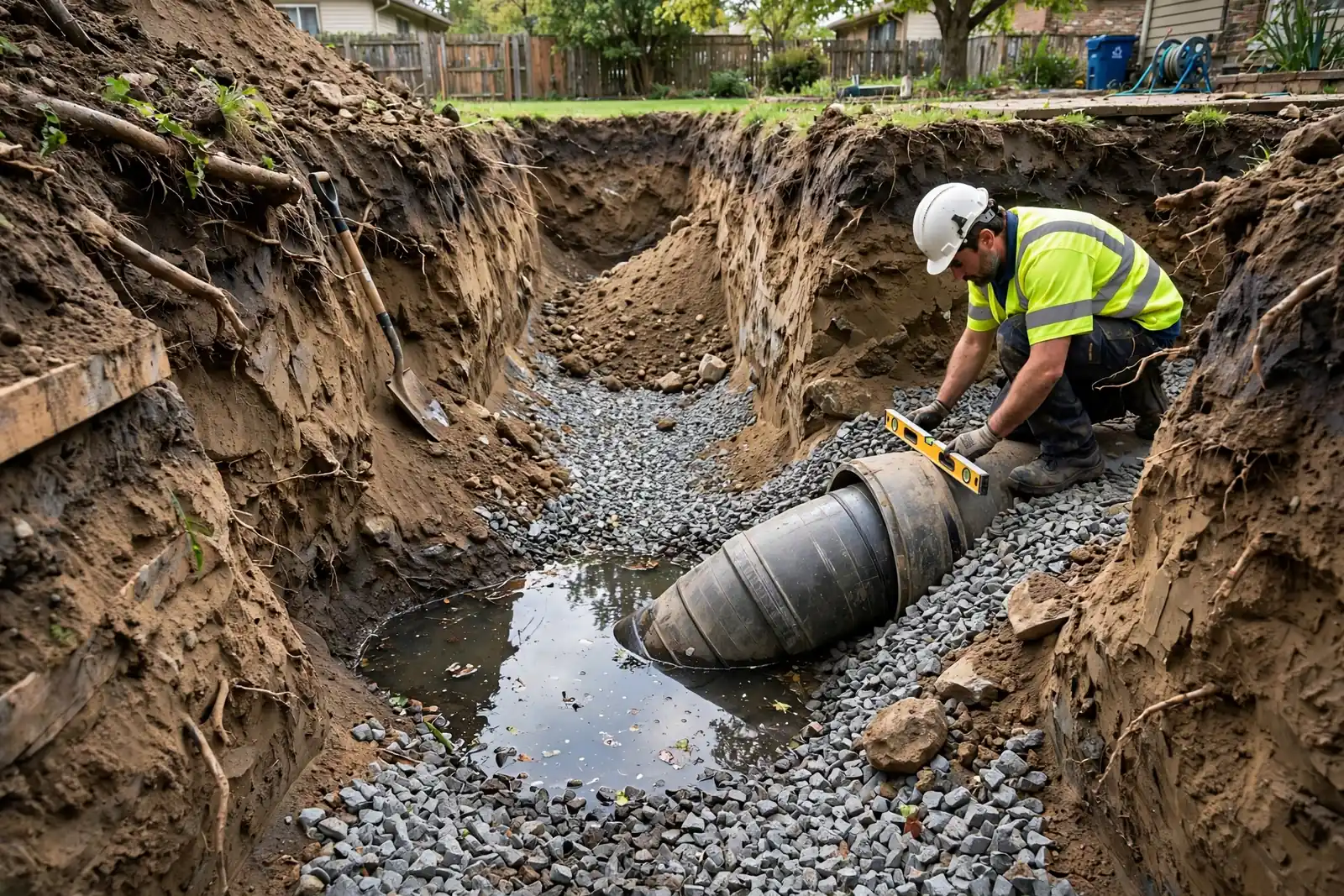
Bellied Sewer Line Parma, OH
A bellied sewer line is a low section where water and solids sit instead of flowing — and no amount of cleaning will fix a pipe that has lost its fall.
Need help with your sewer line?
Call Now to reach a local sewer professional. Describe the problem, where it is, and what the line has been doing.
Hours: Mon–Fri 7:00 AM–10:00 PM ET · Sat 8:00 AM–10:00 PM ET · Sun 7:00 AM–9:00 PM ET
What a bellied sewer line is
A sewer line works by gravity: it slopes gently down from the house to the street main, and wastewater flows downhill. A belly is a section where the pipe has sagged below that slope — a low spot in the line. Water and solids collect in the belly instead of flowing through it, and the line backs up at the lowest drain in the house.
A belly is a problem with the fall of the line, not with a blockage. Cleaning the line removes what is sitting in the belly, but the belly is still there, and it fills again. The line will keep backing up until the low section is re-graded — which means digging it up and laying it at the correct slope.
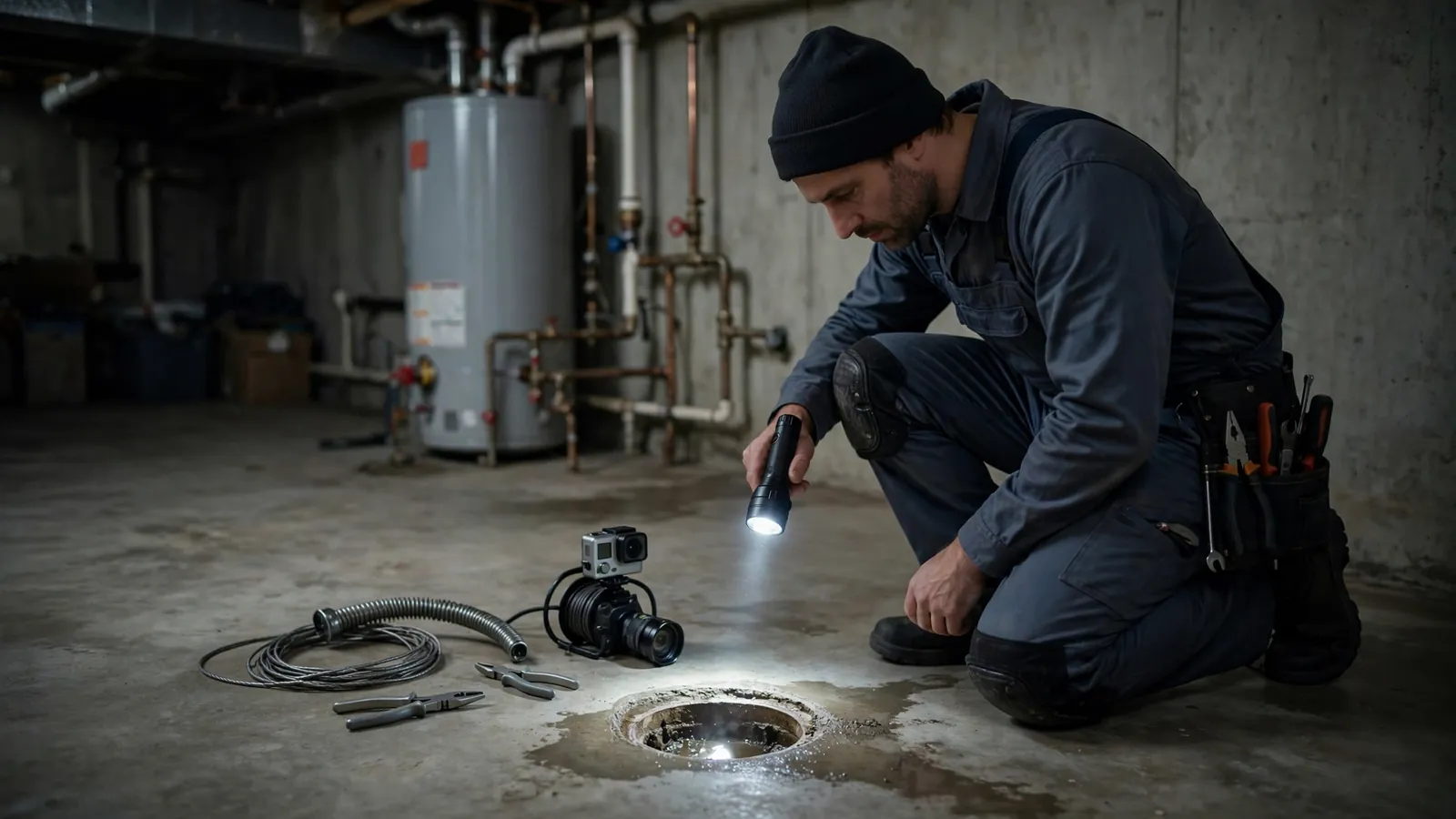
The camera shows a belly clearly. On the monitor, the camera enters a section where the water level rises — the camera is looking at standing water in the low spot. The locator marks the position and depth of the belly on the surface, so the crew knows where to dig and how deep the low section is.
What causes a belly
Ground settlement is the most common cause. The soil under a section of pipe washes out through an open joint, or compacts over time, and the section sags. In Cuyahoga County, the clay soils shift with freeze and thaw, and a section can settle over a single cold season. A line that drained in the autumn can develop a belly by spring.
A poor original installation is the second cause. A lateral laid without a proper bed, or backfilled with material that settles unevenly, can belly soon after it is laid. The older the line, the more likely the bed has settled — and a clay tile lateral from the 1950s has had seventy years for its bed to move.
Hillside ground is the third cause. In Seven Hills and Broadview Heights, the ground moves downhill over time, and a section of pipe can settle as the slope shifts. A belly on a slope is more common than on flat ground, because the fall of the line depends on the ground holding its shape.
How a bellied line is fixed
A belly is fixed by re-grading the low section — digging it up and laying the pipe at the correct slope. There is no trenchless fix for a bad belly: a liner follows the shape of the old pipe, so it does not correct the fall, and a bursting head follows the path of the old pipe too. The low section has to be dug, and the pipe has to be re-laid.
The repair is a spot repair when the belly is local and the rest of the line is sound: one pit, the bellied section removed, and a new section laid at the correct slope on a prepared bed. When the line has bellied in several places, or the whole run has lost its fall, the fix is a full replacement, with the new line laid at a steady fall from the house to the street main.
After the repair, the line is camera-checked end to end, confirming the new section is clear and the fall is correct. The pit is backfilled in layers — compacted as it goes, so the new section does not settle again — and the surface is graded.
What to do now
- Stop using water if the line is backing up, and keep away from any wastewater.
- Call for help and describe the pattern — whether the backup comes and goes.
- Have the line camera-inspected to find the belly and mark its position and depth.
- Do not keep cleaning the line — cleaning does not fix a belly.
- Ask whether the belly is local enough for a spot repair, or the line needs a full replacement.
What causes it
Ground settlement
Soil under a section washes out or compacts, and the section sags into a low spot.
Freeze-thaw movement
Cuyahoga County's clay soils shift with the seasons, and a section can settle over a single cold season.
Poor original bedding
A lateral laid without a proper bed, or backfilled with material that settles unevenly, bellies over time.
Hillside ground
On a slope, the ground moves downhill, and a section can settle as the slope shifts.
Signs of this problem
- The basement floor drain backs up after heavy water use, then clears, then backs up again.
- A camera inspection shows standing water in a section of the line.
- The line has been cleaned more than once, and the problem keeps coming back.
- Solids collect in the line even though nothing unusual was flushed.
- The home is on a slope, or the ground near the line has settled.
- The lateral is a 1950s or 1960s clay line with joints that have opened.
Related service: Sewer Line Replacement
Related guide: How Long Does Sewer Line Replacement Take
Related service: Sewer Line Replacement
Other sewer line problems
Frequently asked questions
Questions people ask about bellied sewer line, answered plainly.
Cleaning removes what is sitting in the belly, but the belly is still there, and it fills again. A belly is a problem with the fall of the line, not with a blockage, and the low section has to be re-graded.
It depends on the belly. A mild belly can sometimes be lined, but a deep belly is a low spot in the line, and the liner follows the shape of the old pipe — it does not correct the fall. A bad belly usually needs a trench to re-grade that section.
A camera inspection shows it. On the monitor, the camera enters a section where the water level rises — the camera is looking at standing water in the low spot. The locator marks the position and depth on the surface.
Ground settlement is the most common cause — soil washing out through an open joint, or compacting over time. Freeze-thaw movement in the clay soils, a poor original bed, and hillside ground in Seven Hills and Broadview Heights all add to it.
The low section is dug up and re-laid at the correct slope, on a prepared bed. A local belly is a spot repair; a line that has bellied in several places needs a full replacement, with the new line laid at a steady fall.
Yes, usually. The belly holds water and solids, which add weight and wash out more soil, and the section sags further. A belly that backs up occasionally will back up more often, and the next backup may be worse than the last.
Dealing with this problem now?
Call Now to reach a local sewer professional. Describe the problem, where it is, and what the line has been doing.
Call now for sewer line help
Tap Call Now to reach a local sewer professional. Tell them where the problem is, what the line has been doing, and whether wastewater is coming into the home.
Hours: Mon–Fri 7:00 AM–10:00 PM ET · Sat 8:00 AM–10:00 PM ET · Sun 7:00 AM–9:00 PM ET
Before you call
- Stop using water if the line is backing up.
- Keep people and pets away from any wastewater.
- Note which drains are slow, and which one backs up first.
- Note whether the problem happens in heavy rain, or all the time.
- Have the age of the home ready, if you know it.