The short version
Problem: Most residential replacements are measured in days. A short, shallow line is faster; a long or deep line takes longer.
What to do: The camera inspection and the locate come first — they are what the schedule is planned from.
When to call: Call Now to have the line inspected and the work planned from what the camera found.
The steps, and how long each takes
A sewer line replacement has six steps, and the schedule is the sum of them. The camera inspection comes first — usually well under an hour of work on site, once the camera is in the line. The locate follows, marking the line's path and depth on the surface. The permits for work in the right-of-way and at the street main are handled before digging, and the time they take depends on the city, not the crew.
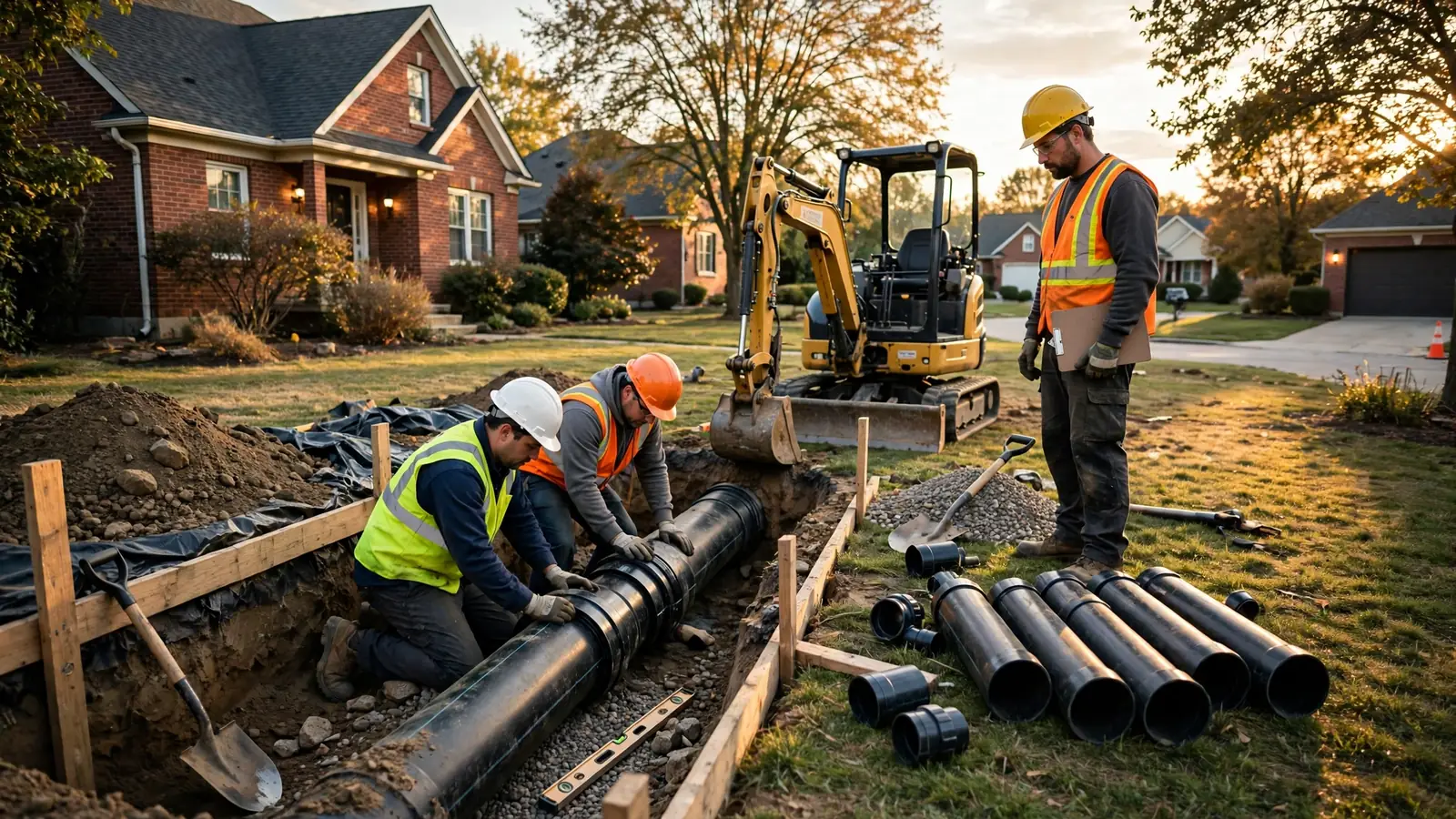
The digging comes next: a trench along the line, or two small pits for trenchless work. A short, shallow line can be opened quickly; a long or deep line takes longer, and a line under a driveway takes longer still. The replacement itself — removing the old pipe and laying the new one, or pulling the burst, or installing and curing the liner — is the middle of the job, and its length depends on the method and the length of the run.
The last steps are the connections and the final camera check. The new line is connected at the house and at the street main, sealed, and camera-checked end to end. Then the trench or pits are backfilled in layers and graded. The backfill is done in layers, compacted as it goes, so the new line does not settle — and that takes time, because a rushed backfill is a line that bellies again.
What makes a job take longer
Length is the first factor. A lateral can be a short run from the house to the street, or a long run under a wide front lawn and a long driveway. The longer the run, the more digging, the more pipe, and the more backfill — and the longer the job. North Royalton and Strongsville, with their larger lots, have longer laterals than Parma's modest ones, and the schedule reflects that.
Depth is the second factor. A shallow lateral is quick to open; a deep one takes longer to dig, and the trench has to be shored as it goes. A line that runs downhill steeply — common in Seven Hills and Broadview Heights — can be shallow at the house and deep at the street, and the deep end takes the time.
What sits above the line is the third factor. A lateral under a driveway, a patio, or a walkway takes longer than one under open lawn, because the surface has to be opened and then restored. A lateral under mature trees takes care, because the roots have to be worked around. And a line that needs work in the street itself — the connection at the main — follows the city's schedule for that work, not the crew's.
Trenchless vs traditional: the schedule
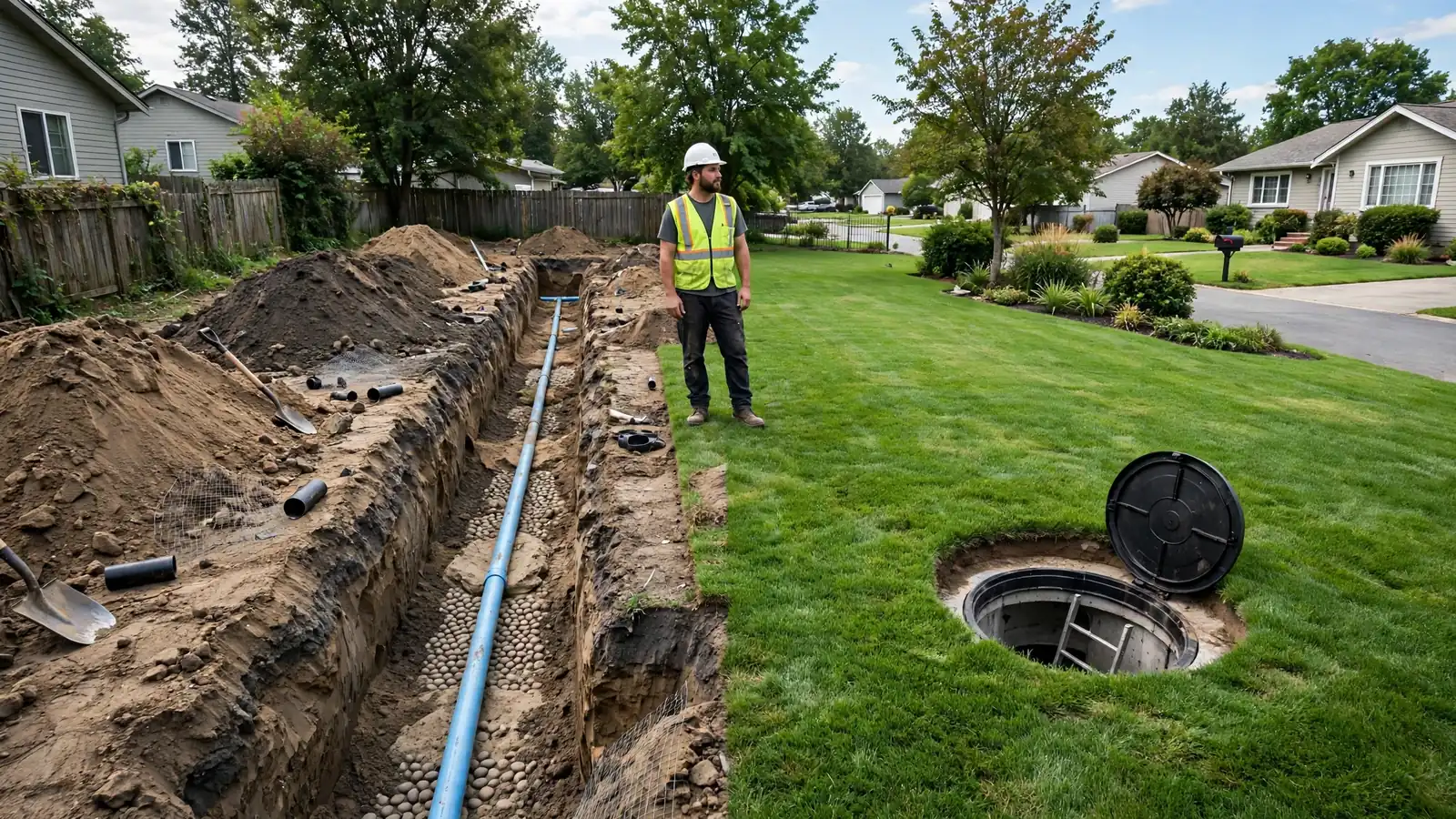
Trenchless work is often faster on the surface, because the digging is two small pits rather than a trench along the whole line. But the trenchless work itself — the burst, or the liner installation and curing — takes its own time. A liner has to cure, and curing takes hours. A burst has to be pulled steadily, and a long burst takes longer than a short one. The schedule for a trenchless job is not automatically shorter; it is shorter in digging and longer in the work between the pits.
An open-trench job is the reverse: more digging, but the pipe-laying itself is straightforward — the old pipe comes out, the new pipe goes in, and the connections are made by hand. The backfill is the slow part, because it is done in layers and compacted as it goes. A rushed backfill settles, and a settled backfill lets the new line belly — so the backfill is not hurried.
Either way, the schedule is planned from the camera inspection and the locate, not guessed. The crew knows the length, the depth, and the method before the work starts, and the schedule follows from that. A job that is planned from the findings is a job that finishes on its schedule.
Winter and weather
Ohio winters slow the work. Frozen ground makes digging slower, and the trench or pits take longer to open. Snow on the ground makes locating and marking slower, and the backfill has to be done with care in cold weather. Replacements do happen in Ohio winters — a line that is backing up now is handled as an urgent job regardless of the season — but the schedule is longer than in summer.
Rain slows the work too. A trench in wet ground is harder to dig and harder to keep open, and the backfill cannot be compacted properly in mud. A job that starts in a dry week may pause for rain, and the schedule moves with the weather. The crew explains the timing when the work is planned, and the schedule is adjusted for the conditions on the day.
The season to plan a replacement is the season the line is found to be failing — not the season that is convenient. A line that backs up in winter will not wait for spring, and a line found failing in a summer camera inspection should not wait for autumn. The schedule is the crew's problem; the homeowner's problem is the line.
What to expect while the work happens
Water use in the house is paused while the line is being replaced, because the lateral is open. The crew explains the timing before work starts, so the household can plan around it — and the pause is usually measured in hours, not days, for the part of the job when the line is open. A lining job needs the line dry while the resin cures, and the crew explains that timing too.
The yard is a work site while the job runs. A trench or two pits, a mini excavator, pipe sections, and backfill material are all in the front yard. The crew keeps the site tidy, and the backfill and grading at the end leave the surface ready for the homeowner to restore — but the lawn over the line will need time to recover, and a driveway that was opened will need its surface restored.
After the work, the finished line is camera-checked, and the homeowner is shown the findings. The camera footage is the record of the finished line — clear, continuous, and flowing with the correct fall. Keep it. It is the evidence that the job was done, and it is useful for any later work on the line, and for a buyer who asks about the sewer.
What can stretch the schedule
Most residential sewer line replacements are measured in days, but a few things can stretch the schedule. Depth is the first: a lateral that runs eight feet down takes longer to dig than one that runs four feet down, and the deeper the trench, the more shoring and care it needs. Length is the second: a long run from a house set far back from the street means more pipe, more digging, and more backfill.
What sits above the line is the third factor. A driveway, a patio, or a walkway over the lateral has to be cut and restored, and concrete needs time to cure. A mature tree over the line complicates the digging and may need the work to go around the root zone. Frozen ground in winter slows excavation, and heavy rain can fill an open trench faster than it can be pumped.
Permits and inspections are the fourth factor, and the one homeowners least expect. Some cities require a permit before the work starts and an inspection before the trench is closed, and the inspection has to be scheduled around the inspector's availability. The camera inspection and the locate come first for a reason: they give the crew the information needed to plan the schedule honestly, instead of promising a date the ground will not keep.
Related: Bellied Sewer Line · Sewer Line Replacement · sewer line replacement in Parma
Related guides
 Comparisons
Trenchless vs Traditional Sewer Replacement in Parma, OH
Trenchless replacement leaves the yard intact. Traditional replacement digs a trench along the line. Which one fits your lateral depends on the camera findings.
 Guides
Signs You Need Sewer Line Replacement in Parma, OH
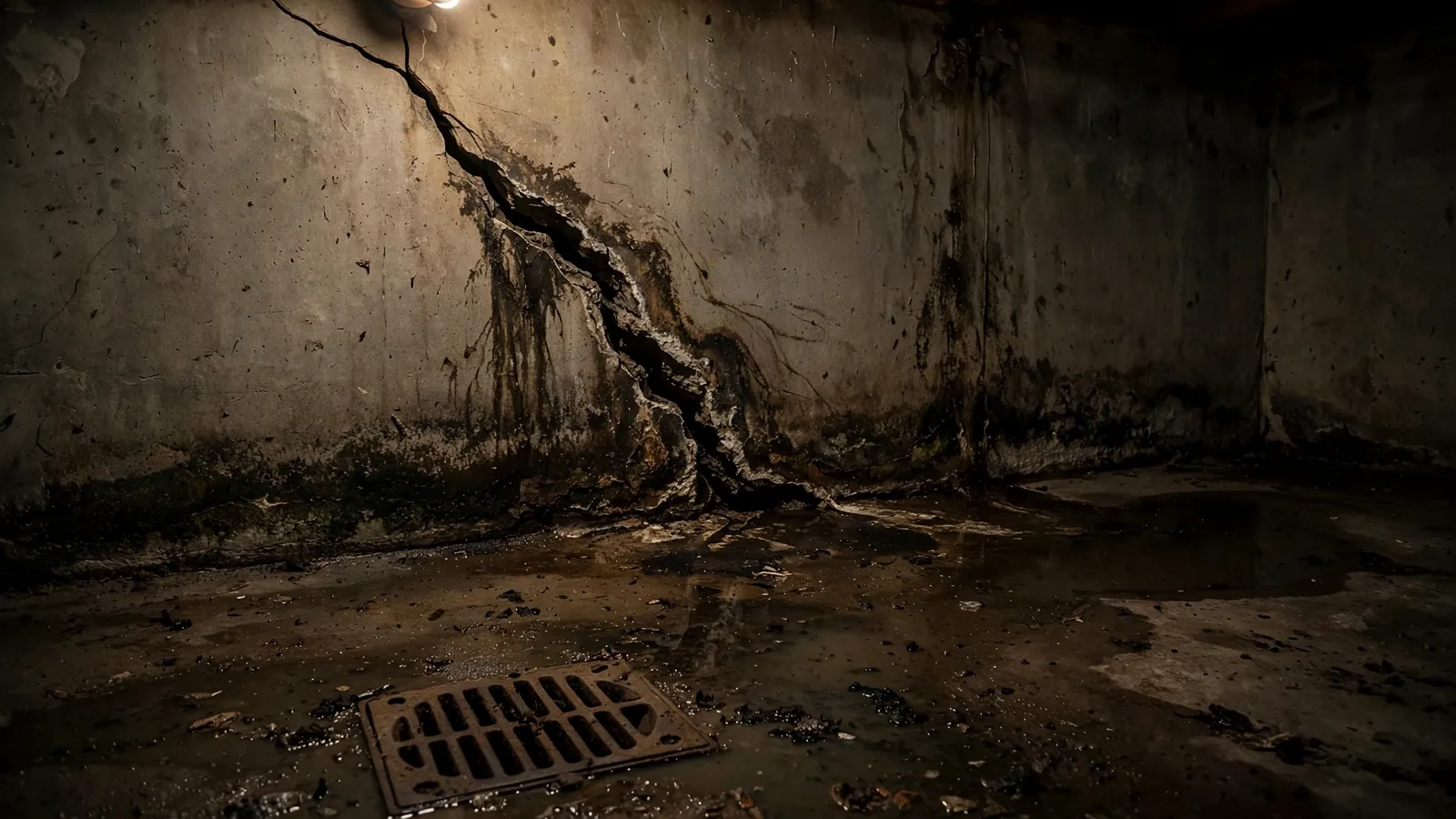
Most Parma laterals are past the age clay tile was made to last. These are the signs that yours is failing — and what a camera inspection shows.
 Guides
What Is a Sewer Lateral? A Parma Homeowner Guide
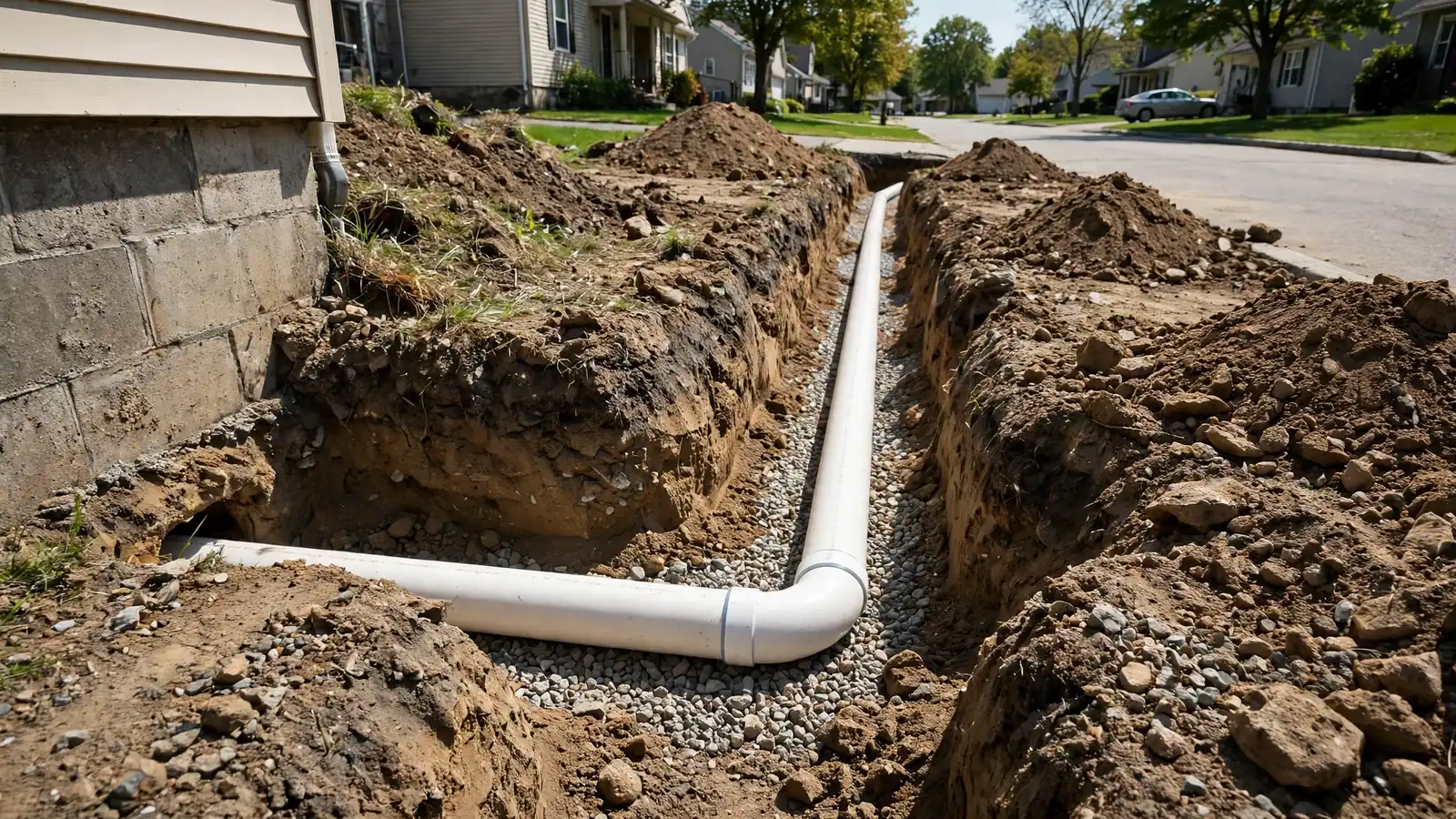
The sewer lateral is the pipe that connects your home to the street main — and in Parma, it is the homeowner's responsibility. Here is what it is and what it does.
Frequently asked questions
Questions people ask about this topic, answered plainly.
Most residential replacements are measured in days, not weeks. A short, shallow line with clear access is faster; a long or deep line, or a line under a driveway, takes longer. The camera inspection and the locate give the crew the information needed to plan the schedule.
Yes, usually. Water use is paused while the line is open, and the crew explains the timing before work starts so the household can plan around it. The pause is usually measured in hours, not days.
Often, on the digging — two small pits rather than a trench along the whole line. But the bursting or lining work itself takes its own time, and a liner has to cure. The schedule is planned from the camera findings, not from the method alone.
Length, depth, what sits above the line, and the weather. A long or deep lateral, a line under a driveway, and frozen or wet ground all add time. The permits for work in the street also take their own time.
Yes, with planning. Frozen ground makes digging slower, but replacements do happen in Ohio winters. A line that is backing up now is handled as an urgent job regardless of the season.
The trench or pits are backfilled in layers and graded, and the surface is left ready for the homeowner to restore. A lawn over the line needs time to recover, and a driveway that was opened needs its surface restored. The backfill settles over weeks, and the grading is checked as it does.
Still have questions?
Call Now to reach a local sewer professional — describe the problem and what the line has been doing.
Call now for sewer line help
Tap Call Now to reach a local sewer professional. Tell them where the problem is, what the line has been doing, and whether wastewater is coming into the home.
Hours: Mon–Fri 7:00 AM–10:00 PM ET · Sat 8:00 AM–10:00 PM ET · Sun 7:00 AM–9:00 PM ET
Before you call
- Stop using water if the line is backing up.
- Keep people and pets away from any wastewater.
- Note which drains are slow, and which one backs up first.
- Note whether the problem happens in heavy rain, or all the time.
- Have the age of the home ready, if you know it.