The short version
Problem: Clay tile fails at the joints; cast iron corrodes and narrows; PVC has sealed joints and a smooth interior.
What to do: A camera inspection shows which material your lateral is, and how far it has failed.
When to call: Call Now to have the line inspected and the replacement planned from what the camera found.
Clay tile: the pipe Parma was built with
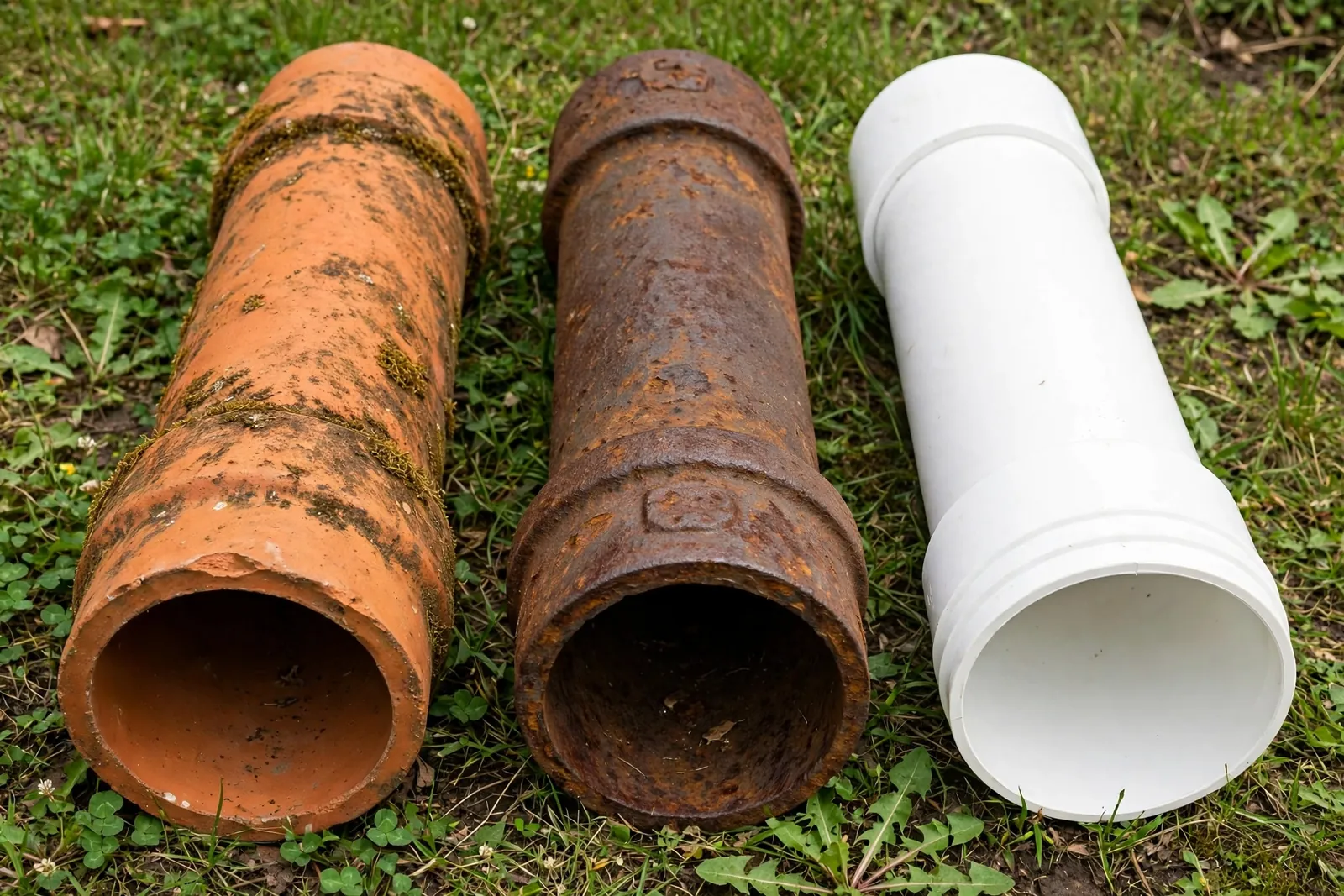
Clay tile — vitrified clay pipe — was the sewer pipe of choice when Parma was built. It is strong in compression, it does not corrode the way iron does, and it was cheap and available in the 1940s, 1950s, and 1960s, when most of Parma's homes went up. A clay lateral is made of short sections, usually two to three feet long, joined with mortar or a bell-and-spigot fit.
The weakness of clay tile is not the clay itself. It is the joints. Every joint is a seam, and a lateral can have twenty or thirty of them between the house and the street. Over decades, the ground shifts, the mortar crumbles, and the joints open. Roots find the openings. Soil enters. Sections settle and separate. The pipe itself may still be intact while the line as a whole has failed at its joints.
Clay tile generally lasts about 50 to 60 years. The median Parma home was built in 1958, and about 68 percent of the city's housing units date from 1940 to 1969. That puts most of Parma's clay laterals past the age the material was made to last. When a clay lateral starts failing, the fix that lasts is replacement — with modern pipe that has sealed joints and a smooth interior.
Cast iron: the pipe inside the house
Cast iron was the standard sewer pipe inside the house and just outside the foundation, in Parma and across the country. It is strong, quiet, and fire-resistant, and it was the standard material for indoor drains and the first few feet of the lateral when Parma's homes were built. Most Parma homes have two pipe materials in one lateral: cast iron inside, clay tile outside.
The weakness of cast iron is corrosion. Wastewater, and the gases it gives off, attack the iron from the inside. Over decades the inside wall scales and pits, the bore narrows, and the rough surface catches paper and waste. A cast iron line does not fail suddenly the way a cracked clay section can — it closes slowly, year by year, until the line barely passes water and the house starts backing up.
A cast iron lateral from the 1950s is now about seventy years old. The corrosion is not a matter of if but of how far it has gone, and a camera inspection shows it directly: the inside of the pipe on the monitor, rough and narrowed, with scale flaking off the wall. When the bore has narrowed that far, replacement — or lining, where the pipe still holds its shape — is the work that gives the home a line that flows again.
PVC: the pipe that replaces them
PVC — and its relatives, ABS and HDPE — is the pipe that replaces clay and cast iron in most residential laterals today. It has sealed joints and a smooth interior, and it comes in long sections, so a lateral has far fewer joints than a clay line. Roots cannot enter through joints that are sealed, and the smooth bore resists the buildup that narrows a cast iron line.
PVC does not corrode, and it does not scale. It can still fail — ground settlement can belly it, a heavy vehicle can crush a shallow section, and a bad joint can leak — but it fails less often and later than clay tile or cast iron. A PVC lateral laid today is expected to serve the home for decades, and the camera inspection of a PVC line usually shows a clear, smooth bore with tight joints.
Trenchless bursting often uses HDPE — a flexible plastic pipe that is pulled through the old line in one continuous length, with no joints at all along the run. Lining leaves a resin pipe inside the old one, also jointless. The direction of the industry is clear: fewer joints, smoother interiors, and pipes that roots cannot enter.
How to tell what your lateral is made of
A camera inspection shows it. Clay tile is easy to recognise on camera — short sections with a joint every two or three feet, and the orange-brown colour of the ceramic. Cast iron is a rough, dark interior with scale, and long sections with joints far apart. PVC is smooth and light-coloured, with tight joints and a clear bore. The camera shows the material section by section, so a lateral that changes material — cast iron inside, clay outside — is visible as it is.
The age of the home is also a strong clue. A Parma home built in the 1950s or 1960s almost always has a clay tile lateral with cast iron at the house end, unless it has already been replaced. A home built in the 1970s or 1980s has early plastic — PVC or ABS. A home built in the 1990s or later has modern plastic. But the age is a clue, not a proof — the camera is the proof, and it is what the replacement is planned from.
The transition matters. Most Parma laterals have two materials, and the joint between them — cast iron to clay tile, just outside the foundation — is a common failure point, because the two materials move differently with the ground. A camera inspection that runs from the house to the street main shows the transition, and the replacement plan covers the whole lateral, whatever materials it is made of.
What replaces each material
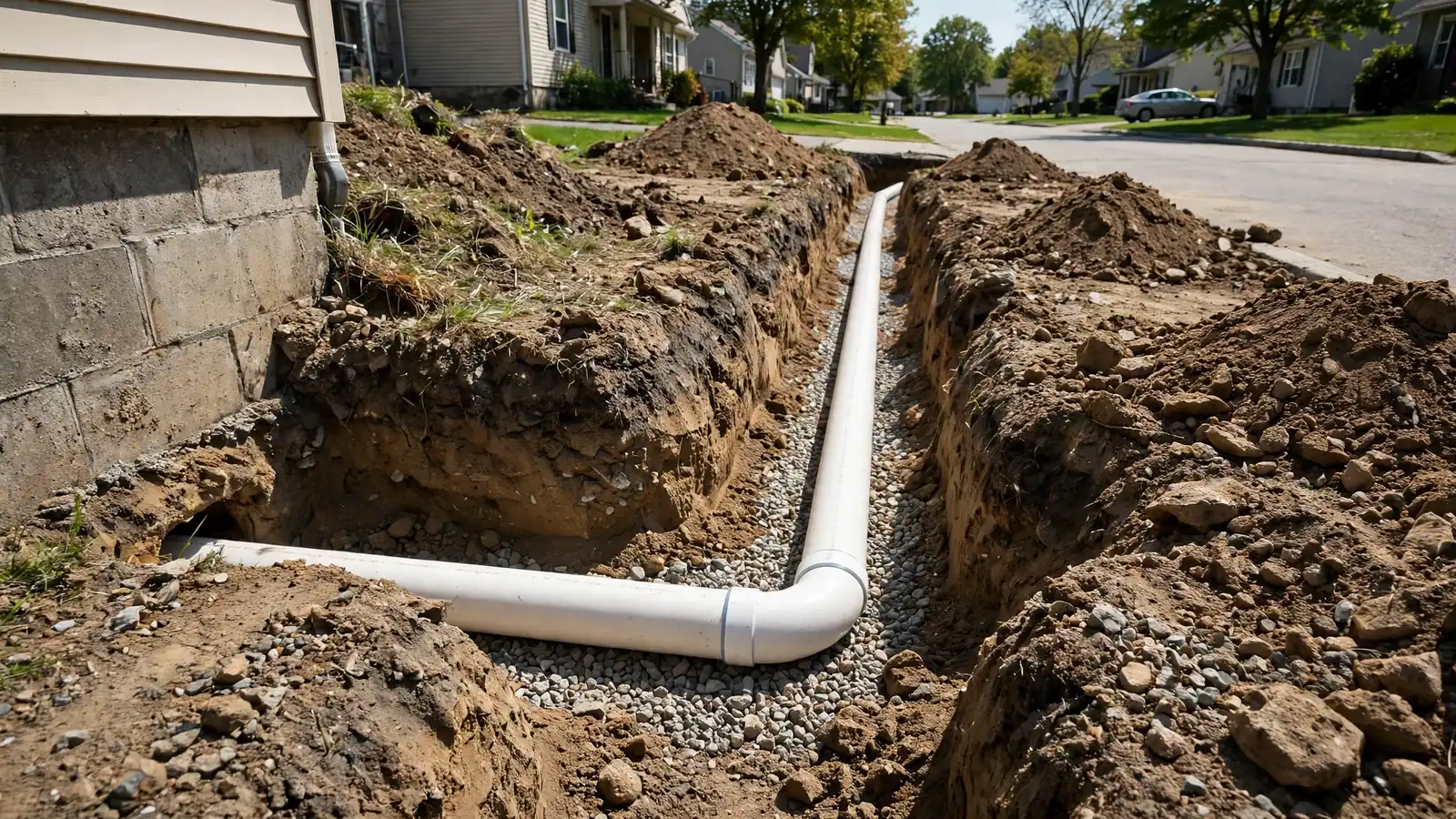
A clay lateral is replaced by bursting, lining, or open trench, depending on the camera findings. A clay line that is still round and continuous can be lined, sealing every joint at once. A clay line that is badly damaged or collapsed is burst or dug. Either way, the replacement is a modern plastic pipe with sealed joints — and the joints that failed are gone.
A cast iron lateral is replaced the same way, with one difference: the corrosion has narrowed the bore, so the replacement restores the full diameter as well as the joints. Lining fits a cast iron line that still holds its shape, giving it a smooth interior. Bursting fits a cast iron line that is badly corroded or collapsed. The camera shows how far the corrosion has gone, and the method follows from that.
A PVC lateral that has failed — a crushed section, a bad joint, a belly — is usually a spot repair, because the rest of the line is sound. The failed section is replaced with new PVC, sealed to the sound pipe on either side. A PVC line that has failed in many places is a replacement, but that is rare — PVC fails less often and later than the materials it replaced.
What the pipe material tells you about the house
The pipe material in the ground tells you when the house was built, and what to expect from the line. Clay tile means the house went up in the postwar decades — in Parma, usually the 1940s, 1950s, or 1960s. Cast iron means the same era, or a little later, and often means the line is inside the house as well as under the yard. Modern plastic pipe means the line was replaced at some point, or the house is newer than the neighborhood around it.
The material also tells you how the line will fail. Clay fails at the joints, where roots enter and soil washes in. Cast iron fails from the inside, where corrosion narrows the bore and roughens the wall. Plastic fails least often, and usually at a connection or from ground movement rather than from the pipe itself. A camera inspection shows which failure is happening, and the material tells the crew what to look for before the camera goes in.
For a buyer, the material is a useful clue. A Parma home with its original clay lateral is a home whose sewer line is at or past the age the material was made to last. That does not mean the line has failed — some clay lines run well for decades past their expected life — but it does mean a camera inspection is worth doing before the purchase. The inspection shows the actual condition, and the condition is what matters, not the age alone.
Related: Cracked Sewer Pipe · Clay Sewer Pipe Replacement · sewer line replacement in Parma
Related guides
 Guides
What Is a Sewer Lateral? A Parma Homeowner Guide
The sewer lateral is the pipe that connects your home to the street main — and in Parma, it is the homeowner's responsibility. Here is what it is and what it does.
 Comparisons
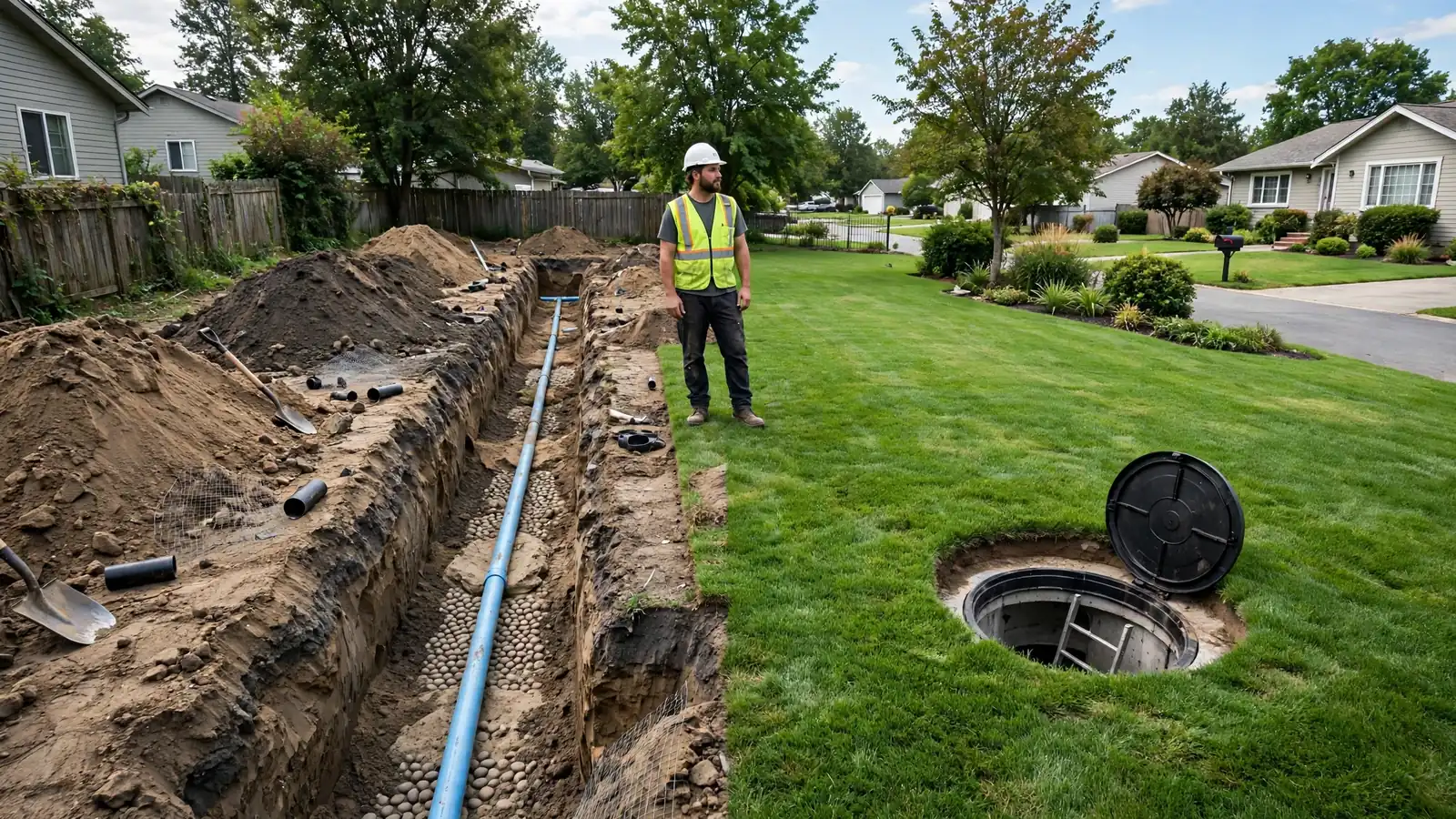
Trenchless vs Traditional Sewer Replacement in Parma, OH
Trenchless replacement leaves the yard intact. Traditional replacement digs a trench along the line. Which one fits your lateral depends on the camera findings.
 Guides
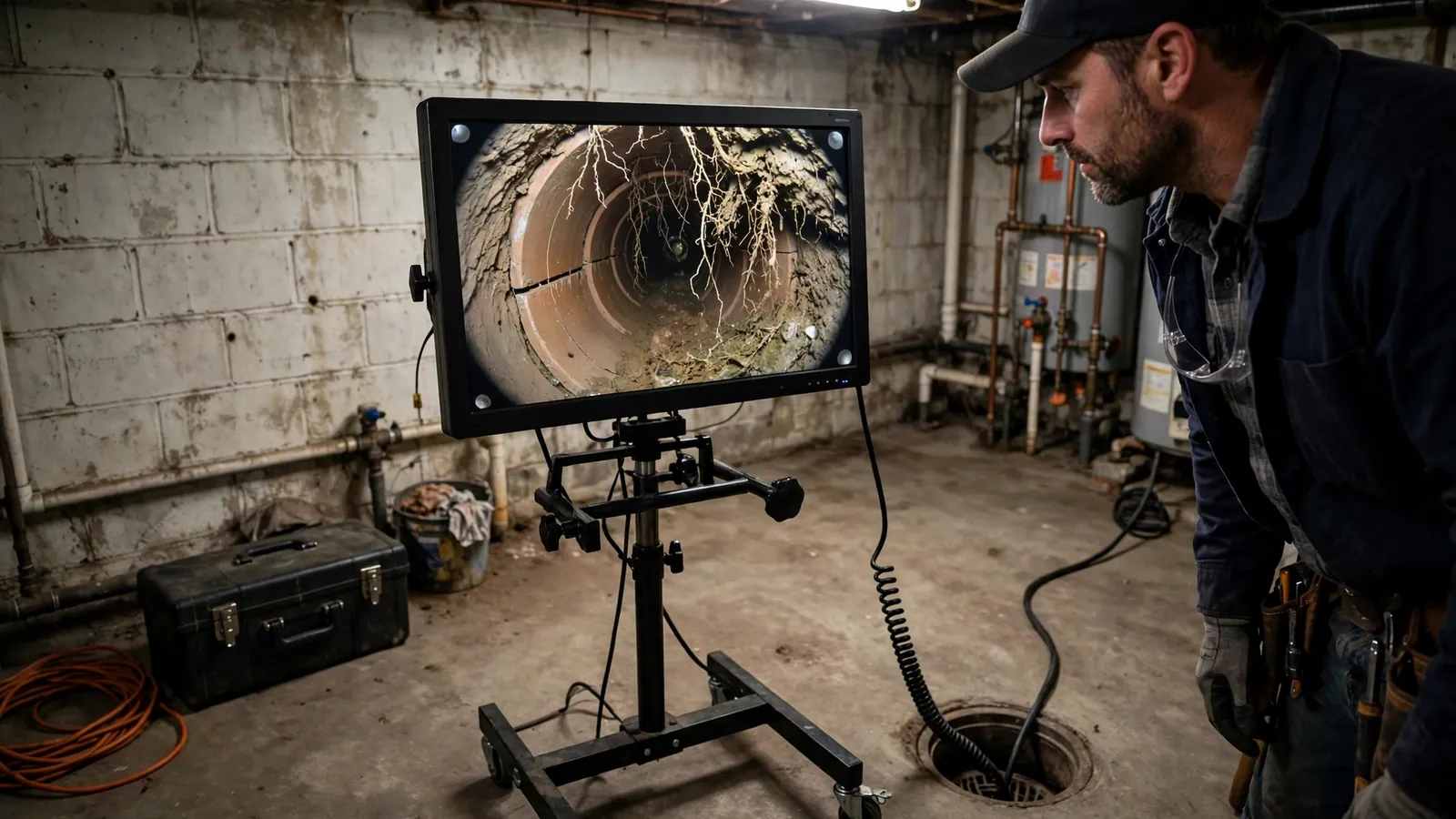
Sewer Camera Inspection: What It Shows in Parma, OH
A camera inspection shows the inside of your lateral — the material, the damage, and the location — so the fix matches the problem instead of the guess.
Frequently asked questions
Questions people ask about this topic, answered plainly.
A camera inspection shows it. A Parma home built in the 1950s or 1960s almost always has a clay tile lateral with cast iron at the house end, unless it has already been replaced. The camera shows the material section by section.
It was the right pipe for its time — strong, corrosion-resistant, and cheap. Its weakness is the joints: short sections joined with mortar, and every joint is a seam that opens with age. The pipe itself may still be intact while the line has failed at its joints.
It fails differently. Clay fails at the joints; cast iron corrodes from the inside and narrows. A cast iron line from the 1950s is now about seventy years old, and the corrosion is well advanced. Neither material lasts forever, and both are now past the age they were made to last.
Most residential replacements use PVC or a similar modern plastic pipe, with sealed joints and a smooth interior. Trenchless bursting often uses HDPE, pulled through in one continuous length with no joints at all.
Yes, where the line is still round and continuous. A cured liner seals every joint at once with a jointless new pipe inside the old one. A collapsed or badly bellied clay line cannot be lined, and needs a trench or bursting instead.
The replacement pipe is a modern plastic pipe with sealed joints and a smooth interior — a different kind of pipe from clay tile or cast iron. The finished line is checked on camera before the job is called done, and the new pipe is expected to serve the home for decades.
Still have questions?
Call Now to reach a local sewer professional — describe the problem and what the line has been doing.
Call now for sewer line help
Tap Call Now to reach a local sewer professional. Tell them where the problem is, what the line has been doing, and whether wastewater is coming into the home.
Hours: Mon–Fri 7:00 AM–10:00 PM ET · Sat 8:00 AM–10:00 PM ET · Sun 7:00 AM–9:00 PM ET
Before you call
- Stop using water if the line is backing up.
- Keep people and pets away from any wastewater.
- Note which drains are slow, and which one backs up first.
- Note whether the problem happens in heavy rain, or all the time.
- Have the age of the home ready, if you know it.